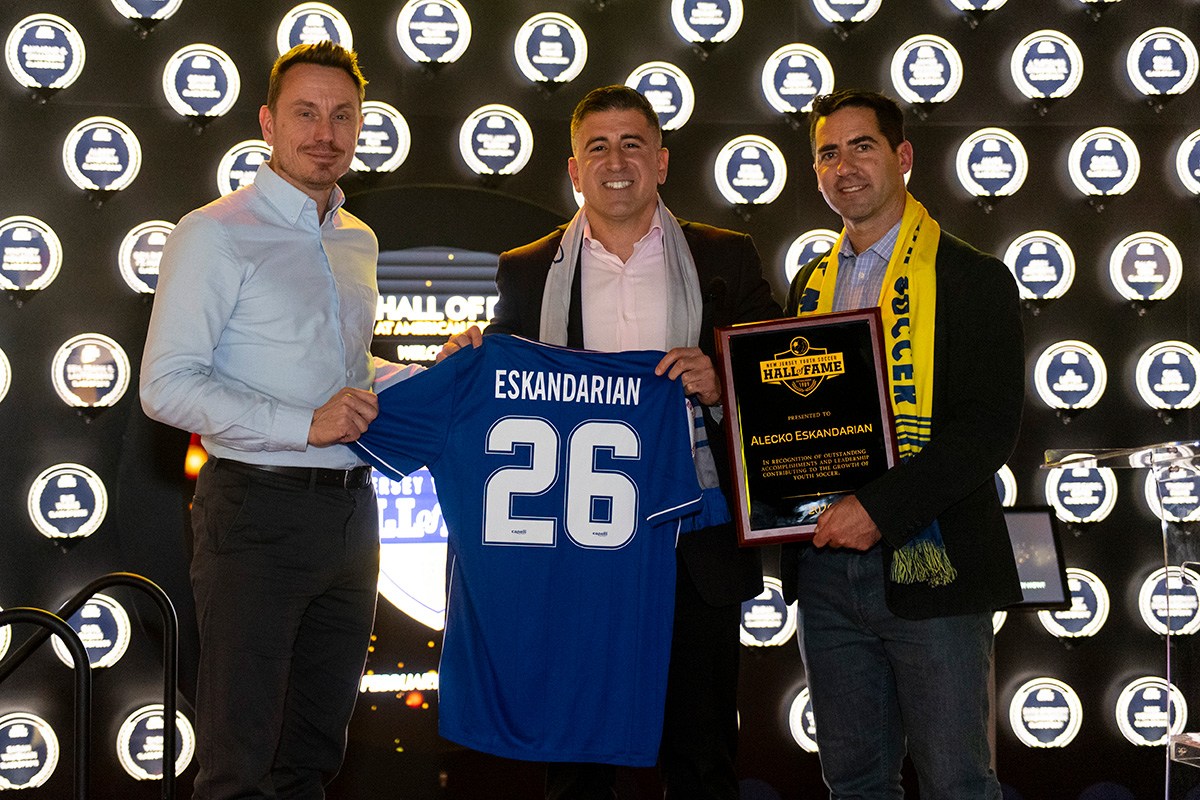
As of 2026, Alecko Eskandarian remains a foundational figure in the history of Major League Soccer (MLS), transitioning from a prolific striker to a key executive within the league's administrative structure. His career is defined by high-level collegiate success, an MVP-caliber professional peak with D.C. United, and a premature retirement necessitated by chronic concussions—a transition that eventually led him to a stable and lucrative career in sports management and player relations.
The Collegiate Foundation and the 2003 MLS SuperDraft
Alecko Eskandarian’s professional trajectory began with one of the most decorated collegiate careers in American soccer history. Playing for the University of Virginia (UVA) from 2000 to 2002, Eskandarian established himself as a clinical finisher. In his junior year, he scored 25 goals, a performance that earned him the Hermann Trophy, awarded to the top college soccer player in the United States.
His collegiate dominance made him the consensus choice for the first overall pick in the 2003 MLS SuperDraft. D.C. United selected him with the intention of making him the face of their frontline. At the time, MLS was still in its formative decade, and Eskandarian represented the "new breed" of domestic talent—highly skilled, media-savvy, and capable of leading a franchise.
The Project-40 Contract
Financially, Eskandarian entered the league under the "Project-40" program (now known as Generation Adidas). This was a critical component of his early financial profile. Project-40 players received higher-than-average entry salaries and, more importantly, their compensation did not count against a team's salary budget. This allowed Eskandarian to secure a stable financial base while the league provided him with educational grants to finish his degree at UVA, a common perk for underclassmen entering the draft early.
Professional Peak: D.C. United and the 2004 Championship
The 2004 season remains the highlight of Eskandarian’s playing career. Under the guidance of coach Peter Nowak, Eskandarian flourished, scoring 10 goals in the regular season. However, it was his performance in the postseason that cemented his legacy.
In the 2004 MLS Cup final against the Kansas City Wizards, Eskandarian scored two goals in the first half, leading D.C. United to a 3-2 victory. He was named the MLS Cup MVP, an accolade that significantly boosted his market value and commercial appeal. During this era, Eskandarian became one of the most recognizable faces in the league, famously known for his "Budweiser incident" where he spat out a sip of the beer in a goal celebration—a moment that, while controversial, increased his visibility in a crowded sports market.
Financial Growth and Endorsements
Following the 2004 championship, Eskandarian’s earning potential shifted. While MLS salaries in the mid-2000s were modest compared to the current "Designated Player" era, his status as a top-tier domestic forward allowed him to negotiate near the league's maximum non-DP salary. His financial profile was further bolstered by:
- Performance Bonuses: MLS Cup MVP honors and Best XI selections typically triggered significant contract escalators.
- Apparel Deals: As a rising star, he secured localized and national endorsements, most notably with Adidas, which was the league's primary kit sponsor.
- National Team Call-ups: Although his international career was limited to a few caps, appearances for the U.S. Men’s National Team (USMNT) provided additional match fees and daily stipends.
The Injury Crisis and Forced Retirement
The middle years of Eskandarian’s career (2007–2010) were marked by frequent transfers and a harrowing battle with concussions. He moved from D.C. United to Toronto FC, followed by stints at Real Salt Lake, Chivas USA, and finally the LA Galaxy.
While his technical ability remained high—notably scoring the first-ever goal for Toronto FC—his availability became inconsistent. In 2009, while playing for the LA Galaxy, a ball struck him in the face at close range, leading to a severe concussion that ultimately ended his playing career. He officially announced his retirement in 2010 at the age of 28.
The financial impact of early retirement for a professional athlete is often devastating. However, Eskandarian’s situation was managed through a combination of league-mandated insurance and a strategic shift into coaching and administration. Unlike players who struggle to find a secondary career, Eskandarian utilized his reputation and tactical intelligence to remain within the soccer ecosystem.
Transition to Executive Leadership and Financial Stability
Post-retirement, Eskandarian did not leave the sport. He initially joined the coaching staff of the New York Cosmos in the NASL, where he served as an assistant coach and head of the youth academy. This role allowed him to maintain a professional income while building the administrative resume necessary for a high-level corporate role.
By the mid-2010s, Eskandarian transitioned to the Major League Soccer headquarters in New York. He took on the role of Director of Player Relations and Competition. In this capacity, he became responsible for:
- Roster Compliance: Ensuring teams adhere to the complex salary cap and allocation money rules.
- Player Pathways: Developing the infrastructure for youth academies and the transition of homegrown players to the first team.
- Disciplinary Reviews: Assisting in the oversight of league-wide competition standards.
Executive Compensation and Net Worth in 2026
By 2026, Eskandarian’s financial profile has shifted from the volatility of an athlete's "pay-for-play" model to the stability of a senior executive. While MLS does not publicly disclose front-office salaries, industry benchmarks for Directors and Vice Presidents in major North American sports leagues suggest a compensation package in the mid-to-high six-figure range.
His estimated net worth in 2026 is bolstered by nearly two decades of continuous employment within the professional soccer industry, coupled with prudent investments in real estate and a diversified portfolio. His long-term association with the league office also provides access to executive benefits, including robust pension plans and health coverage—critical assets given his history of head injuries.
Alecko Eskandarian Career Statistics and Financial Milestones
The following table summarizes the key phases of Eskandarian's career and the associated financial/professional status.
| Period | Role / Team | Key Achievement | Financial/Status Context |
|---|---|---|---|
| 2000–2002 | UVA (NCAA) | Hermann Trophy Winner | Amateur; Education Grants secured. |
| 2003–2006 | D.C. United | MLS Cup MVP (2004) | Top-tier domestic salary; Project-40. |
| 2007–2010 | Multi-Club (MLS) | 30+ Career Goals | Accumulated earnings via transfers; Injury settlements. |
| 2011–2012 | NY Cosmos | Assistant Coach | Transition to steady coaching salary. |
| 2013–2026 | MLS Executive | Director of Player Relations | Senior executive compensation and benefits. |
Impact on Player Safety and Long-term Legacy
Eskandarian’s career overview is incomplete without discussing his role in player safety. His forced retirement became a catalyst for MLS to overhaul its concussion protocols. In 2026, the league’s rigorous "Return to Play" guidelines are a direct evolution of the lessons learned from Eskandarian’s medical struggles.
Financially, his advocacy for player welfare has indirectly influenced the negotiation of Collective Bargaining Agreements (CBAs). Modern MLS players enjoy better long-term disability insurance and post-career medical support—protections that were less robust during Eskandarian's playing days. His legacy is therefore twofold: a dynamic goal-scorer who defined a championship era, and a resilient professional who successfully navigated the transition from the pitch to the boardroom.
Frequently Asked Questions
Why did Alecko Eskandarian retire so early?
Eskandarian retired at the age of 28 due to chronic concussion symptoms. A final injury in 2009 while playing for the LA Galaxy made it medically unsafe for him to continue professional play. His retirement highlighted the dangers of head injuries in soccer long before it became a mainstream topic in the sport.
What is Alecko Eskandarian's estimated net worth in 2026?
While exact figures are private, Alecko Eskandarian's net worth in 2026 is estimated to be between $2 million and $5 million. This is based on his career earnings as a top-pick MLS player, his long-tenured role as a senior executive at MLS headquarters, and his various coaching positions.
What is his current role at Major League Soccer?
As of 2026, Eskandarian serves as a high-ranking official in the Player Relations and Competition department. He works closely with league leadership to manage roster rules, player development initiatives, and the integration of new franchises into the league's competitive structure.
Did Alecko Eskandarian play for the US National Team?
Yes, Eskandarian earned one cap for the United States Men's National Team in 2003. Although he was a prolific scorer in MLS, intense competition for forward spots and his later injury struggles limited his international appearances.
How did the 2004 MLS Cup change his career?
The 2004 MLS Cup was the turning point that established him as a league star. By scoring two goals in the final and winning the MVP award, he became a household name for American soccer fans, which increased his leverage in contract negotiations and expanded his off-field commercial opportunities.
Professional Recommendation for Career Transitions
For professional athletes looking at Eskandarian’s career as a blueprint, the "next action" is clear: diversify skills early. Eskandarian did not wait until his playing days were over to understand the mechanics of the league. By staying engaged with the administrative side of the sport and maintaining strong professional relationships with league officials, he ensured that his career would not end when his body could no longer compete. Athletes should prioritize finishing degrees and seeking internships within their respective league offices during the off-season to prepare for the inevitable transition out of active play.