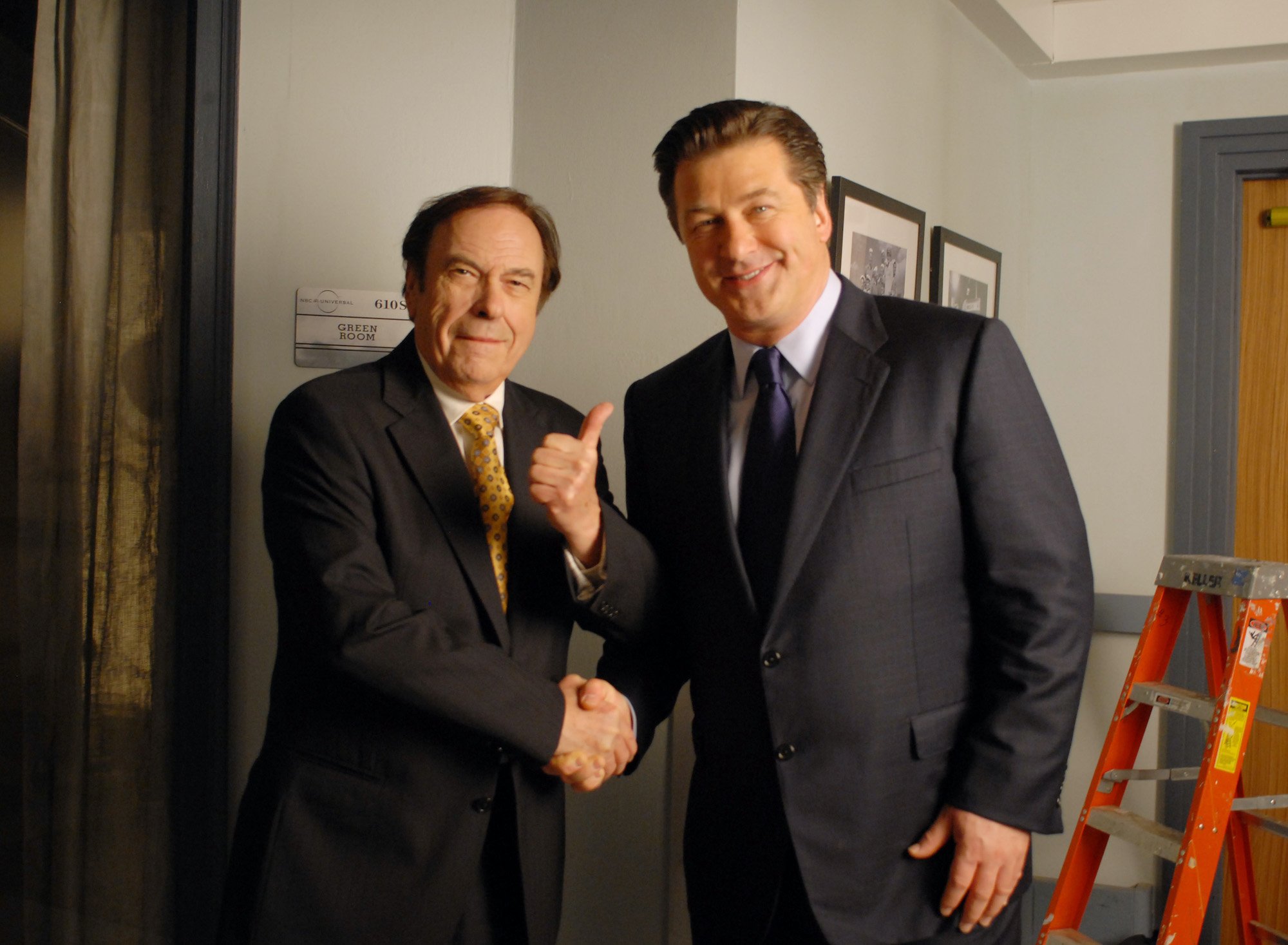
Alec Baldwin’s portrayal of Jack Donaghy on 30 Rock remains a masterclass in comedic timing and character depth. As the quintessential corporate executive, Donaghy transitioned from a satirical archetype of GE management into a beloved mentor, earning Baldwin critical acclaim and cementing the character as a cornerstone of modern television history.
The Genesis and Evolution of Jack Donaghy
When 30 Rock debuted in 2006, the character of John Francis "Jack" Donaghy was introduced as the Vice President of East Coast Television and Microwave Oven Programming for General Electric. Created by Tina Fey, the character was initially designed to be the corporate antagonist to Fey’s Liz Lemon, representing the rigid, profit-driven world of "The Man" interfering with the creative chaos of a live sketch comedy show.
However, the chemistry between Alec Baldwin and Tina Fey quickly reshaped the show’s trajectory. Baldwin brought a level of gravitas and unexpected vulnerability to a role that could have easily remained a two-dimensional caricature of a Republican businessman. By the time the series concluded in 2013, Jack Donaghy had evolved into a complex figure: a mentor, a philosopher of "vertical integration," and a man deeply obsessed with legacy and his own complicated upbringing.
As we look back from 2026, the character stands as a relic of a specific era of American corporate culture—the "GE Way"—that has since been transformed by the tech-heavy, decentralized reality of the 2020s. Yet, Baldwin’s performance ensures that Donaghy remains relevant, serving as a timeless study of ambition and the performance of masculinity in the workplace.
Alec Baldwin’s Performance: A Career Renaissance
Before 30 Rock, Alec Baldwin was primarily recognized as a dramatic leading man from films like The Hunt for Red October and Glengarry Glen Ross. While his "Always Be Closing" speech in the latter was legendary, it was his transition to the small screen that allowed him to flex his comedic muscles in a sustained way.
Baldwin’s performance as Jack Donaghy is defined by several key technical elements:
- The Vocal Delivery: Baldwin employed a "whisper-growl" that could convey authority, conspiratorial intimacy, or utter exhaustion with a single syllable. His pronunciation of "Lemon" became one of the most recognizable catchphrases in sitcom history.
- Physicality: Despite often being confined to a suit and an office, Baldwin used his stature to dominate the frame. His precise movements—the way he held a scotch glass or adjusted his cufflinks—communicated a character who was constantly performing "success."
- The Straight Man/Buffoon Pivot: Baldwin possessed the rare ability to play the "straight man" to the absurdity around him while simultaneously being the source of the absurdity. Whether he was reenacting a therapy session by playing both himself and his mother or demonstrating a "trivection oven," he maintained a deadpan commitment that made the ridiculous feel grounded.
The Mentorship of Liz Lemon: The Heart of the Show
The central pillar of 30 Rock was the platonic relationship between Jack Donaghy and Liz Lemon. In a television landscape often dominated by "will-they-won't-they" romantic tensions, Jack and Liz offered a refreshing alternative: a professional and personal mentorship built on mutual respect and fundamental disagreement.
Jack viewed Liz as a "project"—a woman of immense talent who lacked the "Jack Power" to navigate the corporate world effectively. His advice, often delivered through metaphors involving high-end retail or historical military campaigns, sought to mold Liz into a more assertive version of herself. Conversely, Liz provided Jack with a window into the lives of the "ordinary" people he claimed to understand but often viewed through a lens of aristocratic detachment.
Their dynamic was not one-sided. While Jack taught Liz about negotiation and the importance of wearing a tuxedo after 6:00 PM ("What am I, a farmer?"), Liz taught Jack about the necessity of human connection and the flaws in his rigid worldview. This relationship allowed the character of Jack to soften without losing his edge, making his eventual ascent to the head of GE feel earned rather than just a plot point.
Jack Donaghy’s Philosophy: Vertical Integration and Jack Power
One of the most enduring aspects of the character is the fictionalized corporate philosophy he espoused. Jack was the ultimate advocate for "Six Sigma" and "Vertical Integration." His obsession with the General Electric brand was both a source of comedy and a reflection of his identity.
The Trivection Oven and Innovation
Jack’s pride in the "Trivection Oven"—a fictional product that combined thermal, convection, and microwave technology—symbolized his belief in the power of traditional manufacturing. In the world of 30 Rock, innovation wasn't about software or apps; it was about making a better microwave or a more efficient lightbulb. This "Old Guard" perspective provided a satirical look at the end of the industrial era in America.
The "Jack-isms"
Throughout the series, Baldwin delivered dozens of "Jack-isms" that defined his worldview:
- Reaganism: Jack’s idolization of Ronald Reagan was total. He viewed the 1980s as the pinnacle of American achievement.
- The Suit: Jack believed that a suit was a suit of armor. He famously chided Liz for her "business casual" attire, viewing it as a sign of mental weakness.
- The 1% Lifestyle: His mentions of elite clubs, secret societies (like the "Committee to Re-Elect the President"), and luxury brands (like his obsession with expensive rugs) satirized the extreme wealth gap of the late 2000s.
Supporting Relationships: Banks and Colleen
A character is often defined by those they struggle against. Jack Donaghy’s world was populated by figures who challenged his dominance.
Devon Banks (Will Arnett)
The rivalry between Jack and Devon Banks was a highlight of the series. Banks, a flamboyant and ruthless corporate climber, served as the foil to Jack’s traditionalism. Their scenes were characterized by intense close-ups and whispered threats, often dripping with homoerotic subtext that Jack seemed largely oblivious to, focusing instead on the tactical maneuvers of the corporate "game."
Colleen Donaghy (Elaine Stritch)
The most important relationship in Jack’s life, however, was with his mother, Colleen. Played with terrifying brilliance by Elaine Stritch, Colleen was the source of Jack’s drive and his deepest insecurities. Their interactions revealed the "little boy" inside the corporate titan, explaining his desperate need for approval and his inability to ever feel truly successful. The episodes featuring Colleen added a layer of pathos to Jack’s character, making his quest for power seem like a compensatory mechanism for a childhood spent under her critical eye.
Awards and Critical Legacy
Alec Baldwin’s performance as Jack Donaghy is one of the most decorated in the history of the Primetime Emmy Awards. His ability to maintain the quality of the performance over seven seasons was noted by critics and peers alike.
| Award Body | Wins | Nominations | Notable Years |
|---|---|---|---|
| Primetime Emmy Awards | 2 | 7 | Outstanding Lead Actor in a Comedy Series (2008, 2009) |
| Golden Globe Awards | 3 | 7 | Best Actor – Television Series Musical or Comedy (2007, 2009, 2010) |
| Screen Actors Guild (SAG) | 7 | 7 | Outstanding Performance by a Male Actor in a Comedy Series (Consecutive 2007-2013) |
| Critics' Choice TV Awards | 0 | 3 | Recognition for Best Actor in a Comedy |
The record-breaking seven consecutive SAG Award wins highlight how much professional actors admired Baldwin's craft. He didn't just play a character; he created a archetype that other shows have attempted to replicate, though rarely with the same success.
Analyzing the "Jack Donaghy" Archetype in 2026
From the perspective of 2026, Jack Donaghy represents a "lost world" of corporate America. He was a man who believed in the physical product—the microwave, the television set—at a time when the world was shifting toward the digital and the ethereal.
If 30 Rock were set today, Jack would likely be warring with "disruptors" and silicon-valley venture capitalists who value "pivoting" over "tradition." His character works because he is a dinosaur who refuses to believe he is extinct. He brings a sense of formal elegance to a world he views as increasingly slovenly and chaotic.
Furthermore, the character’s political stance—once a sharp satire of the Bush-era GOP—has taken on new meaning. Jack Donaghy was a "country club" Republican, focused on fiscal policy and deregulation, which contrasts sharply with the populist shifts in real-world politics over the last decade. This makes his character a fascinating historical marker of what mainstream conservatism looked like in the mid-to-late 2000s.
Practical Influence: The "Donaghy Effect" in Business
Surprisingly, the character of Jack Donaghy has been cited in actual business contexts. His "principles" of management, though intended as satire, often touched on real corporate truths:
- The Importance of Personal Branding: Long before "influencers," Jack understood that he was the face of his department.
- Decisiveness: Even when he was wrong (like when he attempted to tank the network on purpose), Jack was decisive.
- Mentorship: The show illustrates that even the most high-powered executives need someone to guide, and in turn, someone to ground them.
Common Misconceptions About the Character
Despite the character's popularity, several misconceptions persist:
- Is he based on Lorne Michaels? While there are elements of Saturday Night Live creator Lorne Michaels in Jack (particularly the mentorship and the whisper-voice), Tina Fey has stated he is a composite of several executives, including former GE CEO Jack Welch and NBC executive Bob Wright.
- Is he a villain? While he often acts as an antagonist to Liz's goals, Jack is never a true villain. His motivations are usually rooted in a sincere belief that his way is the "correct" way for everyone involved.
- Did Baldwin improvise his lines? While Baldwin’s delivery made the lines feel spontaneous, 30 Rock was a notoriously tightly-scripted show. The genius lay in Baldwin's ability to make complex, rapid-fire dialogue feel like natural thought.
FAQs About Alec Baldwin as Jack Donaghy
Why did Alec Baldwin decide to do a sitcom?
At the time, Baldwin’s film career was in a transition phase. He saw the role of Jack Donaghy as an opportunity to reinvent himself and work with Tina Fey, whom he admired from her time on SNL. The move was considered a gamble but ultimately resulted in the most successful chapter of his career.
What is Jack Donaghy's middle name?
His full name is John Francis Donaghy. The character is of Irish-Catholic descent, a background that often informs his traditionalist values and his complicated relationship with his family in Boston.
What happened to Jack Donaghy in the series finale?
In the 2013 finale, Jack briefly achieves his dream of becoming the CEO of GE (by then Kabletown), but he realizes that "having it all" doesn't bring him happiness. He resigns to find himself, ultimately coming up with a new idea for a clear dishwasher, signaling that his true passion lies in the "innovation" of physical products.
How many times did Alec Baldwin win an Emmy for this role?
Alec Baldwin won two Primetime Emmy Awards for Outstanding Lead Actor in a Comedy Series for his work as Jack Donaghy, in 2008 and 2009. He was nominated every single year the show was on the air.
What is "Vertical Integration" in the context of the show?
In the show, Jack uses "Vertical Integration" as a buzzword for GE owning every part of the process—from the machines that make the parts to the network that broadcasts the commercials for the products. It was a satire of the massive corporate mergers happening at the time.
Final Thoughts and Next Actions
To truly appreciate Alec Baldwin’s contribution to television history, a re-watch of 30 Rock is essential. Focus particularly on Season 3 and Season 4, where the character of Jack Donaghy hits his stride, balancing corporate ruthlessness with genuine comedic pathos. For those interested in the craft of acting, pay attention to his "reaction shots"—Baldwin often gets the biggest laugh of a scene without saying a word, simply by reacting to the insanity of characters like Tracy Jordan or Jenna Maroney.
Whether you view him as a satirical warning or a bizarrely aspirational figure, Jack Donaghy remains one of the most intelligently written and brilliantly performed characters in the history of the American sitcom.