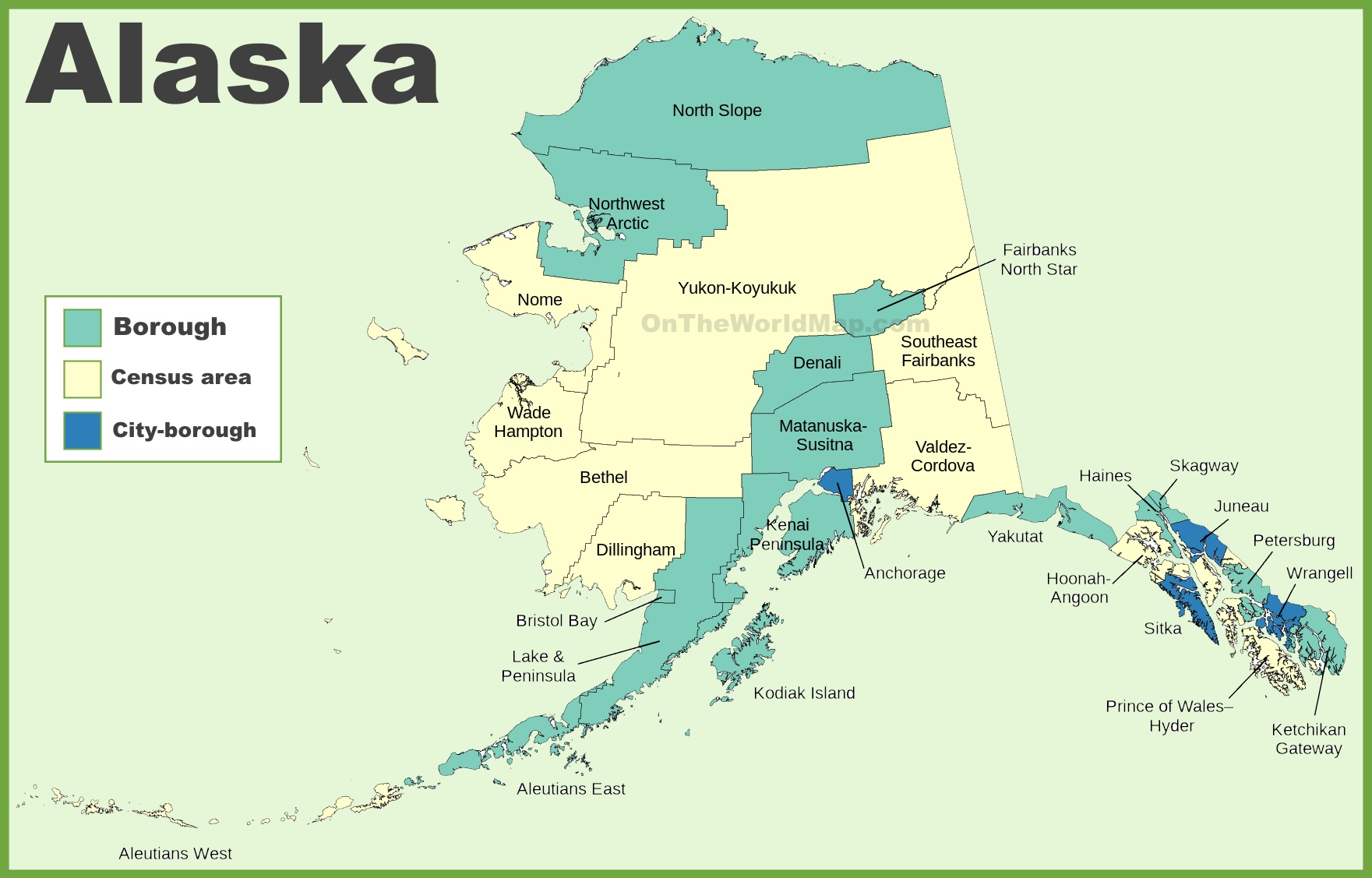
Alaska is currently represented in the United States House of Representatives by a single member who serves the entire state. This unique configuration exists because the state's total population, as determined by the decennial census, falls below the threshold required to qualify for additional seats under the current method of apportionment. This single seat carries the full weight of Alaska’s federal legislative interests, encompassing a vast and diverse geographic area.
The Constitutional Basis for Congressional Apportionment
The structure of the United States House of Representatives is mandated by Article I, Section 2 of the U.S. Constitution. This section dictates that representatives shall be apportioned among the several states according to their respective numbers, which are determined by an actual enumeration taken every ten years. Since the first census in 1790, the methodology for distributing these seats has evolved, but the fundamental requirement—that representation be based on population—remains the bedrock of the lower chamber.
Following the 1910 Census, the House of Representatives was fixed at 435 voting members through the Reapportionment Act of 1929. Because the number of seats is capped, the distribution of these seats becomes a zero-sum game: as the population of some states grows faster than others, seats are reallocated to reflect these demographic shifts. For a state like Alaska, which has a relatively small population density compared to the national average, the mathematics of the 435-seat cap dictates that it receives only one seat.
Population Thresholds and the Huntington-Hill Method
To determine which states receive additional seats, the U.S. Census Bureau utilizes the "Method of Equal Proportions," also known as the Huntington-Hill method. This statistical technique was adopted in 1941 to minimize the relative difference in the number of people per representative across different states.
The process works by calculating "priority values" for each seat. Every state is guaranteed at least one representative, regardless of population. Once the initial 50 seats are assigned (one to each state), the remaining 385 seats are distributed one by one to the states that have the highest priority values. The priority value is determined by the formula:
P = Population / (n * (n - 1))^(1/2)
Where n is the number of the seat being assigned (e.g., the second seat for a state, the third seat, etc.).
For Alaska to gain a second seat, its population would need to grow significantly enough to generate a priority value that exceeds the value of the 435th seat currently held by another state. As of the 2026 reporting period, Alaska’s population remains well below the point required to move up the priority list for a second seat. While Alaska is the largest state by land area, the apportionment process ignores geography entirely, focusing strictly on headcounts.
The Evolution of Alaska’s Representation
Alaska entered the Union on January 3, 1959. At that time, its population was approximately 226,000. Under the 1950 Census data, which governed the period immediately following statehood, Alaska’s population was insufficient to warrant more than one representative. Throughout its history as a state, Alaska has maintained a consistent pattern of having one representative in the House.
This single-member district structure is often referred to as an "at-large" district. Unlike states such as California or Texas, where voters are grouped into specific geographic districts, every eligible voter in Alaska casts a ballot for the same single candidate. This creates a specific political dynamic where the representative must balance the interests of disparate regions, from the urban centers of Anchorage and Fairbanks to the remote, rural villages of the Aleutian Islands and the North Slope.
Challenges of At-Large Representation
Representing an entire state with a single office presents unique operational challenges. The primary difficulty is the sheer diversity of needs across the Alaskan landscape. The legislative agenda of the state includes issues as varied as maritime law and fisheries management, Arctic energy production, indigenous land rights, and federal infrastructure funding for remote transportation.
Because there is only one representative, that individual acts as the sole conduit for federal services for the entire population. Constituent services—such as resolving issues with the Social Security Administration, navigating federal grant applications, or seeking assistance with veterans' affairs—are funneled through one congressional office. This creates a high volume of demand on the representative’s staff compared to members in states with multiple districts, where constituent service loads are distributed among several offices.
| Feature | Single-Representative State (Alaska) | Multi-Representative State (Generic) |
|---|---|---|
| District Scope | Entire State | Specific Geographic Sub-section |
| Constituent Base | All state residents | Subset of state population |
| Legislative Focus | Broad statewide issues | Regional and local interests |
| Service Volume | High demand on one office | Distributed across several offices |
| Political Reach | Statewide campaign required | Targeted local campaign required |
The Impact of Geographic Vastness
Alaska’s land mass is over 660,000 square miles. For a representative, maintaining a connection with the electorate is physically demanding. In a standard district, a representative might drive across their territory in a few hours. In Alaska, the representative must travel by air or sea to reach many of the communities they serve.
This geography influences the nature of the representative’s work. Much of the federal legislative effort for Alaska focuses on "the Alaska exception," or unique provisions within federal statutes that account for the state’s lack of a road system, its extreme climate, and its reliance on aviation. Consequently, the representative often sits on committees that directly impact these logistical realities, such as the Committee on Transportation and Infrastructure or the Committee on Natural Resources.
Voter Participation and Political Trends
In 2026, the political process in Alaska continues to be characterized by unique electoral procedures. Alaska employs a nonpartisan open primary system followed by ranked-choice voting in the general election. This system was implemented to encourage candidates to appeal to a broader base of the electorate rather than catering strictly to party extremes.
Because there is only one representative, the campaign for the seat is always a statewide effort. This necessitates significant fundraising and extensive travel, as candidates must make themselves known to voters in regions that are thousands of miles apart. The at-large nature of the seat means that every voter, regardless of where they live in the state, has the same representative, ensuring that Alaska’s voice in Washington is unified even if it is singular.
Frequently Asked Questions
Does Alaska have any plans to increase its number of representatives? No, because the number of seats is capped at 435, Alaska cannot gain a second seat unless its population grows to a level that outranks a state currently holding a seat, or if Congress chooses to expand the total number of seats in the House. There is currently no active legislation to expand the House.
Is the Alaska representative the same as the state's Senators? No. Every state, regardless of population, is granted two U.S. Senators. Alaska has two Senators and one Representative, providing the state with a total of three members in the U.S. Congress.
Does a single representative have less voting power than a state with many representatives? A single representative has exactly the same voting power as any other individual member of the House. However, a state with only one representative has less collective voting power (one vote out of 435) than a state with 20 or 30 representatives.
How do Alaskan residents contact their single representative? Residents contact their representative through the official congressional website, which hosts offices in Washington, D.C., as well as district offices located within Alaska. These offices are designed to handle constituent casework, federal agency inquiries, and legislative concerns.
Will the 2030 Census change Alaska's representation? Changes in the number of representatives are strictly tied to census data. If the 2030 Census shows that Alaska’s population has grown sufficiently relative to the rest of the nation, it could theoretically qualify for a second seat. However, this depends entirely on the growth rates of all 50 states.
Is there a benefit to having an at-large representative? Some political scientists argue that at-large representation forces the candidate to adopt a more statewide, consensus-based platform. Because they represent everyone, they are less likely to fall into the "siloed" politics that can sometimes occur in smaller, hyper-partisan geographic districts.
Next Steps for Engagement
If you are an Alaskan resident seeking to engage with your federal representation, the most effective first step is to visit the official House of Representatives website. By entering your zip code, you can find the contact information for your representative, including details on how to request a meeting, how to inquire about casework, or how to submit comments on pending legislation.
Staying informed about your representative's committee assignments is also vital. Because Alaska relies heavily on federal oversight for land management and transportation, the representative’s committee work often has a disproportionate impact on the daily lives of Alaskans. Engaging with their office’s newsletter or public outreach sessions allows you to remain involved in the issues currently moving through the legislative process.