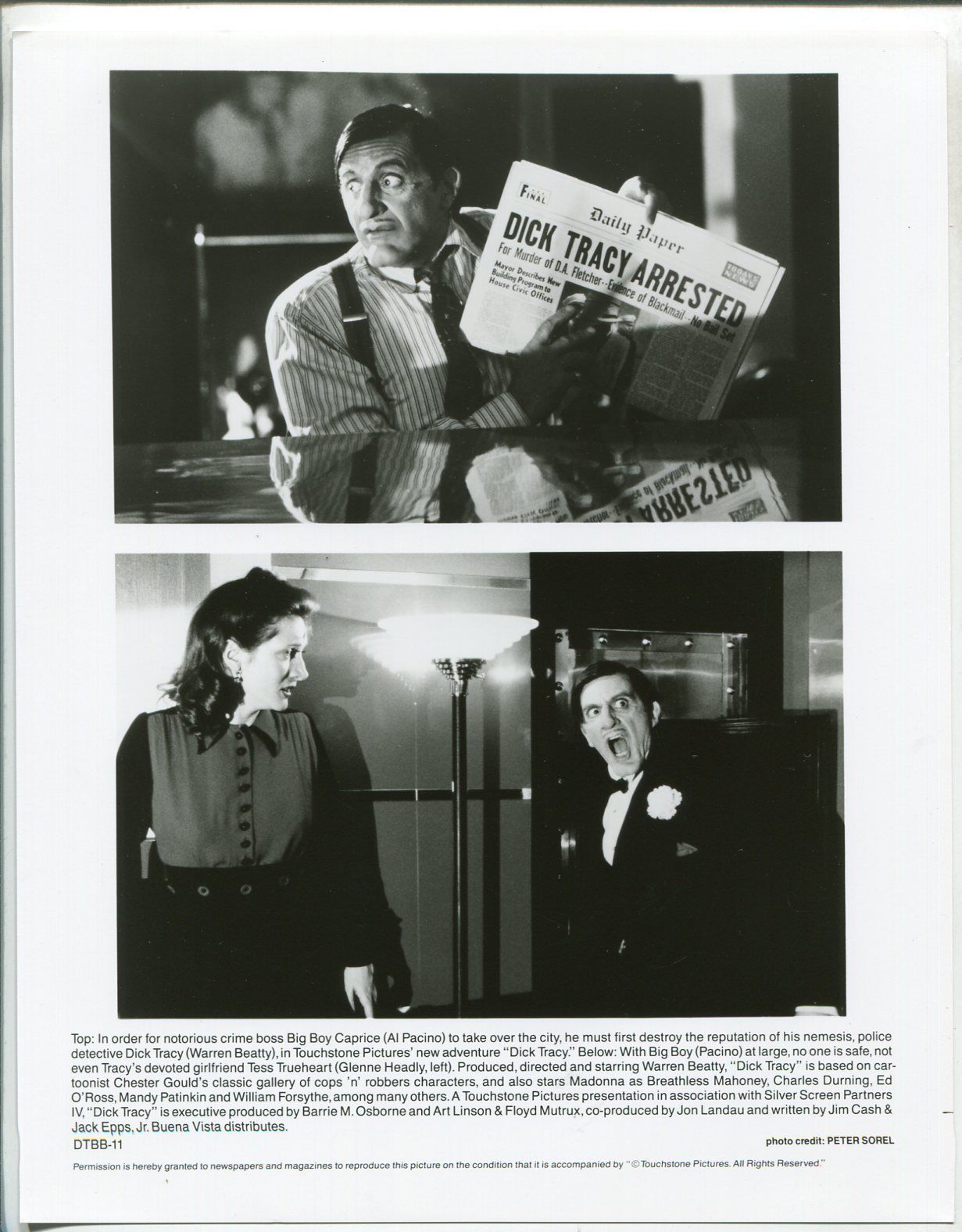
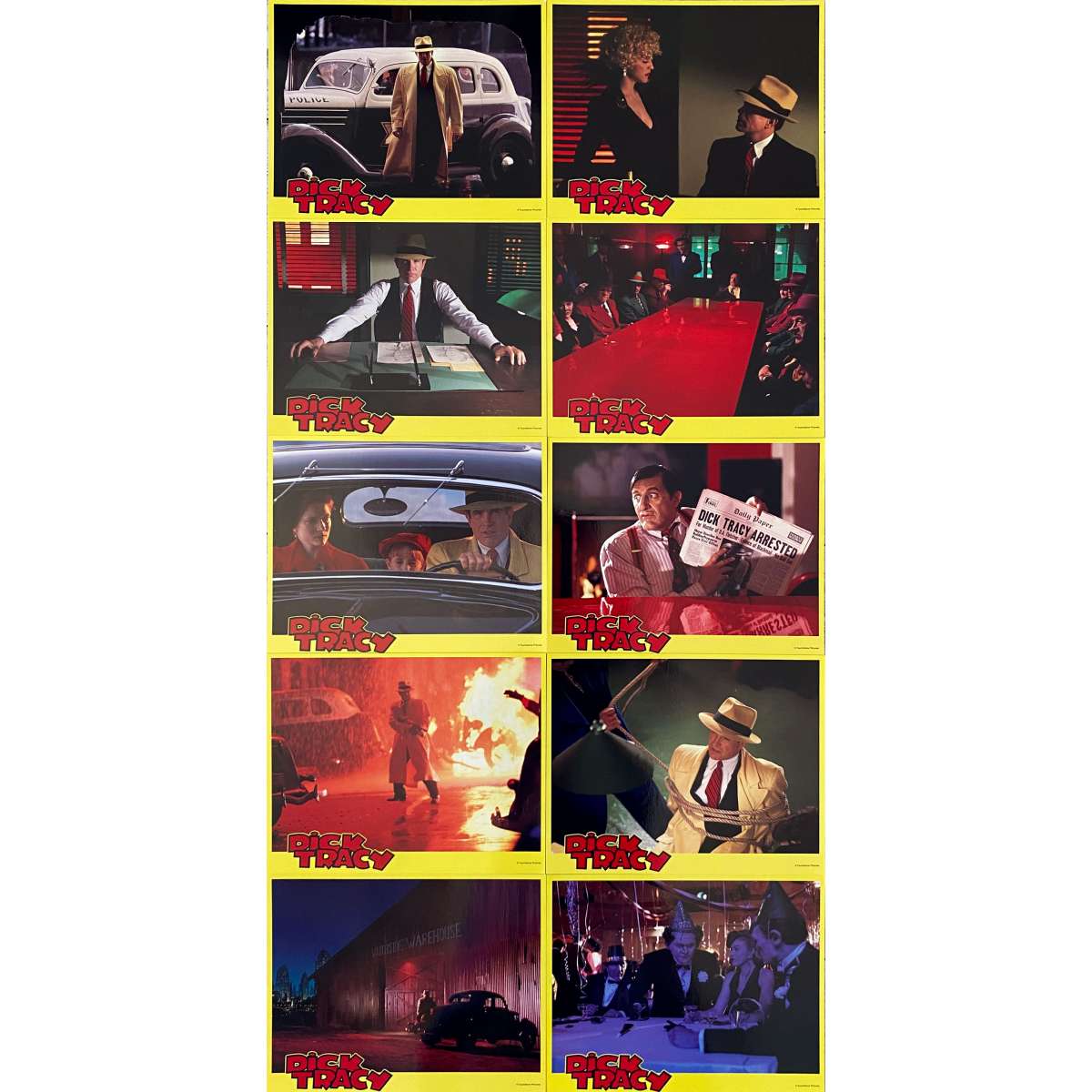
Al Pacino delivered a career-defining, Oscar-nominated performance as Alphonse "Big Boy" Caprice in Warren Beatty’s 1990 film Dick Tracy. Utilizing grotesque prosthetic makeup and a high-energy, theatrical acting style, Pacino transformed the primary antagonist into a comedic tour de force, blending menace with absurdity in a landmark comic book adaptation.
The Genesis of Alphonse "Big Boy" Caprice
When Warren Beatty set out to adapt Chester Gould’s famous comic strip for the big screen, he sought to create a world that was visually distinct from the gritty realism that often defined the crime genre. The 1990 production of Dick Tracy was a bold experiment in primary colors and heightened reality. Central to this vision was the casting of Al Pacino as the film's lead villain, Alphonse "Big Boy" Caprice.
In the late 1980s, Al Pacino was undergoing a significant career resurgence. Following a brief hiatus from the screen, his return in Sea of Love (1989) had proven he was still a massive box-office draw. However, the role of Big Boy Caprice offered something entirely different: an opportunity for "theatrical" acting that leaned into his background in the arts and Shakespearean drama. Pacino was not merely playing a mobster; he was playing a caricature of a mobster, requiring a delicate balance between genuine threat and comedic timing.
The collaboration between Beatty and Pacino was pivotal. Beatty, serving as director, producer, and the titular star, gave Pacino significant creative freedom to develop the character’s eccentricities. This resulted in a villain who was as likely to break into a frantic dance as he was to order a hit on a rival.
The Prosthetic Masterpiece: Physical Transformation
The most striking aspect of Al Pacino in Dick Tracy is his physical appearance. To honor the exaggerated aesthetic of Chester Gould’s original comic strips, makeup artists John Caglione Jr. and Doug Drexler were tasked with creating "mugs" for the film’s rogues’ gallery.
Pacino spent approximately three to four hours in the makeup chair every morning. The process involved:
- Prosthetic Application: Foam latex pieces were applied to his chin, nose, and forehead to create the bulbous, distorted features of Big Boy.
- Color Matching: The makeup had to remain consistent under the film's unique lighting, which utilized a strictly limited palette of only seven colors to mimic the look of a Sunday newspaper comic strip.
- Mobility Challenges: Pacino had to learn how to emote through heavy layers of latex. Rather than letting the mask hide his performance, he used the exaggerated features to amplify his facial expressions.
The success of this transformation was recognized by the Academy of Motion Picture Arts and Sciences, as Caglione and Drexler won the Oscar for Best Makeup. For Pacino, the makeup acted as a shield and a catalyst, allowing him to fully submerge his own identity into the chaotic persona of the crime boss.
Acting Style: Comedic Ferocity and the "Pacino Method"
Al Pacino’s performance in Dick Tracy is often cited as one of the most successful examples of "scenery-chewing" in modern cinema. By 1990, Pacino had already established a reputation for intense, simmering performances (such as in The Godfather) and explosive, high-decibel outbursts (such as in Scarface). In Dick Tracy, he fused these elements with a vaudevillian sensibility.
Big Boy Caprice is a character defined by his insecurity and his obsession with order and "the plan." Pacino chose to play him with a frantic, jittery energy. Whether he is screaming at his henchmen—played by an equally impressive ensemble including William Forsythe and Dustin Hoffman—or attempting to woo Madonna’s character, Breathless Mahoney, Pacino’s movements are sharp and unpredictable.
One of the most famous sequences involves Big Boy attempting to rehearse a musical number or dictating his "credo" to his subordinates. Pacino’s ability to transition from a whisper to a roar within a single sentence created a sense of "dangerous comedy." This performance style was a precursor to the more experimental roles he would take in the later decades of his career, showing a willingness to abandon his leading-man persona for the sake of character-driven art.
Comparing Al Pacino’s 1990 Performances
The year 1990 was a monumental one for Al Pacino, as it featured two of his most contrasting roles. While Dick Tracy showcased his ability to handle absurdist comedy and heavy makeup, The Godfather Part III saw him returning to the somber, weighted role of Michael Corleone.
| Feature | Big Boy Caprice (Dick Tracy) | Michael Corleone (The Godfather Part III) |
|---|---|---|
| Genre | Comic Book / Neo-Noir / Comedy | Crime Drama / Tragedy |
| Visual Style | Heavy prosthetics, vibrant colors | Naturalistic, aging makeup |
| Temperament | Volatile, eccentric, loud | Regretful, weary, authoritative |
| Critical Acclaim | Oscar & Golden Globe Nominee | Mixed to positive reviews for the role |
| Primary Motivation | Controlling the city's underworld | Redeeming his soul and family name |
| Key Co-star | Madonna / Warren Beatty | Diane Keaton / Andy Garcia |
This comparison highlights Pacino’s incredible range. To be able to deliver a grounded, tragic performance as an aging Don while simultaneously playing a cartoon villain with such conviction is a feat few actors have managed.
The Narrative Role of the Antagonist
In the structure of Dick Tracy, Big Boy Caprice serves as the dark mirror to Tracy’s unwavering morality. While Tracy is defined by his yellow trench coat and his binary view of right and wrong, Big Boy is the embodiment of the "chaos" that threatens the city.
Pacino’s Big Boy is also a social climber. He doesn't just want to run the rackets; he wants to be respected as a visionary. This is evidenced by his frequent monologues about "The City" and his attempts to organize the other "mugs" into a corporate-style syndicate. This adds a layer of satire to the performance, as Pacino mocks the corporate greed and ambition of the late 1980s through the lens of a 1930s gangster.
His interactions with The Kid (played by Charlie Korsmo) and his rivalry with Dick Tracy provide the film’s narrative engine. While many comic book villains are one-dimensional, Pacino’s Caprice is driven by a desperate, almost pathetic need for validation, which makes his eventual downfall both satisfying and strangely memorable.
Reception, Awards, and Cultural Impact
Upon its release in June 1990, Dick Tracy was a significant commercial success, grossing over $160 million worldwide. While the film received mixed reviews for its pacing and script, critics were almost unanimous in their praise for Al Pacino.
Roger Ebert, in his original review, noted that Pacino’s performance was "joyful" and that he seemed to be having the time of his life under the makeup. The industry agreed, and Pacino received several major award nominations:
- Academy Awards: Nominated for Best Supporting Actor.
- Golden Globes: Nominated for Best Supporting Actor – Motion Picture.
- BAFTA Awards: Nominated for Best Supporting Actor.
While he did not win the Oscar that year (the award went to Joe Pesci for Goodfellas), the nomination was significant. It marked the first time an actor had been nominated for an Academy Award for a role in a comic book adaptation since the genre's modern inception. This paved the way for later recognition of similar "transformative" comic book roles, such as Heath Ledger’s Joker or Joaquin Phoenix’s Joker.
As we look back from 2026, the performance has only grown in stature. In an era dominated by CGI and motion-capture, Pacino’s work in Dick Tracy remains a testament to the power of practical effects and physical acting.
Technical Execution and Production Design
The success of Pacino’s role cannot be separated from the production design by Richard Sylbert and the cinematography by Vittorio Storaro. The film used matte paintings and miniatures to create a city that looked like a pop-up book. Storaro used hard lighting to create sharp shadows, which complemented the prosthetic makeup on Pacino’s face.
The production was famously rigorous. Warren Beatty was a perfectionist, often demanding dozens of takes for simple scenes. Pacino, known for his own meticulous preparation, flourished in this environment. The "Mumbles" scene, featuring Dustin Hoffman, is a prime example of two heavyweight actors using the film's heightened reality to create a unique comedic rhythm that feels distinct from any other crime film of the era.
Frequently Asked Questions
Was Al Pacino’s makeup in Dick Tracy CGI?
No, the makeup was entirely practical. It consisted of foam latex prosthetics designed by John Caglione Jr. and Doug Drexler. This was long before CGI was capable of such detailed facial replacement. The makeup won an Academy Award for its innovation and execution.
Did Al Pacino sing in the movie?
While Pacino’s character, Big Boy Caprice, is heavily involved in scenes featuring music and dancers, the primary singing in the film is performed by Madonna. However, Pacino does engage in rhythmic, theatrical delivery that borders on musicality, particularly during his "credo" speech and when he is celebrating his various criminal successes.
How did the makeup affect Pacino's acting?
Pacino has stated in various interviews over the years that the makeup was liberating. By hiding his well-known face behind the character of Big Boy, he felt he could take more risks with his voice and body language. The prosthetics didn't just change his look; they changed how he breathed and moved, contributing to the character's unique, high-strung energy.
Why is Dick Tracy (1990) considered a cult classic today?
In 2026, Dick Tracy is celebrated for its uncompromising visual style and its commitment to a specific aesthetic that has rarely been replicated. Unlike many modern superhero films that strive for realism, Dick Tracy embraced its comic strip roots. Al Pacino’s performance is often cited as the highlight of the film, representing a perfect marriage of high art and popular entertainment.
How many Academy Awards did Dick Tracy win?
The film won three Academy Awards: Best Art Direction, Best Makeup, and Best Original Song (for Stephen Sondheim's "Sooner or Later"). While Al Pacino was nominated for Best Supporting Actor, he did not win, though his nomination remains a landmark for the genre.
Recommendation for Viewers and Historians
For those interested in the evolution of comic book cinema or the versatility of Al Pacino, Dick Tracy (1990) is essential viewing. To fully appreciate the performance, it is recommended to watch the film in a high-definition format that preserves Vittorio Storaro’s precise color palette.
Pay close attention to Pacino’s hands and his posture; he uses his entire body to convey the character's manic ambition. For students of film, comparing this performance with his work in Glengarry Glen Ross or Scent of a Woman (which would follow shortly after) provides a masterclass in how an actor can adapt their "internal" method to suit "external" technical requirements like prosthetics and stylized production design.