In 2026, Air India has successfully transitioned into a streamlined, global carrier following the total integration of Vistara and the completion of its Vihaan.AI transformation. The current codeshare changes focus on deeper Star Alliance synergy and strategic bilateral expansions with United Airlines, Singapore Airlines, and the Lufthansa Group, providing passengers with unprecedented connectivity across six continents under a single booking.
The landscape of Indian aviation has undergone a seismic shift, and as of 2026, Air India stands as the primary beneficiary of a consolidated market. For the international traveler, the most significant updates involve how "AI" coded flights are now distributed across partner networks, the synchronization of loyalty benefits, and the operational transition of former Vistara routes into the unified Air India brand. This guide details the technical and practical aspects of these changes to help passengers navigate the current airline ecosystem.
The Strategic Framework of Air India’s 2026 Network
The codeshare changes observed in 2026 are not merely administrative updates but the result of a multi-year fleet expansion and network optimization strategy. With the delivery of a significant portion of its record-breaking 470-aircraft order, Air India has shifted from a carrier that relied on partners to fill gaps to one that uses codeshares to dominate high-traffic corridors and provide niche access to secondary markets.
The Unified "AI" Code Implementation
By early 2026, the "UK" code previously used by Vistara has been entirely retired. All former Vistara codeshare agreements—notably those with Japan Airlines, British Airways, and United—have been either renegotiated, absorbed into the Air India Star Alliance framework, or expanded into deeper joint business agreements (JBAs). This means a passenger booking a flight from London to Amritsar via Delhi will now see a seamless "AI" flight number throughout the journey, ensuring consistent baggage policies and service standards.
Star Alliance Integration Depth
Air India’s membership in Star Alliance has reached a new level of maturity in 2026. While the airline joined the alliance in 2014, the "New Air India" has implemented full technical parity with Tier-1 members like Lufthansa and United. This includes "Through Check-in" capabilities across all member airlines, meaning passengers can receive boarding passes for three or more connecting flights at their point of origin, a feature that was previously inconsistent on certain regional routes.
Major Codeshare Partner Expansions in 2026
The 2026 schedule highlights several key regional expansions. These partnerships are designed to bypass the traditional "hub-and-spoke" limitations by utilizing the strengths of local leaders in distant markets.
North America: The United and Alaska Airlines Synergy
In 2026, the partnership between Air India and United Airlines has expanded to cover over 80 domestic US destinations. This is a strategic move to counter the dominance of Middle Eastern carriers that funnel US-India traffic through Dubai or Doha.
- New Gateways: Beyond New York (JFK/EWR), Chicago (ORD), and San Francisco (SFO), Air India now utilizes United’s hubs in Houston (IAH) and Denver (DEN) to provide "AI" coded flights to the American South and Mountain West.
- Alaska Airlines Integration: To bolster West Coast connectivity, the codeshare with Alaska Airlines now covers the entire Pacific Northwest. This allows passengers from Seattle or Portland to book a single ticket to Delhi or Mumbai, with seamless transfers in San Francisco or Vancouver.
Europe: Strengthening the Lufthansa and Swiss Connection
The Lufthansa Group remains Air India’s most vital partner in Europe. In 2026, the codeshare has shifted from simple seat-selling to a coordinated schedule.
- Frankfurt and Munich Hubs: Air India has synchronized its arrival times in Frankfurt and Munich to minimize layovers for passengers connecting to smaller European cities like Prague, Warsaw, or Oslo.
- Swiss International Air Lines: The codeshare with Swiss has been expanded to include more daily frequencies between Zurich and Delhi/Mumbai, catering specifically to the premium business segment with synchronized lounge access protocols.
Asia-Pacific: The Singapore Airlines Joint Venture
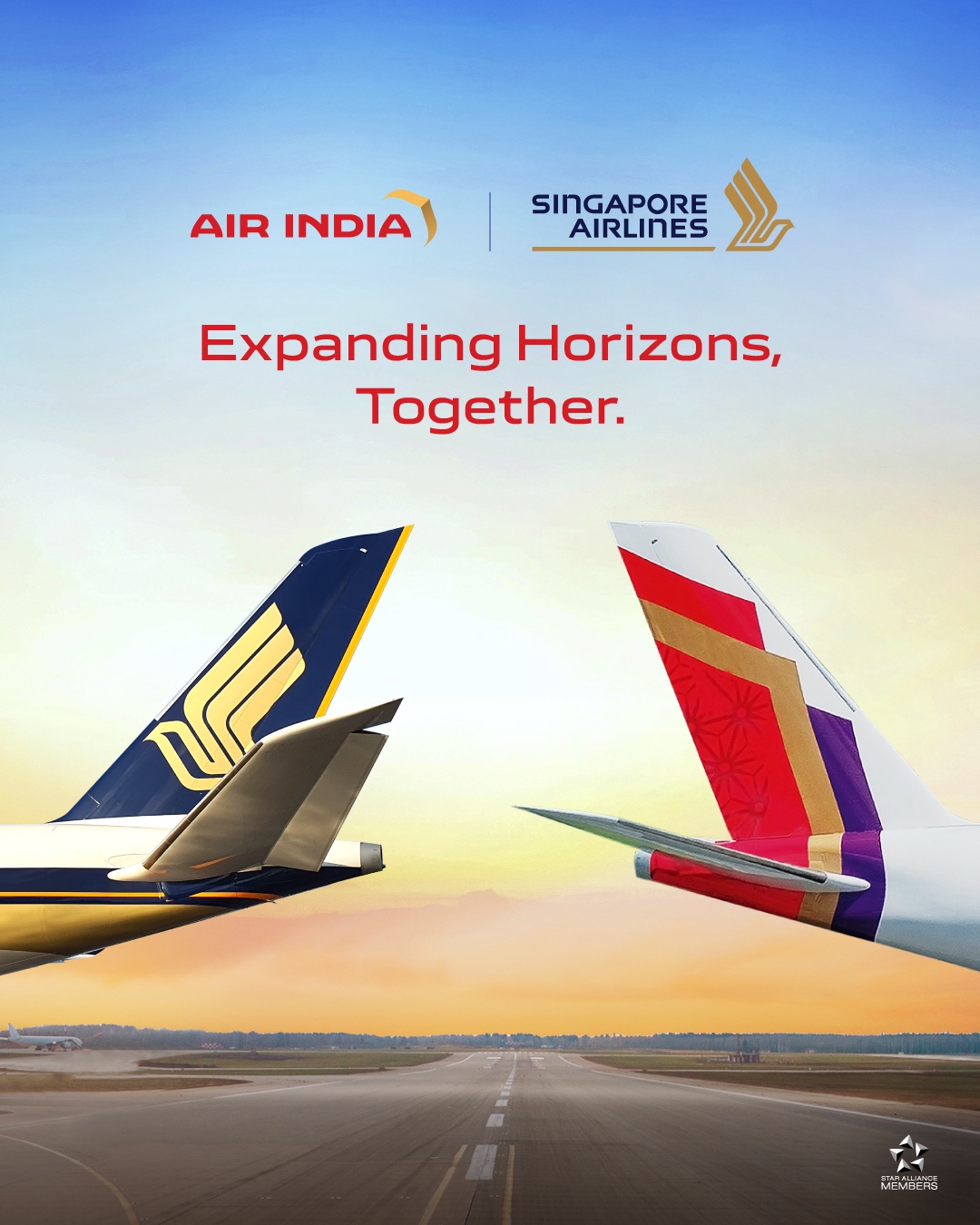
Perhaps the most significant change in 2026 is the deepening of the relationship with Singapore Airlines (SIA). Following the merger of Vistara (which was a JV between Tata and SIA) into Air India, the two carriers have entered into a comprehensive joint business agreement. This allows for:
- Revenue Sharing: On specific routes between India and Singapore, the airlines now operate as a single entity, offering "AI" and "SQ" codes interchangeably.
- Network Reach: Air India passengers now have codeshare access to over 40 destinations in Australia, New Zealand, and Southeast Asia via Singapore Changi Airport.
Technical Improvements for Passengers
The 2026 codeshare updates have brought several technical enhancements that directly affect the passenger experience. These improvements are rooted in the airline's revamped IT infrastructure.
Unified Baggage Policy (Resolution 302)
One of the most frequent pain points for codeshare travelers was conflicting baggage allowances. In 2026, Air India has strictly enforced IATA Resolution 302 across all codeshare partners. This ensures that the baggage allowance of the "Most Significant Carrier" (usually Air India on the long-haul segment) applies to the entire journey, even if the domestic feeder flight is operated by a partner with more restrictive rules.
Real-Time Digital Synchronization
Through the updated Air India mobile app, passengers on codeshare flights can now track their checked luggage across different airlines in real-time. If you are flying on a United-operated flight with an Air India ticket, the app receives telemetry from United’s tracking system, providing a single source of truth for the traveler.
Lounge Access Standardization
In 2026, the ambiguity surrounding lounge access for codeshare passengers has been resolved. Gold and Platinum members of Air India’s Flying Returns program now have guaranteed access to all Star Alliance lounges globally, regardless of which partner is operating the "AI" coded flight. This is a significant upgrade from the previous "operating carrier" rules that often confused travelers.
2026 Codeshare Partner Comparison Table
The following table outlines the current status of Air India's primary codeshare partnerships and the specific benefits available to passengers in 2026.
| Partner Airline | Region | Relationship Type | Key Benefit in 2026 |
|---|---|---|---|
| United Airlines | North America | Strategic Codeshare | Access to 80+ US domestic cities via 5 hubs. |
| Singapore Airlines | Southeast Asia/Pacific | Joint Venture | Seamless connection to Australia/NZ; shared lounges. |
| Lufthansa Group | Europe | Star Alliance Partner | Synchronized schedules for 120+ European destinations. |
| ANA (All Nippon) | East Asia | Star Alliance Partner | Enhanced connectivity to Tokyo Haneda and Narita. |
| Alaska Airlines | North America | Bilateral Partner | Focus on US West Coast and Pacific Northwest access. |
| Air Canada | North America | Star Alliance Partner | Direct connections from Toronto/Vancouver to 15 Indian cities. |
| Tel Aviv (EL AL) | Middle East | Bilateral Partner | Direct codeshare on the Delhi-Tel Aviv corridor. |
Impact on the Flying Returns Loyalty Program
The 2026 codeshare changes have fundamentally altered how miles are earned and redeemed. The "Flying Returns" program has been rebranded and modernized to compete with global standards.
Accrual Parity
Previously, flying on a codeshare partner might result in lower "tier point" accrual. In 2026, any flight booked with an "AI" flight number—regardless of the operating aircraft—earns 100% of the tier points and miles associated with the fare class. This makes it significantly easier for frequent flyers to maintain status while utilizing the expanded partner network.
Redemption Liquidity
Air India has introduced "Dynamic Redemption" for codeshare flights. In 2026, passengers can use their Flying Returns points to book "AI" coded seats on partner airlines directly through the Air India website with the same ease as booking a native Air India flight. The "blackout dates" that plagued previous codeshare redemptions have been largely eliminated for top-tier loyalty members.
Navigating Potential Challenges
While the 2026 updates have simplified most processes, travelers should remain aware of specific operational nuances that persist in codeshare travel.
Check-in Procedures
Despite technical synchronization, the general rule in 2026 remains that passengers must check in with the operating carrier for the first segment of their journey. For example, if you are flying from Seattle to Delhi via San Francisco, and the first leg is operated by Alaska Airlines, you must use the Alaska Airlines desk or app, even if your ticket was purchased from Air India.
Upgrade Eligibility
One remaining limitation in 2026 is the ability to use Air India upgrade vouchers on codeshare flights operated by partners. Currently, upgrades using "Flying Returns" points are generally only applicable to flights operated by Air India aircraft. If you are on a United-operated flight with an "AI" code, you must typically rely on Star Alliance Upgrade Awards, which have different availability criteria and point requirements.
Service Disruptions (IRROPS)
In the event of a flight cancellation or delay (Involuntary Rerouting/Operations), the airline that caused the delay is responsible for rebooking you. In 2026, the Air India "Global Command Centre" has direct communication lines with partner hubs, but passengers are still advised to seek assistance from the airline currently operating their flight for immediate needs like hotel vouchers or meal coupons.
Frequently Asked Questions
Which airlines are now part of the Air India codeshare network in 2026?
As of 2026, Air India maintains codeshare agreements with all 26 Star Alliance members, including United, Lufthansa, Singapore Airlines, and ANA. Additionally, it has significant bilateral agreements with non-alliance partners like Alaska Airlines and EL AL to provide coverage in regions where alliance presence is thinner.
How do the 2026 changes affect my baggage allowance on a connecting flight?
Air India now strictly follows the "Most Significant Carrier" rule. If the longest part of your journey is an Air India international flight, that baggage allowance (e.g., 2 pieces of 23kg) will typically apply to your entire itinerary, including domestic feeder flights operated by partners, provided they are on the same ticket.
Can I earn Air India Flying Returns points on all codeshare flights?
Yes. In 2026, any flight booked with an "AI" flight number is eligible for full point and tier status accrual. If you book a flight with a partner's code (e.g., a "UA" flight number) but fly on a partner airline, you still earn points as per the Star Alliance agreement, but the accrual rate may differ based on the fare class.
Are Vistara flights still separate from Air India in 2026?
No. The integration was finalized prior to 2026. All Vistara operations, aircraft, and staff have been absorbed into Air India. The "UK" airline code is no longer in use, and all previous Vistara routes are now operated under the Air India "AI" code.
Do I get lounge access on a codeshare flight if I have Air India status?
Yes. As of 2026, Air India Gold and Platinum members have full access to Star Alliance lounges worldwide when traveling on any "AI" coded or Star Alliance-operated flight. This includes lounges operated by Lufthansa, United, and Singapore Airlines, regardless of the class of service.
Practical Recommendations for 2026 Travelers
To maximize the benefits of the 2026 Air India codeshare updates, travelers should adhere to the following best practices:
- Book the "AI" Code: Whenever possible, book your journey using the "AI" flight number even if the flight is operated by a partner. This ensures better mileage accrual and simplifies the application of Air India's baggage and customer service policies.
- Use the Unified App: The 2026 Air India mobile app is the central hub for managing codeshare itineraries. Use it to track bags and receive real-time gate change notifications from partner airlines.
- Verify Terminal Info: Especially in large hubs like London Heathrow or New York JFK, ensure you check which terminal the operating carrier uses. While Air India has co-located with many Star Alliance partners in 2026, some airports still require terminal transfers.
- Check-in with the First Carrier: Always go to the website or counter of the airline operating the very first flight of your trip to obtain your boarding passes and check your bags.
By leveraging these expanded partnerships, Air India has positioned itself as a truly global carrier in 2026, offering Indian travelers a seamless bridge to the rest of the world and international travelers a more reliable entry point into the Indian subcontinent.