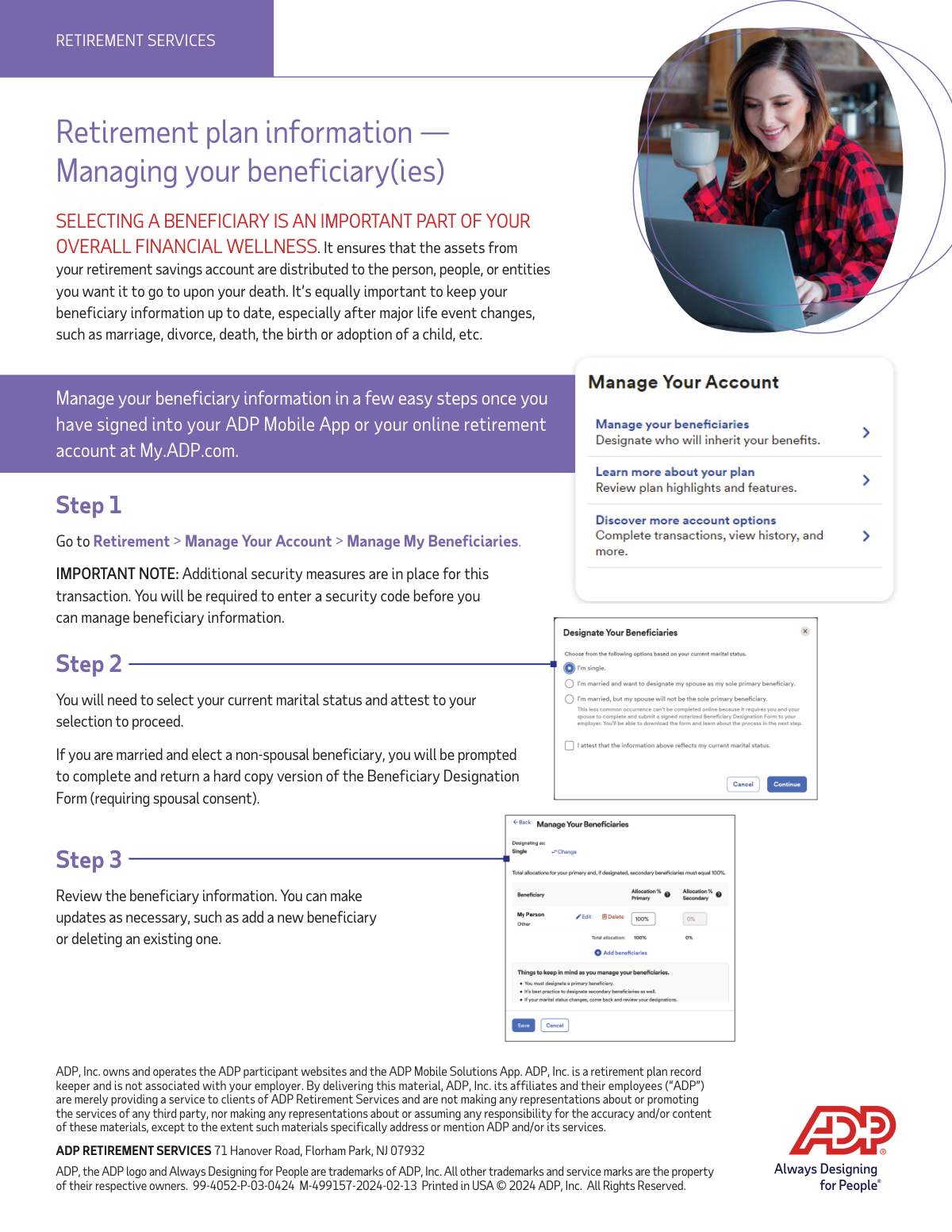
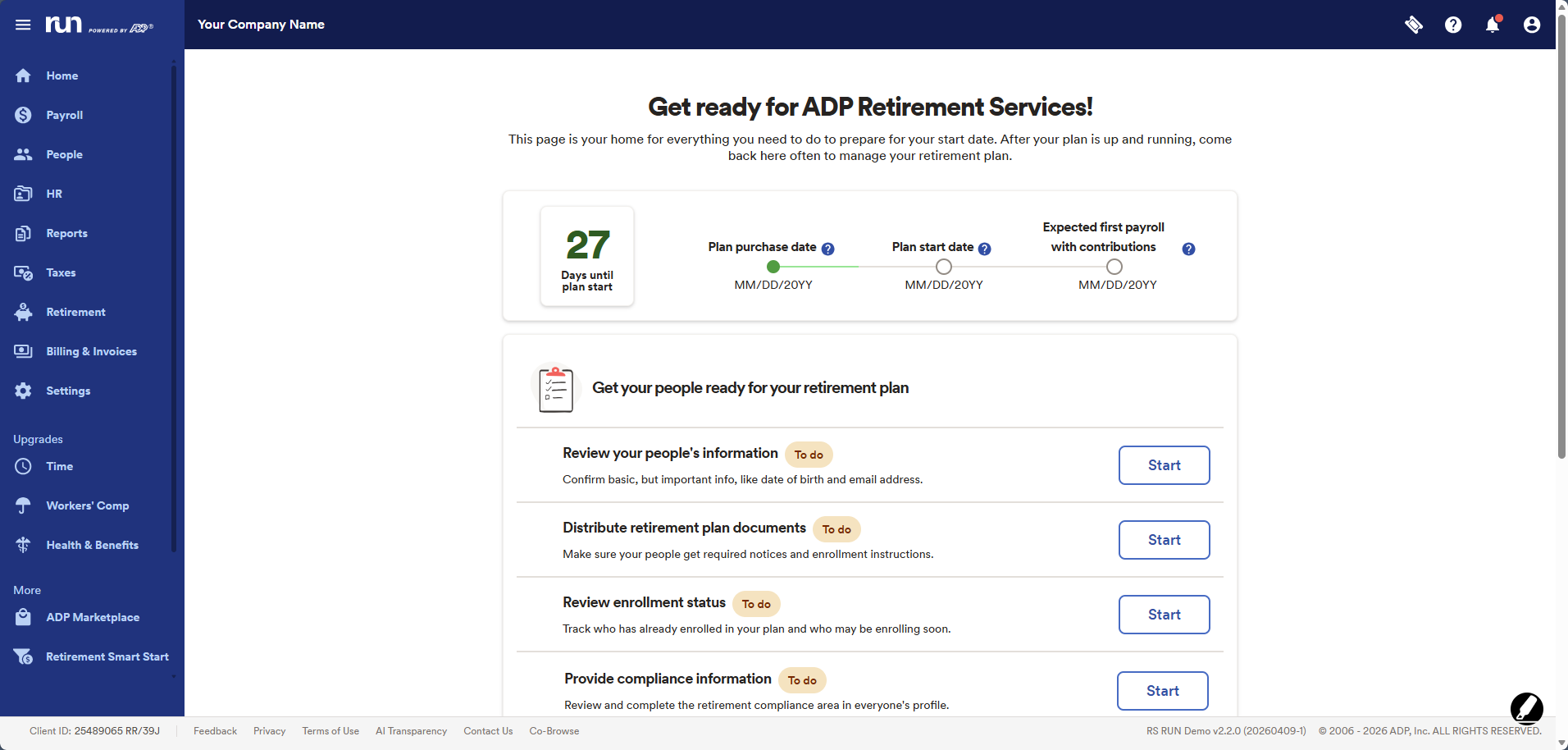
An ADP retirement rollover involves moving assets from an ADP-administered 401(k) or 403(b) plan into a new employer’s retirement plan or an Individual Retirement Account (IRA). To execute this, you must log into the ADP portal, verify your vesting status, and initiate a "Direct Rollover" to ensure funds move between institutions without triggering taxes or early withdrawal penalties.
Understanding the ADP Retirement Ecosystem
ADP (Automatic Data Processing, Inc.) is one of the world's largest providers of human resources management software and services. While many know them for payroll, their ADP Retirement Services division acts as the recordkeeper for thousands of corporate retirement plans. If your employer uses ADP for your 401(k), they are responsible for tracking your contributions, employer matches, investment gains, and the tax status of your funds.
When you leave a job, your 401(k) account doesn't disappear, but its status changes. You are no longer an "active participant" but a "terminated participant." In 2026, many individuals find themselves with multiple "orphan" accounts from previous employers. An ADP retirement rollover is the formal process of consolidating these funds into a single, manageable location. This is not merely a transfer of cash; it is a specialized movement of tax-advantaged assets that requires strict adherence to IRS guidelines to avoid unintended tax liabilities.
ADP typically offers two primary ways to manage these funds: keeping them in the current plan (if the balance exceeds certain thresholds, usually $5,000 or $7,000 depending on the plan document) or rolling them out. Understanding the role ADP plays as the intermediary is the first step in ensuring your retirement savings continue to grow unhindered by unnecessary fees or tax hits.
Why Initiate a Rollover in 2026?
As of 2026, the financial landscape has become increasingly complex, with a wider array of investment vehicles available than ever before. Choosing to roll over your funds from an ADP plan generally stems from three primary motivations: consolidation, cost control, and investment flexibility.
Consolidation and Oversight
Managing multiple retirement accounts can lead to a fragmented investment strategy. If you have three different 401(k)s with three different providers, you likely have overlapping investments, leading to unintended concentration in certain sectors or stocks. By moving your ADP funds into a single IRA or your current employer’s plan, you gain a holistic view of your asset allocation. This simplifies your Required Minimum Distribution (RMD) calculations later in life and makes it easier to rebalance your portfolio annually.
Fee Reduction
While ADP provides robust platforms, the underlying fees of a workplace 401(k) are often higher than those of a self-directed IRA at a major brokerage. These fees include administrative recordkeeping fees, 12b-1 marketing fees for certain mutual funds, and investment management fees. In 2026, the cumulative impact of even a 0.5% difference in fees over twenty years can equate to tens of thousands of dollars in lost retirement income. A rollover allows you to move into lower-cost ETFs (Exchange Traded Funds) or institutional-class mutual funds that might not be available within the ADP plan menu.
Expanded Investment Choices
Workplace plans are legally required to offer a "diversified" menu of investments, but this menu is often limited to 15–30 mutual funds. By rolling your ADP balance into an IRA, you open the door to almost any investment vehicle: individual stocks, international bonds, real estate investment trusts (REITs), and even specialized sector funds. This is particularly important for "super-savers" or sophisticated investors who want to employ specific hedging strategies or ESG (Environmental, Social, and Governance) focused portfolios that their previous employer’s plan might lack.
Prerequisites for a Successful ADP Rollover
Before clicking "Submit" on the ADP portal, you must gather specific information to prevent the check from being lost or the transaction from being rejected by the receiving institution.
- Vesting Verification: Review your "Vesting Schedule" in the ADP dashboard. While your own contributions are always 100% yours, employer matching contributions often vest over a period of three to six years. If you leave your job before you are fully vested, a portion of that match will be forfeited and returned to the employer upon rollover.
- Destination Account Details: You must have a destination account already open. This can be a traditional IRA, a Roth IRA, or a new 401(k). You will need the Account Number, the Legal Name of the Receiving Institution, and their Mailing Address for Rollover Checks.
- Correct Titling: This is the most common point of failure. A rollover check should never be made out to you personally. It should be titled: "[Receiving Institution] FBO [Your Name] [Your Account Number]." "FBO" stands for "For Benefit Of." If the check is made out to you, ADP is legally required to withhold 20% for federal taxes, which you will then have to replace out-of-pocket during tax season to avoid a penalty.
- Tax Status Segregation: If your ADP account contains both pre-tax (Traditional) and after-tax (Roth) contributions, you need to know how the receiving institution handles these. Usually, they must go into two separate accounts (a Traditional IRA and a Roth IRA) to maintain their tax-advantaged status.
Step-by-Step Guide to the ADP Rollover Process
The process in 2026 is largely digitized, though some employers still require a final manual sign-off before funds are released.
Step 1: Access the ADP Retirement Participant Website
Navigate to the ADP financial services portal. You will need your login credentials. If you have been away from the company for several years, you may need to use the "Forgot User ID" tool, which will identify you based on your Social Security Number and date of birth.
Step 2: Navigate to "Withdrawals and Rollovers"
Once logged in, look for the "Account" or "SmartPlan" tab. Under the "Transact" or "Move Money" menu, select "Withdrawals" or "Request a Rollover." The system will present you with the total balance currently available for distribution, which should already account for your vesting percentage.
Step 3: Choose the Distribution Method
You will be asked if you want a "Direct Rollover" or an "Indirect Rollover."
- Direct Rollover (Recommended): The funds are sent directly to your new financial institution. No taxes are withheld.
- Indirect Rollover: A check is mailed to you. You have 60 days to deposit it into a new retirement account. If you fail to do so, the IRS treats it as a taxable distribution and applies a 10% early withdrawal penalty if you are under age 59½.
Step 4: Enter Receiving Institution Information
Input the details of your new broker (e.g., Fidelity, Vanguard, Charles Schwab). You will specify whether the funds are going to an IRA or another 401(k). If you are moving funds to a new employer's 401(k), ensure that the new plan's administrator has provided you with "Qualified Plan" acceptance documents.
Step 5: Review Fees and Confirm
ADP may charge a flat "Distribution Fee" or "Processing Fee" (typically ranging from $25 to $100 in 2026). This fee is usually deducted directly from the account balance. Review the summary page to ensure the mailing address is correct—most rollover checks are sent via standard USPS mail unless you pay for expedited shipping.
Step 6: Tracking and Deposit
After confirmation, it typically takes 5 to 10 business days for the check to be cut and mailed. Once you receive notice from your new institution that the funds have arrived, log into that new account to allocate the cash. Many people forget this step, leaving their rollover funds sitting in a low-interest "Settlement Fund" or "Cash Account" rather than being invested in the market.
Comparison of Rollover Destinations
Choosing where to send your ADP funds depends on your specific financial goals for 2026 and beyond.
| Feature | New Employer 401(k) | Traditional/Roth IRA | Keep in ADP (If Allowed) |
|---|---|---|---|
| Investment Selection | Limited to plan menu | Virtually unlimited | Limited to old plan menu |
| Fees | May be subsidized by employer | Often lowest (brokerage-dependent) | Participant pays full admin fees |
| Loan Access | Usually allows 401(k) loans | No loans allowed | No loans for terminated employees |
| Creditor Protection | High (ERISA protected) | Varies by state law | High (ERISA protected) |
| RMD Rules | Can delay if still working | Must start at age 73/75 | Must start at age 73/75 |
Tax Implications and IRS Compliance in 2026
The IRS continues to monitor rollovers closely to prevent tax evasion. In 2026, the "One-Rollover-Per-Year Rule" remains a critical constraint for indirect rollovers between IRAs. However, this rule does not apply to direct rollovers from an ADP 401(k) to an IRA. You can move multiple 401(k) accounts into a single IRA within the same 12-month period without issue.
The 20% Mandatory Withholding
If you choose to have the ADP check mailed to you in your name (Indirect Rollover), ADP is required by law to withhold 20% for federal income tax. For example, if you have $100,000, you will only receive a check for $80,000. To complete the rollover and avoid taxes, you must deposit the full $100,000 into your new account within 60 days. This means you must find $20,000 from other savings to "make the account whole" until you get the withheld amount back as a tax refund the following year. Always choose a Direct Rollover to avoid this liquidity trap.
Net Unrealized Appreciation (NUA)
If your ADP account contains highly appreciated company stock (shares of the employer you just left), do not initiate a standard rollover without consulting a tax professional. Under NUA rules, you may be able to move the stock to a regular taxable brokerage account and pay lower capital gains tax rates on the appreciation rather than higher ordinary income tax rates. This is a niche but highly valuable strategy for long-term employees of successful public companies.
Common Mistakes to Avoid
- Forgetting to Update the Address: If you haven't worked for the company in years, ADP might have an old address on file. Update your contact information 48 hours before requesting the rollover to ensure the system syncs.
- Missing the 60-Day Window: For indirect rollovers, the clock starts the day you receive the funds. Missing this deadline by even one day results in the entire amount being treated as income for 2026.
- Neglecting the "Asset Allocation": Moving the money is only half the battle. Once the funds land in your new IRA, you must select your mutual funds or stocks. Leaving $250,000 in a 0.01% interest cash account for six months can cost you thousands in missed market gains.
- Incorrect Tax Categorization: Attempting to roll a Traditional 401(k) into a Roth IRA is actually a Roth Conversion. This is a taxable event. Ensure you are rolling "like-to-like" unless you intentionally want to pay the taxes now to secure tax-free growth later.
Troubleshooting ADP Rollover Issues
If your rollover check hasn't arrived within 15 business days, your first step is to check the "Transaction History" on the ADP portal. This will show the date the check was issued and the address it was sent to. If the address was incorrect, you must request a "Stop Payment" and a reissue, which may incur an additional fee.
If the receiving institution rejects the check, it is usually because the "FBO" line was formatted incorrectly or the account number was missing. In this case, the institution will often mail the check back to you or to ADP. If this happens, call the ADP Retirement Services Participant Service Center directly. Having a live agent assist with the reissue can ensure the specific requirements of the receiving brokerage are met.
Frequently Asked Questions
Can I roll over my ADP 401(k) while I am still employed?
Generally, no. Most plans do not allow "In-Service Distributions" until you reach age 59½. Some plans may allow it for specific types of contributions (like after-tax non-Roth contributions), but you must check your specific Summary Plan Description (SPD) on the ADP portal to be certain.
What happens to my outstanding 401(k) loan if I do a rollover?
If you have an outstanding loan from your ADP account, leaving your job usually makes the balance due immediately. If you do not pay it back, the outstanding balance is treated as a "Deemed Distribution," meaning it is taxed as income and subject to a 10% penalty. You cannot roll over an unpaid loan balance.
Is there a minimum balance required for an ADP rollover?
ADP does not set a minimum for you to move your money out. However, if your balance is under $1,000, many employers will automatically "force-out" the account by sending you a check (minus 20% withholding) if you do not take action within 60–90 days of leaving. If the balance is between $1,000 and $5,000 (or $7,000 in some 2026 plans), they may automatically roll it into an IRA of their choice (Safe Harbor IRA) unless you provide your own destination.
Does a rollover count toward my 2026 contribution limits?
No. A rollover is a transfer of existing retirement assets and does not count against your annual contribution limits (e.g., the $23,500 limit for 401(k)s or the $7,000–$8,000 limit for IRAs in 2025/2026). You can roll over $1 million and still contribute the maximum allowed for the current year.
How do I handle a rollover if I am living abroad?
If you are an expat in 2026, the process remains the same, but you should prioritize digital transfers if possible. If ADP must mail a physical check, ensure you have a reliable US-based mailing address (like a family member or a virtual mailbox) or work with a brokerage that can accept mobile check deposits via their app.
Final Recommendation
For most individuals in 2026, the most effective path is a Direct Rollover to a Traditional or Roth IRA at a low-cost brokerage. This provides the maximum level of control, the lowest fee structure, and the broadest array of investment choices. To begin, open your target IRA first, then log into the ADP portal to initiate the "Direct Rollover" using the specific "FBO" titling provided by your new broker. This ensures your hard-earned savings continue to compound without the friction of unnecessary taxes or administrative delays.