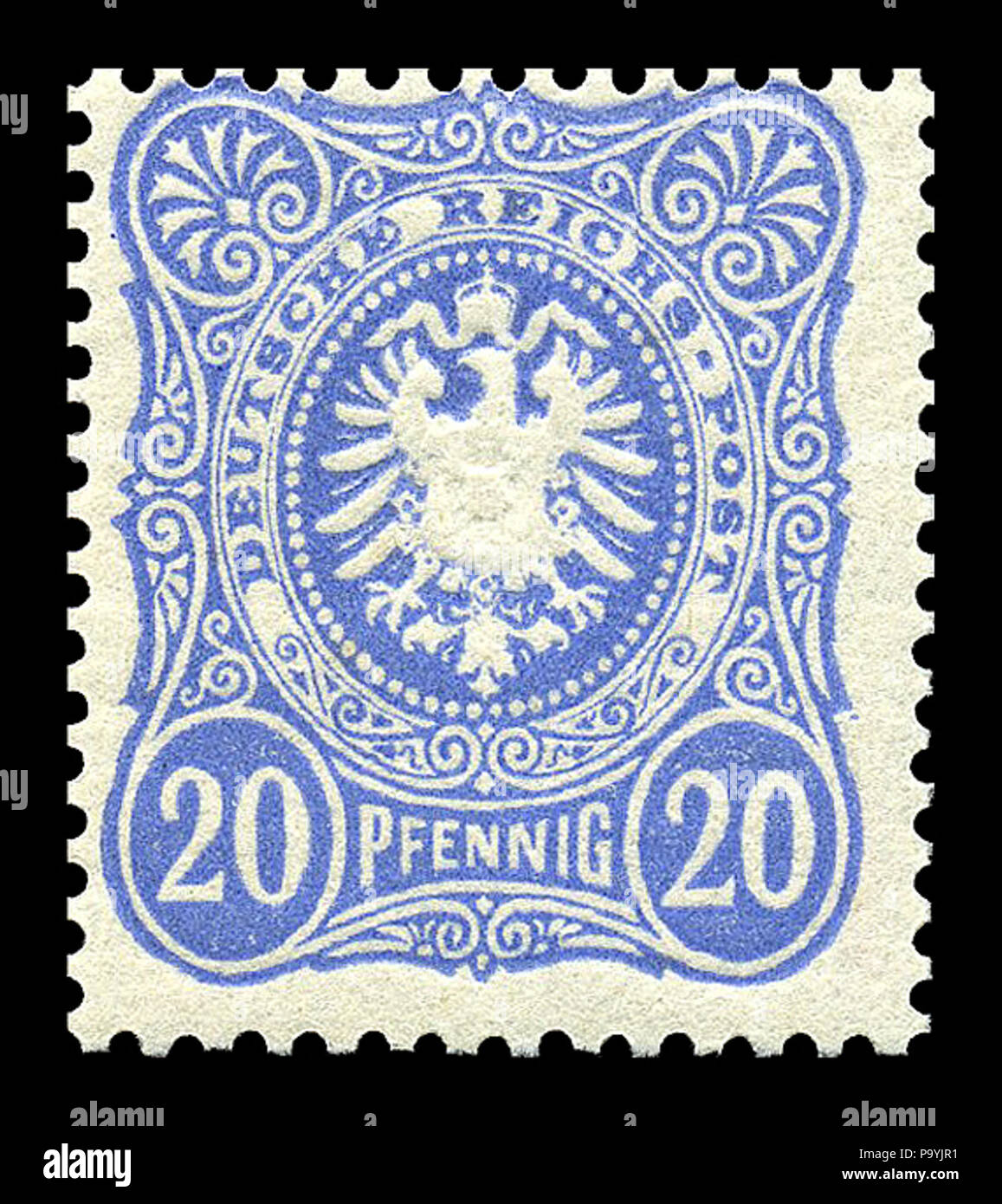
In the German language, Adler is the noun for "eagle." It is a masculine noun (der Adler) that refers to the large bird of prey known for its strength and keen sight. Beyond its biological definition, "Adler" serves as a central pillar of German national identity, appearing as the Bundesadler on official seals, coins, and government buildings.
As of 2026, the word remains one of the most recognizable and symbolically charged terms in the German-speaking world. Whether you are studying the language, researching heraldry, or exploring German history, understanding the nuances of "Adler" requires looking at its grammatical structure, its deep etymological roots, and its pervasive presence in modern culture and statecraft.
Linguistic Profile and Grammatical Usage
The word "Adler" follows standard German grammatical rules for masculine nouns, but it possesses a few characteristics that learners should note. Because the word ends in "-er," its plural form is identical to its singular form in the nominative case, a common feature in German morphology for nouns with this suffix.
Declension of the Noun
To use "Adler" correctly in a sentence, you must apply the correct case endings. In 2026, standard High German (Hochdeutsch) maintains the following declension pattern:
| Case | Singular | Plural |
|---|---|---|
| Nominative (Subject) | der Adler | die Adler |
| Genitive (Possession) | des Adlers | der Adler |
| Dative (Indirect Object) | dem Adler | den Adlern |
| Accusative (Direct Object) | den Adler | die Adler |
An important distinction is the dative plural form, which adds an "-n" (den Adlern). This is a frequent point of error for non-native speakers. For example: Ich gebe den Adlern Futter (I am giving the eagles food).
Gender and Compound Words
"Adler" is strictly masculine. Even when referring to a female eagle, German speakers typically use the masculine noun unless they specify the biological sex using the suffix "-in" (die Adlerin), though this is less common in general conversation than in specialized ornithological contexts.
German is famous for its compound nouns, and "Adler" is a frequent building block. These compounds usually describe specific types of eagles or eagle-like traits:
- Steinadler: Golden eagle (literally "stone eagle").
- Seeadler: White-tailed eagle or sea eagle.
- Fischadler: Osprey (literally "fish eagle").
- Doppeladler: Double-headed eagle, common in historical heraldry.
- Adlerauge: Eagle eye (used to describe someone with excellent vision).
The Etymology of Adler: From "Noble Bird" to Modern German
The history of the word "Adler" is a fascinating journey through Middle and Old High German. The word is an "appellative" compound, meaning it was originally formed by combining two descriptive terms.
The roots of "Adler" lie in the Old High German words adel (noble) and aro (eagle). Over centuries, adel-aro contracted into adelare and eventually became the modern Adler. This transition reflects a linguistic trend where the "noble" prefix was added to distinguish the eagle as the "king of birds," a status it has held in European folklore for millennia.
The aro component is related to the Gothic ara and the Old Norse ari. Interestingly, the English word "erne" (a poetic or dialectal term for a sea eagle) shares the same Germanic ancestor. While English eventually adopted the Anglo-Norman word "eagle" (from the Latin aquila), German retained its native Germanic roots, preserving the "noble" connection in the very name of the bird.
The Federal Eagle: Symbol of the German State
The most prominent use of the word "Adler" in 2026 is in the context of the Bundesadler (Federal Eagle). This is the official heraldic symbol of the Federal Republic of Germany.
Historical Evolution of the German Eagle
The eagle has been a symbol of German authority for over a thousand years. Its use can be traced back to the Roman Empire, where the aquila was the standard of the legions. Charlemagne, seeking to position himself as the successor to the Roman Emperors, adopted the eagle symbol in the 9th century.
- Holy Roman Empire: The eagle became the symbol of the Emperor. Over time, the "Double-Headed Eagle" (Doppeladler) was adopted to represent the dual role of the Emperor as the head of the German kingdom and the Roman Empire.
- The German Confederation and Prussia: In the 19th century, the eagle was a central figure in Prussian heraldry, characterized by its more aggressive, stylized appearance.
- Weimar Republic: After World War I, Germany adopted a simpler, single-headed eagle to symbolize the new republic, stripping away the monarchical crowns and regalia.
- The Third Reich: The National Socialist regime co-opted the eagle (Reichsadler), usually depicted holding a swastika in its talons. This version is legally banned in Germany today under laws prohibiting the use of symbols of unconstitutional organizations.
- Modern Germany (Post-1949): The current Bundesadler is based on the Weimar design. It is intentionally less "martial" in appearance. In the German Bundestag (Parliament), a massive, somewhat rounded version of the eagle hangs on the wall; it is affectionately nicknamed "Die fette Henne" (The Fat Hen) by locals and politicians.
Usage in 2026 Official Capacity
In 2026, you will find the Adler on:
- German Euro coins: The 1-euro and 2-euro coins minted in Germany feature the Federal Eagle.
- Passports and IDs: Every German passport is embossed with the eagle.
- Government Buildings: The eagle signifies the presence of federal authority.
- National Sports Teams: While the German national football team (DFB) uses a stylized eagle on its crest, the bird is a symbol of national pride across various sporting disciplines.
Ornithology: Eagles in the German Wilderness
Beyond the symbolic and linguistic, the "Adler" is a living creature that plays a vital role in the Central European ecosystem. Germany is home to several species, and their protection is a major focus of environmental policy in 2026.
The Steinadler (Golden Eagle)
The Steinadler is primarily found in the Bavarian Alps. As one of the largest birds of prey in Europe, it has a wingspan of up to 2.3 meters. In 2026, the population is carefully monitored by the Bavarian State Office for the Environment. It is a symbol of the rugged beauty of the German highlands.
The Seeadler (White-tailed Sea Eagle)
The Seeadler is the bird that most closely resembles the heraldic Bundesadler. It is found mostly in Northern Germany, particularly in Mecklenburg-Vorpommern and Brandenburg. After being nearly extinct in the mid-20th century, conservation efforts have led to a significant recovery. These birds are often seen near large lakes and the Baltic coast.
Comparison of Major Eagle Species in Germany
| Feature | Steinadler (Golden Eagle) | Seeadler (White-tailed Eagle) | Fischadler (Osprey) |
|---|---|---|---|
| Wingspan | 190–230 cm | 200–240 cm | 145–170 cm |
| Primary Habitat | High mountains, cliffs | Wetlands, coastal areas | Rivers, lakes |
| Diet | Mammals (marmots, hares) | Fish, waterfowl, carrion | Exclusively fish |
| German Status | Rare (Alps only) | Stable/Increasing | Migratory/Protected |
Common Idioms and Phrases Featuring "Adler"
The eagle’s characteristics—keen sight, height, and power—have given rise to several common expressions in the German language.
- Adleraugen haben: "To have eagle eyes." This is used exactly like the English equivalent, meaning someone has exceptionally sharp vision or is very observant. Beispiel: "Meine Mutter hat Adleraugen; sie sieht jeden Fleck auf dem Teppich."
- Mit Adleraugen beobachten: "To watch with eagle eyes." This implies a level of intense, unblinking scrutiny.
- Adlernase: "Eagle nose." A descriptive term for a prominent, aquiline nose.
- Den Adler machen: This is a more modern, colloquial expression often used in sports or leisure (like skiing or jumping) to describe spreading one's arms out like wings.
"Adler" as a Proper Noun: Names and Brands
The word "Adler" is also a very common surname and brand name in Germany, often chosen for the prestige associated with the bird.
Surnames
As a surname, Adler is widespread throughout Germany and among the Jewish diaspora (Ashkenazi). Historically, names were often taken from house signs in medieval cities; a house with an eagle painted on it might lead to the family living there being called "Adler." Famous individuals with this name include the psychologist Alfred Adler and the philosopher Mortimer Adler.
Commercial Branding
Several prominent German companies use the name to project strength and reliability:
- Adler Modemärkte: A well-known German clothing retail chain.
- Adlerwerke: Historically a significant manufacturer of bicycles, cars, and typewriters in Frankfurt.
- Eintracht Frankfurt: This major Bundesliga football club is nicknamed "Die Adler" (The Eagles), and their mascot, Attila, is a live golden eagle that flies in the stadium before matches.
Summary of Key Facts for 2026
If you are communicating in a professional or academic setting in 2026, keep these facts in mind regarding "Adler":
- Legal Status: Use of the eagle in official government logos is protected by law (Urheberrecht and Markengesetz). You cannot use the official Bundesadler for private business without permission.
- Pronunciation: The "A" is a long vowel (like "ah"), and the "d" is soft, followed by a vocalized "r" at the end: /ˈaːdlɐ/.
- Cultural Sensitivity: While the eagle is a proud national symbol, be aware of its historical contexts. Always distinguish between the modern, democratic Bundesadler and historical versions when discussing politics or history.
Frequently Asked Questions
Is "Adler" always capitalized in German?
Yes. In German grammar, all nouns are capitalized regardless of their position in a sentence. Whether you are talking about the bird or the symbol, it is always written as "Adler."
What is the difference between an Adler and a Falke?
An Adler (eagle) is generally much larger and belongs to the family Accipitridae. A Falke (falcon) is smaller, known for its extreme speed, and belongs to the family Falconidae. In German culture, both are respected, but the Adler is the "royal" bird, while the Falke is often associated with hunting (falconry).
Can I use "Adler" to describe a person?
Only metaphorically. You can say someone has an Adlerblick (eagle gaze) or Adleraugen (eagle eyes). Calling someone "an eagle" directly is less common in German than it might be in some other languages, though it can imply they are a high-flyer or a visionary in a business context.
Why does the German eagle on the Euro coin look different from the one in Parliament?
The Bundesadler has several official "stylizations." The version on the coins (Münzadler) is designed for clarity at a small scale. The version in the Bundestag (the Bundestagsadler) is a specific artistic sculpture. Both are legally recognized representations of the same national symbol.
What is a "Doppeladler"?
A Doppeladler is a double-headed eagle. While not the current symbol of Germany, it was the symbol of the Holy Roman Empire and later the Austro-Hungarian Empire. It symbolizes a claim to universal power or the union of two realms.
Practical Recommendation
For those learning German or working with German entities, mastering the word "Adler" is more than a vocabulary exercise; it is an entry point into German civic life. When writing, ensure you use the correct masculine articles (der/des/dem/den). If you are designing materials for a German audience, avoid using eagle imagery that mimics official government seals to prevent trademark or legal issues. For nature enthusiasts, a visit to the Nationalpark Berchtesgaden remains the best way in 2026 to see the Steinadler in its natural habitat, providing a real-world connection to this powerful linguistic symbol.