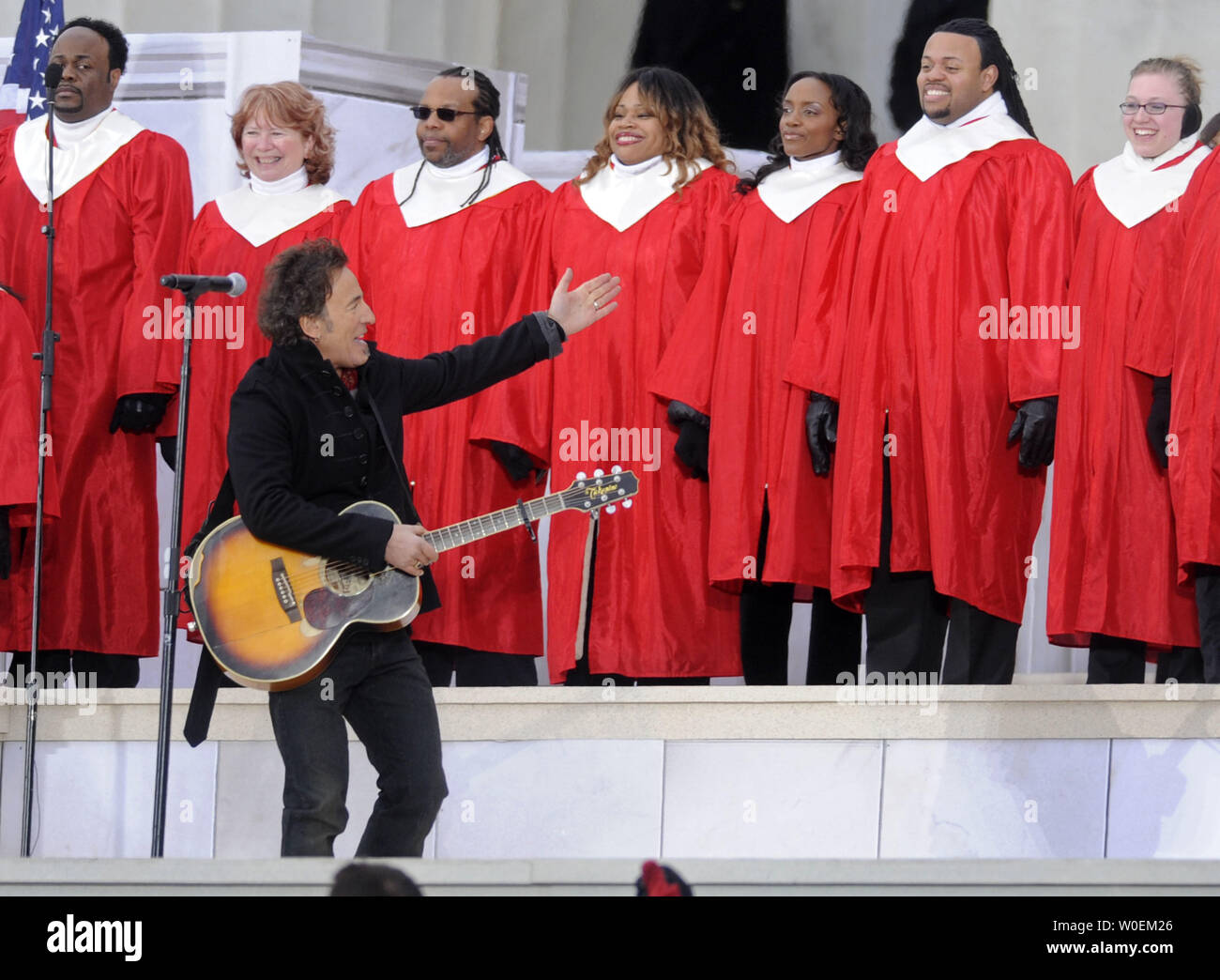
The connection between Abraham Lincoln and Bruce Springsteen lies in their shared role as myth-makers and chroniclers of the American experience, with Springsteen frequently drawing on Lincoln’s rhetorical cadence, moral gravity, and vision of democracy to frame the struggles of the American working class.
The Shared American Narrative: From Prairie State to Jersey Shore
To understand why Abraham Lincoln and Bruce Springsteen are so frequently invoked in the same cultural breath, one must look at how both men became symbols of the American promise and its persistent fractures. Abraham Lincoln, born in a log cabin in Kentucky and raised on the frontiers of Indiana and Illinois, rose to lead the nation through its greatest moral and existential crisis. Bruce Springsteen, born in Long Branch, New Jersey, and raised in the working-class town of Freehold, built a monumental musical catalog around the sweat, grit, and dashed hopes of ordinary Americans.
While separated by a century and a medium—politics versus rock and roll—both figures wrestled with the same fundamental question: Can a nation conceived in liberty and dedicated to equality sustain itself when economic and social pressures tear at its fabric? Springsteen’s songwriting often reads like a musical extension of Lincoln’s Gettysburg Address, invoking a landscape where the ideals of freedom and opportunity collide with the grim realities of factory closures, economic inequality, and spiritual exhaustion.
By examining their lives, public personas, and cultural outputs, observers find a fascinating dialogue across time. Lincoln provided the constitutional and moral framework of modern American democracy, while Springsteen provides the emotional soundtrack of citizens trying to live up to that framework in their daily lives.
Rhetorical Architecture: The Language of the Common Man
One of the most striking parallels between Lincoln and Springsteen is their mastery of plainspoken, yet deeply resonant language. Neither man relied on academic pretense or high-flown aristocratic diction to connect with audiences. Instead, both utilized the vernacular of ordinary people to address monumental themes.
Lincoln’s Plain Style and Biblical Cadence
Lincoln’s speeches—most notably the Gettysburg Address, the Second Inaugural Address, and the House Divided speech—are masterpieces of compression and clarity. He drew heavily on the King James Bible and common idioms, avoiding the flowery, ornamental prose popular among politicians of the 19th century.
- Economy of Words: Lincoln could summarize the moral weight of a civil war in fewer than 300 words at Gettysburg.
- Moral Clarity: His phrasing framed complex legal and political disputes as stark moral imperatives accessible to any farmer or laborer.
- Inclusivity: By speaking in terms of "we" and "the people," he positioned himself not above the electorate, but as an instrument of a collective destiny.
Springsteen’s Narrative Lyricism
Similarly, Springsteen writes lyrics that function as micro-histories of American life. Songs like "The River," "Born in the U.S.A.," "Atlantic City," and "Youngstown" do not deal in abstract political theory; they focus on specific people facing concrete hardships.
- Character-Driven Stories: Springsteen populates his songs with factory workers, veterans, lovers, and drifters who feel the direct impact of macroeconomic shifts.
- The Epical Everyday: Much like Lincoln elevated the common soldier and citizen to a place of historical significance, Springsteen treats the struggles of an unemployed steelworker with operatic gravity.
- Resonant Refrains: His choruses rely on stark, memorable imagery—highway patrolmen, dark sprawling parking lots, dusty operational machinery—that grounds high-minded ideals in physical reality.
The Politics of the Frontier and the Factory Floor
Geography and background deeply shaped the worldviews of both Lincoln and Springsteen. Their respective origins positioned them as outsiders who managed to diagnose the national malaise better than the entrenched elites of their times.
| Dimension | Abraham Lincoln | Bruce Springsteen |
|---|---|---|
| Geographic Roots | Frontier Midwest (Kentucky, Indiana, Illinois) | Working-Class Northeast (Freehold, New Jersey) |
| Core Medium | Legal briefs, political debates, presidential addresses | Rock and roll albums, live stadium performances, memoirs |
| Central Conflict | Preservation of the Union and the abolition of chattel slavery | Economic displacement, deindustrialization, and the American dream |
| Audience | 19th-century citizens, soldiers, and politicians | 20th- and 21st-century working-class concertgoers |
| Philosophical Anchor | The Declaration of Independence as a living promise | The open highway as a symbol of escape and reinvention |
Lincoln’s experience as a circuit-riding lawyer in Illinois exposed him to the day-to-day disputes, legal struggles, and aspirations of frontier settlers. He understood the legal mechanisms of property and contract, but he also recognized the higher law of human equality.
Springsteen grew up in a household shadowed by economic instability, wartime trauma, and the decline of American manufacturing. His father struggled to find steady work, an experience that imprinted upon Springsteen a lifelong empathy for the blue-collar worker. When Springsteen sings about closed factories in the Rust Belt or the emotional weight of paying bills, he is tracking the modern consequences of the very economic freedoms Lincoln's America helped unleash.
Historical Intersections and Critical Reception
Over the decades, cultural critics, historians, and Springsteen himself have frequently drawn explicit lines between the historical president and the musician.
Springsteen has often referenced American history and iconography in his work, positioning his albums as chapters in a continuing story of national identity. When he collaborated with President Barack Obama on the podcast and subsequent book Renegades: Born in the Us, the conversation frequently circled back to the foundational myths of America—myths that are heavily indebted to Lincoln's vision.
Furthermore, historians of American culture have noted that Springsteen's persona functions almost as a secular pastoral ministry, channeling the populist spirit that Lincoln tapped into during his debates with Stephen Douglas and his subsequent presidency. Both figures reject cynicism in favor of a fierce, albeit complicated, faith in the democratic experiment.
Common Misconceptions: Myth Versus Reality
When evaluating cultural icons like Lincoln and Springsteen, observers often fall into specific traps of idealization or misinterpretation.
- The Myth of the Pure Populist: Both men have occasionally been co-opted by opposing political factions. Lincoln was a sophisticated corporate lawyer and politician who masterminded the expansion of federal power, not a simple backwoods mystic. Springsteen, despite his working-class image, is a wealthy global rock star whose life experience has long transcended the assembly lines of New Jersey.
- Oversimplified Nationalism: Neither figure offers uncritical patriotism. Lincoln’s Second Inaugural Address is a profound meditation on national guilt and divine judgment regarding slavery. Springsteen’s "Born in the U.S.A." is frequently misunderstood as a jingoistic anthem when it is actually a devastating critique of how veterans were abandoned after the Vietnam War.
- The Nostalgia Trap: Critics sometimes accuse both men of romanticizing a pastoral or industrial past that never truly existed. However, a close reading of Lincoln's speeches and a close listening to Springsteen's darker albums (such as Nebraska or The Ghost of Tom Joad) reveal a clear-eyed recognition of violence, poverty, and despair.
Practical Takeaways for Understanding American Cultural History
For students of American history, literature, and popular culture, analyzing the connection between Abraham Lincoln and Bruce Springsteen offers a lens into how national identity is constructed and maintained.
- Examine Primary Sources: Do not rely on summaries of Lincoln's speeches or popular interpretations of Springsteen's hits; read the unedited texts of the Gettysburg Address and listen to full album sequences like Darkness on the Edge of Town.
- Contextualize the Environment: Recognize how Lincoln's frontier upbringing and Springsteen's blue-collar Jersey upbringing forged distinct perspectives on labor, freedom, and dignity.
- Look Past the Symbols: Appreciate both men as complex historical actors who used their respective platforms to question, challenge, and ultimately reaffirm the promise of American democracy.
By keeping these principles in mind, researchers and fans alike can appreciate how the words spoken in a cemetery in Pennsylvania in 1863 continue to echo through the electric guitars of the Jersey Shore.