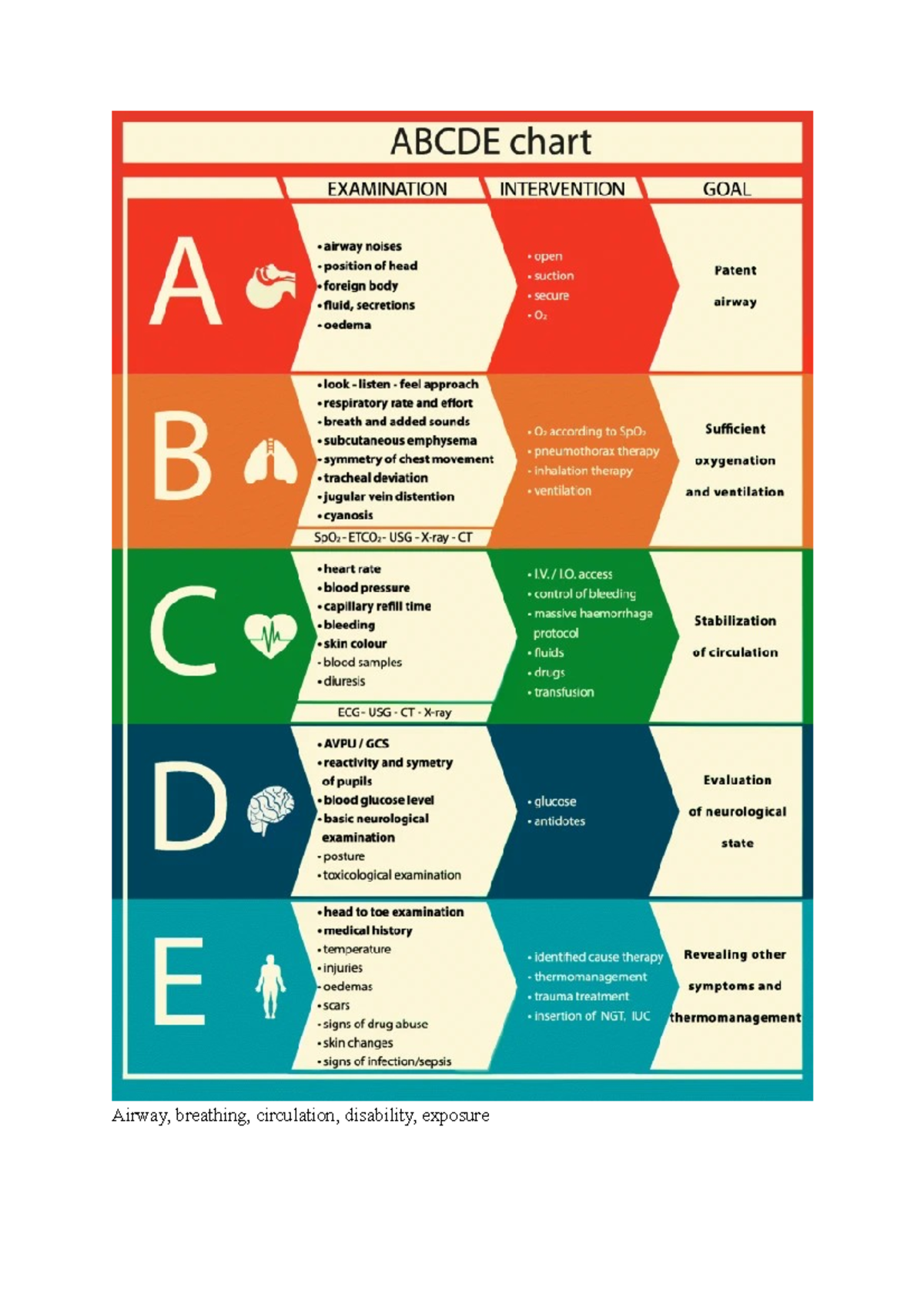
The term "ABCD" is a highly versatile acronym utilized across various professional sectors, most notably in medicine, education, and business. While its meaning is entirely dependent on the industry, its primary and most critical global application is in emergency medicine as a mnemonic for life-saving trauma assessment. Beyond clinical environments, it serves as a foundational framework for organizational development, pedagogical theory, and even nutritional labeling.
Understanding which "ABCD" applies to your specific inquiry requires an analysis of the situational context. Whether you are a healthcare practitioner refining your triage skills, a project manager standardizing risk assessment, or an educator developing curriculum goals, the acronym consistently serves as a structural tool to simplify complex processes into sequential, memorable steps.
Clinical Emergency Medicine: The Lifesaving Mnemonic
In the context of pre-hospital and hospital-based emergency care, ABCD is perhaps the most recognized clinical algorithm in the world. It provides a standardized approach to assessing an acutely ill or injured patient. By following this sequence, medical personnel ensure they address the most life-threatening issues before moving to less urgent diagnostics.
The Standard Clinical Sequence
- Airway (with cervical spine protection): The absolute priority is to ensure the patient has a patent airway. In trauma, this includes manual stabilization of the cervical spine to prevent neurological damage.
- Breathing: Once the airway is clear, the provider must verify that the patient is breathing adequately. This involves assessing the rate, depth, and symmetry of chest movement, as well as checking for signs of hypoxia or tension pneumothorax.
- Circulation: After oxygenation is addressed, the focus shifts to the cardiovascular system. Practitioners check for pulses, control active hemorrhaging, and monitor for signs of shock, such as hypotension or tachycardia.
- Disability (Neurological): This stage involves a rapid assessment of neurological status. The most common tool used here is the Glasgow Coma Scale (GCS) or a simplified AVPU scale (Alert, Voice, Pain, Unresponsive) to determine the patient’s level of consciousness.
Modern protocols often extend this to ABCDE, adding Exposure/Environment to prevent hypothermia and complete a full physical examination. Understanding this progression is essential for any First Aid or Advanced Life Support certification.
Educational Framework: The ABCD Model of Learning Objectives
In pedagogy and instructional design, ABCD stands for Audience, Behavior, Condition, and Degree. This framework is used by educators and curriculum developers to write precise, measurable learning objectives. Using this model ensures that both the instructor and the learner understand exactly what success looks like upon the completion of a lesson or course.
Components of the Educational ABCD Model
- Audience: Identifying the specific group of learners. Example: "The nursing student..."
- Behavior: Defining the observable action the learner must perform. Example: "...will demonstrate proper sterile technique..."
- Condition: Describing the circumstances or tools provided for the task. Example: "...using a manikin and sterile kit..."
- Degree: Specifying the criteria for acceptable performance. Example: "...without any breaches in the sterile field."
By adhering to this structure, educators move away from vague goals like "learn about" or "understand," which are difficult to quantify, toward actionable outcomes that can be objectively tested.
Business and Corporate Management: Strategic Applications
In the corporate world, ABCD is frequently employed as an acronym for risk management or project prioritization. While less standardized than the medical mnemonic, it is often utilized in corporate environments to categorize tasks or risks.
The ABCD Risk Assessment Matrix
In project management, ABCD often correlates to:
- A - Assets: Identifying the critical infrastructure or resources that must be protected.
- B - Business Continuity: Planning for how operations will continue during a disruption.
- C - Communication: Establishing the protocols for keeping stakeholders informed.
- D - Disaster Recovery: The technical and procedural steps taken to restore systems after a failure.
This structure helps project managers move beyond reactive crisis management into proactive resilience planning. By assigning every potential risk or task into an "ABCD" bucket, teams can effectively allocate limited resources to the areas that pose the highest threat or offer the most significant value.
Comparison of Common ABCD Interpretations
The following table summarizes how the "ABCD" abbreviation functions across different professional domains, highlighting the core intent behind the mnemonic in each field.
| Industry | Core Components | Primary Intent |
|---|---|---|
| Medicine | Airway, Breathing, Circulation, Disability | Life-saving triage prioritization |
| Education | Audience, Behavior, Condition, Degree | Writing measurable learning objectives |
| Business | Assets, Business, Communication, Disaster | Risk management and continuity planning |
| Dietetics | A, B, C, D (Vitamins) | Nutritional classification and health status |
| Technology | AI, Blockchain, Cloud, Data | Key pillars of modern digital transformation |
Nutrition and Health: The ABCD of Vitamins
Beyond professional frameworks, the ABCD acronym is frequently used in public health to categorize essential vitamins. This is a common heuristic used in patient education to explain the roles of various micronutrients in human physiology.
- Vitamin A: Essential for vision, immune function, and skin health.
- Vitamin B: A complex group of water-soluble vitamins crucial for energy metabolism and neurological function.
- Vitamin C: A powerful antioxidant that supports collagen synthesis and immune responses.
- Vitamin D: Vital for calcium absorption, bone health, and endocrine regulation.
This classification serves as a foundational pedagogical tool for dietitians and nutritionists when explaining complex biochemical needs to a lay audience.
Common Misconceptions and Limitations
A recurring error when dealing with "ABCD" is assuming that the acronym carries the same meaning across all documents or presentations. Because the abbreviation is highly generic, it is susceptible to "context collapse," where a reader assumes the medical meaning when the author is discussing business strategy.
Navigating Ambiguity
- Check the Source Domain: If you encounter the term in a hospital or emergency room, it is invariably the trauma mnemonic. If you find it in a syllabus or course catalog, it refers to the educational objectives model.
- Look for Modifiers: Often, professionals will clarify the acronym by using a prefix, such as "Medical ABCD" or "Learning Objective ABCD." If the text lacks this, look for contextual clues in the surrounding paragraphs.
- Understand the Scalability: Some frameworks use "ABCDE" or "ABCDX." Always confirm if the specific field you are investigating has updated its standard to include additional letters for more complex assessments.
Frequently Asked Questions
1. Is the medical ABCD mnemonic the same as CPR?
No, though they are related. The ABCD mnemonic is used to assess the patient, whereas CPR (Cardiopulmonary Resuscitation) is a set of physical actions taken to restore circulation and oxygenation. ABCD is the assessment sequence that leads a provider to determine that CPR is necessary.
2. Can the ABCD model be used for non-academic goals?
Yes. The ABCD model (Audience, Behavior, Condition, Degree) is highly effective for any professional development or employee training program. It is widely used in corporate L&D (Learning and Development) departments to ensure that training initiatives lead to measurable increases in workplace performance.
3. Does "ABCD" have a specific legal meaning?
"ABCD" is sometimes used in legal contexts as an acronym for specific contract clauses or regulatory policies (such as "Asset-Based Compensation Disclosure"), but these are niche and subject to the specific jurisdiction. There is no universal legal definition for ABCD.
4. Why is "Disability" the D in the medical version?
In the context of the medical ABCD, "Disability" refers to the neurological state of the patient. It represents a potential "disability" of the central nervous system, such as a traumatic brain injury or stroke. It is placed after circulation because, while brain function is vital, a patient cannot maintain oxygenation to the brain if their circulation is failing.
5. Are there other versions of the ABCD mnemonic?
Yes, there are dozens of variations. For instance, in the field of accounting, it may refer to specific audit protocols. Always verify the professional standard for the specific industry you are researching, as acronyms are frequently repurposed.
Final Recommendations for Practitioners
To effectively utilize the "ABCD" abbreviation, you must first define the context of your work. If you are preparing for a certification or a high-stakes professional presentation, do not rely on the acronym alone. Always expand the letters upon first mention within your document or speech.
For those in medical training, practice the sequence until it becomes second nature, as clinical proficiency is measured by the speed and accuracy with which you can execute the ABCD assessment during a crisis. For educators and project managers, focus on the "Degree" or "Disaster" components—these are the most common areas where the ABCD model fails, usually because the metrics for success or recovery were too vaguely defined.
By standardizing your approach around the specific version of ABCD relevant to your field, you minimize error and ensure that your communications, assessments, and strategies are both clear and actionable.