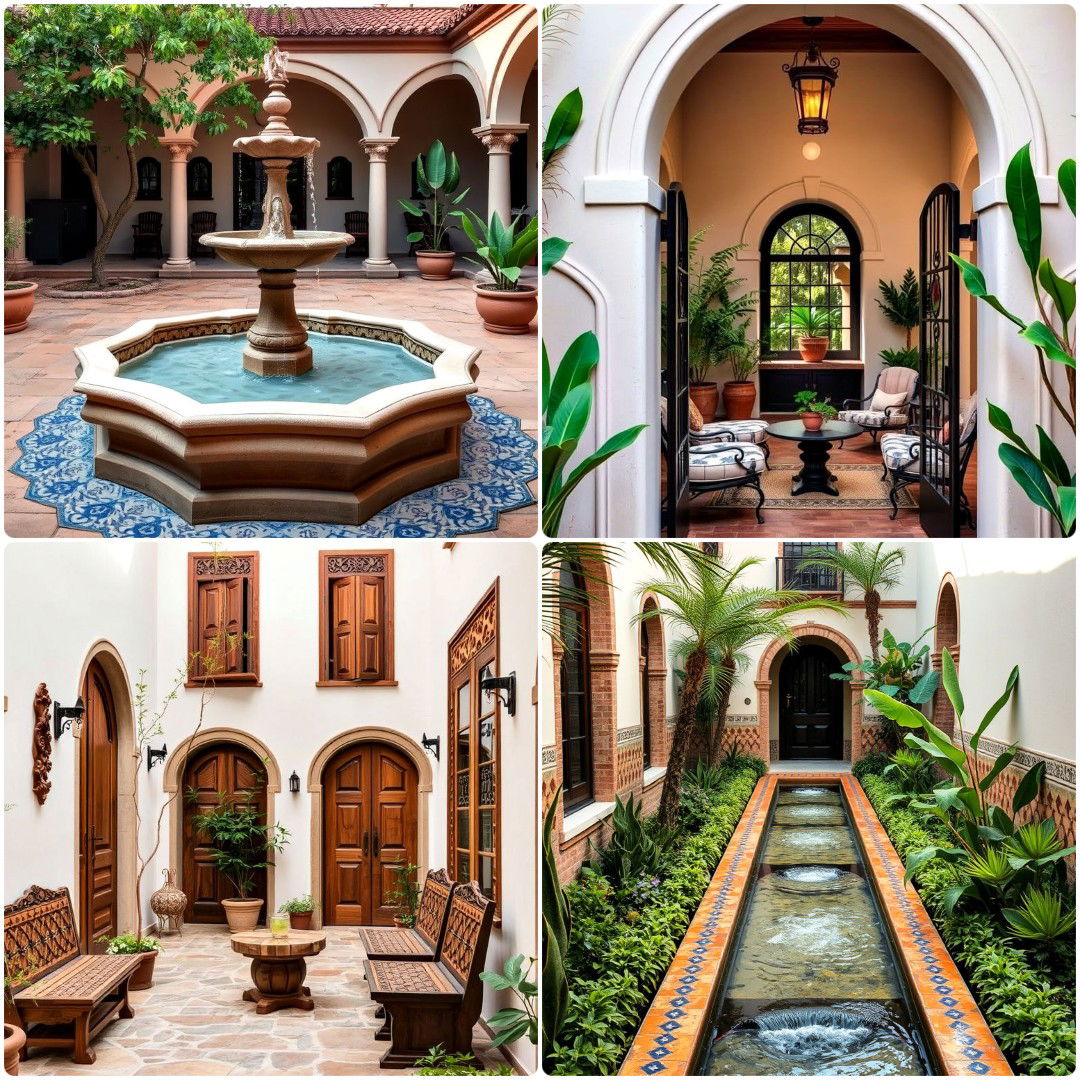
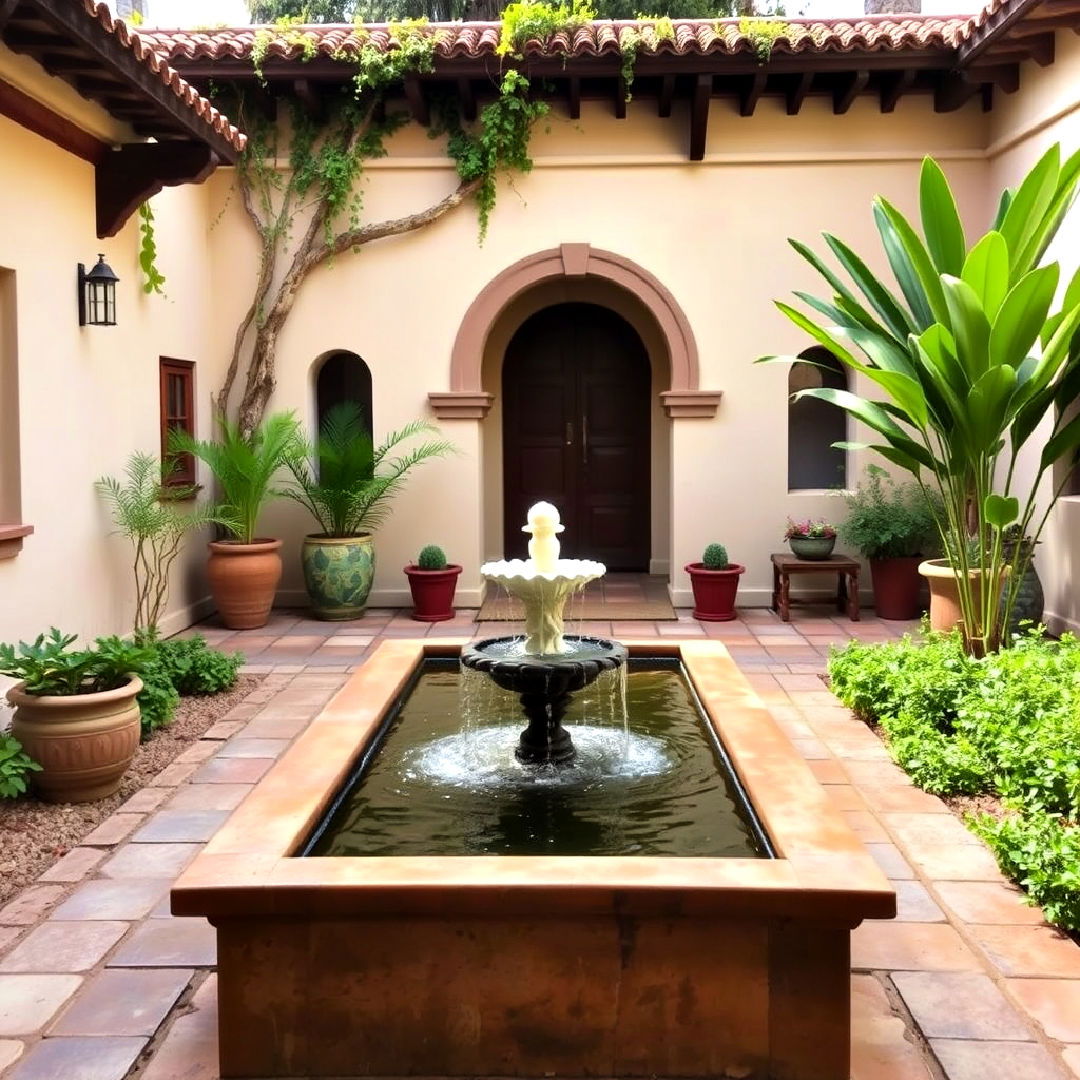
The most widely recognized official abbreviation for "courtyard" is CTYD. Standardized by the United States Postal Service (USPS Publication 28) for mailing addresses and geographic databases, CTYD clearly distinguishes a courtyard from a court (CT). In architectural drafting, real estate listings, and general writing, CTYD or ctyd. remains the accepted standard.
Primary Abbreviations for Courtyard
While "courtyard" is a common noun in architecture, landscape design, real estate, and postal systems, its abbreviated form varies depending on the professional context. Using the correct abbreviation prevents confusion between similar spatial terms like court, court circle, or citadel.
- CTYD: The official, standard abbreviation recognized by postal authorities, real estate boards, and GIS mapping systems. It eliminates ambiguity because it retains the key consonants of both syllables ("court" and "yard").
- CTYD. / ctyd.: The standard punctuated form used in formal prose, literary citations, footnotes, and general lexicography.
- CT: Occasionally used as a street suffix abbreviation in municipal databases, though postal guidelines designate CT specifically for Court. Using CT for Courtyard is generally discouraged to prevent address delivery errors.
Understanding which format to apply depends entirely on the field in which you are writing. A blueprint annotation follows different industry standards than a postal address or a legal land survey.
Postal Addressing and Geographic Standards
In postal administration and spatial data management, precision is essential for automated sorting machinery, emergency dispatch systems, and logistics software.
USPS Publication 28 Standards
The United States Postal Service (USPS) maintains strict rules for address data formatting, documented in USPS Publication 28: Postal Addressing Standards. Appendix C1 of Publication 28 explicitly lists approved street suffix abbreviations to ensure uniform address processing across nationwide distribution networks.
Under USPS standards:
- COURT normalizes to CT
- COURTYARD normalizes to CTYD
- COURTYARDS normalizes to CTYDS
For example, an address written as 1044 Courtyard Plaza must be formatted on official mailings as 1044 CTYD PLZ or 1044 COURTYARD PLZ depending on whether "Courtyard" functions as the primary street name or a suffix. When "Courtyard" is designated as the street suffix itself (e.g., 1044 Oak Courtyard), the standard USPS postal output is:
1044 OAK CTYD
USPS automated optical character readers (OCR) strip punctuation and convert letters to uppercase. Therefore, when writing for postal compliance, never include periods (e.g., use CTYD, not ctyd.).
GIS and Emergency Services (NENA Standards)
Geographic Information Systems (GIS) and Next Generation 911 (NG911) databases rely on standards set by the National Emergency Number Association (NENA) and the Federal Geographic Data Committee (FGDC). These bodies mirror USPS suffix tables to maintain spatial database integrity.
In GIS datasets, using CTYD instead of CT ensures that computer-aided dispatch (CAD) systems accurately route emergency vehicles to a courtyard development rather than a cul-de-sac designated as a "Court."
Architectural, Engineering, and Blueprint Conventions
Architectural drawings, construction plans, and building control schedules demand concise annotations due to spatial constraints on CAD (Computer-Aided Design) sheets and BIM (Building Information Modeling) software models.
Standard Drafting Abbreviations
In architectural drafting—guided by recommendations from the American National Standards Institute (ANSI) and the United States National CAD Standard (NCS)—abbreviations are written in all-capital letters without trailing periods.
- CTYD: Used on site plans, landscaping overlays, floor plans, and room finish schedules to identify exterior or semi-enclosed courtyard spaces (e.g.,
CTYD FINISH SCHEDULE,ENTRY CTYD ELEVATION). - COURT: Preferred when referring strictly to sports courts (e.g., basketball or tennis courts) to avoid confusion with architectural open-air courtyards.
- ATR: Frequently used for an atrium, which differs from a courtyard by being fully enclosed with a transparent or translucent roof structure.
Floor Plan Annotations
When labeling zones on architectural layouts, space planning conventions prioritize brevity to keep drawing lines legible:
- MAIN STRUCTURE
- (Sliding Glass Door)
- CTYD
- GARDEN
In room schedules, spatial attributes for courtyards might appear as:
Space Identifier: CTYD-01Surface Material: Pavers / BluestoneDrainage Spec: Catch Basin Type B
Real Estate Listings and Property Valuation
In real estate marketing, Multiple Listing Service (MLS) databases, and formal property appraisals, abbreviations save space in character-limited description fields.
MLS Outdoor Amenity Codes
Real estate agents and listing aggregators utilize standardized property codes to highlight key residential features. While local real estate boards may vary slightly, standard shorthand includes:
- CTYD: Private or shared outdoor courtyard space.
- PAT: Patio (ground-level paved area, typically un enclosed by structural walls).
- DCK: Deck (raised wooden or composite outdoor platform).
- BALC: Balcony (elevated platform projecting from an upper story).
- ATRIUM: Atrium (interior glass-roofed courtyard).
A typical MLS property description line might read:
"Updated 3BD/2BA townhome w/ updated kit, hardwd flrs, attached 2-car gar, & private brick CTYD."
Uniform Appraisal Dataset (UAD) Rules
For mortgage underwriting through Fannie Mae and Freddie Mac, appraisers follow the Uniform Appraisal Dataset (UAD) specifications. When evaluating exterior amenities and site features:
- Outdoor living areas enclosed by building walls are categorized as courtyard amenities.
- Appraisers list these features in the site description area using standard narrative abbreviations like CTYD to confirm that the area is distinct from standard yard footage or open patios.
Comparison of Courtyard Abbreviations Across Domains
The following reference table outlines the accepted forms, standards authorities, punctuation rules, and examples for abbreviating "courtyard" across major industries.
| Domain / Industry | Recommended Abbreviation | Governing Body / Standard | Punctuation & Case | Example Application |
|---|---|---|---|---|
| Postal / Mailing | CTYD |
USPS Publication 28 | Uppercase, No Period | 742 EVERGREEN CTYD |
| GIS & Mapping | CTYD |
NENA / FGDC Standards | Uppercase, No Period | Attribute: St_Suffix = CTYD |
| Architectural CAD | CTYD |
US National CAD Standard | Uppercase, No Period | PLAN DETAIL - CTYD WALL |
| Real Estate (MLS) | CTYD |
Regional MLS Associations | Uppercase, No Period | REMARK: PRIV CTYD W/ FOUNTAIN |
| General Prose / Writing | ctyd. or ct. |
Chicago Manual / APA | Lowercase, With Period | "The villa features a 500 sq. ft. ctyd." |
| Legal Property Deeds | Fully Spelled Out | Local Land Registries | Title Case / Uppercase | "Lot 4 of the Magnolia Courtyard Tract" |
Grammar, Punctuation, and Contextual Guidelines
Selecting the right style for writing "courtyard" in abbreviated form depends on sentence context, publication guidelines, and visual presentation.
Punctuation Rules
- Technical and Formal Systems: Do not use periods when abbreviating courtyard for postal addresses, CAD files, database fields, or real estate codes (
CTYD). - General Prose and Editorial Writing: Use a trailing period when writing in lower case within formal essays or print publications (
ctyd.).
Preventing Abbreviation Ambiguity
Because several words share initial letters with "courtyard," using shortened forms incorrectly can create misunderstandings:
- CT can mean Court, Connecticut, Computed Tomography (medical scan), or Current Transformer (electrical engineering). Avoid using CT for courtyard unless context makes it impossible to misinterpret.
- Ct. with a single capital letter often denotes Count (title) or Court (legal tribunal).
- ct. in lower case can represent carat (gemstones), cent (currency), or count (quantity).
To eliminate risk, adopt CTYD as your universal abbreviation for courtyard.
Common Pitfalls to Avoid
- Using "CT" on Official Postal Mail: If a street is named Courtyard Lane, abbreviating it as
CT LNcan confuse automated postal sorters into searching for Court Lane. Always useCTYD LN. - Abbreviating in Legal Land Descriptions: In property deeds, mortgages, and title policies, avoid abbreviating "courtyard" entirely. Legal descriptions require fully written names (e.g., "Courtyard Manor Condominium") to maintain legal enforceability and prevent title search errors.
- Mixing Up Courtyard and Atrium: Do not use CTYD when referencing an indoor, glass-covered central space. Use ATRIUM or ATR, as structural open-air exposure defines a courtyard under municipal building codes.
Frequently Asked Questions
What is the official USPS abbreviation for courtyard?
The official USPS abbreviation for courtyard is CTYD. It is defined in USPS Publication 28, Appendix C1, as the standard postal alpha code for the street suffix "Courtyard."
Can "CT" be used as an abbreviation for courtyard?
While CT is sometimes used informally, it officially stands for "Court." Using CT for courtyard causes confusion in databases and postal delivery. CTYD is the correct, unambiguous abbreviation.
How do you abbreviate courtyard on architectural floor plans?
On architectural blueprints and CAD drawings, courtyard is abbreviated as CTYD in all capital letters without a period, following National CAD Standards.
What is the difference between CTYD and PAT in real estate listings?
In real estate listings, CTYD stands for Courtyard (an outdoor area enclosed by walls or building structures), while PAT stands for Patio (an open paved area at ground level that may not be enclosed by walls).
Is courtyard abbreviated with a period?
In postal addressing, CAD drawings, and real estate databases, it is written without a period (CTYD). In formal editorial writing, literary citations, and standard prose, it may be written in lowercase with a period (ctyd.).
Summary and Recommendations
When choosing an abbreviation for "courtyard," follow these actionable rules based on your specific use case:
- For Mailing and Postal Addresses: Always use CTYD in all caps with no punctuation, matching USPS Publication 28 standards.
- For Architectural Blueprints: Label spaces and schedules as CTYD to maintain clear CAD conventions.
- For Real Estate and Property Listings: Use CTYD to highlight private outdoor courtyards in character-limited MLS entries.
- For Formal Writing and Prose: Use ctyd. when brevity is required, or spell the word out completely to maintain reading flow.
- For Legal and Title Documents: Spell out "Courtyard" completely to ensure absolute legal precision.
By adhering to CTYD as your standard, you ensure clarity across all technical, administrative, and creative applications.