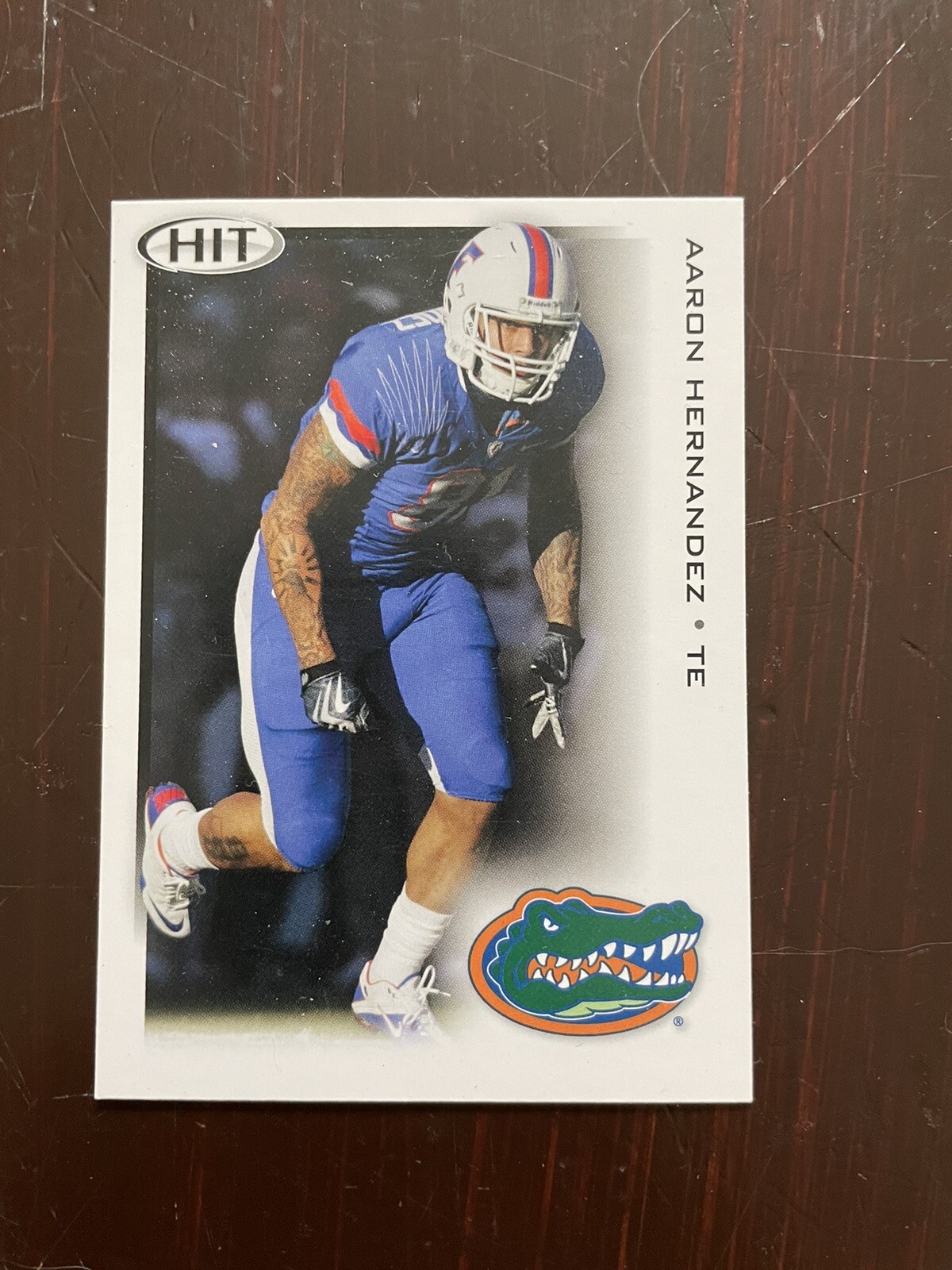
Aaron Hernandez's connection to the state of Florida encompasses his standout collegiate football career at the University of Florida, his subsequent professional transition, and a series of legal controversies that intersected with the state following his time as a Gator. From winning a BCS National Championship in Gainesville to being investigated and later tried for a 2012 Florida shooting—for which he was ultimately acquitted—the Florida chapters of Hernandez's life remain a complex and heavily scrutinized part of his historical record.
The Collegiate Career at the University of Florida
Aaron Hernandez arrived in Gainesville, Florida, in 2007 as one of the most highly touted tight end prospects in the country. Hailing from Bristol, Connecticut, Hernandez committed to the University of Florida under head coach Urban Meyer, choosing the Gators over several other powerhouse programs.
Recruiting and Arrival in Gainesville
As a five-star recruit out of Bristol Central High School, Hernandez possessed an extraordinary blend of size, speed, and pass-catching ability that modern offensive coordinators coveted. When he enrolled at Florida, he joined a burgeoning powerhouse program that had captured the 2006 national championship.
Initially, the transition from New England to the SEC required both athletic and personal adjustments. Hernandez enrolled early, participating in spring practices ahead of his true freshman season in 2007. This early start allowed him to absorb offensive coordinator Dan Mullen's playbook and build a rapport with the team's quarterbacks, laying the groundwork for an impactful collegiate career.
Key Athletic Achievements and Statistics
During his three seasons with the Florida Gators (2007–2009), Hernandez developed from a promising backup into one of the most dominant tight ends in college football history.
- 2007 (Freshman): Played in 13 games, recording 9 receptions for 151 yards. He primarily served as a backup to veteran tight end Cornelius Ingram.
- 2008 (Sophomore): Saw significantly increased playing time, hauling in 34 receptions for 381 yards and 5 touchdowns. He was an integral part of the offense that propelled the Gators to the 2008 BCS National Championship.
- 2009 (Junior): Put together a historic consensus All-American campaign. He led all Football Bowl Subdivision (FBS) tight ends with 68 receptions for 850 yards and 5 touchdowns.
His peak individual achievement came when he won the prestigious John Mackey Award in 2009, presented annually to the nation's top college tight end. He was also named a first-team All-SEC selection and a unanimous All-American.
The 2008 BCS National Championship Season
The pinnacle of Hernandez’s time at the University of Florida was the 2008 season, which culminated in a 24–14 victory over the Oklahoma Sooners in the BCS National Championship Game played in Miami, Florida.
Operating alongside quarterback and Heisman Trophy winner Tim Tebow, wide receiver Percy Harvin, and an elite supporting cast, Hernandez proved to be a critical weapon in high-leverage situations. In the championship game itself, he caught 5 passes for 57 yards. His ability to line up as a traditional inline tight end, in the slot, or split out wide created matchup nightmares for opposing defenses, serving as an early prototype for the modern "move" tight end position in the NFL.
| Season | Games Played | Receptions | Receiving Yards | Average Yards Per Catch | Touchdowns |
|---|---|---|---|---|---|
| 2007 | 13 | 9 | 151 | 16.8 | 0 |
| 2008 | 14 | 34 | 381 | 11.2 | 5 |
| 2009 | 13 | 68 | 850 | 12.5 | 5 |
| Total | 40 | 111 | 1,382 | 12.5 | 10 |
Transition to the NFL and Professional Career
Following his junior season, Hernandez opted to forgo his final year of college eligibility and entered the 2010 NFL Draft. Despite his on-field dominance, concerns regarding character, off-field associations, and reportedly failed drug tests during his time at Florida caused his draft stock to slip.
The New England Patriots drafted Hernandez in the fourth round (113th overall) of the 2010 NFL Draft. In an ironic twist of organizational fortune, the Patriots also drafted tight end Rob Gronkowski in the second round of the same draft. Together, Hernandez and Gronkowski formed one of the most prolific dual-tight-end tandems in NFL history, leading the Patriots to Super Bowl XLVI during the 2011 season and earning Hernandez a lucrative five-year contract extension in 2012.
The 2012 Double-Homicide Trial and Florida Legal Proceedings
While Hernandez's professional career flourished in Foxborough, Massachusetts, his connections to Florida resurfaced dramatically years later in connection with a violent crime in downtown Orlando.
The July 2012 Orlando Shooting
On July 16, 2012, two men—Daniel de Abreu and Safiro Furtado—were shot and killed while sitting in a BMW at a traffic light in downtown Orlando, Florida. A third man was seriously injured. At the time, the case remained unsolved, and local law enforcement searched for leads regarding a dark SUV involved in the shooting.
Following Hernandez’s arrest in Massachusetts in June 2013 for the unrelated murder of Odin Lloyd, investigators began examining his possible links to other violent incidents, including the Orlando double homicide.
Indictment and Trial
In May 2014, a Florida grand jury indicted Aaron Hernandez on two counts of first-degree murder for the deaths of de Abreu and Furtado, along with multiple counts of attempted murder for shots fired at other occupants of the vehicle.
Prosecutors alleged that Hernandez became enraged after an accidental bump spilled a drink on him inside an Orlando nightclub earlier that night, prompting him to follow the victims in an SUV and open fire into their car.
The 2017 Verdict
The trial took place in a Florida courtroom in early 2017, just as Hernandez was already serving a life sentence without the possibility of parole in Massachusetts for the Odin Lloyd murder.
During the trial, the defense team, led by attorney Jose Baez, successfully argued that an associate of Hernandez, Alexander Bradley, was the actual shooter. Bradley had been granted immunity to testify against Hernandez, but defense attorneys exposed inconsistencies in his testimony and pointed to his criminal background.
In April 2017, a Florida jury acquitted Aaron Hernandez of the first-degree murders of Daniel de Abreu and Safiro Furtado, as well as the attempted murder charges related to the other passengers. However, the jury did find him guilty of a single count of possession of a firearm by a convicted felon, for which he received an additional prison sentence. Days after the verdict, Hernandez died by suicide in his Massachusetts prison cell.
Frequently Asked Questions
What years did Aaron Hernandez play football at the University of Florida?
Aaron Hernandez played for the University of Florida from 2007 through 2009. He was a key member of the 2008 BCS National Championship team and won the John Mackey Award as the nation's best tight end in 2009 before declaring for the NFL Draft.
What awards did Aaron Hernandez win while at the University of Florida?
During his 2009 junior season at Florida, Hernandez won the John Mackey Award, was named a unanimous first-team All-American, and earned first-team All-SEC honors after leading all FBS tight ends in receptions and receiving yards.
Why was Aaron Hernandez tried in Florida if he played in New England?
Hernandez was tried in Florida because he was indicted for a 2012 double homicide that occurred in Orlando, Florida. State prosecutors accused him of shooting Daniel de Abreu and Safiro Furtado following a dispute at a nightclub.
Was Aaron Hernandez convicted of the 2012 Orlando shooting?
No. In April 2017, a Florida jury acquitted Aaron Hernandez of the first-degree murders of Daniel de Abreu and Safiro Furtado. He was, however, convicted of a single count of possession of a firearm by a convicted felon.
Did Hernandez's legal issues affect his University of Florida legacy?
Yes. Following his arrest for the Odin Lloyd murder in 2013 and subsequent legal troubles, the University of Florida distanced itself from Hernandez. His statistics and imagery were largely removed from stadium displays and official record histories in Gainesville to reflect the gravity of his subsequent criminal convictions.
Summary and Final Perspective
The narrative surrounding Aaron Hernandez in Florida is sharply divided between elite athletic achievement and severe legal consequence. In Gainesville, he helped deliver a national championship and established a standard of play that revolutionized the tight end position. Yet, his enduring association with the state is also defined by the 2012 Orlando shooting, the subsequent high-profile 2017 trial, and the complex legal battles that unfolded in Florida courtrooms. Understanding this history requires acknowledging both his remarkable collegiate peak and the profound controversies that followed him away from the gridiron.