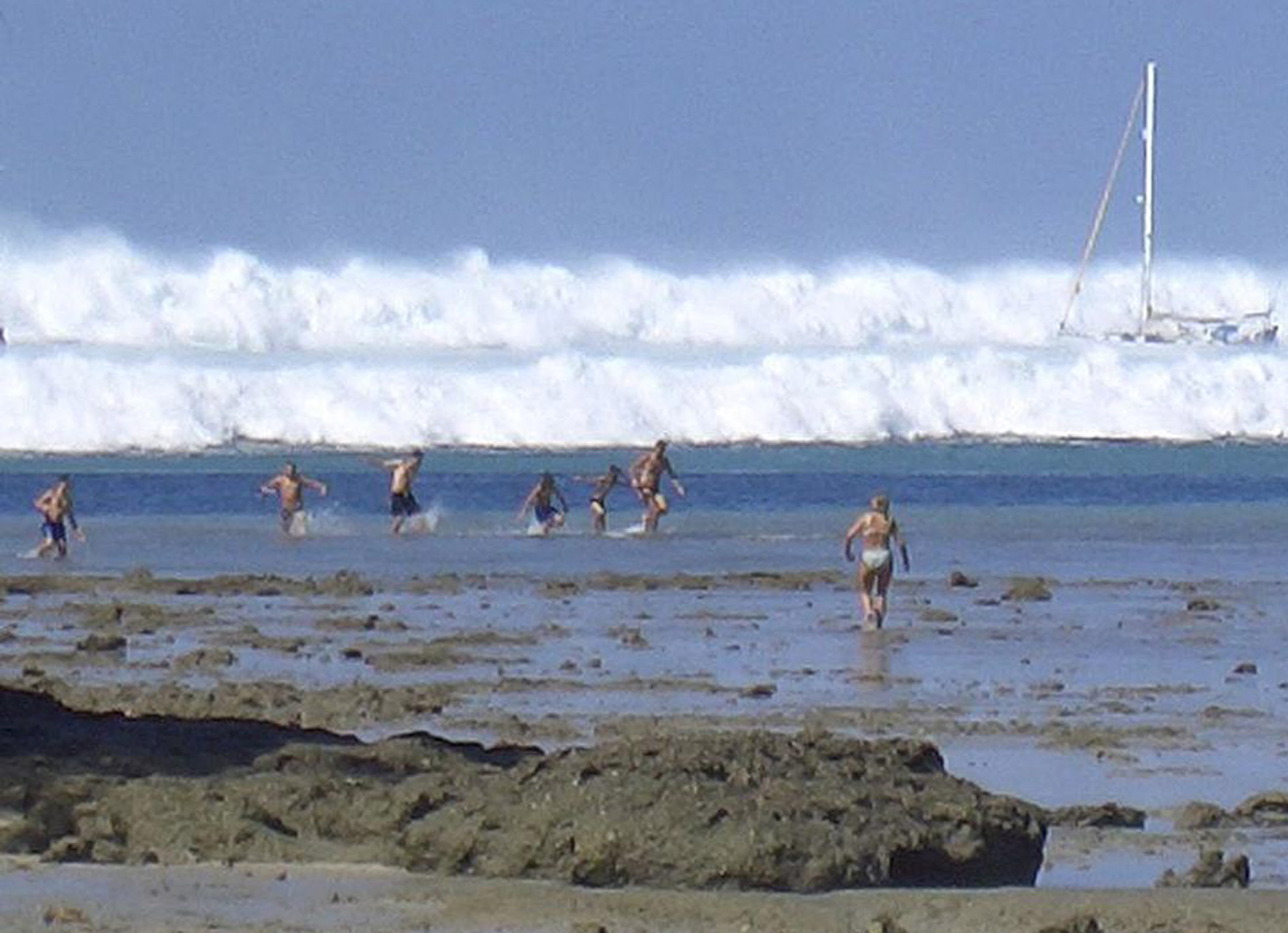
In 2011, a girl named Wati (also known as Maryam) was reunited with her family in Aceh, Indonesia, exactly seven years after being swept away by the 2004 Indian Ocean Tsunami. Discovered in a cafe in Meulaboh, her survival was confirmed through physical birthmarks and family recognition, ending a search that had long been considered hopeless by her community.
The Historical Context: The 2004 Indian Ocean Tsunami
To understand the magnitude of finding a survivor seven years after the fact, one must first grasp the scale of the disaster that separated them. On December 26, 2004, a 9.1-magnitude earthquake struck off the coast of Sumatra, Indonesia. It was one of the most powerful earthquakes ever recorded, triggering a series of devastating tsunamis that radiated across the Indian Ocean.
In the province of Aceh, waves reached heights of up to 30 meters (nearly 100 feet), traveling several kilometers inland. The destruction was near-total in coastal towns like Meulaboh and the capital, Banda Aceh. According to the United States Geological Survey (USGS), the event resulted in over 230,000 deaths across 14 countries, with Indonesia bearing the brunt of the casualties. In the chaos that followed, tens of thousands of people were listed as missing. For many families, "missing" became a permanent status, as the receding waters often carried victims out to sea or buried them under immense fields of debris.
The Case of Wati: A Seven-Year Journey Home
The story of Wati, who disappeared at the age of eight, is the most prominent example of a "7 years after" survival miracle. When the tsunami hit her village in West Aceh, she was swept away from her mother, Yusnidar, who was struggling to save her three children. While Yusnidar survived, she believed Wati had been lost to the sea.
The Discovery in Meulaboh
In December 2011, a teenage girl arrived at a small cafe in Meulaboh. She appeared distressed and claimed to have traveled from another city by bus. She was looking for her family but could only remember a few details, including the name of her grandfather, Ibrahim. A patron at the cafe recognized the name and contacted Ibrahim, who lived nearby.
Verification Through Physical Markers
When Wati was brought to her family, the reunion was initially met with cautious hope. Seven years is a significant period for a child’s physical development; an eight-year-old girl becomes a fifteen-year-old young woman. However, Yusnidar and Ibrahim identified Wati through two distinct physical features: a small mole and a scar above her eyebrow that she had sustained as a toddler. These permanent markers provided the emotional and physical evidence the family needed to confirm her identity.
The Missing Years
Investigations into Wati’s life during those seven years revealed a harrowing story of survival. It was reported that after being swept away, she was found by a woman who effectively forced her into a life of domestic labor and begging. Wati had been moved between different locations, often unable to communicate her origins or find a way back home. Her eventual escape and return to Meulaboh were prompted by her refusal to continue begging, which led to her being cast out by her "guardian," ultimately allowing her to seek her original home.
The Biological and Environmental Factors of Survival
The survival of children in extreme maritime disasters involves a combination of biological resilience and environmental luck. While many victims of the 2004 tsunami succumbed to drowning or blunt-force trauma from debris, those who survived the initial wave faced a secondary set of challenges.
Buoyancy and Debris
In many documented cases of tsunami survival, individuals were saved by clinging to large, buoyant objects—such as uprooted trees, mattresses, or pieces of plastic roofing. Children, being smaller and lighter, are sometimes able to stay atop floating debris that would sink under the weight of an adult. However, they are also more susceptible to hypothermia and exhaustion.
The "Silent" Survivors
In the aftermath of a disaster, the focus is often on the immediate recovery of bodies. However, a "silent" population of survivors often exists: those who are rescued by fishing boats or residents of neighboring villages that were not as heavily impacted. Because communication infrastructure is typically destroyed in a tsunami, these survivors may remain in displaced persons camps or private homes for years without their names ever appearing on an official manifest.
The Psychology of Displacement: Why Survivors Stay Missing
A common question regarding cases like Wati’s is why it takes so long for a survivor to return. The answer often lies in the complex intersection of trauma, age, and social circumstances.
Dissociative Amnesia and Trauma
Severe physical and emotional trauma can trigger dissociative amnesia. This is a psychological defense mechanism where the brain "blocks out" traumatic memories or even personal identity to protect the individual from overwhelming distress. For a child like Wati, the sheer terror of the tsunami, combined with the subsequent years of forced labor, likely contributed to a fragmented memory of her past.
The Role of Age
Children who are separated from their parents at a young age (under 10) have a fragile sense of geography. They may know the names of their parents but not their village, province, or the specific landmarks required to navigate home. When these children are taken in by "well-meaning" strangers or, in darker cases, by those seeking cheap labor, they are often told that their original families are dead. This psychological conditioning can prevent a child from attempting to run away for years.
Forensic and Community Identification Methods
In the absence of immediate identification, several methods are used to verify the identity of survivors who reappear years later. While Wati’s case relied on physical markers, the field of forensic identification has evolved significantly.
DNA Profiling
The most definitive method for verifying identity is DNA testing. In the years following the 2004 tsunami, international organizations like the International Commission on Missing Persons (ICMP) worked to collect DNA samples from surviving family members to create a database. When a potential survivor is found, their DNA can be compared against this "blind" database to find a match.
Physical Anthropology
Forensic anthropologists examine scars, dental records, and healed bone fractures. Since many children in disaster-prone regions do not have regular dental checkups, family-reported "unique identifiers" (like Wati’s mole or a specific childhood scar) remain the primary tool for community-based verification.
Cognitive Re-association
Psychologists use "memory triggers"—such as photos of the childhood home, specific local foods, or old toys—to help a survivor regain their sense of self. In several Aceh cases, survivors who were found years later were able to describe the interior layout of their family homes, a detail that would be nearly impossible for an impostor to fabricate.
Notable Long-Term Tsunami Survivor Cases
The table below highlights several verified cases where individuals were reunited with their families long after they were presumed dead following the 2004 Indian Ocean Tsunami.
| Survivor Name | Time Missing | Age at Disaster | Year Found | Primary Identification Factor |
|---|---|---|---|---|
| Wati (Maryam) | 7 Years | 8 | 2011 | Mole and eyebrow scar |
| Raudhatul Jannah | 10 Years | 4 | 2014 | Recognized by her brother in a village |
| Arif Pratama | 10 Years | 7 | 2014 | Found living as a street child; DNA confirmed |
| Asep (Police Officer) | 17 Years | 20s | 2021 | DNA and police records (found in mental hospital) |
| Martunis | 21 Days | 7 | 2005 | Visual (found wearing a Portugal football jersey) |
Legal and Social Reintegration Post-Recovery
Finding a survivor after seven years is a cause for celebration, but it also triggers a complex series of legal and social challenges.
The Legal Status of the "Deceased"
In many tsunami-affected regions, the government issued death certificates for missing persons after a certain period (usually one to five years) to allow families to settle estates or receive government aid. When a survivor like Wati returns, the family must navigate the legal process of "annulling" a death certificate and re-registering the individual as a living citizen. This is essential for obtaining national identity cards, accessing education, and eventual employment.
Social Re-adaptation
The transition from a life of displacement—often characterized by poverty or exploitation—to a family environment can be jarring. Survivors often experience "survivor’s guilt" or struggle to bond with siblings they no longer recognize. In the case of Wati, she had to adjust from being a child who was forced to beg to a teenager reintegrating into a structured family and educational system.
Community Impact
These reunions serve a vital role in the collective healing of a community. In Aceh, where almost every family lost someone, the return of a "miracle survivor" provides a sense of hope and closure, even for those who never found their own loved ones. It reinforces the idea that the missing should not be forgotten.
Forensic Advancements and Missing Persons Databases
As we look toward disaster management in 2026, the lessons from the "7-year survivor" cases have led to better infrastructure for tracking the missing. Organizations now emphasize the immediate collection of biological data following a disaster.
- Digital Missing Persons Portals: Real-time databases that allow survivors to upload photos and locations immediately after a disaster.
- Biometric Archiving: Increased use of iris scans and fingerprints in national ID systems (like Indonesia's e-KTP) makes it much harder for individuals to remain "lost" if they interact with any government service.
- Community-Based Reporting: Training local leaders to identify "new" children or adults in their villages who may be displaced survivors of past events.
Frequently Asked Questions
Is it common to find survivors years after a tsunami?
No, it is extremely rare. Most survivors are accounted for within the first few weeks. However, in regions with massive displacement and destroyed infrastructure, individuals (especially children or those with mental health issues) can live in nearby communities for years without being identified.
How did Wati survive the initial tsunami wave?
While the exact details are blurred by time and trauma, it is believed she clung to floating debris and was eventually pulled from the water by a woman in a neighboring district. Unfortunately, instead of reporting her to the authorities, this individual kept her for domestic labor.
Why do some survivors wait so long to come home?
The delay is usually caused by a combination of factors: young age (not knowing how to get home), fear of their captors or "guardians," and psychological dissociation where memories of their original home are suppressed due to trauma.
What happened to Wati after she was found in 2011?
After her reunion in 2011, Wati (Maryam) was reintegrated into her family in Meulaboh. Her story became a symbol of resilience in Aceh. She received support from local NGOs to help with her transition back into social life and education.
Can DNA prove identity after 7 or more years?
Yes. DNA remains stable throughout a person's life. As long as there are biological samples from parents or siblings to compare against, DNA profiling can confirm a person's identity with 99.9% accuracy, regardless of how many years have passed.
Final Recommendation for Families of the Missing
For families who are still searching for loved ones lost in natural disasters, the case of Wati demonstrates that while the odds are low, recovery is possible. The most practical next action is to ensure that your DNA is on file with national or international missing persons databases. If you suspect a person in your community may be a displaced survivor, contact local social services or the Red Cross. These organizations have established protocols for sensitive identification and family reunification that prioritize the psychological well-being of the survivor.