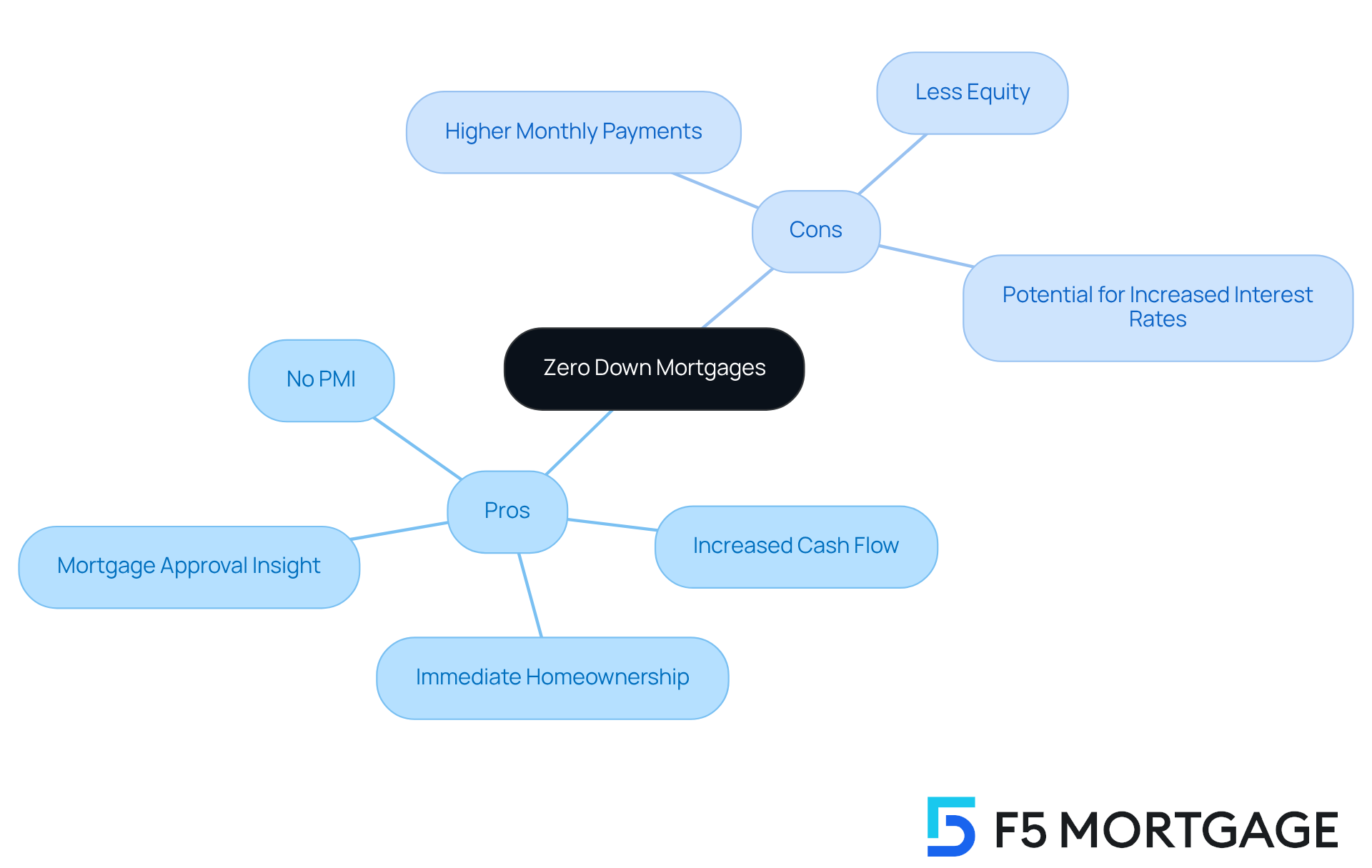
A 0 down mortgage allows qualified homebuyers to finance 100% of a home’s purchase price, eliminating the need for a traditional upfront down payment. While these loans increase accessibility for first-time buyers and service members, they typically require specific eligibility—such as military service or purchasing in a rural area—and often carry higher long-term costs through interest and specialized fees.
Navigating the housing market in 2026 requires a sophisticated understanding of financing vehicles. While the "20% down" rule has become less of a strict requirement and more of a financial benchmark, the allure of a zero-down-payment mortgage remains strong for those looking to preserve their liquid savings. However, 100% financing is not a "free lunch." It is a specialized financial product designed for specific demographics and geographic regions.
Before committing to a zero-down mortgage, it is essential to look beyond the monthly payment and understand the structural implications of high-leverage lending. From the "hidden" costs of closing to the risk of negative equity, here are the seven critical things you must know before signing a 100% financing agreement.
1. Zero Down Does Not Mean Zero Cash Required
One of the most persistent myths in real estate is that a "0 down" mortgage means you can walk into a closing and receive the keys without spending a dime. In reality, the "down payment" is only one of several upfront costs associated with a home purchase.
Buyers are still responsible for closing costs, which typically range from 2% to 5% of the home's purchase price. In 2026, with median home prices remaining elevated, this can still amount to a significant sum. Closing costs include:
- Loan Origination Fees: Charged by the lender for processing the application.
- Appraisal Fees: To ensure the property’s value supports the loan amount.
- Title Insurance and Search: To guarantee the property is free of liens.
- Government Recording Fees: To document the change of ownership.
- Prepaid Items: Such as property taxes and homeowners insurance placed into escrow.
While it is possible to negotiate for the seller to pay some or all of these costs (known as seller concessions), in a competitive market, such requests often make an offer less attractive. If the seller refuses to contribute, a buyer using a zero-down program like a VA or USDA loan must still have several thousand dollars in liquid cash to finalize the transaction.
2. Eligibility is Highly Restrictive
The primary 100% financing options available in 2026 are not "open enrollment" products. They are government-backed programs designed to serve specific social or economic goals. If you do not fit into these specific categories, a zero-down mortgage may be legally or structurally unavailable to you.
VA Loans (Veterans Affairs)
The VA loan remains the most robust zero-down option. It is reserved for active-duty service members, veterans, and eligible surviving spouses. The program is a benefit earned through service, offering no down payment requirements and no private mortgage insurance (PMI). However, it does require a Certificate of Eligibility (COE) and the home must be the borrower's primary residence.
USDA Loans (United States Department of Agriculture)
The USDA’s Rural Development program offers 100% financing to low-to-moderate-income borrowers who purchase homes in eligible rural and suburban areas. While "rural" sounds restrictive, many outer-ring suburbs of major metropolitan areas still qualify under the USDA's eligibility maps. There are, however, strict household income limits that vary by county.
Specialized Conventional Programs
Some private lenders and credit unions offer proprietary zero-down programs for "high-earner, low-asset" professionals, such as doctors or lawyers (often called "Physician Loans"). These are rare and usually come with higher credit score requirements and slightly higher interest rates.
3. The Impact of Funding Fees and Guarantee Fees
While zero-down mortgages like VA and USDA loans do not require traditional monthly Private Mortgage Insurance (PMI), they are not free from insurance-related costs. Instead, they utilize "funding fees" or "guarantee fees" to protect the lender and the government against default.
For a VA loan, the VA Funding Fee is a one-time charge based on the loan amount, the borrower’s service type, and whether it is their first time using the benefit. In 2026, this fee is often rolled into the loan balance. While this saves the buyer from paying it upfront, it increases the total debt.
The USDA loan involves two separate fees:
- Upfront Guarantee Fee: Usually 1% of the loan amount, often financed into the loan.
- Annual Fee: A monthly charge (currently 0.35% of the remaining principal balance) that lasts for the life of the loan.
Rolling these fees into the mortgage means you are starting your homeownership journey with a Loan-to-Value (LTV) ratio exceeding 100%. Essentially, you owe more than the home is worth the moment you sign the papers.
4. The Risk of Negative Equity (Being "Underwater")
When you put 0% down, you have zero equity in the property on day one. Equity is the difference between the home's market value and the amount you owe on your mortgage. In a standard 20% down scenario, you have a significant buffer. If the market dips by 5%, you still have 15% equity.
With a 0 down mortgage, even a minor stagnation in the housing market can put you into a state of negative equity, or being "underwater." This becomes a critical issue if you need to sell the home or refinance.
To sell a home, you must pay off the mortgage balance plus the real estate commissions (typically 5-6%). If you have no equity, you would have to pay the lender out of your own pocket just to sell the house. This "mobility trap" can be devastating for individuals who might need to relocate for work or personal reasons. Before choosing 100% financing, you must be confident that you intend to stay in the home for at least 5 to 7 years to allow for natural appreciation and principal reduction.
5. Stricter Credit and Debt-to-Income Standards
Lenders view zero-down mortgages as higher-risk transactions. Because the borrower has no "skin in the game" (their own capital at risk), the lender must be certain of the borrower’s ability to repay. Consequently, the underwriting process is often more rigorous than it is for a borrower putting 10% or 20% down.
In 2026, while the minimum credit score for a VA or USDA loan might be listed as 620 or 640 by the government, individual lenders (who provide the actual cash) often apply "overlays." These are stricter internal requirements. A borrower with a 620 score might get approved, but they will face significantly higher interest rates than someone with a 740 score.
Furthermore, your Debt-to-Income (DTI) ratio—the percentage of your gross monthly income that goes toward paying debts—is scrutinized. Lenders want to see that even with a 100% financed mortgage payment, you have enough "residual income" to cover life’s emergencies. For 100% financing, a DTI above 41% to 43% often requires significant compensating factors, such as large cash reserves or a long, stable employment history.
6. Higher Long-Term Interest Costs
The "cost of convenience" for not providing a down payment is reflected in the interest you pay over the 30-year life of the loan. Even if the interest rate on a zero-down loan is identical to a 20% down loan (which it rarely is), the total interest paid will be much higher because the principal balance is larger.
Consider the following comparison based on 2026 market averages:
| Feature | 0% Down (VA/USDA) | 20% Down (Conventional) |
|---|---|---|
| Purchase Price | $400,000 | $400,000 |
| Down Payment | $0 | $80,000 |
| Loan Amount | $400,000+ | $320,000 |
| Interest Rate (Est.) | 6.75% | 6.25% |
| Monthly P&I | $2,594 | $1,970 |
| PMI/Annual Fee | $116 (USDA) | $0 |
| Total Paid Over 30 Years | ~$970,000 | ~$789,000 |
As demonstrated, the choice to put 0% down can result in paying nearly $180,000 more over the life of the loan. This is due to the compounding effect of interest on a larger principal balance and the slightly higher interest rates typically assigned to high-LTV loans.
7. Appraisals and Property Standards are More Stringent
When using government-backed 0-down programs, the property itself must meet specific safety and habitability standards. This is because the government is guaranteeing the loan and wants to ensure the collateral (the house) is sound.
The VA Minimum Property Requirements (MPRs) and USDA standards are more "nitpicky" than conventional appraisals. They often require the following to be in good working order:
- Heating and Electrical Systems: Must be functional and safe.
- Roofing: Must have a reasonable remaining life (often at least 2-3 years).
- Structure: No dry rot, pest infestations, or lead-based paint issues.
- Water and Sewage: Must meet local health requirements.
If an appraiser identifies a "deficiency," the seller must repair it before the loan can close. In the competitive 2026 market, many sellers prefer conventional buyers because they know a conventional appraisal is less likely to trigger mandatory, costly repairs. Buyers using 0-down programs may find themselves losing out on older "fixer-upper" homes that cannot pass these strict inspections.
Frequently Asked Questions
Can I get a zero-down mortgage if I am not a veteran?
Yes, the USDA loan is the primary vehicle for non-veterans to obtain 100% financing, provided the property is in an eligible area and the household income is within the program's limits. Additionally, many states offer Down Payment Assistance (DPA) programs. These are not technically "0 down mortgages," but they provide a second loan or grant to cover the 3% or 3.5% down payment required by conventional or FHA loans, effectively resulting in zero out-of-pocket for the down payment.
Does a 0 down mortgage hurt my credit score?
The mortgage application itself will result in a "hard inquiry" on your credit report, which can cause a temporary, minor dip in your score. However, the 100% financing aspect does not inherently hurt your credit. In the long term, making on-time payments on a large installment loan like a mortgage is one of the most effective ways to build a high credit score.
Can I refinance a zero-down mortgage later?
Yes, but there is a catch: you must have enough equity to qualify for the new loan. If you start with 0% down and home values remain flat, you may not have the required 3% to 5% equity to qualify for a refinance until you have paid down the principal for several years. The exception is the VA Interest Rate Reduction Refinance Loan (IRRRL) or the USDA Streamline Refinance, which often do not require a new appraisal or specific equity levels.
Is FHA a zero-down mortgage?
No. An FHA loan requires a minimum down payment of 3.5%. While this is much lower than 20%, it is not a zero-down product. FHA loans are often confused with 0-down programs because they are popular among first-time buyers and have flexible credit requirements.
Are zero-down mortgages only for first-time buyers?
No. VA loans can be used multiple times throughout a veteran's life (though the funding fee may increase for subsequent uses). USDA loans are also available to repeat buyers, provided the buyer does not own another "adequate" home in the local area and meets the income and location requirements.
Next Steps for Prospective Buyers
If you believe a zero-down mortgage is the right path for your financial situation in 2026, your first action should be to verify your eligibility.
- Check the Maps: Visit the USDA Eligibility site to see if the neighborhoods you are considering qualify.
- Obtain Your COE: If you are a veteran, log into the VA's eBenefits portal to secure your Certificate of Eligibility.
- Audit Your Credit: Before speaking to a lender, pull your credit report to ensure there are no errors. Aim for a score of at least 640 to access the best available rates for 100% financing.
- Consult a Specialized Lender: Not all banks handle USDA or VA loans with the same expertise. Seek out a lender that specializes in government-backed products to ensure they understand the specific appraisal and underwriting nuances of these programs.
While 100% financing can be a powerful tool for entering the housing market, it requires a long-term commitment to the property to overcome the initial lack of equity and the higher total cost of the loan.