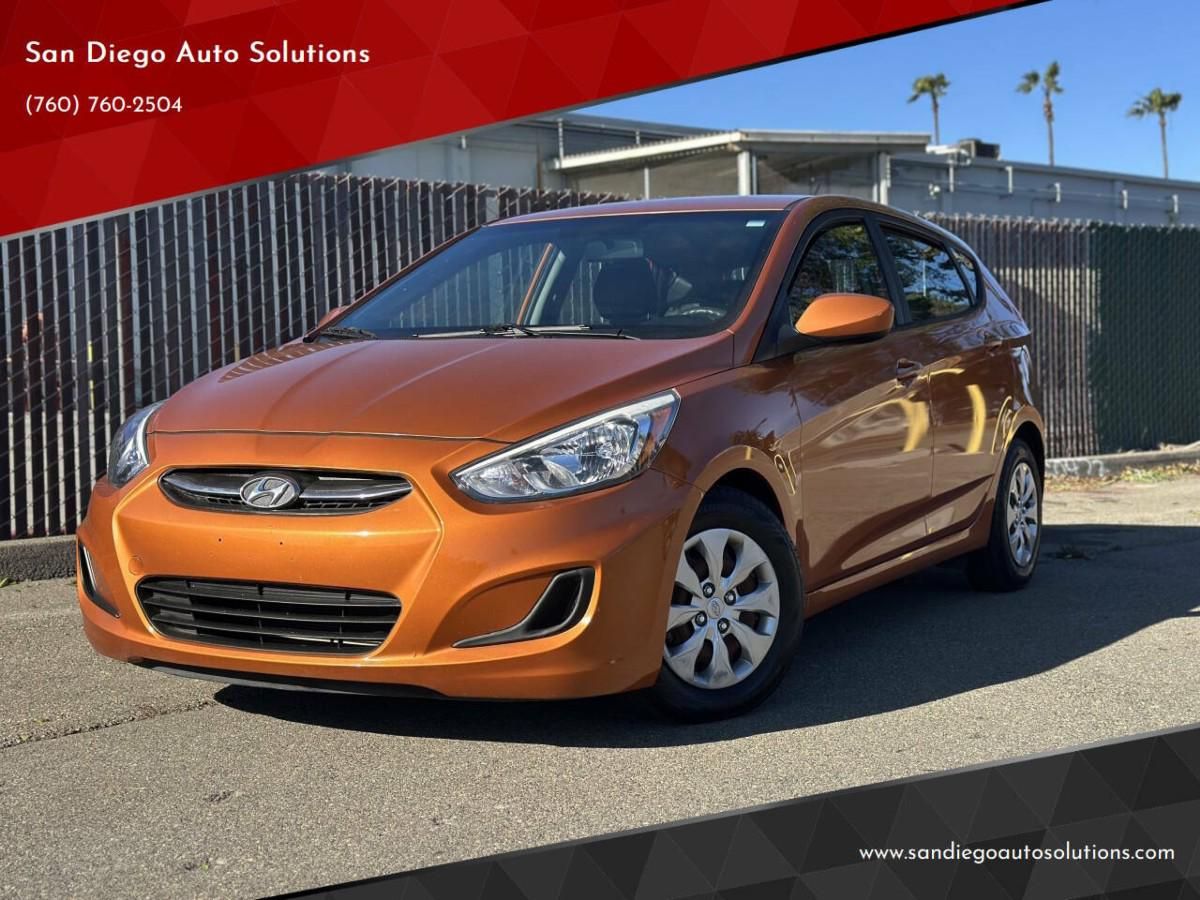
Major automotive reviews highlight the 2017 Hyundai Accent for its class-leading 137-horsepower engine, exceptional fuel efficiency averaging up to 36 mpg highway, generous interior and cargo versatility, straightforward infotainment layout, feature-packed trim levels, composed city handling, and surprisingly low long-term maintenance costs. As the final model year of the fourth generation (RB series), the 2017 Accent represents the peak refinement of Hyundai's budget subcompact lineup.
Overview of the 2017 Hyundai Accent
The 2017 Hyundai Accent occupies a prominent position in the entry-level subcompact segment. Serving as the farewell model for the fourth generation before Hyundai introduced the redesigned fifth generation for 2018, the 2017 Accent benefited from years of iterative engineering improvements. Offered in both a classic four-door sedan and a practical five-door hatchback configuration, this subcompact vehicle was designed to compete directly with rivals such as the Honda Fit, Toyota Yaris, Nissan Versa, and Ford Fiesta.
Automotive critics from major publications evaluated the 2017 model extensively during its market release, praising its mechanical straightforwardness, functional interior design, and economic operation. On the secondary market, the 2017 Hyundai Accent remains a popular choice for commuters, first-time car buyers, and city drivers looking for dependable transportation without excessive ongoing costs.
Below are the 7 key review highlights distilled from comprehensive road tests, long-term evaluations, and automotive safety benchmarking.
1. Class-Leading Engine Power and Powertrain Refinement
One of the most consistent points of praise across automotive review outlets was the standard powertrain found in every 2017 Hyundai Accent trim. While many competitors in the subcompact class relied on underpowered, naturally aspirated engines producing under 110 horsepower, Hyundai equipped the Accent with a sophisticated 1.6-liter Gamma Gasoline Direct Injection (GDI) inline 4-cylinder engine.
Mechanical Specifications and Output
- Engine Type: 1.6-liter DOHC 16-valve GDI 4-Cylinder
- Horsepower: 137 hp @ 6,300 rpm
- Torque: 123 lb-ft @ 4,850 rpm
- Transmission Options: 6-speed manual or 6-speed automatic with SHIFTRONIC® manual shift control
- Drivetrain: Front-Wheel Drive (FWD)
The integration of direct fuel injection allowed the engine to squeeze maximum power out of a small displacement. Critics noted that the 137 horsepower output gave the Accent superior acceleration compared to the Nissan Versa or Toyota Yaris of the same era. Merging onto highways and making passing maneuvers required less engine strain, providing drivers with greater confidence on high-speed roadways.
The available six-speed automatic transmission was also frequently praised for its smooth gear changes, avoiding the rubber-band sensation and high-pitched drone common in vehicles equipped with continuously variable transmissions (CVTs).
2. Competitive Fuel Economy and Low Operating Costs
Fuel efficiency is a primary deciding factor for buyers in the subcompact segment, and review consensus confirmed that the 2017 Hyundai Accent delivered strong real-world fuel economy figures. According to official estimates from the U.S. Environmental Protection Agency (EPA), the 2017 Accent achieved balance between daily city commuting and extended highway travel.
EPA Fuel Economy Ratings
- 6-Speed Automatic: 27 mpg City / 36 mpg Highway / 30 mpg Combined
- 6-Speed Manual: 27 mpg City / 37 mpg Highway / 31 mpg Combined
Automotive testing logs showed that real-world highway driving often equaled or exceeded the 36 mpg EPA highway rating when driven conservatively. Hyundai’s integrated Active ECO System modified engine and transmission control parameter profiles on automatic models to smooth out throttle response, helping drivers maximize mileage during stop-and-go commuting.
Combined with a 11.4-gallon fuel tank capacity, the 2017 Accent provides a cruising range of roughly 350 to 400 miles between fill-ups. The car's ability to run on standard 87-octane unleaded gasoline keeps fuel expenses low, rendering it an economical daily driver over thousands of annual miles.
3. Generous Interior Space and Cargo Versatility
Despite its compact external footprint—measuring just 172 inches long for the sedan and 162 inches for the hatchback—the interior packaging of the 2017 Accent earned widespread approval from reviewers. Hyundai maximized cabin volume by optimizing seating angles and thin-profile door panel construction.
| 2017 Hyundai Accent Cabin Space | Measurement |
|---|---|
| Total Passenger Volume | 89.8 cu. ft. (Sedan) / 90.1 cu. ft. (Hatch) |
| Front Headroom / Legroom | 39.9 in. / 41.8 in. |
| Rear Headroom / Legroom | 37.8 in. / 33.3 in. |
Hatchback vs. Sedan Practicality
Reviewers consistently emphasized the practical distinction between the two body styles:
- The Four-Door Sedan: Features a traditional trunk capacity of 13.7 cubic feet. The wide trunk opening and flat trunk floor allow for multiple large suitcases or grocery bags.
- The Five-Door Hatchback: Provides 21.2 cubic feet of cargo space behind the 60/40 split-folding rear seats. When the rear seats are folded flat, total available utility space expands to an impressive 47.5 cubic feet.
This cargo capacity turned the 5-door hatchback variant into a versatile utility vehicle capable of hauling gear, small furniture, and bulk shopping goods—rivaling larger compact hatchbacks in total usable volume.
4. Simplified, User-Friendly Cabin Ergonomics
In an era when many automakers were transitioning to complicated touchscreen interfaces and touch-sensitive climate controls, reviewers appreciated the 2017 Hyundai Accent’s straightforward, functional dashboard design.
Cabin Layout and Controls
- Tactile Switchgear: Large, physical rotary knobs for climate control and fan speed allow adjustments without taking eyes off the road.
- Audio System: Crisp analog buttons and dual dials for volume and radio tuning accompany a clear, backlit LCD display.
- Visibility: Thin A-pillars and large side glass panels provide clear outward sightlines, minimizing blind spots for urban maneuvers and tight parking.
- Material Selection: While hard plastics are present—typical for subcompact vehicles of this price point—critics noted that Hyundai used textured surfaces and high-quality fitments to prevent the interior from feeling cheap or flimsy.
Higher-tier trims introduced upgraded cloth seating, a leather-wrapped steering wheel, tilt-and-telescoping steering adjustment, and a center console storage armrest, raising interior comfort above standard subcompact norms.
5. Strategic Trim Level Packages and Equipment Value
For the 2017 model year, Hyundai streamlined the Accent’s trim structure to simplify buying options and increase standard feature value. The model line consisted primarily of the base SE, the sedan-exclusive Value Edition, and the top-tier hatchback-exclusive Sport trim.
Trim Breakdown Comparison Table
| Feature / Specification | SE (Sedan / Hatchback) | Value Edition (Sedan) | Sport (Hatchback) |
|---|---|---|---|
| Engine | 1.6L GDI 4-Cylinder (137 hp) | 1.6L GDI 4-Cylinder (137 hp) | 1.6L GDI 4-Cylinder (137 hp) |
| Wheels | 14-inch Steel with Covers | 16-inch Aluminum Alloy | 16-inch Machine-Finish Alloy |
| Brakes (Front/Rear) | Disc / Drum | 4-Wheel Disc with ABS | 4-Wheel Disc with ABS |
| Rear Suspension | Torsion Beam | Torsion Beam | Torsion Beam with Sport Tuning |
| Keyless Entry | Standard Remote Keyless | Standard Remote Keyless | Standard Remote Keyless |
| Bluetooth / Audio | AM/FM/CD/MP3, 6 Speakers | Hands-free Bluetooth, Steering Controls | Hands-free Bluetooth, Steering Controls |
| Exterior Highlights | Body-color handles & mirrors | Heated side mirrors | Projector headlights with LED accents |
The introduction of the Value Edition trim for 2017 was praised by reviewers as the sweet spot of the lineup. It added essential driver upgrades—such as 16-inch alloy wheels, rear disc brakes, steering-wheel-mounted audio controls, cruise control, and Bluetooth hands-free phone connectivity—at a modest price bump over the base SE trim.
6. Urban Agility and Composed Ride Quality
Road test editors commended the 2017 Hyundai Accent for its balanced driving dynamics, particularly in suburban and dense city environments. The mechanical chassis setup includes independent MacPherson front struts with coil springs and a rear coupled torsion beam axle.
Handling and Ride Characteristics
- Turning Diameter: A tight 34.1-foot turning circle makes U-turns and parallel parking effortlessly manageable.
- Suspension Tuning: Softly sprung to absorb potholes, road expansion joints, and uneven pavement effectively.
- Steering Feel: The motor-driven electric power steering (MDPS) is lightweight at low speeds for easy parking maneuvers, building appropriate resistance at highway speeds.
- Braking Performance: Models equipped with 4-wheel disc brakes (Value Edition and Sport) offered firm pedal feel and consistent stopping distances, earning higher marks than rival subcompacts equipped only with rear drum brakes.
While the Accent was designed for efficiency and comfort rather than high-performance cornering, road testers found that it maintained highway stability well, insulated wind noise effectively for its class, and delivered a relaxed commuting experience.
7. Strong Structural Integrity and Long-Term Value
Evaluating the 2017 Hyundai Accent from a long-term reliability perspective reveals why it remains highly sought-after on the pre-owned market. Historical consumer safety data and reliability indices confirm the durable design of the 4th-generation Accent platform.
Safety Engineering
The 2017 Accent comes standard with six airbags (advanced dual front airbags, front seat-mounted side-impact airbags, and side curtain airbags), Vehicle Stability Management (VSM), Electronic Stability Control (ESC), and Traction Control System (TCS).
- NHTSA Rating: The National Highway Traffic Safety Administration (NHTSA) awarded the 2017 Hyundai Accent an overall safety rating of 4 out of 5 stars, noting solid performance in frontal and side crash tests.
- IIHS Testing: The Insurance Institute for Highway Safety (IIHS) rated the 2017 Accent with "Good" scores (the highest rating) in moderate overlap front impact, side impact, roof strength, and head restraint performance tests.
Long-Term Ownership Benefits
- Low Maintenance Costs: Simple mechanical systems mean replacement components—such as brake pads, rotors, spark plugs, and filters—are widely available and inexpensive.
- Proven Engine Reliability: The 1.6L Gamma GDI engine uses a timing chain rather than a timing belt, eliminating the periodic maintenance expense of belt replacement when serviced with routine oil changes.
- Affordable Used Market Entry: Buyers seeking reliable transportation find the 2017 Accent offers modern necessities (Bluetooth, cruise control, power windows) without the high price tag of newer subcompact crossovers.
Pre-Purchase Inspection Guide for Buyers
When evaluating a pre-owned 2017 Hyundai Accent, performing a targeted pre-purchase inspection helps ensure long-term dependability. Focus on the following key maintenance points:
- GDI Valve Carbon Inspection: Because gasoline direct injection sprays fuel directly into the combustion chamber rather than over the intake valves, carbon deposits can build up on intake valves over high mileage (typically above 70,000–80,000 miles). Listen for rough idling or hesitation during cold starts.
- Transmission Fluid History: On 6-speed automatic models, verify that the transmission fluid has been inspected or serviced according to manufacturer intervals, ensuring smooth, unhesitating gear engagements.
- Suspension Components: Inspect the front MacPherson strut assemblies and lower control arm bushings for signs of wear, grease leaks, or clunking noises during low-speed turns over bumps.
- Brake Package Verification: Check whether the model is an SE trim with rear drum brakes or a Value Edition / Sport trim with 4-wheel disc brakes. Ensure rear drum shoes or disc pads have adequate remaining material.
- Recall & TSB Verification: Confirm that all open manufacturer recalls or technical service bulletins have been completed by an authorized Hyundai service department.
Frequently Asked Questions (FAQs)
Is the 2017 Hyundai Accent a reliable used car?
Yes, the 2017 Hyundai Accent is considered a highly reliable subcompact car. As the final production year of the fourth generation, most early manufacturing issues were resolved. Its naturally aspirated 1.6L engine and traditional 6-speed automatic transmission offer simple, proven mechanical engineering that yields long service life when regularly maintained.
What is the main difference between the 2017 Accent Sedan and Hatchback?
The main differences lie in cargo capacity, exterior dimensions, and available trims. The hatchback is 10 inches shorter overall, making it easier to park, but offers significantly more overall cargo volume (up to 47.5 cubic feet with rear seats folded, versus 13.7 cubic feet in the sedan trunk). Additionally, the top-tier Sport trim is exclusive to the hatchback body style, while the Value Edition trim is exclusive to the sedan.
Does the 2017 Hyundai Accent have Apple CarPlay or Android Auto?
No, the 2017 Hyundai Accent did not come equipped with Apple CarPlay or Android Auto from the factory. Factory audio features were limited to AM/FM/CD/MP3 audio systems with USB/auxiliary inputs and Bluetooth hands-free connectivity on higher trims. However, because the Accent uses a standard double-DIN dash opening, aftermarket touchscreen head units with Apple CarPlay and Android Auto can be easily installed.
How many miles can a 2017 Hyundai Accent last?
With proper maintenance—including regular oil changes every 5,000 to 7,500 miles and timely fluid flushes—a 2017 Hyundai Accent can reliably reach 150,000 to 200,000 miles or more without major powertrain failures.
What fuel does the 2017 Hyundai Accent require?
The 2017 Hyundai Accent requires standard 87-octane regular unleaded gasoline. It does not require premium fuel, which helps maintain low overall running costs.
Final Recommendation
The 2017 Hyundai Accent remains an excellent pick for drivers seeking budget-conscious, practical, and fuel-efficient transportation. Review highlights consistently praise its standard 137-horsepower engine, practical 36-mpg highway fuel economy, flexible hatchback cargo capability, and easy-to-use cabin controls.
For buyers shopping on the secondary market, seeking out a Value Edition Sedan or a Sport Hatchback delivers the best overall balance of standard safety features, upgraded 4-wheel disc brakes, alloy wheels, and interior conveniences. Verified routine maintenance history makes the 2017 Accent a trustworthy vehicle that delivers economical personal mobility for years to come.