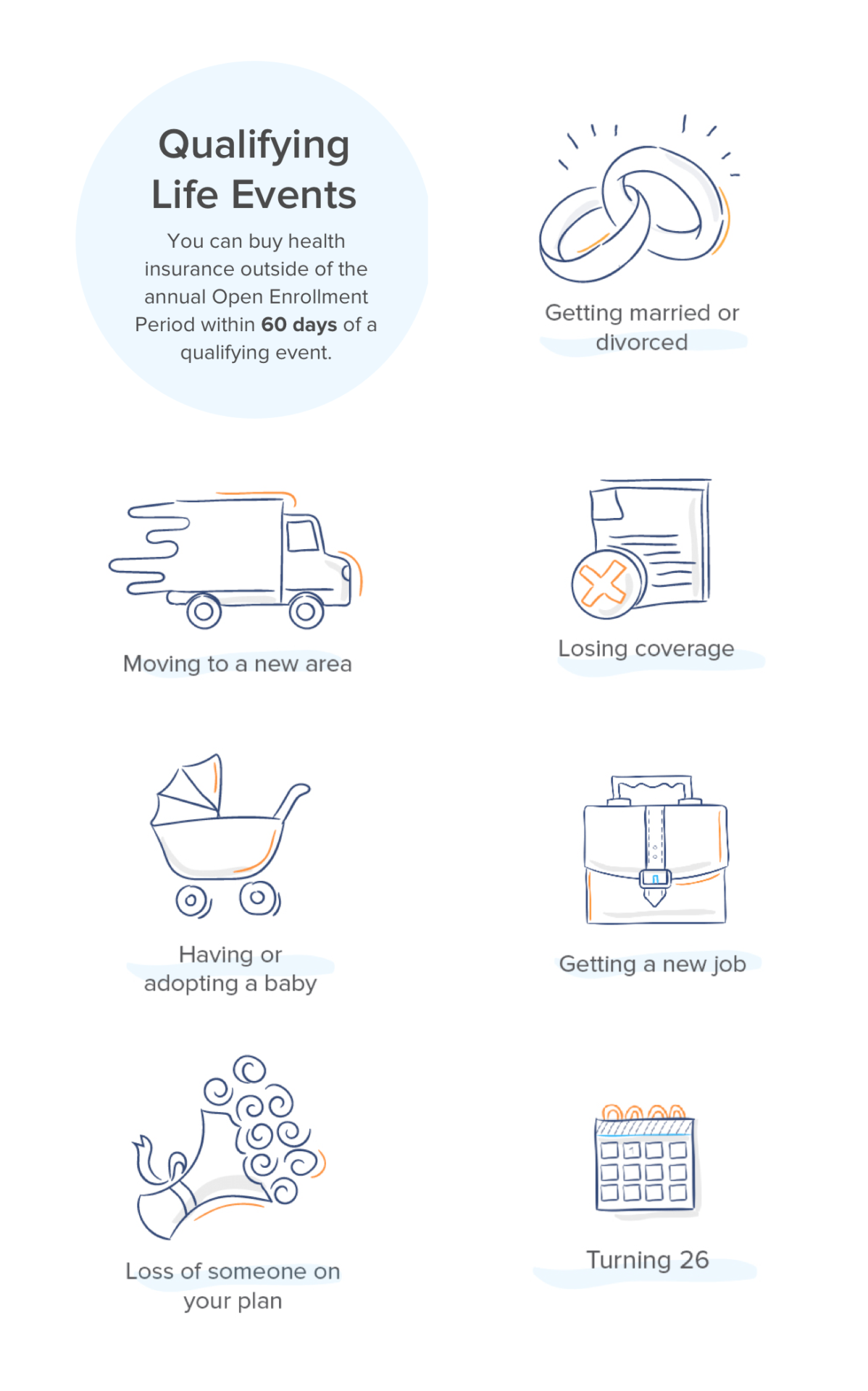
Following a qualifying life event, you generally have a window of 60 days to enroll in a new health insurance plan or change your existing coverage through a Special Enrollment Period (SEP). This 60-day timeframe applies to both the Health Insurance Marketplace and most private plans, allowing you to secure essential coverage outside of the standard annual Open Enrollment Period.
Health insurance in the United States is structured around strict enrollment windows to ensure market stability. However, life does not always align with the calendar year. Whether you are welcoming a new family member, changing your marital status, or experiencing a career transition, the "60-day rule" is your primary mechanism for maintaining continuous health coverage. As of 2026, these regulations remain a cornerstone of the Affordable Care Act (ACA) framework, though the specific requirements for documentation and eligibility have become more streamlined to help consumers navigate transitions more effectively.
Understanding the Special Enrollment Period (SEP)
A Special Enrollment Period is a time outside the yearly Open Enrollment Period when you can sign up for health insurance. You qualify for an SEP if you’ve had certain life events, known as Qualifying Life Events (QLEs).
The 60-day window is the standard duration for most SEPs. It typically begins the day the event occurs and ends 60 days later. If you fail to act within this period, you may be barred from enrolling in a comprehensive health plan until the next Open Enrollment Period, which usually begins in November for coverage starting the following January.
It is important to distinguish between the Marketplace SEP and Employer-Based SEPs. While the Marketplace (HealthCare.gov or state-based exchanges) almost universally provides 60 days, some employer-sponsored plans may offer a shorter window—often only 30 days—to notify the human resources department of a life change. Always check your specific Summary of Benefits and Coverage (SBC) if you are covered through a workplace.
Common Qualifying Life Events That Trigger the 60-Day Window
Not every life change qualifies you for a Special Enrollment Period. The events are categorized into four primary groups: loss of health coverage, changes in household, changes in residence, and other less common circumstances.
1. Loss of Health Coverage
This is the most common reason individuals seek an SEP. If you lose "minimum essential coverage," the 60-day clock begins. This includes:
- Job-based coverage loss: This applies whether you quit, were laid off, or your employer stopped offering insurance.
- Aging out of a parent's plan: In 2026, as in previous years, children can stay on a parent's health plan until they turn 26. The 60-day window begins on your 26th birthday.
- Loss of eligibility for Medicaid or CHIP: If your income increases or other factors make you ineligible for government-funded programs.
- Expiration of COBRA coverage: Note that voluntarily stopping COBRA payments does not count; the 18-month or 36-month period must actually end.
2. Changes in Household
When your family structure changes, your insurance needs usually change with it. Qualifying events include:
- Marriage: You have 60 days from the date of the ceremony to add a spouse or change plans.
- Birth, Adoption, or Foster Care: These events are unique because coverage is typically backdated to the date of the birth or placement, ensuring the child is covered from day one, even if you enroll on day 59 of the window.
- Divorce or Legal Separation: This only qualifies as a QLE if the legal change results in you losing your previous health insurance.
- Death of a policyholder: If the person who carried the insurance for the household passes away, survivors have 60 days to find new coverage.
3. Changes in Residence
Moving can trigger an SEP, but there is a specific requirement: you must have had qualifying health coverage for at least one day in the 60 days prior to your move. You qualify if you move to:
- A new county or zip code.
- The United States from a foreign country or U.S. territory.
- A seasonal home for student or transitional work.
- A different state.
4. Other Qualifying Events
Several technical or legal changes also provide a 60-day window:
- Becoming a U.S. citizen.
- Release from incarceration.
- Gaining status as a member of a federally recognized tribe.
- Changes in income that affect your eligibility for premium tax credits or cost-sharing reductions.
Documentation Requirements for the 60-Day Window
In 2026, the process of "Special Enrollment Verification" remains a critical step. When you apply for a plan after a QLE, the insurance exchange or the provider will often require proof that the event actually occurred. You generally have 30 days after picking a plan to submit this documentation, even though the overall window to pick the plan is 60 days.
| Event Type | Required Documentation Examples |
|---|---|
| Loss of Coverage | Letter from employer or previous insurer citing the last day of coverage. |
| Marriage | Marriage certificate or valid government-issued marriage license. |
| Birth/Adoption | Birth certificate, hospital records, or adoption placement papers. |
| Moving | Utility bills from the old and new addresses, or a valid lease agreement. |
| Medicaid Denial | Official denial letter from the state Medicaid or CHIP agency. |
Failure to provide documentation can result in your enrollment being canceled, even if you have already started paying premiums. It is vital to maintain digital copies of these records to speed up the verification process.
How to Enroll During a Special Enrollment Period
The process for utilizing your 60-day window is sequential. Missing a step can lead to delays in your coverage effective date.
- Report the Event Immediately: Visit HealthCare.gov or your state’s specific exchange. Update your profile to indicate you have experienced a life change.
- Verify the Eligibility Date: The system will calculate your deadline. For example, if you lost coverage on June 1, 2026, your window typically closes on July 31, 2026.
- Compare Plans: Because an SEP allows you to change plans, take the time to evaluate if your current network of doctors and your prescription drugs are still covered under the new options.
- Select and Confirm: Once you select a plan, you must "confirm" the selection. This is often where users stop, thinking the process is done. You must follow through to the final confirmation screen.
- Pay the First Premium: Your coverage will not be active until the insurer receives the first payment.
Effective Dates: When Does Coverage Start?
The date your coverage begins depends on the type of QLE and when you enroll. This is a common point of confusion for many consumers.
For a loss of coverage, if you enroll before your current coverage ends, your new plan can start the first day of the following month. If you enroll after your coverage has already ended, your new plan typically starts the first of the month following your selection.
For birth or adoption, the coverage is almost always retroactive to the date of the event. This prevents parents from being billed thousands of dollars for hospital stays that occur before they had a chance to officially add the newborn to the policy.
For marriage or moving, the standard rule is that if you pick a plan by the 15th of the month, coverage starts the 1st of the next month. If you pick after the 15th, coverage might be delayed by an extra month (e.g., enrolling on June 20th might lead to an August 1st start date).
What Happens if You Miss the 60-Day Deadline?
Missing the 60-day window is a serious issue, as it leaves you without access to ACA-compliant health insurance for the remainder of the year. However, there are a few "safety net" options to consider if the deadline passes:
- Medicaid and CHIP: Unlike private insurance, you can apply for Medicaid or the Children’s Health Insurance Program (CHIP) at any time of the year. There is no enrollment window. If your income falls within the state-specified limits, you can get covered immediately.
- Short-Term Health Insurance: These plans are not ACA-compliant and often do not cover pre-existing conditions or essential health benefits like maternity care. They are intended as a temporary bridge (often limited to 3-4 months in total duration under 2026 regulations) until the next Open Enrollment Period.
- Health Care Sharing Ministries: These are not insurance but are organizations where members share healthcare costs. They do not have enrollment windows but have significant limitations on what they will pay for.
- COBRA (if applicable): If you lost a job, you typically have 60 days to elect COBRA. This is often more expensive than Marketplace plans, but it allows you to keep the exact same coverage you had at your job.
Financial Assistance and Subsidies in 2026
Even during a Special Enrollment Period, you are eligible for financial assistance. This includes Advanced Premium Tax Credits (APTC) and Cost-Sharing Reductions (CSR). When you report your life event, your eligibility for these subsidies is recalculated.
For instance, if you lost your job, your projected annual income for 2026 will likely decrease. This could qualify you for a much higher subsidy than you previously received, significantly lowering your monthly premiums. Conversely, if you get married to a high-earning spouse, your subsidies may decrease. It is essential to provide an accurate estimate of your "Modified Adjusted Gross Income" (MAGI) for the remainder of the year to avoid having to pay back tax credits when you file your returns in 2027.
Frequently Asked Questions
Can I switch plans during the 60-day window if I already have insurance?
Yes, but only if your life event qualifies you to do so. For example, if you move to a new state, you are allowed to switch plans because your current network may no longer be available. However, some life events only allow you to add a dependent to your existing plan rather than switching to an entirely different insurance company.
Does a pregnancy count as a qualifying life event for an SEP?
In most states, the pregnancy itself does not trigger a 60-day window. However, the birth of the child does. Once the baby is born, you have 60 days to enroll in a new plan or add the baby to your current one. Some states, like New York, have historically implemented rules allowing pregnancy to count as a QLE, so check your specific state regulations.
What if my employer only gives me 30 days to change my insurance?
This is a common conflict. The federal law for the Marketplace is 60 days, but private employer plans are often governed by different sections of the ERISA or IRS codes, which allow them to set a 30-day window for "Section 125" cafeteria plans. If you miss your employer's 30-day window, you may still be able to get an individual plan on the Marketplace using the remaining 30 days of the federal 60-day window.
Does losing my "short-term" plan count as a QLE?
No. Losing "non-minimum essential coverage," such as a short-term plan, a travel insurance policy, or a discount medical plan, does not qualify you for a Special Enrollment Period. You must lose "qualifying" coverage to trigger the 60-day window.
Can I get an SEP if I forgot to sign up during Open Enrollment?
Generally, no. Forgetting or being too busy during the standard Open Enrollment Period is not considered a qualifying life event. You must experience one of the specific legal, household, or residential changes defined by the ACA.
Practical Recommendation
If you have experienced a qualifying life event, do not wait. While 60 days may seem like a long time, the requirement to gather documentation, compare plans, and ensure your doctors are in-network can be time-consuming.
Start by visiting the official HealthCare.gov portal or contacting a licensed insurance broker who can guide you through the 2026 plan options. Ensure you have your termination letter, marriage license, or birth certificate ready in a digital format. If you are near the end of your 60-day window, prioritize submitting your application immediately; you can usually fulfill the documentation requirements shortly after the initial enrollment.