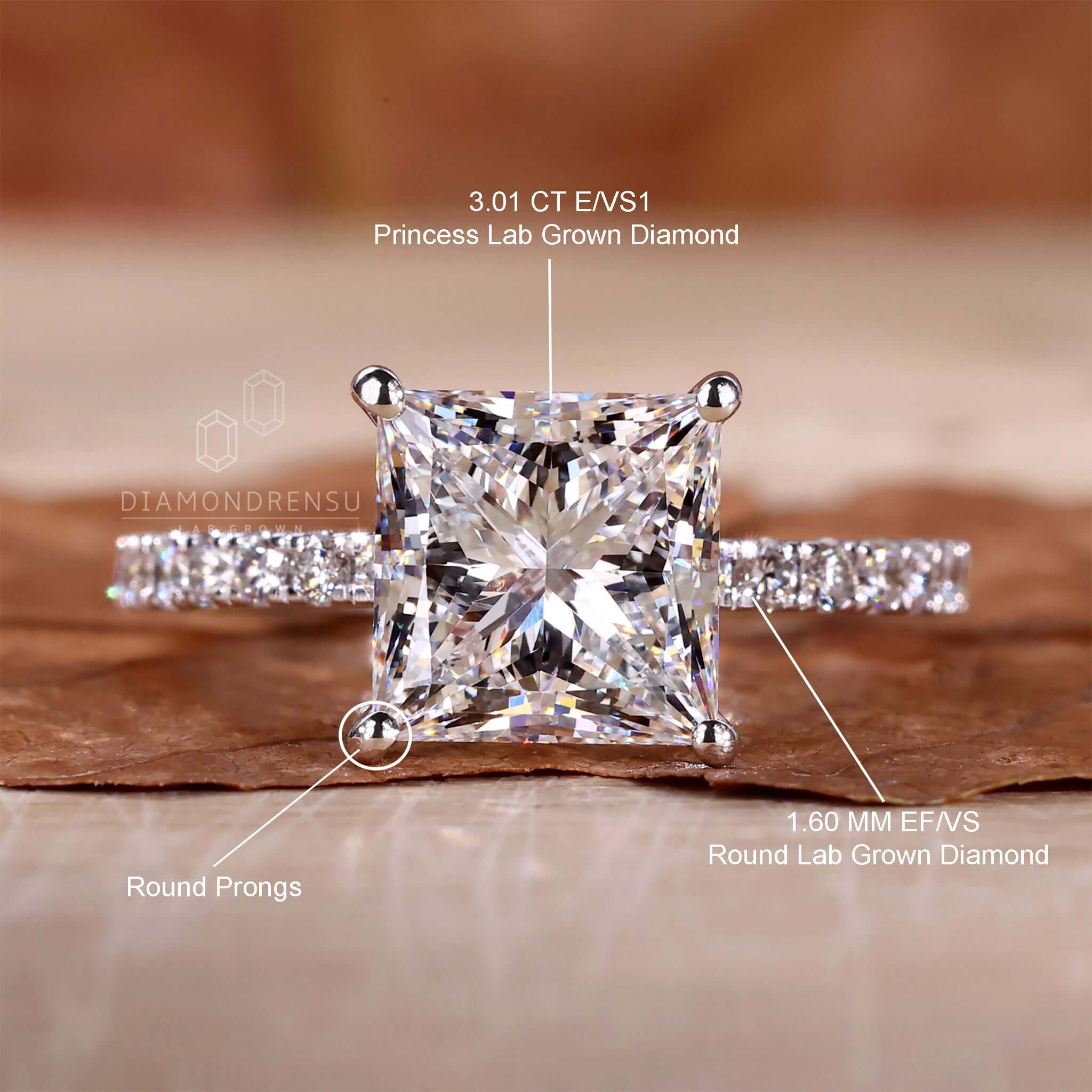
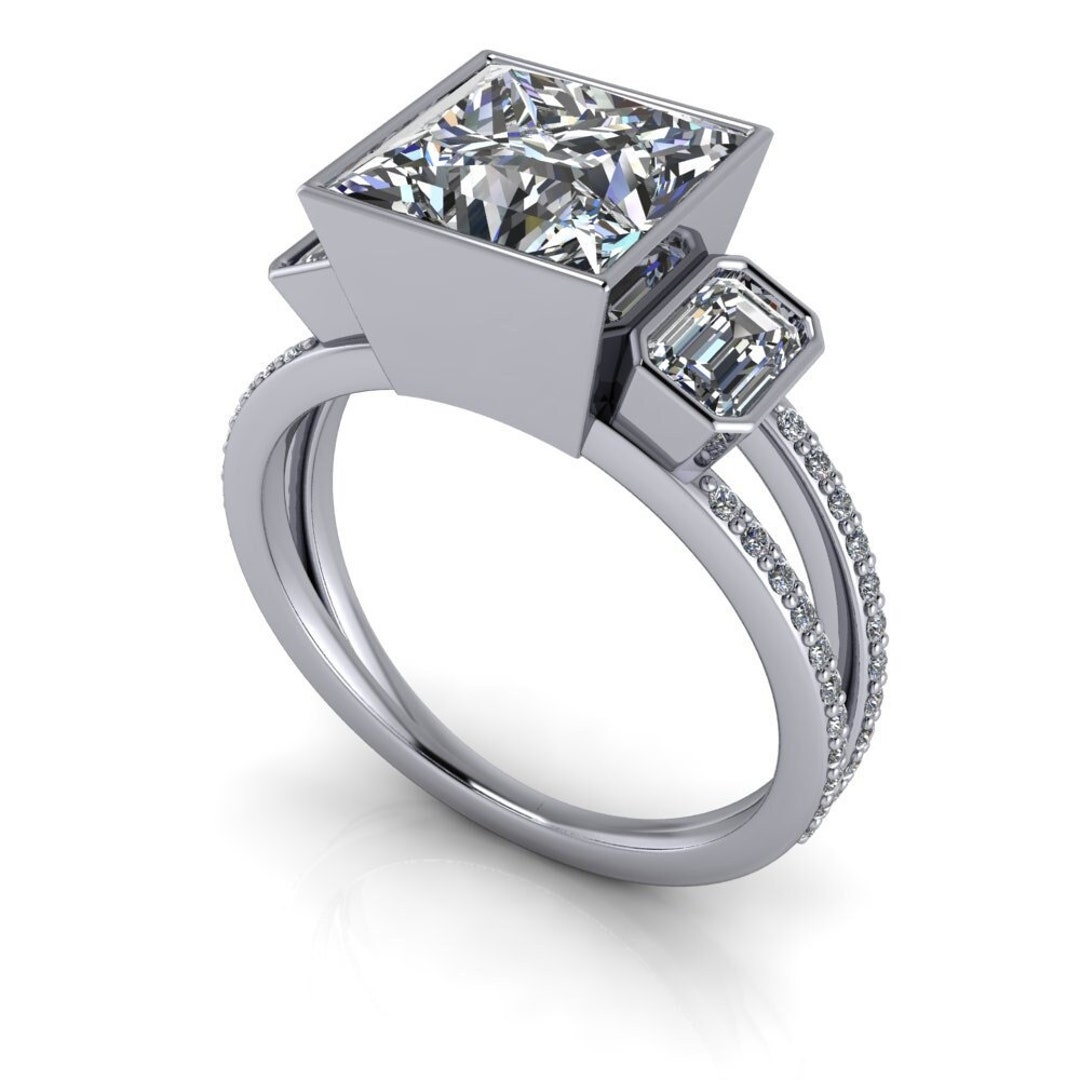
A 3 princess cut diamond ring typically ranges from $1,500 to over $30,000, depending heavily on total carat weight, diamond quality factors like the 4Cs, metal choice, and setting style. This guide breaks down the pricing tiers, design options, and structural variables to help you find the right balance between beauty and budget.
Choosing a diamond engagement ring is a significant emotional and financial investment. Among the myriad styles available, the three-stone ring stands out for its rich symbolism representing the past, present, and future of a relationship. When combined with the modern, geometric brilliance of the princess cut, the result is a striking piece of jewelry that commands attention. However, navigating the market for a three-stone princess cut ring requires an understanding of how multiple variables interact to influence the final price tag.
Unlike a solitaire ring, where the entire budget focuses on a single stone, a three-stone ring introduces complexity. You must evaluate a central diamond flanked by two side stones, ensuring they match harmoniously while staying within your financial parameters. This comprehensive overview examines the pricing structures, design options, technical specifications, and strategic considerations required to make an informed purchase.
Understanding the Three-Stone Princess Cut Concept
The three-stone ring design features a dominant center stone accompanied by two smaller side stones. In a princess cut configuration, these stones feature square or slightly rectangular shapes with sharp, uncut corners and brilliant-cut facets. This design creates a unique interplay of light, offering a different visual signature than round or emerald-cut stones.
Symbolism and Aesthetic Appeal
The primary driver behind the popularity of the three-stone setting is its meaning. Jewelers and couples often market and interpret the trio of stones as representing the stages of a relationship: what has been, what is now, and what is yet to come. Beyond the sentimental value, the geometry of the princess cut provides a contemporary, architectural aesthetic. The sharp corners and linear facets project a bold, clean-cut look that appeals to those who prefer modern sophistication over traditional soft curves.
The Challenge of Matching Multiple Diamonds
Purchasing a multi-stone ring is fundamentally different from buying a solitaire. The most critical technical challenge is diamond matching. The center stone and the two side stones must complement each other across several dimensions:
- Color Matching: A noticeably yellower side stone placed next to a colorless center stone will instantly draw the eye and disrupt the ring's visual harmony.
- Clarity Matching: While side stones can often be of a slightly lower clarity grade than the center stone—since they are smaller and disperse light rapidly—they must not contain prominent inclusions that are visible to the naked eye.
- Proportion and Sizing: The ratio between the center stone and the side stones dictates the overall silhouette. Traditional proportions feature side stones that are roughly half the carat weight or physical width of the center stone, though custom designs often feature tapered side stones or matching dimensions for a bolder look.
Comprehensive Breakdown of Pricing Variables
The price of a 3 princess cut diamond ring is not determined by a single factor. Instead, it is an aggregate of the gemological characteristics of all three stones, the cost of the precious metal, and the labor involved in crafting the setting.
The 4Cs of Diamond Grading
The Gemological Institute of America (GIA) established the 4Cs—Cut, Color, Clarity, and Carat weight—as the universal standard for evaluating diamonds. In a three-stone ring, you must evaluate these factors for multiple stones, which multiplies the complexity of the pricing calculation.
- Carat Weight: Total Carat Weight (TCW) is the sum of the center stone and both side stones. Because diamond prices increase exponentially rather than linearly with weight (a single 2-carat diamond costs significantly more than two 1-carat diamonds of identical quality), a three-stone ring can offer a clever way to achieve high total carat weight by distributing the weight across three distinct gems.
- Cut Quality: While GIA does not assign a formal cut grade to princess cuts in the same way they do for round brilliants, the depth percentage, table percentage, and symmetry are vital. A poorly cut princess cut will appear dark in the center (often called a "window" or "extinction" effect) and will lack the fiery sparkle characteristic of the cut.
- Color Grades: Princess cuts retain color more readily than round brilliant cuts. To the naked eye, a color grade in the G-H range often appears entirely face-up white, allowing buyers to save money compared to purchasing top-tier D-F stones.
- Clarity Grades: Because of the brilliant facet pattern, princess cuts mask inclusions relatively well. Eye-clean stones in the VS1 to SI1 clarity range typically offer the best value, provided the inclusions are not located near the sharp corners, which are vulnerable structural points.
Precious Metal Choices
The metal used for the band and the basket settings significantly impacts the baseline cost and ongoing maintenance of the ring.
| Metal Type | Price Range | Durability | Maintenance Requirements |
|---|---|---|---|
| 14K White Gold | Moderate | High | Requires periodic rhodium plating to maintain whiteness |
| 18K White Gold | Moderate to High | Moderate | Softer than 14K; requires rhodium plating |
| 14K / 18K Yellow Gold | Moderate to High | High | Low maintenance; classic warm appearance |
| Platinum | High | Very High | Develops a patina over time; highly durable and hypoallergenic |
Design Options and Customization Paths
When shopping for a 3 princess cut diamond ring, buyers can choose from a spectrum of pre-set designs or opt for custom configurations. Each path offers distinct advantages depending on your aesthetic preferences and budget flexibility.
Center Stone to Side Stone Proportions
The visual dynamics of the ring change dramatically based on the size relationship between the stones:
- Graduated Three-Stone Rings: The traditional format features a prominent center stone flanked by smaller side stones. This creates a focal point that emphasizes the central diamond while the side stones provide framing.
- Three-Stone Rings with Equal Stones: A modern, bold variation features three princess cut diamonds of nearly identical size. This requires high precision in matching the dimensions and optical properties of all three stones, creating a continuous band of brilliance across the finger.
- Tapered Side Stones: Some designs pair a square princess cut center stone with trapezoid or baguettes side stones, though keeping all three stones in the princess cut family maintains a uniform, sharp-cornered aesthetic.
Setting Styles for Princess Cuts
The way the diamonds are secured into the metal framework affects both the safety of the stones and the overall look of the ring.
- Prong Settings: The most common choice. Traditional four-prong settings hold each corner of the princess cut securely. V-prongs are strongly recommended for princess cut diamonds because they wrap around and protect the vulnerable sharp corners from chipping or impact.
- Bezel Settings: A metal rim surrounds the perimeter of the diamond. While extremely secure and snag-free, a full bezel can block light entry from the sides, slightly reducing the diamond's brilliance, though it offers a sleek, contemporary appearance.
- Bar and Channel Settings: While less common for three-stone rings (which typically highlight distinct stone separations), some transitional designs use bar settings to separate the center stone from the side stones cleanly.
Laboratory-Grown vs. Natural Diamonds
The choice between natural mined diamonds and laboratory-grown diamonds has transformed the engagement ring market, fundamentally altering pricing strategies for multi-stone configurations.
Cost Differences
Laboratory-grown diamonds share the exact same physical, chemical, and optical properties as natural diamonds. However, their production costs and market dynamics mean they typically cost 60% to 80% less than their natural counterparts of equivalent grade. For a three-stone ring—where you are purchasing three separate high-grade stones—this price differential becomes substantial. A natural diamond three-stone ring totaling 2.5 carats might easily exceed $20,000, whereas a laboratory-grown equivalent of identical quality can often be acquired for $4,000 to $7,000.
Resale and Value Considerations
Buyers must weigh the upfront savings of laboratory-grown diamonds against long-term value retention. Neither natural nor laboratory-grown engagement rings function as liquid investments; standard retail markups mean that selling a used ring back to the market generally yields a fraction of the purchase price. Natural diamonds historically retain a more stable baseline value due to perceived rarity, while laboratory-grown diamond prices have experienced downward market adjustments as technology and production efficiency scale. If the primary goal is maximizing visual size and quality within a fixed budget, laboratory-grown stones offer a compelling pathway.
Practical Guidance and Buying Strategies
Purchasing a three-stone princess cut ring requires careful planning to avoid overpaying or ending up with a structurally vulnerable piece of jewelry.
Prioritizing the Budget
Because you are purchasing multiple stones, it is easy to let costs spiral. To manage your budget effectively:
- Allocate the Core Budget to the Center Stone: The center stone should command roughly 60% to 70% of the total gemstone budget, with the remaining 30% to 40% split between the two side stones.
- Compromise on Side Stone Color and Clarity Safely: You can often drop one or two color and clarity grades on the side stones without noticing a visual difference, provided they match each other closely and do not clash with the center stone.
- Inspect the Certification: Ensure that all significant stones (particularly the center stone) come with independent grading reports from reputable gemological laboratories such as the GIA or the American Gem Society (AGS).
Common Mistakes to Avoid
- Neglecting Corner Protection: Failing to use V-prongs on princess cut diamonds leaves the four sharp 90-degree corners exposed to chipping during daily wear.
- Ignoring Matching Proportions: Buying side stones that are too small can make the ring look disjointed, while side stones that are too large will overwhelm the center stone, ruining the classic three-stone hierarchy.
- Skipping Comprehensive Insurance: Multi-stone settings carry a higher total value and feature multiple points of potential stone loss. Securing specialized jewelry insurance independent of standard homeowners or renters policies is essential.
Summary and Next Actions
A 3 princess cut diamond ring offers a timeless yet modern expression of commitment, balancing bold geometry with deep emotional symbolism. Pricing spans a wide spectrum, driven by total carat weight, diamond origin (natural versus lab-grown), precious metal selection, and the precision required to match multiple stones.
To take the next step, establish a realistic total budget, decide whether natural or laboratory-grown diamonds align with your values, and consult with a reputable jeweler who can source a matching trio of stones. Prioritize secure settings like V-prongs to protect the sharp corners of the princess cut, and ensure all primary diamonds are accompanied by independent laboratory grading reports.