Electricity is the flow of energy resulting from the movement of charged particles, primarily electrons, through a conductive medium. In 2026, it serves as the essential foundation for global infrastructure, powering everything from the microscopic transistors in quantum processors to the massive industrial grids that sustain modern civilization and the biological impulses within our own nervous systems.
While electricity is a daily constant in our lives, its true nature is often misunderstood. To understand how our world functions—ranging from the smartphones in our pockets to the massive shifts in renewable energy integration seen throughout 2026—we must examine the underlying physical realities of this force. Below are three fundamental facts about electricity that explain its behavior, its presence in nature, and the mechanical relationship that allows us to harness it.
1. The Speed of an Electrical Signal vs. the Speed of Electrons
One of the most counterintuitive facts about electricity is the massive discrepancy between the speed at which a "signal" travels and the actual physical movement of the electrons within a wire. Most people assume that when they flip a light switch, electrons race from the switch to the lightbulb at the speed of light. In reality, the physical electrons move at a pace slower than a garden snail.
Signal Velocity and the Electromagnetic Field
When you close a circuit, the "effect" of electricity—the energy that turns on a lamp—travels as an electromagnetic wave. This wave moves through the space surrounding the conductors and within the insulation at a significant fraction of the speed of light. In a typical copper wire, this signal velocity is roughly 70% to 90% of the speed of light (approximately 200,000 to 270,000 kilometers per second).
This near-instantaneous transmission occurs because the wire is already "full" of electrons. When a voltage is applied, it creates an electric field that exerts a force on all electrons in the circuit simultaneously. Think of a long pipe already filled with water; when you push a cup of water into one end, a cup of water immediately exits the other end. The pressure wave travels instantly, even if the individual water molecules have not yet traversed the length of the pipe.
The Concept of Drift Velocity
In contrast to the lightning-fast signal, the physical movement of individual electrons—known as drift velocity—is incredibly slow. In a typical household direct current (DC) circuit, an electron might move at a rate of approximately 0.01 centimeters per second. At this speed, it would take several hours for a single electron to travel through just one meter of wire.
In alternating current (AC) systems, which power the vast majority of homes in 2026, the electrons do not really "travel" anywhere at all. Instead, they vibrate back and forth 50 or 60 times per second (Hertz), staying essentially in the same spot while vibrating the electromagnetic field that carries the actual energy to the appliance.
Why This Distinction Matters
Understanding the difference between signal speed and electron speed is vital for high-speed data transmission and the design of modern electronics. As we push the limits of computing in 2026, engineers must account for the "propagation delay" caused by the physical limits of the electromagnetic wave, even as the electrons themselves remain nearly stationary. This fact also explains why electrical "noise" or interference can happen; the field exists outside the wire, not just inside the metal.
2. Electricity is the Primary Language of the Human Body
We often categorize electricity as a "man-made" utility, but it is fundamentally a biological phenomenon. Every thought, movement, and heartbeat you experience is the result of intricate electrical signaling. Without the body’s internal electrical system, the brain could not communicate with the muscles, and the heart would cease to pump.
The Mechanism of Bioelectricity
Biological electricity does not function exactly like the copper wiring in a home. While household electricity relies on the movement of electrons, the human body uses ions—atoms or molecules that have a net electric charge. The most common ions used by the body are sodium, potassium, calcium, and chloride.
The membranes of our cells, particularly neurons (nerve cells), act like tiny biological capacitors. They maintain a "resting potential" by keeping different concentrations of ions on the inside and outside of the cell wall. When a neuron is "fired," specialized channels in the cell membrane open, allowing ions to rush in and out. This rapid change in voltage is called an action potential, and it travels down the nerve fiber like a wave.
The Heart’s Internal Grid
The most prominent example of biological electricity is the human heart. The heart contains a specialized group of cells called the sinoatrial (SA) node, which acts as a natural pacemaker. This node generates a consistent electrical impulse that travels through the heart muscle, triggering it to contract in a coordinated rhythm.
In medical settings in 2026, we utilize this fact through Electrocardiograms (ECGs) to monitor heart health. By placing electrodes on the skin, doctors can detect the electrical leakage from the heart’s internal circuit. Furthermore, modern medical technology now uses targeted electrical stimulation to treat chronic pain and neurological disorders, effectively "speaking" the body’s native electrical language.
Atmospheric and Natural Electricity
Beyond the human body, electricity is a dominant force in the natural world. Lightning is perhaps the most dramatic display of static electricity. It occurs when a massive charge imbalance builds up between clouds and the ground. When the air—which is usually an insulator—can no longer resist the electrical pressure (voltage), it undergoes "dielectric breakdown," becoming a conductor for a split second.
The resulting bolt can reach temperatures of 30,000 Kelvin (approximately 53,540 degrees Fahrenheit), which is five times hotter than the surface of the sun. This sudden expansion of air due to heat creates the sonic boom we know as thunder.
3. The Inseparable Link Between Electricity and Magnetism
A third critical fact is that electricity and magnetism are not two separate forces, but two sides of the same coin: electromagnetism. This relationship, formalized by Michael Faraday and James Clerk Maxwell in the 19th century, is the reason we are able to generate and utilize large-scale power today.
Faraday’s Law of Induction
The majority of the world's electricity is generated through a process called electromagnetic induction. Faraday discovered that moving a conductor (like a copper wire) through a magnetic field—or changing the magnetic field around a conductor—induces an electric current to flow in that wire.
Whether a power plant uses coal, natural gas, nuclear energy, or wind, the end goal is almost always the same: to spin a turbine. That turbine spins a massive magnet inside a coil of wire. This mechanical motion is converted into electrical energy via the magnetic field. In 2026, even as we transition toward renewable sources, the physics of the generator remains the cornerstone of energy production.
The Role of Transformers and the Grid
The relationship between electricity and magnetism also allows us to transport power over long distances efficiently. Using transformers, we use magnetism to "step up" the voltage of electricity for transport across high-voltage lines.
- Induction in the Transformer: An alternating current flows through a primary coil, creating a fluctuating magnetic field.
- Magnetic Transfer: This magnetic field passes through a secondary coil.
- Voltage Conversion: Based on the number of wire loops in the coils, the voltage is either increased (to reduce energy loss during long-distance travel) or decreased (to make it safe for home use).
Magnetism in Everyday Devices
This link is also why your electric motors work. An electric motor is simply a generator running in reverse: instead of using motion to create electricity, it uses electricity to create a magnetic field that pushes against other magnets, creating motion. This principle powers everything from the cooling fans in your computer to the drivetrain of electric vehicles.
| Feature | Electricity (Electrostatics/Current) | Magnetism (Magnetostatics) |
|---|---|---|
| Primary Carrier | Electrons or Ions | Moving charges / Magnetic Dipoles |
| Basic Unit | Charge (Coulombs) | Flux (Webers) |
| Force Producer | Voltage (Potential Difference) | Magnetomotive Force |
| Interdependence | Moving charge creates a magnetic field. | Changing magnetic field creates an electric field. |
| Common Application | Heating, Lighting, Computing | Motors, Generators, MRI Machines |
Practical Implications for Energy Management in 2026
As we navigate the energy landscape of 2026, these three facts have direct practical applications for how we manage our homes and businesses. The transition toward "Smart Grids" relies heavily on the electromagnetic principles mentioned above to balance loads and prevent surges.
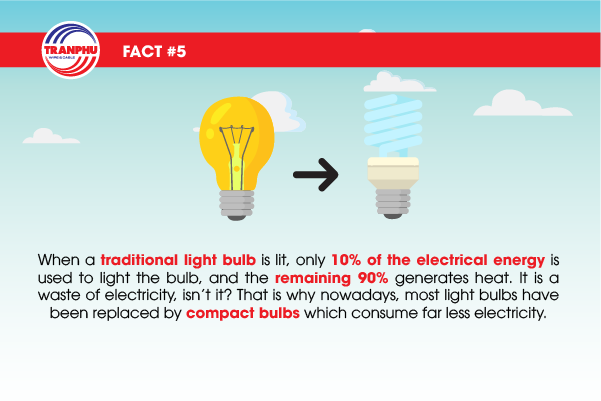
- Efficiency and Heat: Because electrons encounter resistance as they move (even slowly) through a conductor, they collide with atoms, converting some electrical energy into heat. This is why devices get warm. High-efficiency appliances in 2026 are designed to minimize this resistive loss.
- Safety Protocols: Understanding that the body is an electrical system explains why even small amounts of current are dangerous. A current of as little as 70 to 100 milliamperes (mA) can disrupt the heart's SA node, leading to a fatal arrhythmia. This is why Ground Fault Circuit Interrupters (GFCIs) are mandatory in modern construction.
- Storage Challenges: One of the most significant hurdles in 2026 remains the fact that electricity is difficult to store in its "pure" form. It must be converted into chemical energy (batteries) or potential energy (pumped hydro) because the electromagnetic field itself exists only as long as there is a source and a circuit.
Frequently Asked Questions
Why doesn't a bird get shocked when sitting on a power line?
A bird does not get shocked because it is not creating a path to the ground. For electricity to flow, there must be a difference in electrical potential (voltage). Since the bird has both feet on the same wire, its whole body is at the same electrical potential as the wire. If the bird were to touch the wire and a grounded object (like a utility pole or a different wire) simultaneously, the electricity would flow through the bird to reach the lower potential, resulting in a fatal shock.
Is electricity a form of matter?
No, electricity is not matter; it is a phenomenon associated with the presence and motion of matter that has a charge. While electrons are matter (subatomic particles with mass), the electricity itself refers to the energy or the flow. You cannot "weigh" electricity, although you can measure the mass of the particles that carry it.
What is the difference between AC and DC electricity?
Direct Current (DC) involves electrons flowing in a single, constant direction, commonly used in batteries and electronics. Alternating Current (AC) involves electrons periodically reversing direction, which is the standard for power grids because it is much easier to "step up" or "step down" in voltage using transformers for efficient long-distance transmission.
Can electricity travel through a vacuum?
Yes, electricity can travel through a vacuum, but it requires a different mechanism than a wire. In a vacuum, electrons can be ejected from a source (a cathode) and travel freely to a destination (an anode). This was the principle behind old cathode-ray tube (CRT) televisions and is still used today in certain types of specialized scientific equipment and space-based technologies.
How is electricity "made"?
Electricity is not technically "made" but rather "converted" from other forms of energy. According to the law of conservation of energy, energy cannot be created or destroyed. We convert mechanical energy (wind/steam), chemical energy (batteries), or radiant energy (solar panels) into electrical energy.
Moving Forward: Next Actions for the Consumer
Understanding the fundamental nature of electricity is the first step toward better energy literacy. In 2026, as electricity costs and environmental impacts remain at the forefront of public discourse, consumers should take the following actions:
- Conduct an Energy Audit: Identify where resistive heat loss is occurring in your home. Old wiring or inefficient appliances convert expensive electricity into wasted heat.
- Verify Safety Equipment: Ensure that your home is equipped with modern GFCIs and Arc Fault Circuit Interrupters (AFCIs). These devices detect the "leakage" of the electromagnetic field or irregular patterns that signify a fire hazard.
- Investigate Induction Technology: From kitchen cooktops to EV charging, induction technology (based on Fact #3) is often more efficient than traditional resistive heating or physical plug-in connections.
By respecting the speed, biological significance, and magnetic origins of electricity, we can better appreciate the complex system that keeps our 2026 world illuminated and connected.