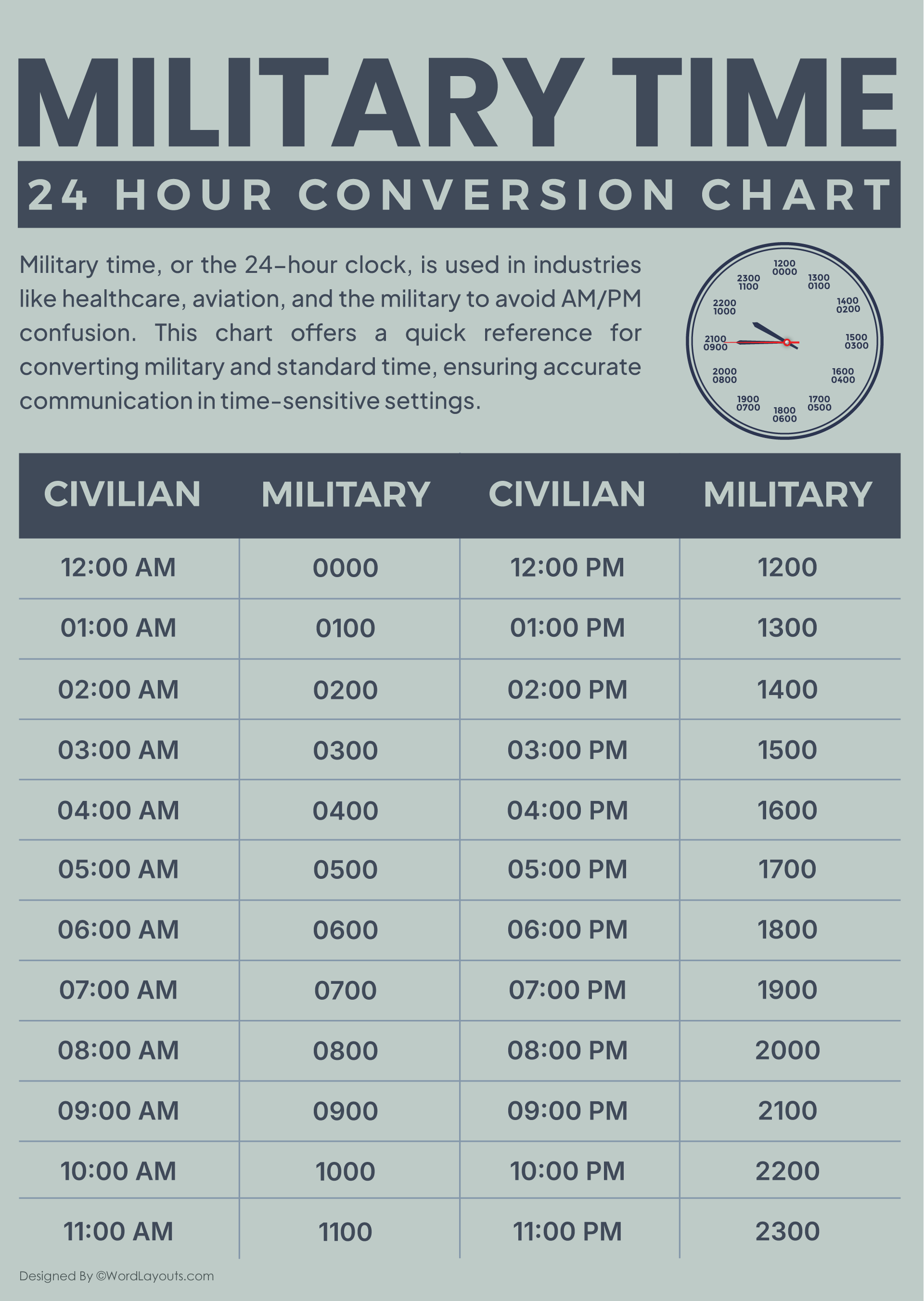
The 24-hour time system, often referred to internationally as military time or railway time, is a convention where the day runs from midnight to midnight and is divided into 24 hours, numbered from 00:00 to 23:59. It is the international standard for timekeeping, providing an unambiguous method of recording time that eliminates the potential confusion between ante meridiem (a.m.) and post meridiem (p.m.) periods.
Across the globe, the 24-hour clock is the standard in most countries for civil, industrial, and official use. While English-speaking regions like the United States, Canada, and Australia frequently utilize the 12-hour format in casual conversation and domestic settings, the 24-hour format remains the essential backbone for transportation, medicine, aviation, and computing. Understanding where and why this system is implemented is critical for global navigation, digital synchronization, and professional communication.
The Global Prevalence of the 24-Hour Clock
The 24-hour clock is not merely a technical alternative; for the majority of the world's population, it is the primary way of life. In most of Europe, South America, and large portions of Asia and Africa, the 24-hour clock is used in public life, including television schedules, transport timetables, and official government documentation.
For instance, in countries like France, Germany, and Spain, a train departure at 8:30 p.m. is exclusively displayed as 20:30. This uniformity prevents logistical errors that can arise when systems are required to distinguish between morning and evening hours. Because the system is based on the ISO 8601 standard for the representation of dates and times, it is the preferred format for international data exchange and scientific documentation.
Critical Sectors Requiring Unambiguous Timekeeping
While many individuals may choose their preferred format on personal devices, specific industries mandate the 24-hour clock to ensure safety and operational accuracy. When life, infrastructure, or complex data sets are at risk, the ambiguity of a 12-hour clock—which repeats the numbers 1 through 12 twice—is deemed an unacceptable risk.
Aviation and Maritime Navigation
Aviation and maritime industries operate across time zones, often crossing the International Date Line. To prevent catastrophic errors in flight planning or shipping schedules, these industries rely on Coordinated Universal Time (UTC) expressed in the 24-hour format. Whether a pilot is landing in London or Tokyo, the time is communicated in a format that remains constant, ensuring that communication between air traffic control and flight crews is never misinterpreted.
Healthcare and Emergency Services
In a hospital setting, medication administration, surgical logging, and emergency response records must be precise. If a patient requires a dose at 1:00, the 24-hour system distinguishes between 01:00 (middle of the night) and 13:00 (early afternoon) with absolute clarity. Using 12-hour labels in medical charts poses a significant risk of medication errors, which is why electronic health record systems globally are configured to the 24-hour standard.
Public Transportation and Logistics
Railway, bus, and flight schedules are the most common points of contact for the average person with the 24-hour clock. In countries where the 12-hour clock is the norm, such as the United States, transit systems still often use the 24-hour clock for printed schedules and digital displays to eliminate confusion. A schedule that reads "12:00" versus "00:00" is much easier to manage for automated systems than one that relies on "noon" or "midnight," which can be subject to language-dependent interpretation.
Computing and Digital Infrastructure
Behind every digital transaction, server log, and timestamp is a 24-hour clock. Programming languages, databases, and operating systems store time internally as a 24-hour value. When you view a timestamp on a file or an email header, the operating system converts that internal data into a human-readable format. Using 24-hour time in digital systems simplifies time-based arithmetic—calculating the duration between two events is significantly easier when you do not have to account for the modulo-12 transition and the a.m./p.m. shift.
Comparison of Time Formats
To understand the practical differences, it is useful to compare how specific moments appear in both formats. The primary functional difference lies in the "rollover" point; the 24-hour clock is continuous, whereas the 12-hour clock requires a reset.
| Event Time | 12-Hour Format | 24-Hour Format |
|---|---|---|
| Midnight (Start of day) | 12:00 AM | 00:00 |
| Early Morning | 6:00 AM | 06:00 |
| Noon | 12:00 PM | 12:00 |
| Afternoon | 2:30 PM | 14:30 |
| Evening | 8:00 PM | 20:00 |
| Late Night | 11:59 PM | 23:59 |
Why the 12-Hour Clock Persists in Certain Regions
Despite the efficiency of the 24-hour system, the 12-hour clock remains deeply embedded in the social and cultural identity of English-speaking countries. This is largely due to the mechanical heritage of clock faces. Until the rise of digital technology, the vast majority of consumer clocks were analog, featuring a circular dial with 12 hour markers. Because the human eye is accustomed to this interface, the 12-hour format continues to be the dominant choice for consumer watches and household clocks in the United States, Canada, and parts of the United Kingdom.
Furthermore, language patterns are resistant to change. Phrases like "five o'clock" are culturally ingrained and have a natural cadence that "seventeen hundred hours" does not replicate in casual, domestic conversation. Consequently, these regions have developed a "bilingual" relationship with time: they use the 12-hour clock for social interaction and the 24-hour clock for professional, technical, and travel-related purposes.
Common Challenges and Troubleshooting
Transitioning to or interpreting 24-hour time can be confusing for those accustomed to the 12-hour system. Below are common points of friction and how to resolve them.
Misinterpreting Midnight
The most common mistake occurs at the beginning and end of the day. Many people incorrectly assume that 24:00 is a valid time. According to ISO 8601, the day begins at 00:00. While 24:00 is sometimes used to signify the end of a business day, it is technically the same moment as 00:00 of the following day. When reading digital logs, look for 00:00 to signify the start of the current date.
The "Military Time" Misconception
In the United States, the 24-hour clock is colloquially known as "military time." While the two are functionally identical in their hour designations, there are minor differences in notation. In strict military usage, the colon is often omitted (e.g., 1430 hours), and leading zeros are always included (e.g., 0800 instead of 8:00). In civilian or scientific 24-hour usage, the colon is standard (14:30), and the word "hours" is omitted.
Converting Quickly
To convert a p.m. time to the 24-hour format, simply add 12 to the hour. For example, 3:00 p.m. becomes 3 + 12 = 15:00. To convert back, subtract 12. If you find yourself struggling with mental math, remember that all times from 00:00 to 11:59 remain unchanged, and all times from 13:00 to 23:59 represent the afternoon and evening hours.
Professional Considerations for 2026 and Beyond
As we move through 2026, the reliance on 24-hour time in digital systems continues to grow. If you are operating in a professional capacity, particularly in logistics, international trade, or IT, defaulting to the 24-hour format is considered best practice. It reduces the need for constant conversion and minimizes the risk of human error during cross-border communication.
If you are developing a product or service with a global user base, it is highly recommended to provide a toggle setting that allows users to switch between 12-hour and 24-hour formats. This inclusivity ensures that your service remains accessible to users in regions where 24-hour time is the default, while respecting the cultural preferences of those who prefer the 12-hour system.
Frequently Asked Questions
Why do some digital clocks display 00:00 while others show 12:00 at midnight?
This depends on the system's locale settings. A device set to a 24-hour format will display midnight as 00:00, whereas a device set to a 12-hour format will display 12:00 AM. If you see 00:00, the device is correctly utilizing the 24-hour standard.
Is "military time" the same as the 24-hour clock?
Yes, in terms of the hour values used. The term "military time" is primarily an American colloquialism. The underlying mathematical structure is identical, though military communications often use specific conventions like speaking the hour as a four-digit number followed by the word "hours."
Which countries use the 24-hour clock exclusively?
There are no countries where the 24-hour clock is used exclusively in speech; however, in countries such as France, China, and much of the Middle East, the 24-hour clock is the default for almost all written and formal communication, including TV listings, store hours, and government documents.
How do I change my smartphone to use 24-hour time?
On most modern smartphones, you can navigate to your "Date & Time" settings in the system preferences. There is typically a toggle labeled "Use 24-hour format." Enabling this will globally update the time display across your device, including your lock screen, calendar, and system notifications.
Does the 24-hour clock account for daylight saving time?
Yes. The 24-hour system is a way of formatting time, not a specific time zone or daylight saving policy. It follows the same rules as the 12-hour clock regarding shifts for daylight saving. When clocks move forward or backward, the 24-hour clock adjusts accordingly, just as a 12-hour clock would.
Final Action and Best Practices
For those residing in regions where the 12-hour clock is common, the best way to become proficient with the 24-hour system is to update the settings on your personal digital devices. By exposing yourself to the 24-hour format in your daily routine—on your phone, computer, and smart appliances—the mental conversion process becomes intuitive over time.
If you are traveling internationally, ensure that you rely on the 24-hour clock for all transportation logistics. Whether you are reading a train schedule in Berlin or a flight manifest in Dubai, utilizing the 24-hour system will ensure you remain perfectly synchronized with local infrastructure, preventing the confusion that often plagues travelers who rely on a.m./p.m. conventions in a 24-hour world.