For the 2023 Kia Sportage, the recommended tire pressure is typically 35 PSI (pounds per square inch) for all four tires under normal load conditions. This specification applies to most trim levels, including the LX, EX, and SX. However, always verify the exact requirements on the Tire and Loading Information placard located on the driver’s side B-pillar.
Proper tire maintenance is the cornerstone of vehicle safety, fuel efficiency, and handling precision. As we move through 2026, many 2023 Kia Sportage models are approaching their first or second major tire service intervals. Whether you are driving the gasoline-powered model, the Hybrid (HEV), or the Plug-in Hybrid (PHEV), understanding the nuances of your tire pressure monitoring system (TPMS) and specific inflation needs is vital for preserving the longevity of your vehicle’s drivetrain and suspension components.
Understanding Your 2023 Kia Sportage’s Recommended Tire Pressure
The 2023 Kia Sportage was a complete "NQ5" generation redesign, introducing a variety of wheel sizes and tire types ranging from 17-inch alloys to 19-inch sport wheels. Despite these differences in diameter, Kia has standardized the inflation pressure across most of the lineup to ensure a consistent ride quality and to calibrate the electronic stability control systems effectively.
The "Cold" Tire Pressure Standard
The manufacturer’s recommended 35 PSI is a "cold" inflation pressure. This means the pressure should be measured when the vehicle has been stationary for at least three hours or has been driven less than one mile. Friction between the rubber and the road generates heat, which causes the air inside the tire to expand. If you check your tires immediately after a long highway drive, the reading might be 38 to 40 PSI. Do not bleed air out of a hot tire to reach 35 PSI, as this will result in an under-inflated tire once the rubber cools down.
Trim-Specific Variations
While 35 PSI is the baseline, specific trims like the X-Pro and X-Pro Prestige come equipped with B.F. Goodrich All-Terrain tires. These tires feature a more aggressive tread pattern and stiffer sidewalls. While the street-operating pressure remains consistent with the placard, off-road enthusiasts occasionally "air down" for traction. However, for all paved road operations in 2026, adhering strictly to the 35 PSI standard is necessary to prevent irregular wear on these specialized tread blocks.
2023 Kia Sportage Tire Specifications by Trim
The following table outlines the common tire sizes and recommended pressures for the 2023 Kia Sportage lineup.
| Trim Level | Standard Tire Size | Recommended Cold PSI (Front/Rear) | Wheel Diameter |
|---|---|---|---|
| LX (Gas/HEV) | 235/65R17 | 35 / 35 | 17-inch |
| EX (Gas/HEV/PHEV) | 235/60R18 | 35 / 35 | 18-inch |
| SX & SX-Prestige | 235/55R19 | 35 / 35 | 19-inch |
| X-Line | 235/55R19 | 35 / 35 | 19-inch |
| X-Pro & X-Pro Prestige | 235/65R17 (All-Terrain) | 35 / 35 | 17-inch |
| PHEV (All Trims) | 235/55R19 | 35 / 35 | 19-inch |
Note: If you have equipped your Sportage with aftermarket wheels or different tire brands, the Load Index and Speed Rating must match or exceed the original equipment manufacturer (OEM) specifications.
Why Maintaining Correct Tire Pressure is Critical
Maintaining the precise 35 PSI recommended for the 2023 Sportage is not merely a suggestion; it impacts several mechanical and financial aspects of vehicle ownership.
Fuel Economy and EV Range
For owners of the Sportage Hybrid and PHEV, tire pressure directly correlates to the efficiency of the electrified powertrain. Under-inflated tires increase rolling resistance, forcing the gasoline engine to engage more frequently or draining the high-voltage battery faster. In 2026, with energy costs remaining a primary concern for drivers, maintaining optimal PSI can improve fuel economy by up to 3% according to the Department of Energy.
Tire Longevity and Tread Wear
Tires are a significant investment. Over-inflation (e.g., 42+ PSI) causes the center of the tread to bulge, leading to premature wear in the middle of the tire. Conversely, under-inflation causes the sidewalls to flex excessively, wearing down the "shoulders" of the tire. Given that the 2023 Sportage utilizes an advanced All-Wheel Drive (AWD) system (standard on many trims), uneven tire wear can put undue stress on the center differential, potentially leading to costly drivetrain repairs.
Safety and Braking Distance
Tire pressure dictates the size and shape of the "contact patch"—the area of rubber actually touching the road. Under-inflated tires can become "mushy," slowing down steering response during emergency maneuvers. More importantly, incorrect pressure can increase braking distances, particularly in wet or icy conditions where the tread's ability to evacuate water is compromised by the distorted shape of the tire.
How to Check and Adjust Tire Pressure on Your Sportage
By 2026, many drivers rely solely on digital sensors, but manual verification remains the gold standard for accuracy.
- Gather Tools: Use a high-quality digital or dial-type tire pressure gauge. The "pencil" style gauges are often less accurate over time.
- Locate the Valve Stem: Remove the plastic cap from the valve stem on one of the tires. Keep the cap in a pocket so it isn't lost.
- Take a Reading: Press the gauge firmly onto the valve stem. You should hear a brief hiss of air. The reading will then appear on the gauge.
- Compare to Placard: If the reading is below 35 PSI, use an air compressor to add air in short bursts. If it is above, use the small nipple on the back of the gauge to release air.
- Check the Spare: If your 2023 Sportage is equipped with a temporary "donut" spare (common in gas models), it usually requires a much higher pressure, typically 60 PSI. Note that many Hybrid and PHEV models do not include a spare tire, instead providing a Tire Mobility Kit (sealant and a small compressor).
The Tire Pressure Monitoring System (TPMS) in the 2023 Sportage
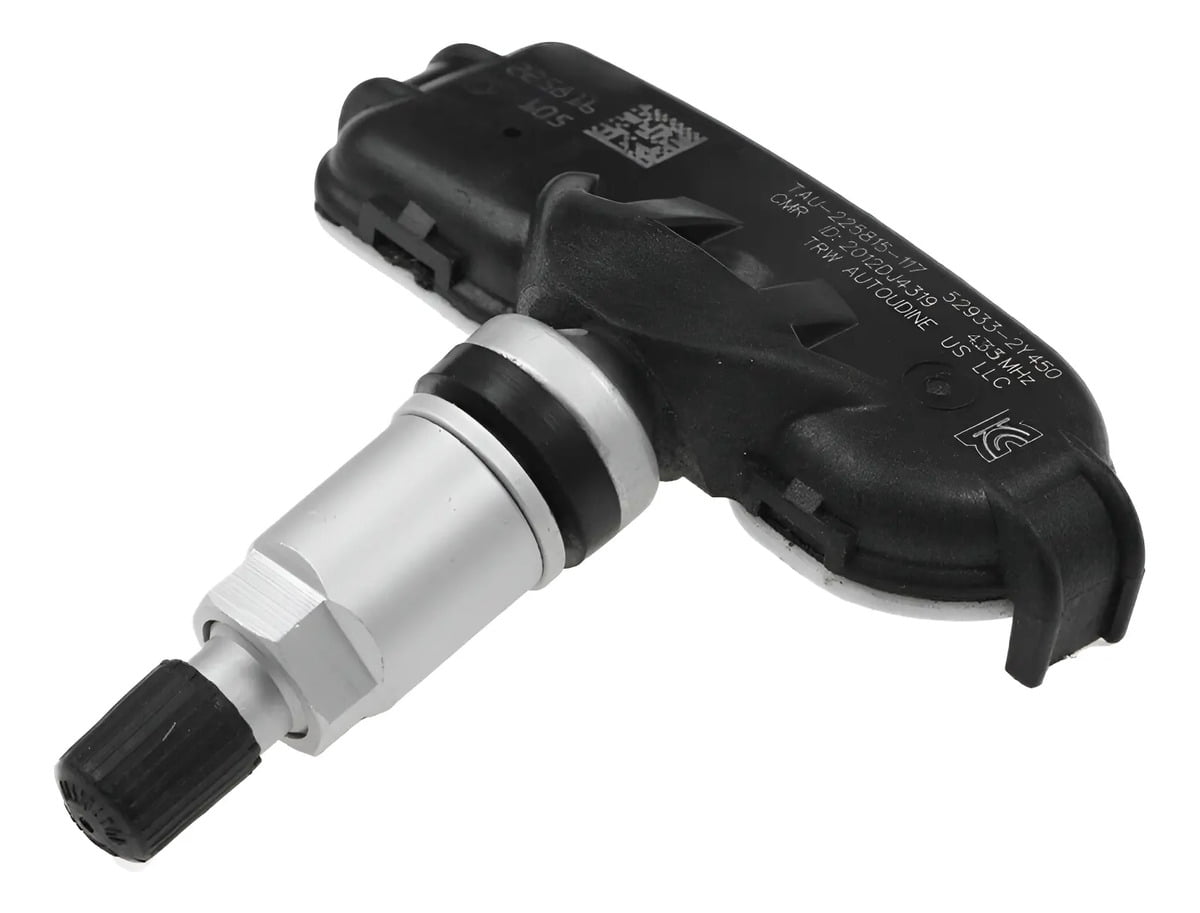
The 2023 Kia Sportage utilizes a Direct TPMS. This means there is a physical pressure sensor mounted inside each wheel as part of the valve stem assembly. These sensors transmit real-time data to the vehicle’s ECU (Electronic Control Unit).
Viewing Real-Time Pressure
On the 2023 Sportage, you can view the individual pressure of each tire through the instrument cluster. Use the "Mode" button on the steering wheel to toggle to the vehicle information menu (represented by a document icon). Scroll down until you see the tire pressure display.
Note: The vehicle usually needs to be driven for several minutes at speeds above 15 mph (25 km/h) before the sensors "wake up" and provide a current reading.
The Low Pressure Warning Light
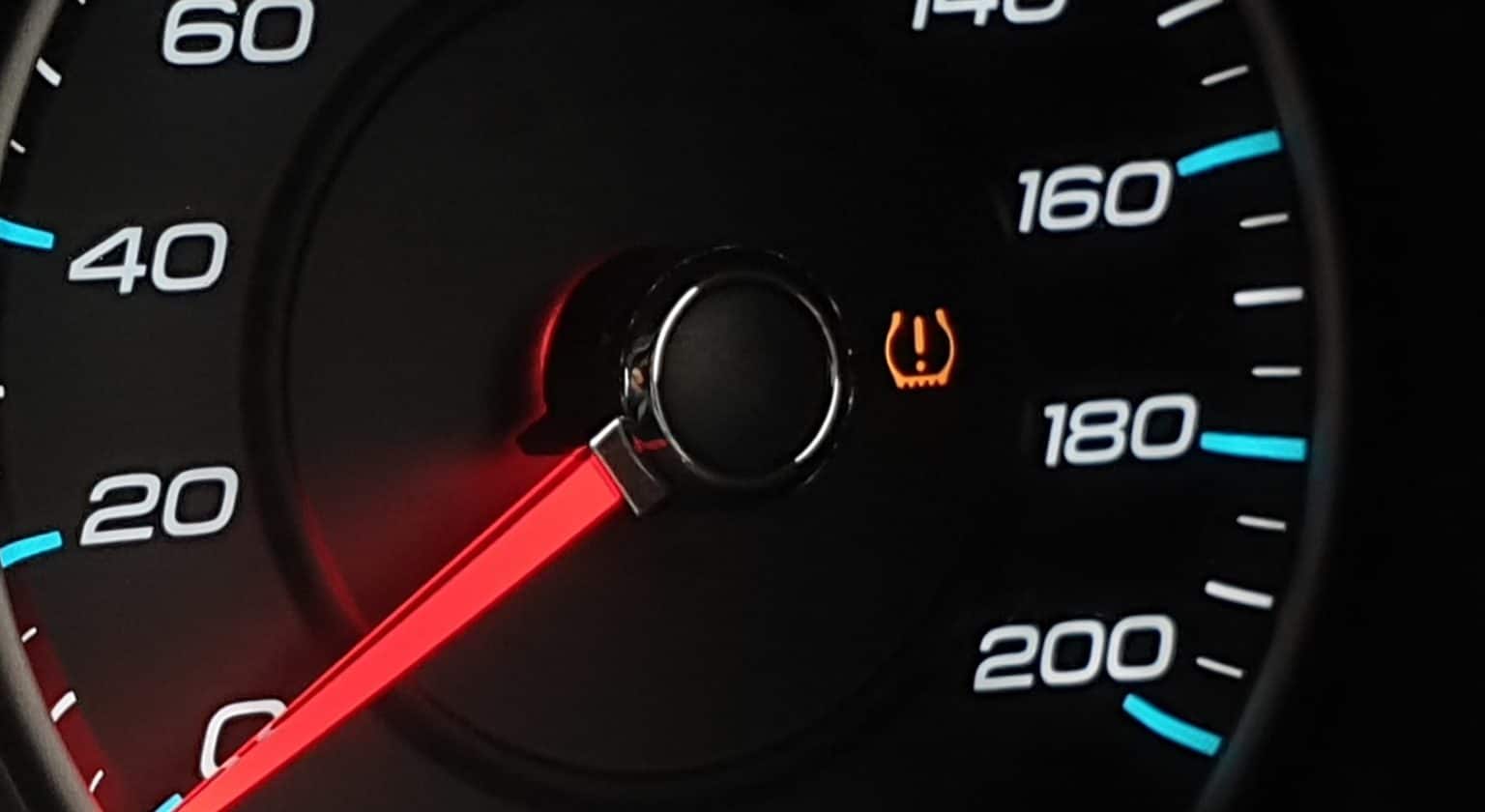
When a tire drops approximately 20-25% below the recommended 35 PSI, a yellow horseshoe-shaped icon with an exclamation point will illuminate on the dashboard. In the 2023 model, this is often accompanied by a graphic indicating exactly which tire is low.
Troubleshooting Common TPMS Issues and Warnings
As the 2023 Sportage enters its fourth year of service in 2026, owners may begin to encounter common TPMS-related issues.
The Self-Learning Reset Procedure
Unlike older vehicles, the 2023 Kia Sportage does not have a manual "TPMS Reset" button under the dash. The system is self-learning. Once you have inflated all tires to the correct 35 PSI (including the spare, if the system monitors it), you simply need to drive the car. Usually, after 5 to 10 minutes of consistent driving above 20 mph, the light will extinguish itself as the sensors recalibrate.
TPMS Light Flashing vs. Steady
- Steady Light: One or more tires are low on air. This is an inflation issue.
- Flashing Light: If the light flashes for about one minute and then stays on, there is a malfunction with the system itself. This often indicates a failed sensor battery or a sensor that was damaged during a tire change. TPMS sensor batteries typically last 5 to 10 years, but premature failure can occur.
Temperature-Induced Warnings
In many regions, the first cold snap of autumn triggers the TPMS light. For every 10-degree Fahrenheit drop in temperature, tire pressure drops by approximately 1 PSI. If your tires were at 34 PSI on a warm day, a sudden cold night could drop them to 31 PSI, triggering the sensor. Simply refill them to 35 PSI when cold to resolve this.
Seasonal Adjustments: Driving in Winter and Summer
The 2023 Sportage is often used as a family commuter and adventure vehicle, meaning it faces diverse weather conditions.
Summer Considerations
In peak summer heat, asphalt temperatures can exceed 140°F. This heat transfers to the tires. While you should still set your cold pressure to 35 PSI, be mindful that high heat increases the risk of blowouts if the tires have existing structural damage or "bubbles" in the sidewall. Inspect your tires for dry rot or cracks, especially as the 2023 OEM tires may be showing signs of aging by 2026.
Winter Considerations
If you swap to dedicated winter tires (like Bridgestone Blizzaks or Michelin X-Ice), ensure they are also inflated to the 35 PSI specified by Kia, unless the tire manufacturer explicitly states otherwise for a specific load. Winter tires have softer compounds that perform best when the contact patch is maintained at the factory-specified dimensions.
Long-Term Tire Care and Rotation
To maximize the life of your tires on the 2023 Sportage, inflation is only half the battle.
- Rotation Schedule: Kia recommends rotating tires every 7,500 to 10,000 miles. For AWD models, this is particularly important to ensure all four tires wear at the same rate.
- Alignment: If you notice the steering wheel is off-center or the car "pulls" to one side, your alignment may be out. This will cause rapid tire wear regardless of whether your PSI is correct.
- Inspection: Every month, perform a visual check for nails, screws, or "feathering" (where the edges of the tread blocks feel sharp in one direction but smooth in the other).
Frequently Asked Questions
Can I put 40 PSI in my Kia Sportage tires for better gas mileage?
While higher pressure reduces rolling resistance slightly, exceeding the manufacturer's recommendation of 35 PSI is not advised. At 40 PSI, the ride will become significantly harsher, increasing the vibration felt in the cabin. More importantly, it reduces the tire's grip on the road and causes uneven wear, which will cost you more in replacement tires than you would save in fuel.
Why does my TPMS light stay on after I filled the tires?
This is a common concern. The 2023 Sportage requires a short "drive cycle" to reset the light. If you have filled the tires to 35 PSI and the light remains on after 15 minutes of driving, double-check your pressure with a manual gauge. If the pressure is correct, one of the sensors may have failed or requires professional recalibration at a service center.
Does the 2023 Kia Sportage show the pressure for each individual tire?
Yes. The 2023 Sportage features a high-resolution digital display in the instrument cluster that provides individual PSI readings for all four tires. This allows you to identify exactly which tire is leaking or under-inflated without having to check each one manually first.
What should I do if I have a flat tire and no spare?
If your 2023 Sportage (HEV/PHEV) came with a Tire Mobility Kit, follow the instructions on the canister to inject sealant and air into the tire. This is a temporary fix meant to get you to the nearest service station. Note that the sealant can sometimes gum up the TPMS sensor, which may need to be cleaned or replaced afterward.
Is Nitrogen better than regular air for my Sportage?
Nitrogen is less susceptible to pressure fluctuations caused by temperature changes because it has larger molecules that permeate through rubber more slowly than oxygen. While it is beneficial for maintaining a stable 35 PSI over longer periods, regular compressed air is perfectly adequate as long as you check your pressures monthly.
Final Recommendation
For the best balance of safety, comfort, and efficiency in your 2023 Kia Sportage, maintain a cold tire pressure of 35 PSI. Use the onboard digital display to monitor your levels weekly, and perform a manual check with a high-quality gauge once a month. As the vehicle ages into 2026, pay close attention to tread depth and sidewall integrity, ensuring that your tires are ready for the varied demands of modern driving. If the TPMS warning persists despite correct inflation, seek a professional diagnostic to ensure the sensors and communication modules are functioning correctly.