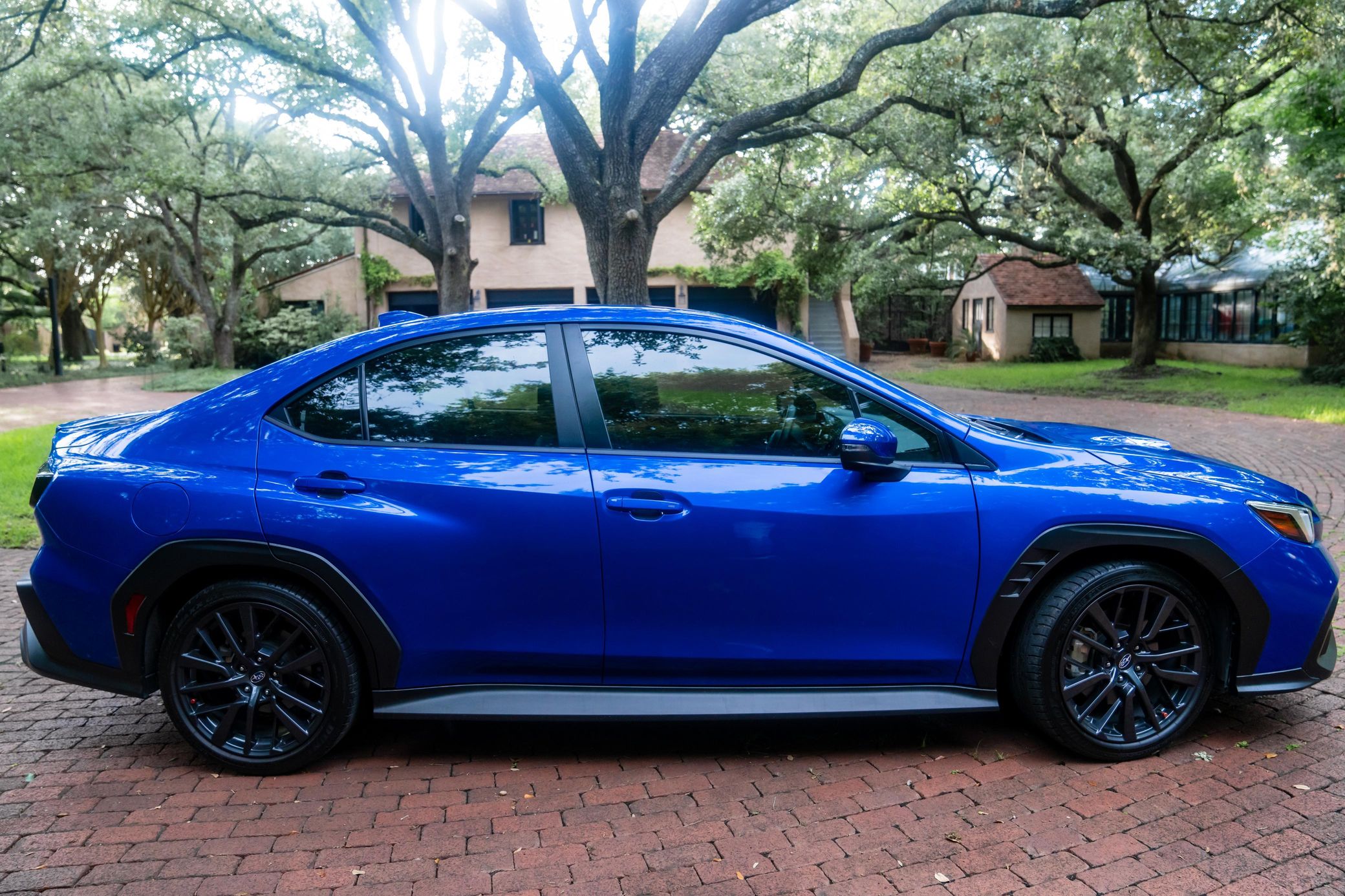
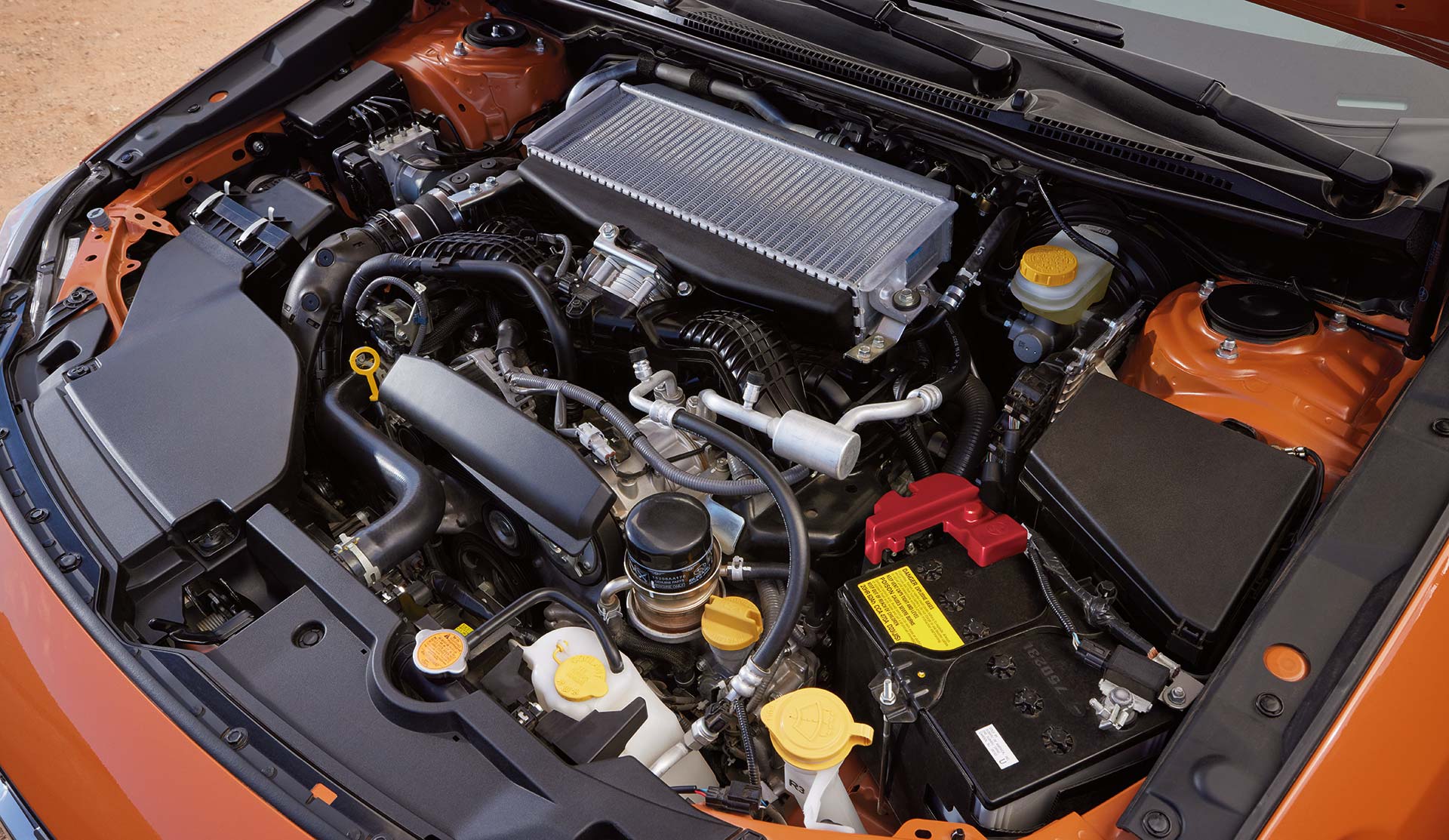
The 2022 Subaru WRX (VB generation) utilizes a Garrett twin-scroll turbocharger integrated into the 2.4-liter FA24F boxer engine. This configuration prioritizes immediate torque availability and a linear power band over high-pressure peak boost. By pairing a larger displacement engine with a highly efficient, electronically controlled turbocharger, Subaru refined the vehicle’s driveability while maintaining its signature performance.
The Shift to the FA24F Engine Architecture
To understand the 2022 WRX turbocharger, one must first understand the engine it feeds. In 2022, Subaru transitioned the WRX from the aging 2.0-liter FA20F to the 2.4-liter FA24F. While this engine was previously seen in the Subaru Ascent and Outback XT, the WRX variant received specific tuning and internal refinements to suit a sport sedan profile.
The increase in displacement by 400cc is the most significant factor in how the turbocharger behaves. In the previous generation (2015–2021), the 2.0L engine relied heavily on high boost pressures (peaking around 15.9 psi) to generate its 268 horsepower. This often resulted in "peak-y" power delivery—a sudden surge of boost followed by a noticeable taper at high RPMs.
By contrast, the FA24F in the 2022 model produces 271 horsepower and 258 lb-ft of torque using significantly less boost pressure, typically peaking around 12–12.5 psi in stock configuration. The "replacement for displacement" philosophy allowed Subaru to use a turbocharger that doesn't have to work as hard to move the same amount of air, leading to lower intake temperatures and better long-term reliability.
Technical Specifications: The Garrett Twin-Scroll System
The heart of the 2022 WRX's forced induction system is a Garrett-sourced MGT22 series turbocharger. This unit is a twin-scroll design, which is a critical piece of technology for reducing lag and improving engine efficiency.
Twin-Scroll Mechanics
A twin-scroll turbocharger features two separate exhaust gas inlets and two nozzles—one smaller and sharper for quick response, and one larger and more angled for high-end performance. In the WRX's flat-four configuration, the exhaust pulses from cylinders 1 and 4 are fed into one scroll, while cylinders 2 and 3 feed the other.
This separation prevents exhaust gas interference. In a single-scroll setup, the exhaust pulse from one cylinder might conflict with the scavenging process of another, creating turbulence that slows down the turbine wheel. The twin-scroll design ensures that pulses hit the turbine wheel at regular intervals, allowing the turbo to "spool" or reach operational speed much faster—often as low as 2,000 RPM.
Electronic Wastegate (EWG) Control
A major upgrade for the 2022 model year was the adoption of a fully electronic wastegate actuator. Older WRX models used pneumatic wastegates controlled by boost solenoids. While effective, pneumatic systems are subject to the physical limitations of springs and vacuum lines, which can lead to "boost creep" or inconsistent pressure in extreme weather.
The 2022 WRX's electronic wastegate allows the Engine Control Unit (ECU) to manipulate the wastegate flap with surgical precision. This results in:
- Faster Warm-up: The ECU can hold the wastegate open during cold starts to heat up the catalytic converter faster, reducing emissions.
- Precise Boost Targets: The system can adjust instantly to atmospheric pressure changes (such as driving through mountain passes).
- Part-Throttle Efficiency: The wastegate can be opened during cruising to reduce pumping losses, slightly improving fuel economy when the driver isn't demanding power.
Performance Characteristics and Boost Delivery
As of 2026, the 2022 WRX is well-regarded for its "diesel-like" torque curve, a direct result of its turbocharger mapping. Unlike the older EJ-series engines found in STIs, which required the driver to wait until 4,000 RPM for significant power, the 2022 WRX provides peak torque from 2,000 to 5,200 RPM.
Boost Pressure vs. Air Volume
A common misconception among enthusiasts is that "less boost equals less power." However, because the FA24F is a larger air pump than its predecessor, it can achieve the same mass airflow at 12 psi that the old 2.0L achieved at 15 psi. Lower boost pressure reduces the "charge air temperature"—the heat generated when air is compressed. Cooler air is denser and more resistant to "knock" or pre-detonation, which allows the ECU to run more aggressive ignition timing safely.
The Bypass Valve (BPV)
The 2022 WRX uses a recirculating bypass valve rather than a blow-off valve (BOV). When the driver lifts off the throttle, the BPV redirects pressurized air back into the intake tract before the turbo inlet. This keeps the turbine wheel spinning faster during shifts and ensures that the mass airflow sensor (MAF) readings remain accurate, preventing the engine from running overly rich during gear changes.
2021 vs. 2022 WRX Turbocharger Comparison
| Feature | 2015–2021 WRX (VA) | 2022–Current WRX (VB) |
|---|---|---|
| Engine Code | FA20F (2.0L) | FA24F (2.4L) |
| Turbo Manufacturer | Garrett / Honeywell | Garrett |
| Wastegate Type | Pneumatic / Vacuum | Electronic (EWG) |
| Peak Boost (Stock) | ~15.9 PSI | ~12.0–12.5 PSI |
| Torque Peak | 2,000–5,200 RPM | 2,000–5,200 RPM |
| Horsepower | 268 hp | 271 hp |
| Intercooler Type | Top-Mount (Small) | Top-Mount (Increased Surface Area) |
Heat Management and the Intercooler System
Turbocharging inherently generates heat, and Subaru continues to utilize its iconic top-mount intercooler (TMIC) for the 2022 WRX. For this generation, the intercooler was redesigned with a larger core and improved ducting integrated into the underside of the hood scoop.
The efficiency of the TMIC is paramount. Because the turbocharger is located at the bottom-front of the engine (for a lower center of gravity), the compressed air must travel up to the intercooler and then down into the intake manifold. While front-mount intercoolers (FMIC) are popular in the aftermarket for 2026-era builds, the stock TMIC is optimized for minimal "transit volume," which contributes to the 2022 WRX's nearly instantaneous throttle response.
Thermal Insulation
Subaru engineers also implemented better heat shielding around the turbocharger housing. Since the turbo sits near the oil pan and various steering components, managing radiant heat is essential for preventing "heat soak," a condition where the intercooler becomes too hot to effectively cool the intake air, resulting in the ECU pulling back power to protect the engine.
Tuning Potential and Aftermarket Considerations
By 2026, the aftermarket for the VB WRX has matured significantly. Tuners have discovered that the 2.4L engine and its Garrett turbocharger have a much higher "ceiling" than the previous generation.
Stage 1 and Stage 2 Pathways
On the stock turbocharger, simple ECU recalibrations can safely increase boost to approximately 18–20 psi. Because the FA24F has stronger connecting rods and a larger displacement, these "Stage 1" tunes frequently yield gains of 50–70 lb-ft of torque without hardware changes.
However, the limiting factor for the 2022 WRX turbo system is often the plastic "charge pipe" (the tube connecting the turbo to the intercooler) and the factory electronic bypass valve, which can leak pressure at higher-than-stock boost levels. Upgrading these to aluminum or reinforced silicone components is a standard recommendation for those seeking higher performance.
The Limits of the Stock Turbo
While the Garrett MGT22 is highly efficient, it is sized for response rather than top-end speed. For drivers looking to exceed 400 wheel horsepower, the stock turbocharger eventually runs out of "breath" at high RPMs. In these cases, the 2022 WRX's electronic wastegate infrastructure makes it easier to integrate larger aftermarket turbos while maintaining sophisticated boost control that was previously impossible on older Subaru platforms.
Maintenance and Longevity
To ensure the 2022 WRX turbocharger lasts for the life of the vehicle, specific maintenance protocols are required. Turbochargers are lubricated and cooled by the engine oil, meaning oil quality is the single most important factor in turbo health.
- Oil Selection: Subaru recommends 0W-20 synthetic oil for the FA24F. However, many enthusiasts and technical experts who drive the car aggressively or live in hot climates often switch to 5W-30 synthetic to provide better shear resistance at the high temperatures the turbocharger bearings encounter.
- Cool-Down Periods: Modern Subaru turbos are water-cooled and utilize a siphoning effect to circulate coolant even after the engine is turned off. However, after a high-load "spirited" drive, it is still best practice to let the engine idle for 30–60 seconds before shutoff to allow the oil to carry heat away from the turbine shaft.
- Air Filtration: The compressor wheel spins at speeds exceeding 150,000 RPM. Even tiny particles of dust or debris passing through a poor-quality air filter can cause "denting" on the compressor fins, leading to imbalance and eventual bearing failure.
Troubleshooting Common Turbo Issues
As the 2022 WRX fleet ages toward 2026 and beyond, owners should be aware of specific indicators of turbocharger stress:
- Boost Leaks: If the car feels sluggish or makes a high-pitched whistling sound under acceleration, the rubber couplers on the intercooler or the plastic charge pipe may have developed a crack or loosened.
- Oil Blow-by: Direct-injection engines like the FA24F can suffer from oil vapor being pulled back into the intake. Over time, this can coat the intercooler fins and reduce its cooling efficiency. Many owners install an "Oil Catch Can" or "Air Oil Separator" (AOS) to mitigate this.
- Wastegate Rattle: While rare on the electronic units, a metallic rattling sound during deceleration can indicate wear in the wastegate linkage.
Frequently Asked Questions
What is the maximum boost pressure on a stock 2022 WRX?
In factory trim, the 2022 WRX typically sees a peak boost of 12.0 to 12.5 psi. Some owners may see brief "overboost" spikes of up to 13.5 psi depending on ambient temperature, gear selection, and load. This is significantly lower than the 15.9 psi seen in the 2021 model, but the 2022 engine moves more air volume due to its 2.4L displacement.
Does the 2022 WRX use a Garrett turbo?
Yes, the 2022 WRX uses a Garrett MGT22 series turbocharger. This is a departure from some older generations that used Mitsubishi (MHI) or IHI units. The Garrett unit is favored for its modern twin-scroll design and compatibility with electronic wastegate actuators.
Can you put a blow-off valve on the 2022 WRX?
While possible, it is generally not recommended unless the vehicle is specifically tuned for it. The 2022 WRX uses a Mass Air Flow (MAF) sensor system. A blow-off valve vents air to the atmosphere that the ECU has already "counted" and fueled for. This causes a momentary rich condition, which can lead to stumbling, backfiring, and potential damage to the catalytic converter over time. A high-quality recirculating bypass valve is a better performance alternative.
Why is the 2022 WRX turbo located at the bottom of the engine?
Subaru moved the turbocharger to a "low-mount" position (at the front-bottom of the engine) beginning with the FA-series engines. This shortens the distance exhaust gases have to travel from the cylinder heads to the turbo, which reduces energy loss and improves spool time. It also helps lower the car's center of gravity, improving handling.
How does the electronic wastegate benefit the 2022 WRX?
The electronic wastegate (EWG) provides superior boost control compared to traditional pneumatic systems. It allows the ECU to precisely manage boost regardless of spring pressure or vacuum, leading to smoother power delivery, better cold-start emissions, and more consistent performance across different altitudes and temperatures.
Final Recommendation: Optimizing the System
For owners of the 2022 WRX looking to maximize the potential of their turbocharger system, the most impactful first step is a high-quality electronic tuning solution combined with a high-flow air filter. These modifications respect the engineering of the Garrett twin-scroll unit while unlocking the inherent headroom of the 2.4L FA24F engine. For those concerned with longevity, the addition of an Air-Oil Separator is the best preventative measure to keep the turbocharger and intercooler clean of oil contamination.