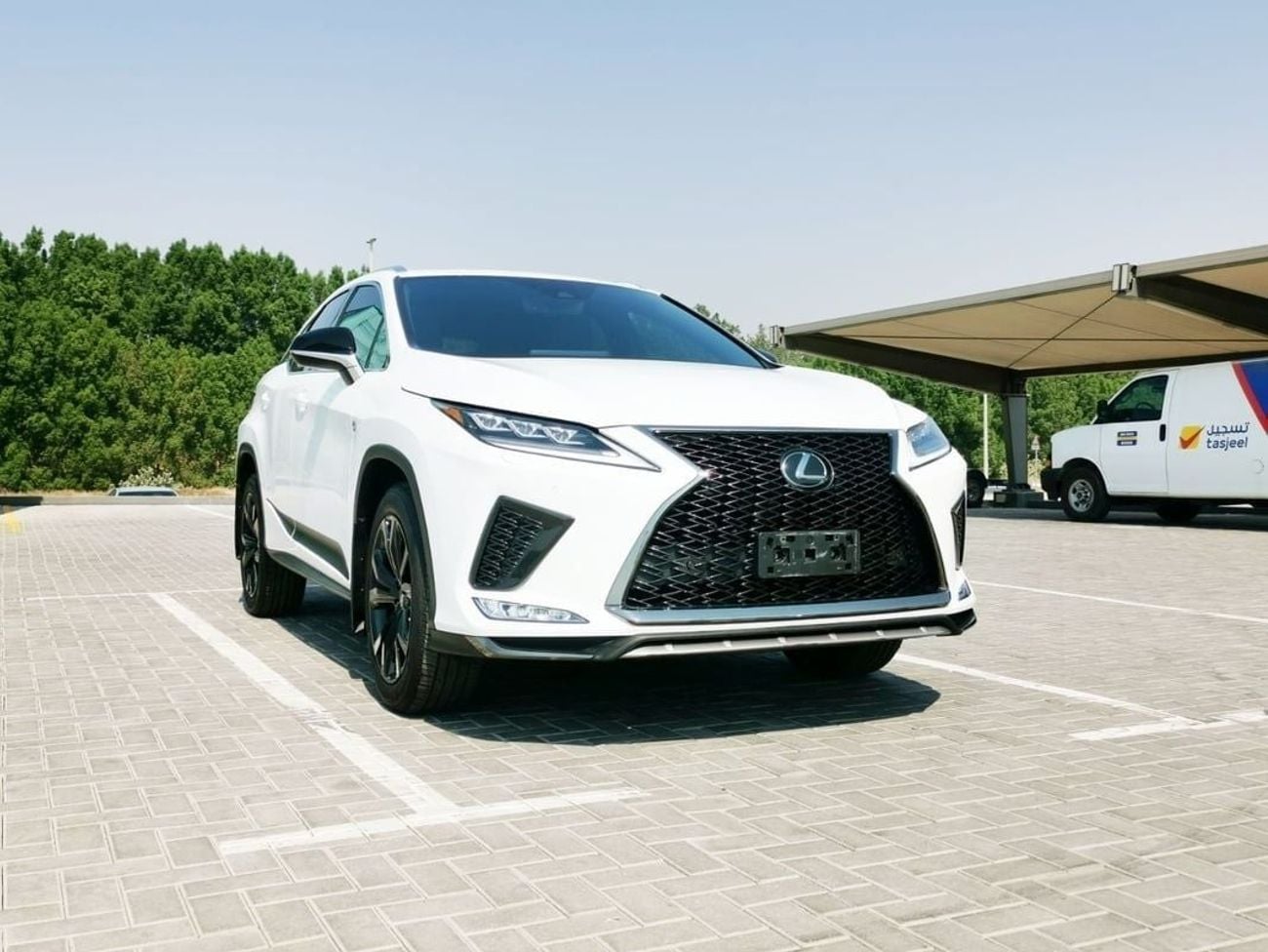
The 2021 Lexus RX 350 F Sport stands as a pivotal iteration in the fourth generation of the luxury crossover SUV line, characterized by its transition into standardized advanced safety suites and refined aesthetic styling. Launched in late 2020 as a 2021 model, this version solidified the mid-cycle refresh architecture that defined the late-stage lifecycle of the RX 350 before the platform overhaul in 2023.
Historical Context and Model Positioning
To understand the 2021 Lexus RX 350 F Sport, one must recognize its place within the broader timeline of the fourth-generation Lexus RX (AL20). Introduced for the 2016 model year, the fourth generation brought a bold, aggressive design language—the "spindle grille"—and a sharp, angular aesthetic that departed significantly from the softer, rounded profiles of its predecessors.
By 2020, Lexus implemented a comprehensive mid-cycle refresh that carried over into the 2021 model year. This period was characterized by incremental structural improvements, including increased chassis rigidity via laser screw welding and adhesive bonding, and the standard implementation of the Lexus Safety System+ 2.0. The "F Sport" trim, specifically, functioned as a performance-oriented appearance package rather than a standalone mechanical transformation, focusing on sport-tuned suspension, bolstered seating, and distinctive interior and exterior trim pieces.
Key Milestones in the 2021 Model Year Timeline
The timeline for the 2021 Lexus RX 350 F Sport was dictated by the manufacturing cycles of the Toyota Motor Manufacturing Canada (TMMC) plant in Cambridge, Ontario.
- Announcement and Debut (Q3 2020): Lexus formally announced the 2021 model year updates in the summer of 2020. The primary focus of this announcement was the expansion of standard safety features and minor adjustments to color palettes and equipment packages.
- Market Arrival (Q4 2020): Dealerships across North America began receiving inventory in late 2020. This timing was critical as the automotive industry navigated supply chain volatility, yet the 2021 RX 350 remained one of the most consistent performers in the mid-size luxury SUV segment.
- Lifecycle Maturation (2021–2022): Throughout its tenure as the current model, the 2021 RX 350 served as a bridge. It utilized the mature, highly reliable 3.5-liter V6 engine—the 2GR-FKS—which had been perfected over years of production.
- Transition to Next Generation (2023): The model year 2021 represented one of the final years for the V6-powered RX before the industry-wide shift toward turbocharged four-cylinder engines and hybrid-only powertrains in the fifth generation.
Technical Specifications and F Sport Distinctions
The 2021 Lexus RX 350 F Sport was defined by a specific set of hardware and software configurations that distinguished it from the base trim levels. While the core engine remained the 295-horsepower 3.5L V6, the F Sport package introduced the Sport S+ drive mode, which altered the throttle response and adjusted the Adaptive Variable Suspension (AVS).
The AVS system is a critical technical component. It continuously monitors and adjusts the damping force at each wheel, providing a dual-natured driving experience: supple and comfortable in Normal mode, or firm and responsive in Sport S+. This mechanical nuance was a primary selling point for consumers who desired the reliability of the RX platform with a more engaging "feel" on winding roads.
Comparison of Trim Features
| Feature | Standard RX 350 | RX 350 F Sport |
|---|---|---|
| Suspension | MacPherson Strut/Double Wishbone | Adaptive Variable Suspension (AVS) |
| Drive Modes | Normal, Eco, Sport | Normal, Eco, Sport S, Sport S+ |
| Interior Trim | Wood/Leather | F Sport Scored Aluminum |
| Exterior | Standard Grille | F Sport Mesh Grille & Badging |
| Seating | Power-adjustable | Performance-bolstered seats |
Requirements and Ownership Considerations
For potential buyers or current owners evaluating the 2021 RX 350 F Sport in 2026, understanding the maintenance requirements is paramount. Because this vehicle relies on a naturally aspirated V6, it avoids the complexities associated with modern small-displacement turbocharging.
Regular Maintenance Prerequisites:
- Engine Oil: The 2GR-FKS engine requires full synthetic 0W-20 oil. Strict adherence to the 10,000-mile service interval is standard, though many owners opt for 5,000-mile intervals if the vehicle is used primarily for short-distance city commuting.
- Transmission: The 8-speed automatic transmission (Aisin) is generally robust but benefits from inspection every 60,000 miles, particularly if the vehicle has been used for towing or heavy traffic.
- Adaptive Variable Suspension: Owners should periodically check for leaks in the electronic struts. These are sophisticated components that enhance ride quality but are more costly to replace than standard dampers.
The Role of Technology and Connectivity
By 2021, the Lexus RX infotainment system had transitioned to include standard Apple CarPlay and Android Auto compatibility, accessible via an 8.0-inch or optional 12.3-inch touchscreen. This was a significant improvement over previous systems that relied exclusively on the Lexus "Remote Touch" joystick, which many users found unintuitive.
In 2026, this technology remains functional, though it lacks the wireless processing power of newer systems. The integration of these smartphone interfaces allows the 2021 RX 350 to remain relevant as a daily driver, as it bridges the gap between older proprietary navigation systems and modern streaming and mapping requirements.
Frequently Asked Questions (FAQ)
1. Is the 2021 Lexus RX 350 F Sport a performance car? No. While it bears the "Sport" name and features a firmer suspension and sharper steering calibration, it is a luxury comfort cruiser. It retains the same powertrain as the base model, meaning the "performance" is limited to handling characteristics and aesthetic upgrades rather than an increase in horsepower or torque.
2. Why is the 2021 model considered a high-value pre-owned choice? The 2021 model benefits from the "late-cycle" effect. By 2021, most manufacturing defects associated with the 2016-2018 models had been engineered out. It includes modern safety technology (Lexus Safety System+ 2.0) and smartphone integration, offering a high-tech experience without the price premium of a brand-new model.
3. Does the F Sport trim affect fuel economy? Negligibly. The fuel economy is largely identical to the non-F Sport variants, as the EPA ratings are based on the engine and transmission combination. Drivers should expect approximately 20 mpg city and 27 mpg highway, depending on driving habits and the AWD vs. FWD configuration.
4. What are the common mechanical issues to look for? The 2021 RX 350 is statistically very reliable. The most common minor grievances relate to the infotainment touchpad, which can be sensitive, and occasionally the water pump, which is a standard wear item in the 3.5L V6 engine family. There are no systemic failures associated with this model year.
5. How does the 2021 model differ from the 2023 redesign? The 2023 redesign marked a significant shift toward a new TNGA-K platform, introducing a turbocharged four-cylinder engine and a completely revamped cabin. The 2021 model retains the classic V6 "smoothness" and a more traditional tactile interior, which many purists prefer over the screen-heavy, turbo-reliant design of the current generation.
Practical Recommendations for Prospective Owners
If you are considering the 2021 Lexus RX 350 F Sport in the current 2026 market, your focus should be on provenance. Because this vehicle is highly desirable for its long-term reliability, search for models with a complete dealer service history. Prioritize examples with fewer than 60,000 miles to ensure the Adaptive Variable Suspension and the sophisticated transmission remain in peak condition.
When inspecting the vehicle, verify that the 12.3-inch display screen (if equipped) operates smoothly through all menus. During the test drive, cycle through the drive modes and listen specifically for any clicking or creaking from the suspension in Sport S+ mode; this is the most accurate test of the AVS system's health. By selecting a well-maintained 2021 model, you are acquiring one of the final iterations of a legendary naturally aspirated engine platform before the automotive industry fully committed to smaller, forced-induction powertrains.