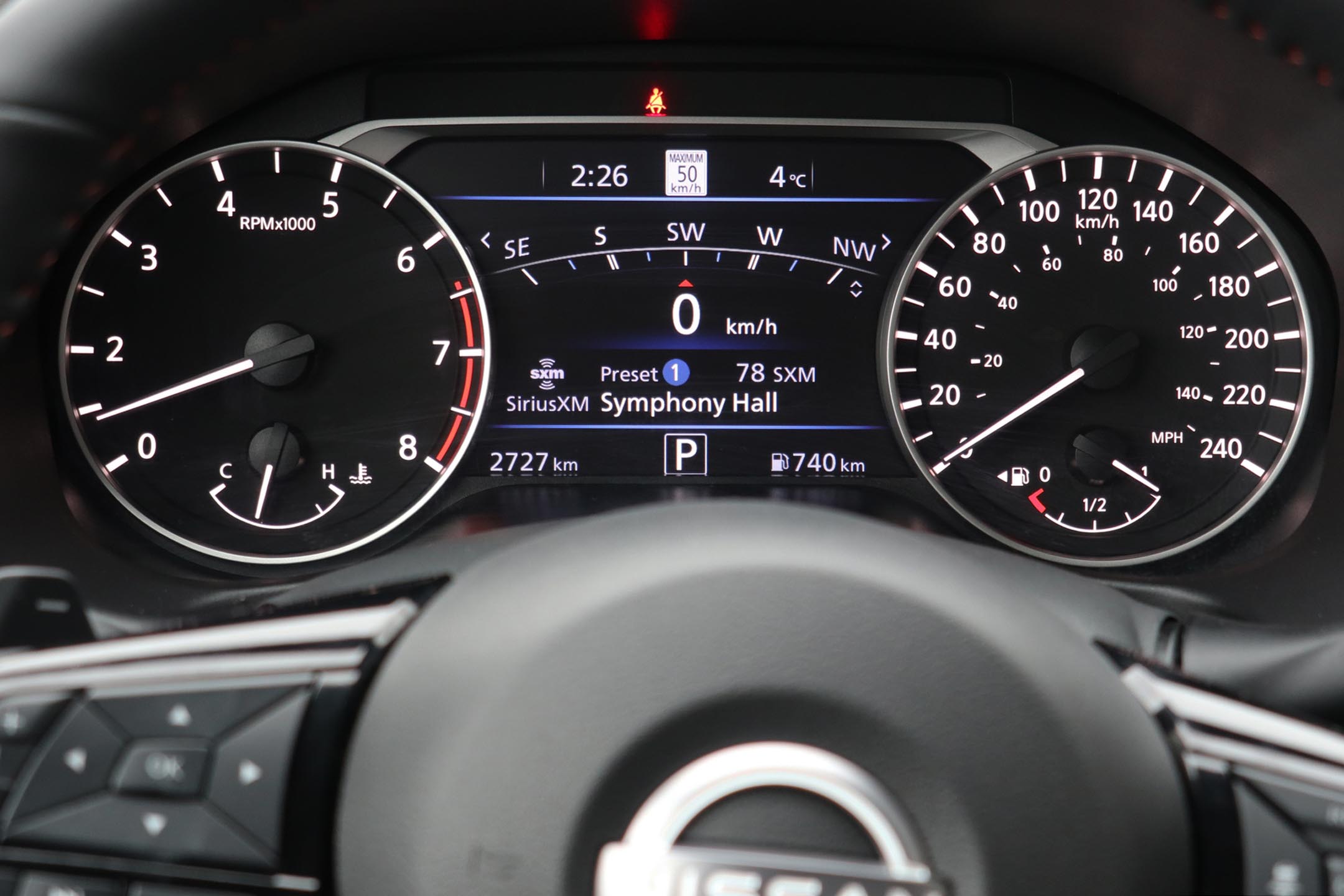
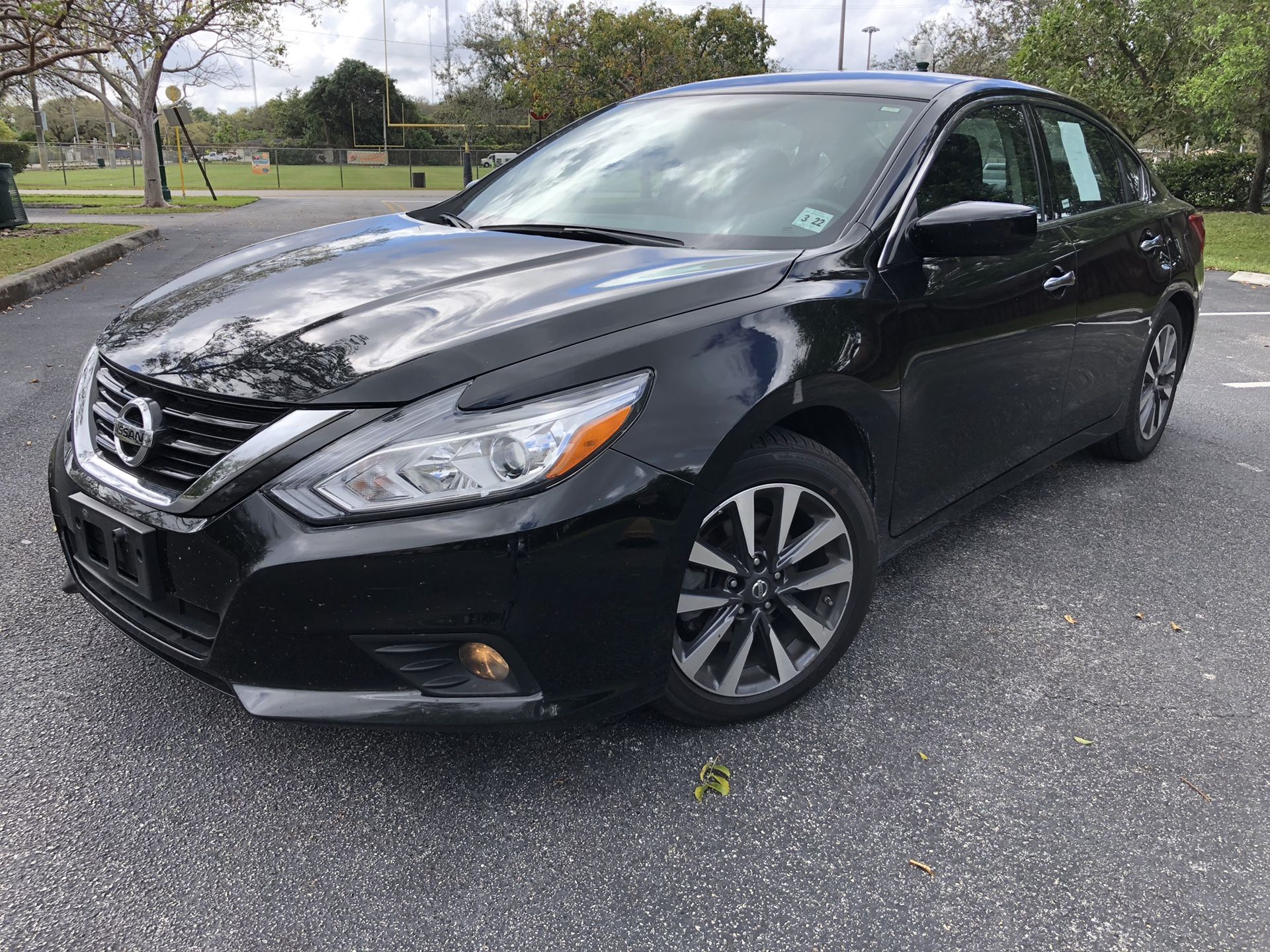
The 2017 Nissan Altima achieves a 0-60 mph time between 5.8 seconds and 8.1 seconds, depending entirely on the powertrain configuration under the hood. Models equipped with the popular 2.5-liter four-cylinder engine record 0-60 acceleration times of 7.8 to 8.1 seconds, while variants with the potent 3.5-liter V6 lower that time to a swift 5.8 to 6.1 seconds.
Overview of 2017 Nissan Altima Engine Options and Specs
The fifth-generation Nissan Altima received a major mid-cycle refresh for the 2016 model year, which carried directly into the 2017 model year with refined aerodynamics, enhanced acoustic insulation, and retuned transmission software. When evaluating straight-line acceleration and everyday driving dynamics, the 2017 Altima was offered with two distinct naturally aspirated engine packages, both paired exclusively with Nissan’s Xtronic Continuously Variable Transmission (CVT) and front-wheel drive (FWD).
- 2017 Nissan Altima Powertrains
- 2.5L 4-Cylinder (QR25DE)
- 179 Horsepower / 177 lb-ft Torque
- 0-60 mph: 7.8 – 8.1 seconds
- 3.5L V6 (VQ35DE)
- 270 Horsepower / 251 lb-ft Torque
- 0-60 mph: 5.8 – 6.1 seconds
- 2.5L 4-Cylinder (QR25DE)
The 2.5-Liter Four-Cylinder (QR25DE)
The vast majority of 2017 Altimas on the road feature the 2.5-liter DOHC 16-valve four-cylinder engine (internal designation QR25DE). This engine generates 179 horsepower at 6,000 rpm and 177 lb-ft of torque at 4,000 rpm.
Engineered primarily for fuel efficiency and linear power delivery, the 2.5-liter engine features continuously variable valve timing control on both intake and exhaust valves (CVTCS). While it provides adequate power for highway merging and daily commuting, its 0-60 mph performance sits firmly in the middle of the midsize sedan class for its generation.
The 3.5-Liter V6 (VQ35DE)
For buyers seeking sports-sedan acceleration, Nissan offered the acclaimed 3.5-liter DOHC 24-valve V6 engine (internal designation VQ35DE). Available on higher trim levels, this powerplant produces 270 horsepower at 6,000 rpm and 251 lb-ft of torque at 4,400 rpm.
The V6 engine transforms the character of the Altima. With nearly 100 additional horsepower, it delivers punchy throttle response and assertive passing power at highway speeds, placing its acceleration metrics near the top of its non-luxury competitive set.
Breakdown of 2017 Nissan Altima 0-60 Times by Trim Level
While engine displacement is the primary metric governing straight-line velocity, trim level features such as wheel size, curb weight, and factory tire compound lead to subtle variations in tested 0-60 mph results across different published automotive tests.
The 2017 Nissan Altima was offered in seven primary trim levels across two engine types: 2.5 Base, 2.5 S, 2.5 SR, 2.5 SV, 2.5 SL, 3.5 SR, and 3.5 SL.
| Trim Level | Engine Type | Horsepower | Torque (lb-ft) | Estimated 0–60 mph Time | Estimated 1/4-Mile Time |
|---|---|---|---|---|---|
| 2.5 Base | 2.5L I4 | 179 hp | 177 lb-ft | 8.0 seconds | 16.2 sec @ 88 mph |
| 2.5 S | 2.5L I4 | 179 hp | 177 lb-ft | 8.1 seconds | 16.3 sec @ 87 mph |
| 2.5 SR | 2.5L I4 | 179 hp | 177 lb-ft | 7.8 seconds | 16.1 sec @ 89 mph |
| 2.5 SV | 2.5L I4 | 179 hp | 177 lb-ft | 8.0 seconds | 16.2 sec @ 88 mph |
| 2.5 SL | 2.5L I4 | 179 hp | 177 lb-ft | 8.0 seconds | 16.2 sec @ 88 mph |
| 3.5 SR | 3.5L V6 | 270 hp | 251 lb-ft | 5.8 seconds | 14.2 sec @ 101 mph |
| 3.5 SL | 3.5L V6 | 270 hp | 251 lb-ft | 5.9 seconds | 14.3 sec @ 100 mph |
Why the SR Trim Performs Differently
The 2.5 SR and 3.5 SR trims were designed as the sportier variants in the lineup. The SR models include standard 18-inch aluminum-alloy wheels paired with wider, lower-profile tires (235/45R18) compared to the standard 16-inch or 17-inch wheels found on Base, S, or SV models. Additionally, SR trims feature stiffer front and rear stabilizer bars (up to 250% stiffer in the rear), which reduce body roll during hard launches and aggressive cornering.
The wider tire contact patch on the SR trim provides slightly better off-the-line traction, allowing driver-testing outcomes to occasionally show 0.1 to 0.2 seconds off the standard 2.5L acceleration sprint.
The Role of Nissan's Xtronic CVT in Acceleration
To understand how the 2017 Altima accelerates, one must understand the operational mechanics of the Xtronic Continuously Variable Transmission (CVT). Unlike a traditional automatic transmission that relies on fixed planetary gears (e.g., 6-speed or 8-speed), a CVT uses a high-strength steel belt wrapped around two variable-diameter pulleys to deliver an infinite ratio of gear steps.
- Engine Crankshaft
- Primary Pulley (Expands/Contracts to alter gear ratios seamlessly)
- Steel Belt
- Secondary Pulley
- Drive Wheels
D-Step Shift Logic
In earlier generations of Nissan vehicles, pressing the accelerator down completely caused the engine to climb to its peak power RPM and hold that pitch continuously—a phenomenon often referred to as the "rubber-band effect."
For the 2017 model year, Nissan integrated D-Step Shift Logic control software across all Altima models. When the driver presses the accelerator beyond roughly 30% to 50% throttle:
- The transmission simulates stepped gear shifts similar to a conventional automatic.
- The engine revs rise and drop sequentially across artificial shift points.
- The power delivery feels more linear and familiar to traditional drivers.
Impact on 0-60 Launch Performance
While CVTs excel at fuel economy by holding the engine in its optimal efficiency band during cruising, they present specific trade-offs during a 0-60 mph launch:
- Initial Off-the-Line Hold: To protect the CVT belt and pulley system from extreme mechanical shock, the transmission control module (TCM) deliberately meters engine torque during the first second of heavy acceleration from a dead stop.
- Mid-Range Pull: Once the vehicle moves past 15–20 mph, the CVT adjusts ratios smoothly to keep the engine right at peak horsepower (6,000 rpm), resulting in strong mid-range torque output between 30 mph and 60 mph.
Real-World Factors Influencing 0-60 Performance
Independent automotive testing organizations perform 0-60 mph evaluations under controlled environmental conditions, often applying weather correction factors for temperature and barometric pressure. In daily driving, several variables alter actual real-world acceleration times.
1. Tire Selection and Condition
Traction is often the primary bottleneck for front-wheel-drive vehicles. The 2017 Altima 3.5 V6 generates sufficient low-end torque to easily overpower the front tires if traction control is disabled. High-performance all-season or summer tires with a high grip compound lower launch slip, whereas worn or budget all-season tires trigger traction control power cuts, adding up to half a second or more to the 0-60 time.
2. Vehicle Weight and Cargo
Automotive testing weights assume a single driver and a partial tank of fuel. The addition of passengers, heavy cargo, or aftermarket equipment adds weight that degrades the power-to-weight ratio:
- Every additional 100 pounds of weight typically adds roughly 0.05 to 0.1 seconds to a midsize sedan’s 0-60 time.
- A fully loaded 2.5L Altima carrying four adults can see its 0-60 mph time increase from 8.0 seconds to nearly 9.0 seconds.
3. Ambient Temperature and Elevation
Naturally aspirated engines rely on ambient atmospheric density to fill the combustion chambers:
- High Altitude: At an elevation of 5,000 feet (such as in Denver, Colorado), engines lose approximately 15% to 17% of their atmospheric power due to thinner air, adding over a full second to 0-60 runs.
- Heat Soak: On hot summer days (above 90°F / 32°C), intake air is less dense, reducing peak horsepower output compared to cool morning air (around 60°F / 15°C).
4. Traction Control and Launch Technique
For optimal 0-60 mph times in the 3.5 V6 Altima:
- Leaving Vehicle Dynamic Control (VDC) fully enabled prevents excessive wheelspin, but engine management briefly reduces throttle input if wheel slip occurs.
- Brake-torquing (holding the foot brake while pre-loading throttle RPM slightly before release) can yield slightly faster launches, though prolonged brake-torquing overheats CVT fluid and forces the transmission into protective torque-limiting modes.
2017 Nissan Altima vs. Competitors (0-60 Acceleration Comparison)
To put the 2017 Altima's performance in context, it helps to analyze how it performed against its primary midsize sedan rivals from the 2017 model year: the Toyota Camry, Honda Accord, and Ford Fusion.
- 0-60 mph Performance Comparison (V6 / Turbo Upgrades)
- 2017 Nissan Altima 3.5 V6: 5.8 sec
- 2017 Toyota Camry 3.5 V6: 5.8 sec
- 2017 Honda Accord 3.5 V6: 5.7 sec
- 2017 Ford Fusion 2.0T Eco: 6.7 sec
4-Cylinder Base Engine Comparison
In base 4-cylinder trims, the midsize segment was closely competitive during this era:
- 2017 Nissan Altima 2.5L (179 hp): ~7.8–8.1 seconds
- 2017 Toyota Camry 2.5L (178 hp): ~8.0–8.3 seconds
- 2017 Honda Accord 2.4L (185 hp): ~7.6–7.8 seconds (with CVT)
- 2017 Ford Fusion 2.5L (175 hp): ~8.8–9.2 seconds
The Altima 2.5 matched the standard Toyota Camry 2.5 nearly identical in straight-line acceleration, while slightly trailing the direct-injected Honda Accord 2.4L.
V6 and Performance Engine Comparison
In upper-tier powertrain configurations, the 2017 Altima 3.5 V6 competed directly with class V6 and EcoBoost offerings:
- 2017 Nissan Altima 3.5 V6 (270 hp): ~5.8 seconds
- 2017 Toyota Camry 3.5 V6 (268 hp): ~5.8 seconds
- 2017 Honda Accord 3.5 V6 (278 hp): ~5.7 seconds
- 2017 Ford Fusion 2.0L Turbo (245 hp): ~6.7 seconds
- 2017 Ford Fusion Sport 2.7L Twin-Turbo V6 AWD (325 hp): ~5.2 seconds
The Altima 3.5 V6 delivered performance virtually tied with the Toyota Camry V6 and Honda Accord V6, making all three remarkably quick family sedans for their era.
Maintenance and Upgrade Considerations for Performance Retention
If maintaining factory 0-60 mph capability and power delivery over time is a priority, regular mechanical attention is essential—particularly regarding the powertrain.
CVT Fluid Care
The Nissan Xtronic CVT relies heavily on specialized fluid (NS-3 CVT Fluid) for both hydraulic pressure and thermal management. Over time, heat breakdown degrades the fluid's viscous properties, leading to belt slipping, harsh simulated gear shifts, and sluggish throttle response.
- Fluid Inspection: Inspect the CVT fluid quality every 30,000 miles.
- Fluid Replacement: Perform fluid service according to severe-use guidelines or at dedicated intervals using genuine Nissan NS-3 fluid to prevent mechanical slip and maintain factory acceleration parameters.
Tire Selection for Better Acceleration
Because the Altima is a front-wheel-drive platform carrying significant front weight bias, tire choice directly alters 0-60 acceleration:
- Replacing worn factory low-rolling-resistance tires with high-performance all-season tires (such as Michelin Pilot Sport All Season 4 or Continental ExtremeContact DWS06 Plus) reduces wheelspin during hard launches.
- Maintaining correct cold inflation pressure prevents tire cupping and ensures an even contact patch on launch.
Frequently Asked Questions
Is the 2017 Nissan Altima fast?
Whether the 2017 Altima is considered fast depends on the engine. The standard 2.5-liter four-cylinder version delivers average acceleration (0-60 mph in 7.8 to 8.1 seconds), which is adequate for normal driving but not fast. The 3.5-liter V6 model, however, completes the 0-60 mph sprint in 5.8 seconds, making it notably quick for a midsize non-luxury sedan.
How can I make my 2.5L Nissan Altima 0-60 time faster?
Improving the 0-60 acceleration of a 2.5L Altima primarily involves traction and weight optimization rather than engine tuning. Installing higher-grip performance tires reduces wheel slip at launch, and removing unnecessary weight from the trunk improves the power-to-weight ratio. Significant engine modifications are generally discouraged, as adding substantial power can place excessive stress on the stock CVT.
Does the 2017 Nissan Altima have a sport mode?
Yes, 2017 Nissan Altima models equipped with the Xtronic CVT feature a "Ds" (Drive Sport) mode on the gear selector, and SR models feature steering-wheel-mounted paddle shifters. Engaging Sport mode shifts the transmission's pulley ratios to keep engine RPM higher in the powerband, delivering faster throttle response during aggressive driving, though maximum pedal-to-the-floor 0-60 times remain largely identical.
Which 2017 Nissan Altima trim is the fastest?
The 3.5 SR and 3.5 SL trims are the fastest in the 2017 Altima lineup. Both trims come equipped with the 270-horsepower 3.5-liter V6 engine, achieving 0-60 mph in roughly 5.8 seconds. The 3.5 SR holds a slight handling edge during launches due to its stiffer suspension tuning and wider 18-inch wheels.
Why is my 2017 Altima accelerating slowly from a stop?
Slow or hesitant acceleration from a complete stop can stem from several potential issues:
- CVT Thermal Protection: If the CVT fluid overheats, the vehicle enters a fail-safe mode that limits engine torque to protect transmission components.
- Dirty Mass Air Flow (MAF) Sensor or Throttle Body: Restricted air readings or carbon buildup can delay throttle response.
- Traction Control Intervention: If the tires lose grip on loose or wet surfaces, the Vehicle Dynamic Control system automatically cuts power to prevent wheelspin.
Practical Recommendation and Next Actions
If you are evaluating a 2017 Nissan Altima as a potential buyer or trying to maximize the performance of your current vehicle, keep these core guidelines in mind:
- Match Engine Choice to Driving Priorities: If highway merging power and aggressive passing acceleration are important to you, seek out the rare 3.5 V6 models (3.5 SR or 3.5 SL). If fuel economy (up to 39 mpg highway) is your primary goal, stick with the 2.5-liter model.
- Inspect Transmission Service History: When buying a used 2017 Altima, review service records to confirm that the CVT fluid has been regularly inspected and serviced with factory-approved NS-3 fluid.
- Upgrade Tires Before Expecting Better Acceleration: If your Altima struggles with wheelspin or hesitant launches, replace low-grade or worn tires with high-traction, name-brand rubber before pursuing any mechanical modifications.