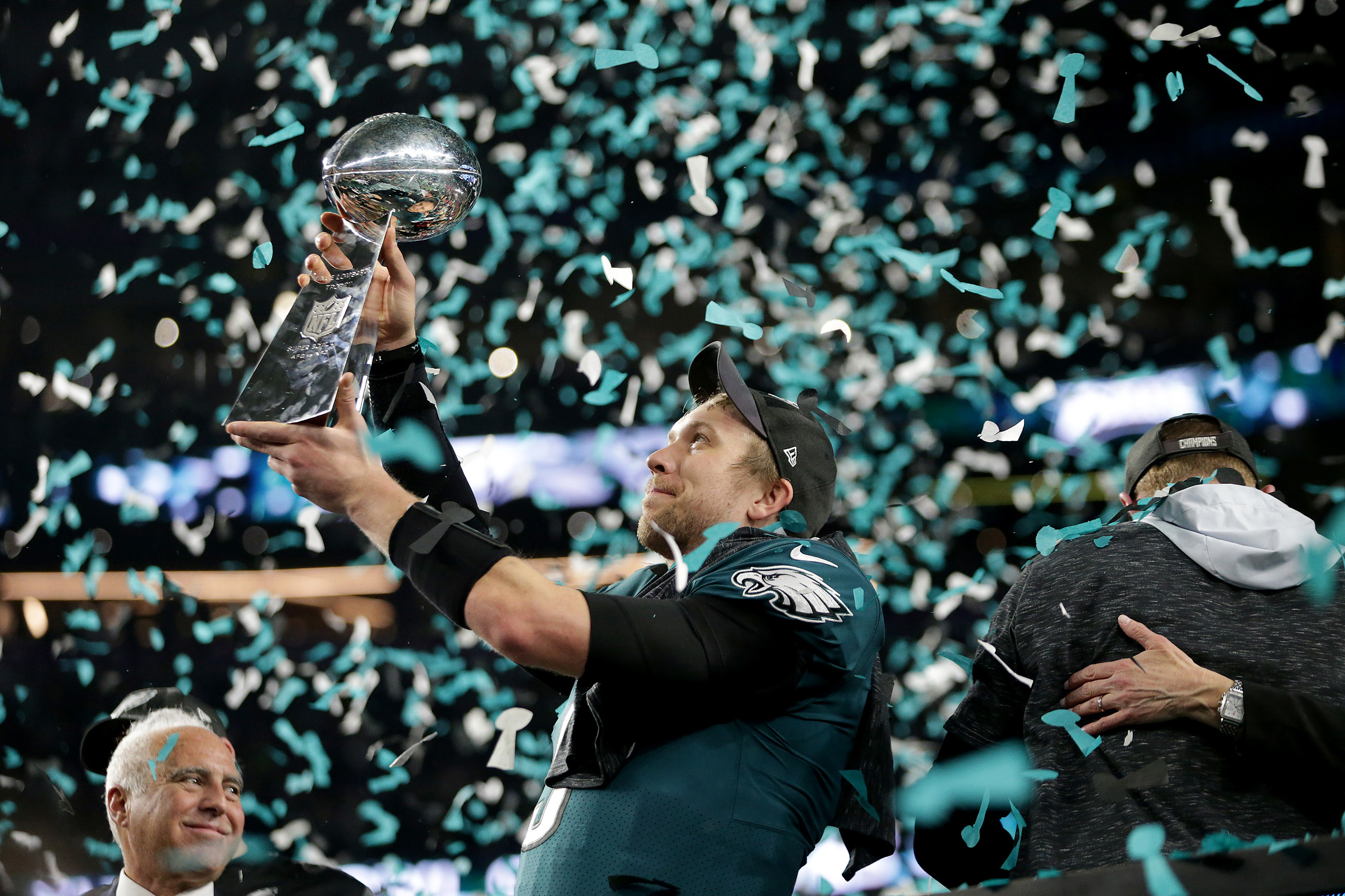
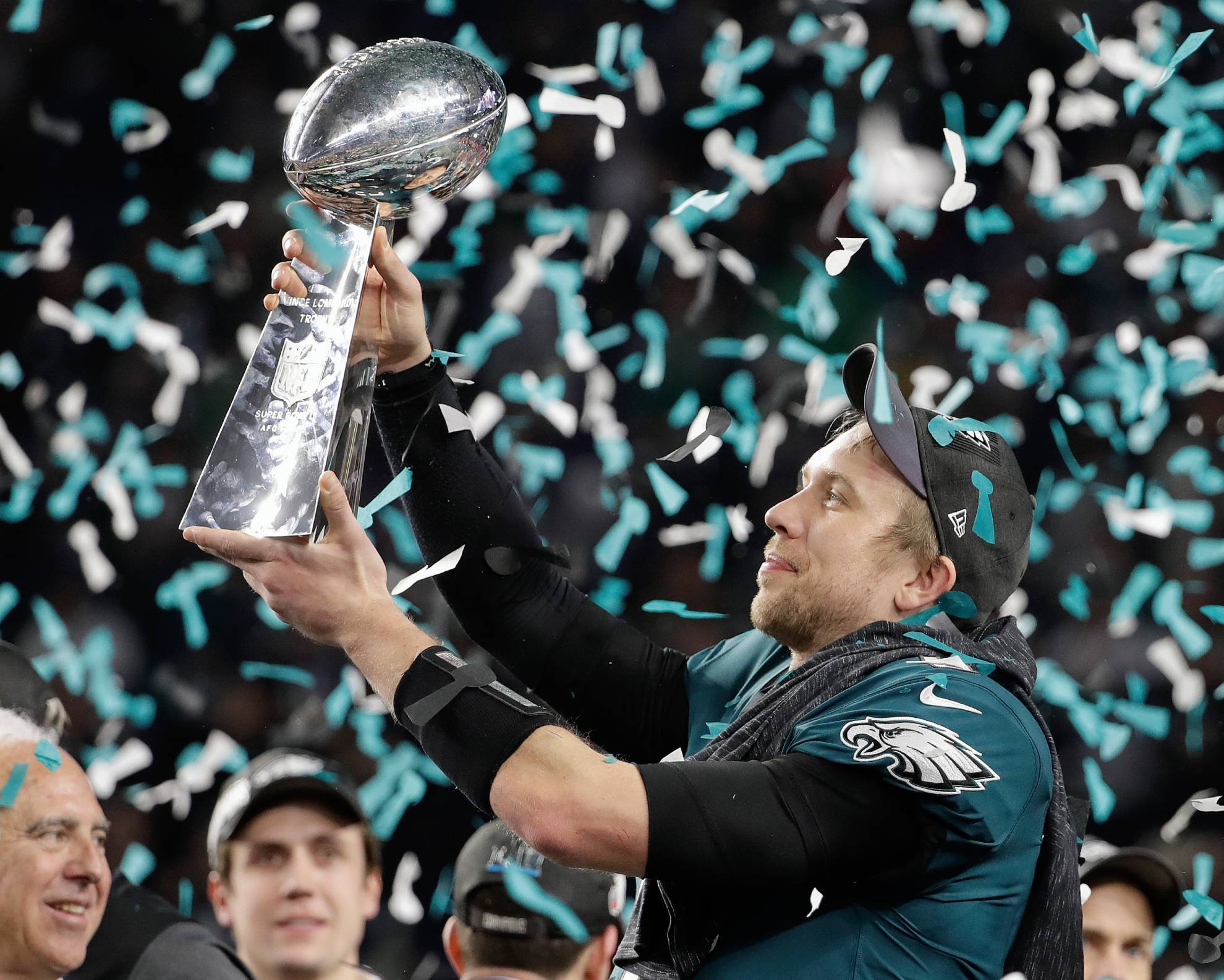
The 2017 Philadelphia Eagles Super Bowl run culminated on February 4, 2018, when Philadelphia defeated the New England Patriots 41-33 in Super Bowl LII at U.S. Bank Stadium in Minneapolis, Minnesota. Led by backup quarterback and Super Bowl MVP Nick Foles, the Eagles secured the first Vince Lombardi Trophy in franchise history through aggressive play-calling, historic offensive output, and a decisive fourth-quarter strip-sack.
The 2017 Regular Season: Dominance and Sudden Adversity
The 2017 Philadelphia Eagles season remains one of the most remarkable campaigns in modern professional football history. Coming off a 7-9 finish in 2016 under first-year head coach Doug Pederson, expectations for 2017 were moderate. However, second-year quarterback Carson Wentz mounted an MVP-caliber campaign, guiding Philadelphia to an 10-2 start powered by a high-octane offense and a physically dominant defensive line led by Fletcher Cox and Brandon Graham.
By early December, the Eagles boasted the NFL's best record. During a Week 14 matchup against the Los Angeles Rams at the Los Angeles Memorial Coliseum, Wentz threw his 33rd touchdown pass of the season—setting a single-season franchise record. However, on that same drive, Wentz suffered a torn anterior cruciate ligament (ACL) while diving into the end zone on a negated touchdown play.
Regular Season Milestones (2017 Philadelphia Eagles):
- Record: 13-3 (NFC East Champions, NFC #1 Seed)
- Carson Wentz: 3,296 passing yards, 33 TDs, 7 INTs (Injured Week 14)
- Offense Ranking: 3rd in scoring (28.6 points/game)
- Nick Foles Takes Over: Week 14 vs. Rams through Super Bowl LII
The loss of Wentz shifted national media consensus. Most sports analysts dismissed Philadelphia's championship prospects, assuming that veteran backup quarterback Nick Foles could not replicate Wentz’s elite third-down efficiency or playmaker mobility. Despite the skepticism, Foles helped close out the regular season to secure the NFC’s top seed with a 13-3 record, earning home-field advantage throughout the NFC playoffs.
The NFC Playoff Path: Embracing the Underdog Identity
Entering the postseason as the first #1 seed in NFL history to be designated as betting underdogs in their opening playoff game, the Eagles leaned heavily into their doubts. Offensive linemen Lane Johnson and Chris Long purchased rubber German Shepherd masks, wearing them on the field after playoff victories to symbolize the team’s "underdog" persona.
NFC Postseason Path to Super Bowl LII:
- Divisional Round: Defeated Atlanta Falcons (15–10)
- NFC Championship: Defeated Minnesota Vikings (38–7)
- Super Bowl LII: Defeated New England Patriots (41–33)
NFC Divisional Round vs. Atlanta Falcons (January 13, 2018)
Philadelphia opened its postseason against the reigning NFC champion Atlanta Falcons. In a defensive struggle, Foles managed the offense effectively, completing 23 of 30 passes for 246 yards. The game was decided in the final minute with a goal-line stand inside the Eagles' 5-yard line. Cornerback Jalen Mills covered Falcons receiver Julio Jones on fourth down, forcing an incomplete pass in the end zone to preserve a 15-10 win.
NFC Championship Game vs. Minnesota Vikings (January 21, 2018)
The Minnesota Vikings entered Lincoln Financial Field boasting the NFL’s top-ranked defense, seeking to become the first team to play a Super Bowl in their home stadium. After falling behind 7-0 early, Philadelphia executed a 38-point unanswered scoring run. Cornerback Patrick Robinson initiated the shift with a 50-yard pick-six off Case Keenum.
Nick Foles delivered a masterpiece, throwing for 352 yards and three touchdowns—including deep strikes to Alshon Jeffery and Torrey Smith—as the Eagles routed Minnesota 38-7 to win the NFC Championship.
Super Bowl LII Breakdown: Eagles vs. Patriots
On February 4, 2018, Philadelphia met the defending champion New England Patriots in Minneapolis for Super Bowl LII. The game developed into an unprecedented offensive shootout, setting the record for the most total yards in any single game in NFL history (1,151 combined yards).
Quarter-by-Quarter Scoring Breakdown:
| Team | Q1 | Q2 | Q3 | Q4 | Total |
|---|---|---|---|---|---|
| Philadelphia Eagles | 9 | 13 | 7 | 12 | 41 |
| New England Patriots | 3 | 9 | 12 | 9 | 33 |
First Half: Setting an Aggressive Tone
Philadelphia established control early. Kicker Jake Elliott hit a 25-yard field goal on the opening drive, followed by a 34-yard touchdown pass from Foles to Alshon Jeffery, who made an acrobatic catch over Patriots cornerback Stephon Gilmore.
Former Patriot LeGarrette Blount added a 21-yard touchdown run in the second quarter, extending the Eagles' lead. New England countered with field goals from Stephen Gostkowski and a 26-yard touchdown run by James White, keeping the Patriots within strike distance at 15-12 late in the first half.
The "Philly Special": Execution of an Iconic Trick Play
The defining moment of Super Bowl LII occurred with 34 seconds remaining in the second quarter. Facing 4th-and-goal from the Patriots' 1-yard line, Doug Pederson faced a crucial tactical choice: kick a conservative field goal to take an 18-12 lead, or attempt a touchdown to maximize momentum.
During a timeout, Nick Foles approached Pederson on the sideline and famously suggested: "Philly Philly?" Pederson paused briefly before replying, "Yeah, let's do it."
Execution Sequence of the "Philly Special":
- Alignment: Foles steps out of shotgun to slide behind right tackle, barking fake signals.
- Direct Snap: Center Jason Kelce snaps directly to running back Corey Clement.
- Pitch: Clement runs left and pitches the ball to tight end Trey Burton moving right.
- Pass & Catch: Burton throws a lofted pass to a wide-open Foles in the right end zone.
The play caught New England’s defense completely off guard. Foles, who had slipped unmonitored into the right side of the end zone, caught Burton's pass for a touchdown. The trick play sent Philadelphia into halftime with a 22-12 lead. The sequence stood in sharp contrast to a failed Patriots trick play earlier in the second quarter, where quarterback Tom Brady dropped a pass thrown to him by receiver Danny Amendola.
The Second-Half Shootout and Climax
The second half turned into a high-scoring exchange between Tom Brady and Nick Foles, as neither defense could consistently force punts.
Second Half Scoring Sequence:
- NE: Brady 5-yd TD pass to Rob Gronkowski (Eagles 22, Patriots 19)
- PHI: Foles 22-yd TD pass to Corey Clement (Eagles 29, Patriots 19)
- NE: Brady 26-yd TD pass to Chris Hogan (Eagles 29, Patriots 26)
- PHI: Elliott 42-yd Field Goal (Eagles 32, Patriots 26)
- NE: Brady 4-yd TD pass to Rob Gronkowski (Patriots 33, Eagles 32 - 9:22 4th Qtr)
- PHI: Foles 11-yd TD pass to Zach Ertz (Eagles 38, Patriots 33 - 2:21 4th Qtr)
The Go-Ahead Drive
After Tom Brady gave New England its first lead of the night (33-32) with 9:22 remaining, Foles orchestrated a 14-play, 75-yard drive. Facing a critical 4th-and-1 at his own 45-yard line, Foles completed a 7-yard pass to Zach Ertz to keep the drive alive. The possession concluded with an 11-yard touchdown pass to Ertz, who dove across the goal line with 2:21 left in regulation. Following a failed two-point conversion attempt, Philadelphia led 38-33.
Brandon Graham’s Game-Defining Strip-Sack
With 2:21 remaining and two timeouts, Tom Brady took the field with an opportunity to engineer a winning drive. Brady had already compiled 505 passing yards—a Super Bowl record.
On 2nd-and-2 from the New England 33-yard line, Eagles defensive end Brandon Graham lined up at defensive tackle alongside Fletcher Cox. Graham beat Patriots guard Joe Thuney with an inside move, reached Brady before he could release the ball, and knocked it free. Rookie defensive end Derek Barnett recovered the fumble at the Patriots' 31-yard line.
Key Defensive Play: The Game-Clinching Turnovers
- Time: 2:09 - 4th Quarter
- Situation: 2nd & 2 at NE 33
- Play: Brandon Graham penetrates B-gap, strip-sacks Tom Brady
- Recovery: Derek Barnett recovers at NE 31
- Result: Sets up Jake Elliott 46-yard FG (Eagles extend lead to 41-33)
The turnover enabled Philadelphia to run time off the clock and set up a 46-yard field goal by Jake Elliott, stretching the lead to 41-33 with 1:05 remaining. Brady's final Hail Mary attempt fell incomplete in the end zone as time expired, confirming Philadelphia's first Super Bowl title.
Super Bowl LII Team & Individual Performance Metrics
Statistical analysis confirms that Super Bowl LII was one of the most remarkable offensive displays in football history. The two teams combined for 874 passing yards and just a single punt throughout the entire contest.
| Metric / Play Indicator | Philadelphia Eagles | New England Patriots |
|---|---|---|
| Final Score | 41 | 33 |
| Total First Downs | 25 | 29 |
| Total Net Yards | 538 | 613 |
| Passing Yards | 374 | 505 |
| Rushing Yards | 164 | 108 |
| Turnovers Lost | 1 | 1 |
| Penalties / Yards | 6 for 35 yards | 1 for 5 yards |
| Time of Possession | 34:04 | 25:56 |
| Third-Down Conversions | 10 of 16 (62.5%) | 5 of 10 (50.0%) |
| Fourth-Down Conversions | 2 of 2 (100%) | 1 of 2 (50.0%) |
| Starting QB Stats | N. Foles: 28/43, 373 YDS, 3 TD, 1 INT | T. Brady: 28/48, 505 YDS, 3 TD, 0 INT |
detailed statistics can be verified through Pro-Football-Reference Super Bowl LII Boxscore.
Strategic Masterclass: Doug Pederson vs. Bill Belichick
The strategic battle between Eagles head coach Doug Pederson and Patriots head coach Bill Belichick challenged conventional NFL game management traditions.
Core Eagles Tactical Advantages:
- Aggressive Fourth-Down Analytics (2-for-2 on 4th downs in Super Bowl)
- Heavy RPO (Run-Pass Option) Integration to maximize Foles' quick release
- Deep Running Back Rotation (Blount, Clement, Ajayi kept defenses tired)
- Defensive Line Stacks (8-man rotation to sustain pass rush efficiency)
Analytical Aggressiveness
Pederson operated with an analytics-driven strategy throughout 2017, leading the NFL in fourth-down conversion attempts. In Super Bowl LII, his willingness to execute the "Philly Special" on 4th-and-goal rather than settling for three points demonstrated a clear determination to score maximum points against a Patriots offense capable of rapid comebacks.
Run-Pass Option (RPO) Adaptation
Offensive coordinator Frank Reich and quarterbacks coach John DeFilippo adjusted the playbook for Nick Foles following Wentz’s injury. By incorporating heavy RPO concepts, Foles could quickly read defensive end leverage post-snap. This approach neutralized New England’s pass rushers and allowed Foles to release the ball rapidly to targets like Nelson Agholor and Zach Ertz.
Defensive Benchings and Rotations
A central storyline of Super Bowl LII was Bill Belichick's decision to bench starting cornerback Malcolm Butler, who had played 97% of New England’s defensive snaps during the regular season. Butler did not play a single defensive snap in the game, forcing backup cornerbacks Eric Rowe and Johnson Bademosi into primary roles that Philadelphia’s passing attack exploited.
Historical Significance and Legacy of the 2017 Eagles Title
The 2017 Eagles' championship carried deep historical importance for the franchise and altered broader NFL tactical trends:
- First Lombardi Trophy: Philadelphia had won three NFL Championships in the pre-Super Bowl era (1948, 1949, and 1960), but had lost its previous two Super Bowl appearances (Super Bowl XV against the Oakland Raiders and Super Bowl XXXIX against the New England Patriots). Winning Super Bowl LII fulfilled a multi-generational pursuit for the fan base.
- Mainstream Adoption of RPO Offenses: Philadelphia’s postseason success validated the integration of modern college RPO concepts into standard NFL playbooks, influencing offensive schemes across the league over subsequent years.
- Shift in Fourth-Down Management: Doug Pederson’s aggressive decision-making in high-stakes situations sped up the league-wide adoption of win-probability analytics when deciding between field goal attempts and fourth-down conversions.
- Nick Foles’ Place in Lore: Foles became the first backup quarterback to win a Super Bowl since Tom Brady replaced an injured Drew Bledsoe in 2001. Foles' jersey and the football from the "Philly Special" were subsequently displayed at the Pro Football Hall of Fame in Canton, Ohio.
Frequently Asked Questions About the 2017 Eagles Super Bowl
Who was the MVP of the 2017 Eagles Super Bowl?
Quarterback Nick Foles was named the Most Valuable Player of Super Bowl LII. Foles completed 28 of 43 pass attempts for 373 yards, three passing touchdowns, and one interception. He also caught a 1-yard touchdown pass on the "Philly Special" trick play, becoming the first player in Super Bowl history to throw and catch a touchdown pass in the same game.
What was the final score of Super Bowl LII?
The Philadelphia Eagles defeated the New England Patriots by a final score of 41 to 33. The two teams combined for 74 points and set an all-time NFL record for total yards in a game with 1,151 yards.
Why did Carson Wentz not play in Super Bowl LII?
Carson Wentz tore his anterior cruciate ligament (ACL) and left lateral meniscus during a Week 14 regular season matchup against the Los Angeles Rams on December 10, 2017. The injury required season-ending knee surgery, making backup quarterback Nick Foles the starter for the remainder of the regular season and the entire playoff run.
What made the "Philly Special" trick play famous?
The "Philly Special" became famous due to its high-risk nature, perfect execution, and key timing. Facing 4th-and-goal from the 1-yard line with 34 seconds left in the first half, Nick Foles pretended to adjust protection calls while running back Corey Clement took a direct snap, pitched the ball to tight end Trey Burton, who then threw a touchdown pass to an unmonitored Foles.
How many yards were gained total in Super Bowl LII?
The Eagles and Patriots combined for 1,151 total yards, breaking the record for the most combined yards in any professional football game—regular season or postseason—in NFL history. New England gained 613 total yards, while Philadelphia accumulated 538 yards.
Next Steps for NFL Historians and Eagles Fans
For fans and analysts reviewing the legacy of the 2017 Eagles championship:
- Review Official Game Film: Watch the full game broadcast and coach's film breakdowns via NFL+ Game Replays to study Doug Pederson’s RPO designs and third-down blitz packages.
- Examine Analytical Trends: Study how fourth-down conversion rates across the NFL shifted following the 2017 season using advanced sports analytics databases like Pro-Football-Reference.
- Explore Franchise History: Contrast the 2017 Super Bowl LII championship victory with Philadelphia's subsequent postseason runs, including their appearance in Super Bowl LVII against the Kansas City Chiefs.