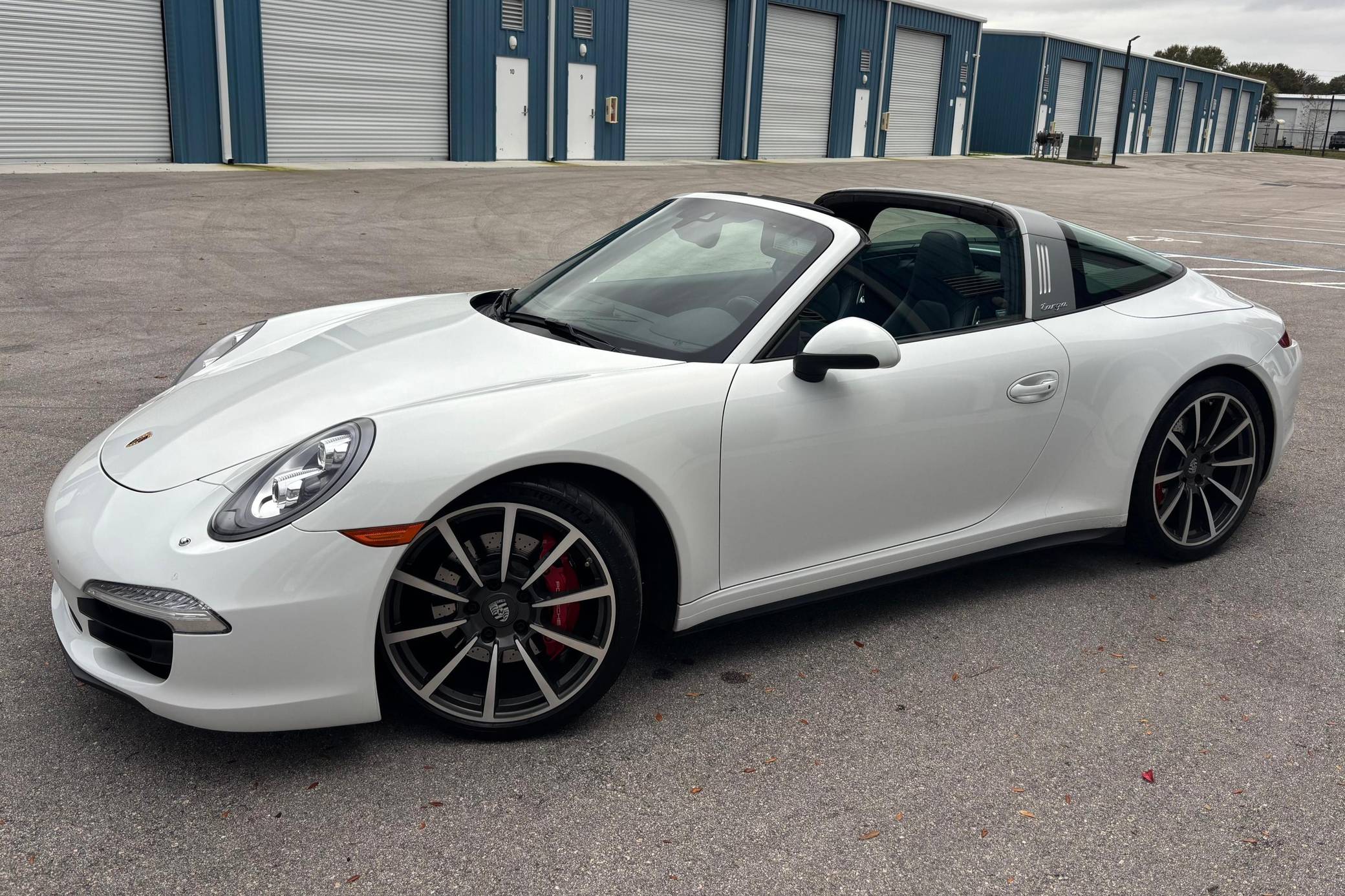
The 2014 Porsche 911 Targa (internal designation 991) marks a dramatic return to the iconic, classic styling cues of the original 1965 Targa while integrating modern, fully automatic roof-deployment mechanics. Available in Targa 4 and Targa 4S variants with standard all-wheel drive, this generation bridges the gap between the open-air freedom of a cabriolet and the structural rigidity and classic profile of a coupé.
Introduction to the 991-Generation Targa
The evolution of the Porsche 911 has seen countless body styles, performance upgrades, and technical innovations over decades of production. However, few models carry the distinct historical weight and visual identity of the Targa. When Porsche introduced the Targa variant for the 991 generation, it addressed a long-standing enthusiast desire: bringing back the iconic brushed-aluminum roll hoop and the wrap-around rear glass window that had been absent since the 993 generation ended production in the late 1990s.
Unlike the glass-roof greenhouse design used on the 964, 996, and 997 generations, the 2014 Porsche 911 Targa recaptures the classic aesthetic while utilizing cutting-edge mechatronics. It is a grand tourer built for drivers who appreciate open-air motoring, timeless design, and the everyday usability that defines the legendary 911 lineage. This overview explores the engineering, powertrain configurations, interior ergonomics, and driving dynamics that make the 2014 Targa a unique proposition in the high-performance sports car market.
Exterior Design and the Return of the Classic Roll Hoop
The defining visual characteristic of the 2014 Porsche 911 Targa is its prominent, wide B-pillar roll bar finished in anodized silver (or optional black). This design element pays direct homage to the original 1965 model, which was originally conceived in response to safety concerns regarding open-top cars in the United States.
Flanking the roll bar is a wraparound rear glass screen that eliminates the traditional C-pillars, offering panoramic rear visibility while maintaining the sweeping silhouette of the 911 coupé. The transition from the solid roofline to the open sky is masked by bodywork lines that blend seamlessly into the wider rear haunches of the all-wheel-drive platform.
The Roof Mechanism: Engineering Marvel and Operation
The engineering highlight of the 2014 Targa is its fully automatic roof system. Operating the roof is an intricate, choreographed ballet that takes approximately 19 seconds.
- Unlocking: Latches at the windshield header release electronically.
- Rear Decklid Activation: The entire rear glass section rises and tilts backward on a complex four-bar linkage system.
- Stowage: The soft-top roof section folds in a Z-shape and tucks neatly into a compartment situated directly beneath the rear glass window.
- Resealing: The rear glass lowers back into place and locks securely against the chassis, sealing the cabin.
Unlike a traditional cabriolet, which exposes its folded fabric top to the elements, the Targa hides its soft top completely beneath solid glass. This protects the fabric from premature degradation and maintains the clean lines of the car whether the roof is open or closed. However, unlike the older manual or semi-manual targas where the driver could remove the roof panel and store it in the front trunk, the 2014 system is entirely automated and cannot be operated while the vehicle is moving at speeds above a very low crawl. Drivers must come to a complete stop to cycle the roof mechanism.
Powertrain Options: Targa 4 and Targa 4S Specifications
The 2014 Porsche 911 Targa was offered exclusively in all-wheel-drive configurations—the Targa 4 and the higher-performance Targa 4S. Both models utilize horizontally opposed, naturally aspirated flat-six engines mounted in the rear.
Targa 4
- Engine Displacement: 3.4 liters
- Horsepower: 350 hp at 7,400 rpm
- Torque: 287 lb-ft (390 Nm) at 5,600 rpm
- 0–60 mph (PDK with Sport Chrono): ~4.6 seconds
- Top Speed: 175 mph (approximate, depending on transmission)
Targa 4S
- Engine Displacement: 3.8 liters
- Horsepower: 400 hp at 7,400 rpm
- Torque: 325 lb-ft (440 Nm) at 5,600 rpm
- 0–60 mph (PDK with Sport Chrono): ~4.2 seconds
- Top Speed: 184 mph (approximate, depending on transmission)
Both engines feature direct fuel injection (DFI) and VarioCam Plus valve timing and lift. Power is routed through either a traditional 7-speed manual transmission—a notable engineering feat for passenger cars—or Porsche's lightning-fast 7-speed Doppelkupplung (PDK) dual-clutch automatic transmission. The all-wheel-drive system utilizes an electronically controlled multi-plate clutch (Porsche Traction Management, or PTM), which continuously distributes torque between the front and rear axles for optimal traction in varied weather and road conditions.
| Model | Engine Size | Horsepower | Torque (lb-ft) | 0–60 mph (PDK) | Top Speed |
|---|---|---|---|---|---|
| Targa 4 | 3.4L Flat-6 | 350 hp | 287 | 4.6 sec | 175 mph |
| Targa 4S | 3.8L Flat-6 | 400 hp | 325 | 4.2 sec | 184 mph |
Interior Comfort and Ergonomics
Stepping inside the 2014 Porsche 911 Targa reveals the high-quality build materials and driver-centric layout introduced in the 991 generation. The interior borrows heavily from the Panamera grand tourer, featuring a rising center console that places the shift lever and vital controls within easy reach of the driver's right hand.
Cabin Layout and Seating
The front seats offer extensive power adjustment, exceptional lateral support, and long-distance comfort, making the Targa an ideal grand touring machine. The rear seats, true to the 911 tradition, are strictly nominal—best suited for small children, luggage overflow, or pets, rather than adult passengers on extended journeys.
Infotainment and Controls
Equipped with the Porsche Communication Management (PCM) system, the center stack includes a touchscreen interface for navigation, audio, and vehicle settings. While technology has advanced significantly since 2014, the system remains functional and straightforward. Physical buttons line the center console for quick access to chassis settings, exhaust modes, and stability control overrides, ensuring drivers can make adjustments without diving into digital submenus.
Open-Air Wind Buffeting Management
One of the primary engineering challenges of the Targa design is cabin turbulence when the roof is retracted. At highway speeds, open-top cars often suffer from heavy wind buffeting. Porsche addressed this by engineering a small, subtle wind deflector that pops up from the top of the windshield frame. Raising this deflector significantly alters the aerodynamic flow over the cabin, reducing interior turbulence and wind noise without ruining the clean lines of the car.
Driving Dynamics and Handling Characteristics
Weighing slightly more than its coupé counterpart due to the mechanical roof apparatus and reinforced chassis elements, the 2014 Targa feels distinct on a winding backroad.
Chassis Rigidity and Weight Distribution
The extra weight of the glass roof and folding mechanism is positioned high and toward the rear, yet Porsche's engineers tuned the suspension geometry to mitigate any adverse effects on handling. The wide-body stance (shared with the Carrera 4 models) provides a wider track, enhancing rear-end stability. The electronic power steering system offers sharp, direct feedback, allowing the driver to place the front wheels with precision.
All-Wheel Drive and Traction
The Porsche Traction Management (PTM) system ensures that power is sent forward whenever rear slip is detected. This makes the Targa 4 and 4S exceptionally sure-footed in adverse weather conditions, providing confidence-inspiring grip whether cornering hard on dry tarmac or navigating slick, rain-soaked asphalt.
Ride Quality
When equipped with Porsche Active Suspension Management (PASM)—an electronic damping control system—the Targa bridges the gap between a supple cruiser and a track-ready sports car. In Normal mode, the suspension absorbs road imperfections smoothly. Switching to Sport or Sport Plus firms up the dampers, reduces body roll, and sharpens throttle response, unleashing the full character of the naturally aspirated flat-six engine.
Comparison: Targa vs. Coupé vs. Cabriolet
Choosing a 911 often comes down to personal preference regarding body style. Each configuration serves a specific purpose for the enthusiast driver.
- Coupé: Offers the highest torsional rigidity, the lightest weight, and the lowest center of gravity. It is the purest choice for track enthusiasts and purists who prioritize ultimate track performance.
- Cabriolet: Features a fully folding fabric top that drops down completely, offering traditional convertible freedom. However, it lacks the iconic architectural roll hoop of the Targa and can exhibit more noticeable chassis flex over rough pavement.
- Targa: Strikes a middle ground. It delivers much of the structural integrity of the coupé combined with open-air driving enjoyment. It is visually striking, highly collectible, and offers a quieter cabin experience than a traditional soft-top cabriolet when closed at high speeds.
Common Considerations and Maintenance for Buyers
For those examining the 2014 Porsche 911 Targa on the pre-owned market, several practical maintenance and ownership factors deserve attention:
- Roof Mechanism Complexity: The intricate mechanical arms and electric motors that operate the glass roof require regular inspection. Ensuring the rubber seals are conditioned and clean prevents water leaks and mechanical binding.
- Tire Wear: Because the Targa is an all-wheel-drive vehicle, matching tire tread depths across all four corners is critical to prevent premature wear on the transfer case and PTM clutches.
- Engine Maintenance: The 3.4L and 3.8L engines in the 991.1 generation are generally robust, utilizing direct injection. Regular oil changes and ignition coil checks are standard requirements for high-mileage examples.
Frequently Asked Questions
Can the 2014 Porsche 911 Targa roof be operated while driving?
No, the roof mechanism cannot be operated while the car is in motion. The vehicle must be brought to a complete stop, and the driver must hold the center-console switch continuously until the 19-second cycle finishes to prevent mechanical misalignment or damage.
What is the difference between the Targa 4 and the Targa 4S?
The primary differences lie in engine displacement and output. The Targa 4 features a 3.4-liter engine producing 350 horsepower, whereas the Targa 4S upgrades to a 3.8-liter engine generating 400 horsepower. The 4S also typically includes larger brakes, stiffer suspension tuning options, and slightly wider wheels.
Is the 2014 Targa manual or automatic?
The 2014 Targa was offered with two transmission choices: a traditional 7-speed manual gearbox and a 7-speed dual-clutch automatic transmission known as the Porsche Doppelkupplung (PDK). Both options provide distinct driving experiences, with the PDK offering faster shift times and the manual offering analog engagement.
Does the Targa have more wind noise than the Coupé?
Yes, when the roof is closed, a Targa naturally exhibits slightly more wind noise around the B-pillar roll bar and rear glass seals compared to a solid-roof coupé. However, it remains significantly quieter at highway speeds than a traditional fabric-topped cabriolet.
Is the 991-generation Targa an all-wheel-drive vehicle?
Yes, all 2014 Porsche 911 Targa models are built exclusively on the wide-body all-wheel-drive platform, bearing the "4" designation to indicate power distributed to all four wheels via Porsche Traction Management.
Conclusion and Next Actions
The 2014 Porsche 911 Targa successfully blends heritage design with modern engineering, making it one of the most distinctive modern classic sports cars available. Whether evaluating performance figures, inspecting the complex roof mechanics, or choosing between the 350-hp Targa 4 and the 400-hp Targa 4S, prospective buyers should prioritize vehicles with comprehensive service history records. Before finalizing a purchase, schedule a pre-purchase inspection (PPI) with a certified Porsche technician to verify the health of the drivetrain, suspension, and complex roof actuation system.