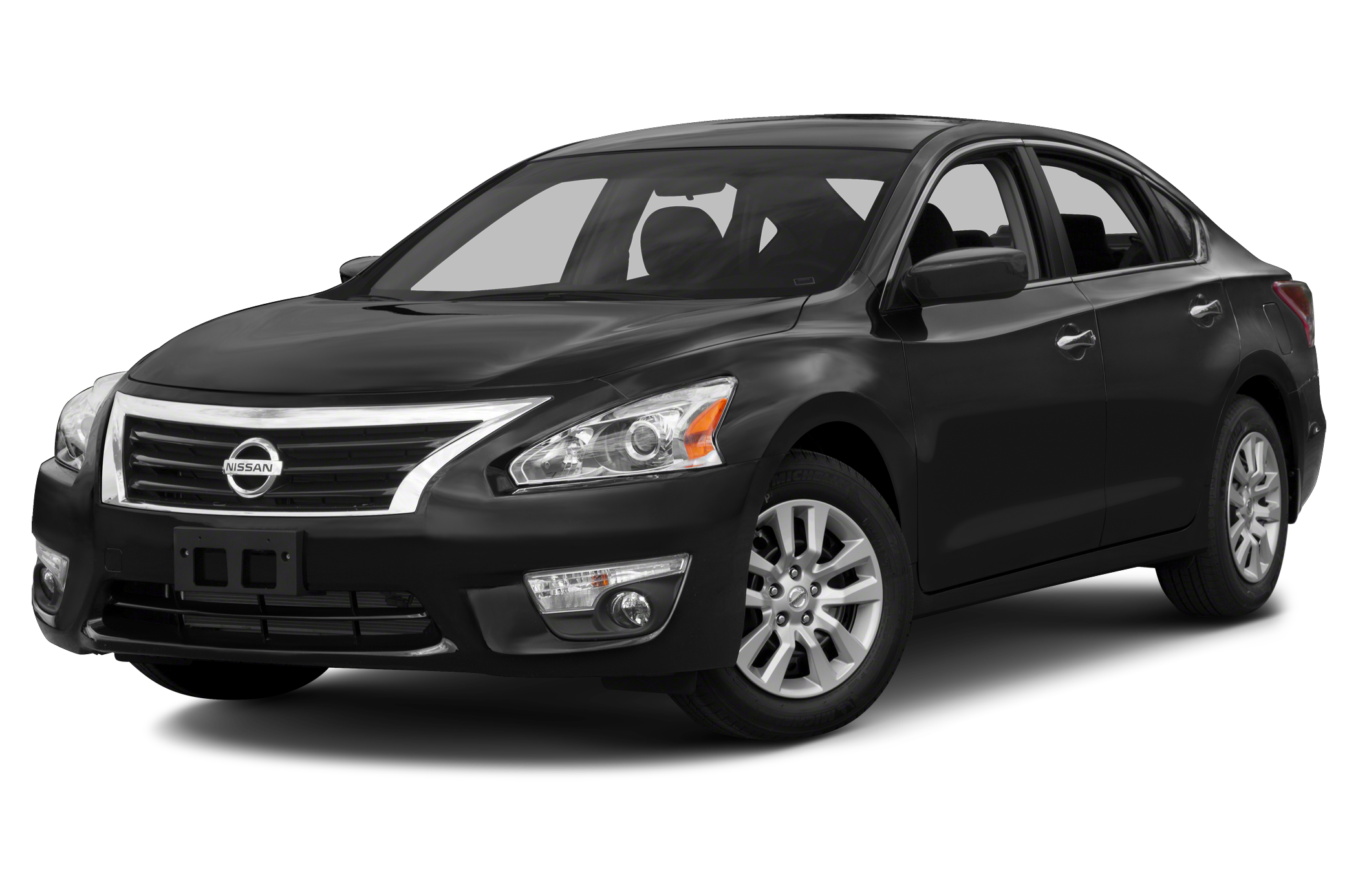
The 2012 Nissan Altima features a standard fuel tank capacity of 20.0 US gallons (approximately 75.7 liters) across all major trim levels, including the 2.5, 2.5 S, 3.5 SR, and both the Sedan and Coupe body styles. This generous capacity provides a significant driving range, often exceeding 500 miles on a single fill-up under highway conditions.
The 2012 Nissan Altima remains a popular choice on the used car market in 2026 due to its balance of performance, comfort, and reliability. One of its most practical features—often overlooked until a long road trip—is its substantial fuel tank. While many modern mid-size sedans have transitioned to smaller tanks to reduce weight and improve laboratory fuel economy scores, the 2012 Altima’s 20-gallon reservoir allows it to compete with even the most modern long-range cruisers.
The Engineering Behind the 20.0-Gallon Tank
In the automotive landscape of the early 2010s, a 20-gallon tank was considered large for the mid-size segment. For comparison, many of its contemporaries, such as the Honda Accord or Toyota Camry, typically offered tanks ranging from 17.0 to 18.5 gallons. Nissan’s decision to equip the L32-generation Altima with a 20-gallon tank was a strategic move focused on "cruising range."
By providing a larger volume of fuel, Nissan ensured that even the more powerful (and thirstier) 3.5L V6 models could travel a respectable distance between stations. This engineering choice reflects the Altima’s identity as a vehicle designed for North American highways, where long distances between exits are common. The tank itself is constructed from high-density polyethylene (HDPE), a durable, lightweight plastic that resists corrosion and is molded to fit the specific contours of the Altima’s underbody, specifically positioned ahead of the rear axle for better weight distribution and safety in the event of a rear-end collision.
2012 Nissan Altima Fuel Capacity by Trim and Engine
Whether you own the fuel-efficient 2.5-liter inline-four or the enthusiast-oriented 3.5-liter V6, the physical size of the fuel tank does not change. This uniformity simplifies manufacturing and ensures that all Altima owners benefit from the same high-capacity reservoir.
2.5 and 2.5 S Trims (Sedan and Coupe)
The 2.5-liter models are the most common variants of the 2012 Altima. Equipped with the QR25DE engine, these vehicles prioritize fuel efficiency. With a 20-gallon tank, the 2.5L Altima offers one of the best "distance-to-empty" metrics in its class.
3.5 SR Trim (Sedan and Coupe)
The 3.5 SR features the legendary VQ35DE V6 engine. While this engine provides significantly more horsepower and torque, it naturally consumes more fuel. The 20-gallon tank is particularly beneficial here, preventing the V6 model from requiring excessively frequent stops, which is a common complaint in performance-oriented sedans with smaller tanks.
The 2012 Altima Coupe Difference
It is a common misconception that the sportier Altima Coupe has a smaller tank due to its shorter wheelbase. However, Nissan maintained the 20.0-gallon capacity for the Coupe as well. This makes the Altima Coupe an exceptional "grand tourer" for its price point, capable of long-distance travel without constant interruptions for refueling.
Estimated Driving Range and Fuel Economy
Understanding the tank size is only half the equation; the other half is how efficiently the 2012 Altima uses that fuel. As of 2026, real-world data and EPA archives provide a clear picture of what owners can expect in terms of range.
| Engine / Body Style | City MPG | Highway MPG | Combined MPG | Max Highway Range |
|---|---|---|---|---|
| 2.5L I4 Sedan (CVT) | 23 | 32 | 27 | 640 Miles |
| 2.5L I4 Coupe (CVT) | 23 | 32 | 27 | 640 Miles |
| 3.5L V6 Sedan (CVT) | 20 | 27 | 23 | 540 Miles |
| 3.5L V6 Coupe (CVT) | 20 | 27 | 23 | 540 Miles |
| 3.5L V6 Coupe (Manual) | 18 | 25 | 21 | 500 Miles |
Note: These figures are based on 2012 EPA estimates. Real-world range will vary based on vehicle maintenance, tire pressure, load, and driving habits.
Calculating Your Actual Range
To find your specific range, you should not rely solely on the 20-gallon total. Most drivers fill up when the "Low Fuel" light illuminates. In the 2012 Altima, this light typically leaves a reserve, which we will discuss in detail below. If you average 25 MPG in combined driving, you can safely expect a range of approximately 450 miles before you need to begin looking for a station.
The Fuel Reserve and "Low Fuel" Warning System
When the fuel gauge in a 2012 Nissan Altima hits the "E" mark or the low fuel warning light illuminates, the tank is not actually dry. Nissan, like most manufacturers, builds in a "reserve" capacity to protect the vehicle and the driver.
How Much Fuel is Left?
In the 2012 Altima, the low fuel warning typically triggers when there are approximately 2.5 to 3.0 gallons remaining in the tank. This means that when the light first comes on, you likely have between 50 and 80 miles of driving range remaining, depending on your current fuel economy.
Why You Should Avoid Driving on the Reserve
While it may be tempting to push the limits of the 20-gallon tank, doing so can be detrimental to the vehicle's health:
- Fuel Pump Cooling: The electric fuel pump is located inside the fuel tank and relies on the surrounding gasoline to act as a coolant. Frequently running the tank near empty exposes the pump to air, leading to overheating and premature failure.
- Sediment Ingestion: Over years of use, microscopic sediment can settle at the bottom of the tank. While the fuel filter is designed to catch this, running the tank extremely low increases the concentration of debris being pulled toward the pump's intake strainer.
- Vapor Lock and Air Pockets: Driving on an nearly empty tank in extreme heat or on steep inclines can cause the pump to ingest air, leading to engine sputtering or stalling.
Fuel Requirements: Octane and Quality
To maximize the potential of the Altima’s 20-gallon capacity, using the correct fuel type is essential. Using the wrong octane won't necessarily change the "size" of the tank, but it will change how many miles you get out of every gallon.
2.5L Engine Requirements
The 4-cylinder engine is designed to run on 87-octane regular unleaded gasoline. Using premium fuel in this engine provides no measurable benefit in terms of fuel economy or power and is generally a waste of money.
3.5L Engine Requirements
For the V6 engine, Nissan recommends using premium unleaded gasoline (91 octane or higher) for maximum performance. While the vehicle's Engine Control Unit (ECU) can retard timing to allow the car to run on 87-octane without damage (preventing "knock"), you will notice a slight decrease in horsepower and a marginal drop in fuel economy. If you are looking to achieve the maximum 540-mile highway range, premium fuel is the better choice for the 3.5L engine.
Ethanol Content (E15 and E85)
The 2012 Nissan Altima is designed to run on gasoline containing up to 10% ethanol (E10). It is not a Flex-Fuel vehicle. You should avoid using E85 (85% ethanol), as the fuel system components—including the seals in the fuel tank and the injectors—are not designed to handle the corrosive nature of high ethanol concentrations. Use of E15 (15% ethanol) should be checked against the specific manufacturer's updates, but generally, 2012 models were optimized for E10.
Common Fuel System Issues in the 2012 Altima
As these vehicles age into 2026, certain issues related to the fuel tank and delivery system have become well-documented. If you notice that your "20-gallon" tank doesn't seem to be taking the correct amount of fuel, or your gauge is behaving erratically, consider the following:
1. Inaccurate Fuel Gauge (Sending Unit Failure)
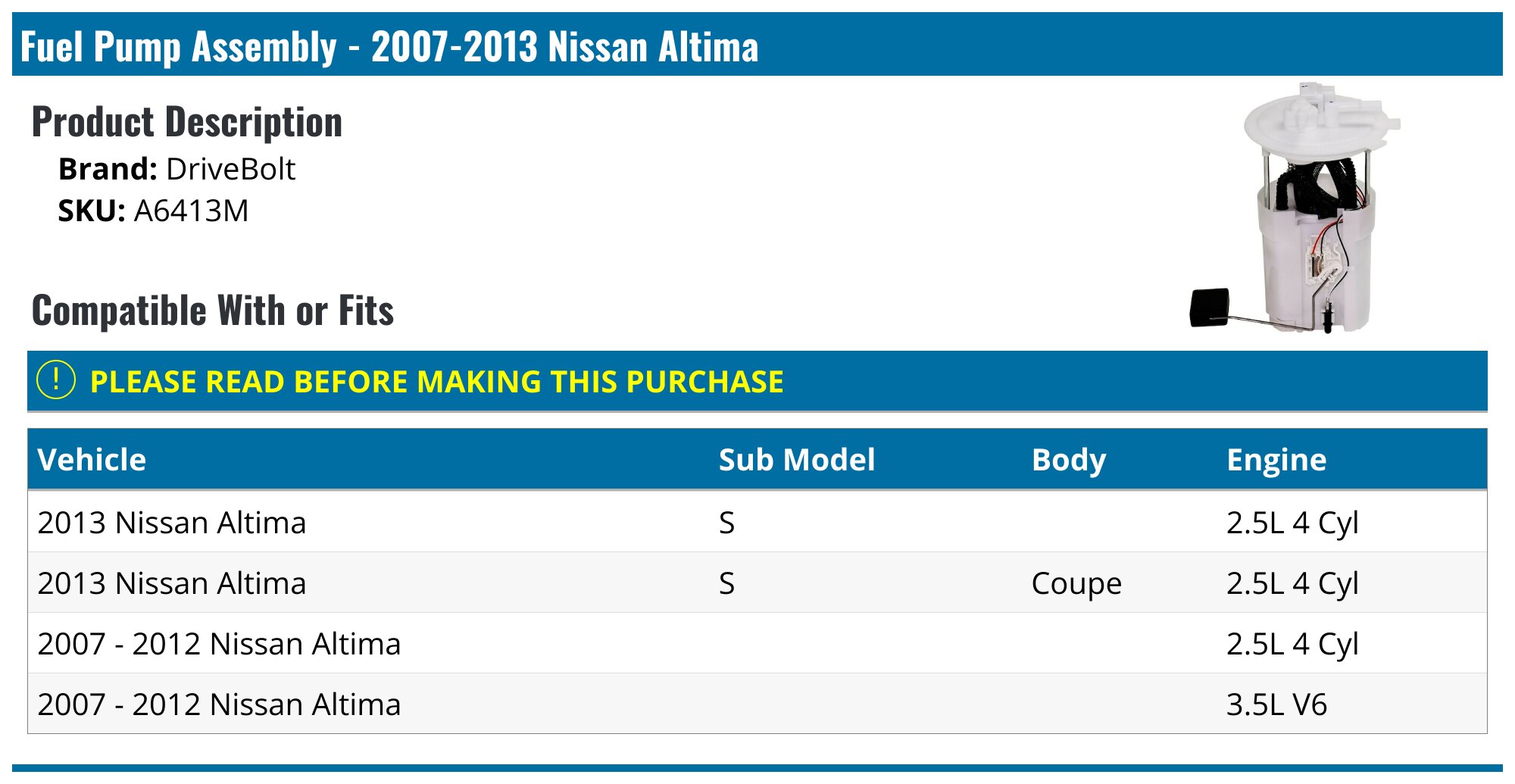
A common issue with the L32 Altima involves the fuel level sending unit. This is a float-based sensor attached to the fuel pump assembly inside the tank. Over time, the sulfur in gasoline can coat the sensor's contact points, leading to inaccurate readings. Owners often report the gauge showing "half full" when the tank is actually nearly empty, or vice versa.
2. Evaporative Emission (EVAP) System Clogs
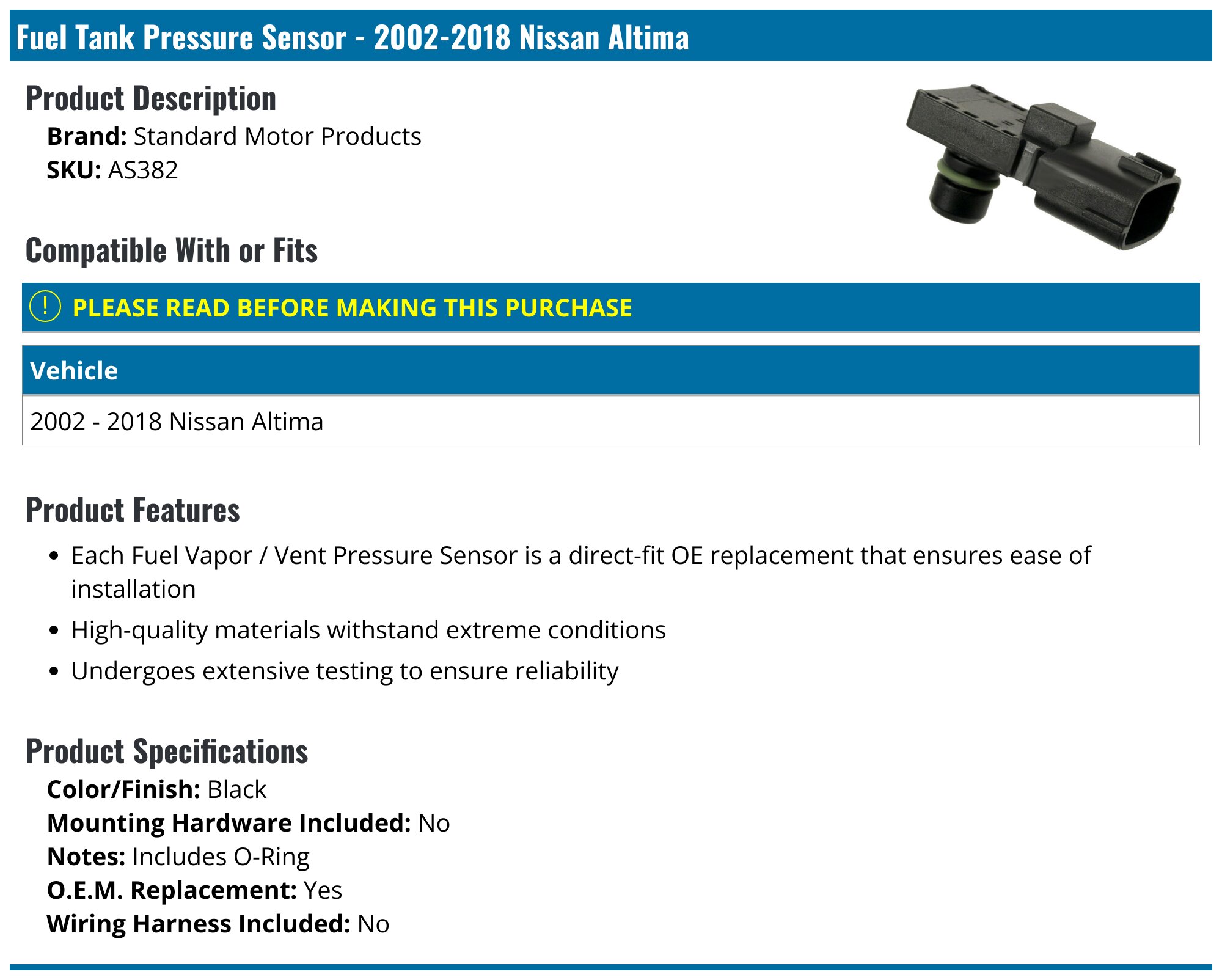
If you find that the gas pump "clicks off" repeatedly when you are trying to fill your 20-gallon tank, the issue is likely not the tank itself but the EVAP system. The charcoal canister or the vent control valve can become clogged or stuck. This prevents air from escaping the tank as fuel enters, tricking the gas station nozzle into thinking the tank is full.
3. Fuel Pump Assembly Wear
Since the fuel pump is a wear item, many 2012 Altimas reaching high mileage in 2026 may require a replacement. Because the pump is accessed through a service panel under the rear seat, it is not necessary to "drop" the entire 20-gallon tank for replacement, which significantly reduces labor costs.
Technical Specifications Comparison: 2012 Altima vs. Competitors
To provide context for the Altima’s 20-gallon tank, it is helpful to see how it compared to its primary rivals during its production year.
| 2012 Vehicle Model | Fuel Tank Capacity (Gallons) | Standard Engine MPG (Hwy) |
|---|---|---|
| 2012 Nissan Altima | 20.0 | 32 |
| 2012 Toyota Camry | 17.0 | 35 |
| 2012 Honda Accord | 18.5 | 34 |
| 2012 Ford Fusion | 17.5 | 33 |
| 2012 Chevrolet Malibu | 16.4 | 33 |
| 2012 Hyundai Sonata | 18.5 | 35 |
As shown, the Altima held a significant advantage in raw capacity. While some competitors achieved slightly higher MPG ratings, the Altima's larger tank often resulted in a longer total highway range, a key selling point for commuters and long-distance drivers.
Maintenance Tips for Longevity
To ensure your fuel system remains efficient as the vehicle continues to age, follow these professional recommendations:
- Replace the Engine Air Filter: A clogged air filter forces the engine to work harder, which can significantly reduce the mileage you get from your 20 gallons of fuel.
- Fuel System Cleaner: Using a high-quality polyetheramine (PEA) based fuel system cleaner once every 5,000 miles can help keep the fuel injectors and the sending unit contacts clean.
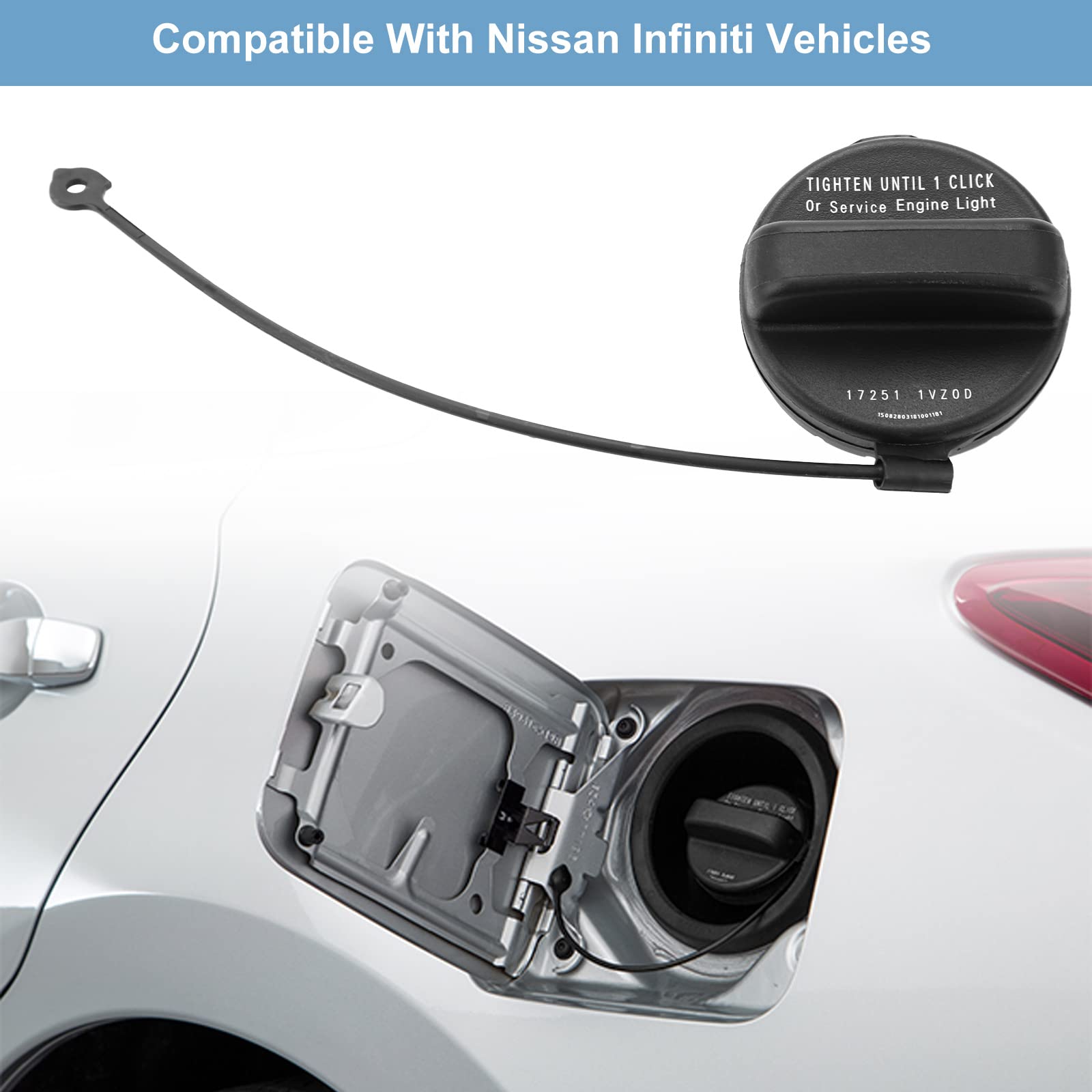
- Inspect the Gas Cap: A worn rubber seal on the gas cap can allow fuel vapors to escape, triggering a "Check Engine" light for a small EVAP leak and slightly reducing your overall fuel efficiency.
- Tire Pressure: The 2012 Altima is sensitive to tire pressure. Maintaining the factory-recommended 32-33 PSI (check your door jamb for specifics) ensures that you aren't wasting fuel on rolling resistance.
Frequently Asked Questions
Does the 2012 Nissan Altima have a gas cap release lever?
Yes, the fuel door release lever is located on the lower dash to the left of the steering wheel, near the hood release. Unlike some modern cars that use a "push-to-release" fuel door, the 2012 Altima requires the internal lever to be pulled.
Can I upgrade to a larger fuel tank?
There are no standard aftermarket "large capacity" tanks for the 2012 Altima. The existing 20-gallon tank is already at the physical limit of the space available in the chassis. If you require more range, the best approach is to ensure the engine is tuned for maximum MPG.
How much does it cost to fill the tank in 2026?
Fuel prices vary wildly by region. To calculate your cost, multiply current local gas prices by 20. For example, if gas is $3.50 per gallon, a completely empty-to-full fill-up would cost approximately $70.00. However, since most people fill up when they have 2-3 gallons left, a typical "full" fill-up is usually around 17-18 gallons.
Why is my 2012 Altima getting poor gas mileage?
Common culprits for a sudden drop in range include a failing oxygen sensor, a dirty mass airflow (MAF) sensor, or dragging brake calipers. If your 20-gallon tank is only getting you 300 miles of highway driving, a diagnostic scan is highly recommended.
Is the fuel tank metal or plastic?
The 2012 Altima uses a multi-layer plastic (HDPE) tank. This is superior to older metal tanks because it cannot rust from the inside out, and it is more resilient in minor impacts.
Practical Recommendation
If you are a current owner or a prospective buyer of a 2012 Nissan Altima, the 20-gallon fuel tank is one of the vehicle's strongest practical assets. To make the most of it, prioritize the health of the EVAP system and the fuel sending unit. If you notice the fuel gauge "sticking" at a certain level, address it promptly to avoid the risk of running out of gas despite the gauge showing a remaining balance. Furthermore, for those driving the 3.5L V6 model, utilizing premium fuel remains the best way to ensure the engine operates at peak efficiency, effectively maximizing the utility of its high-capacity tank.