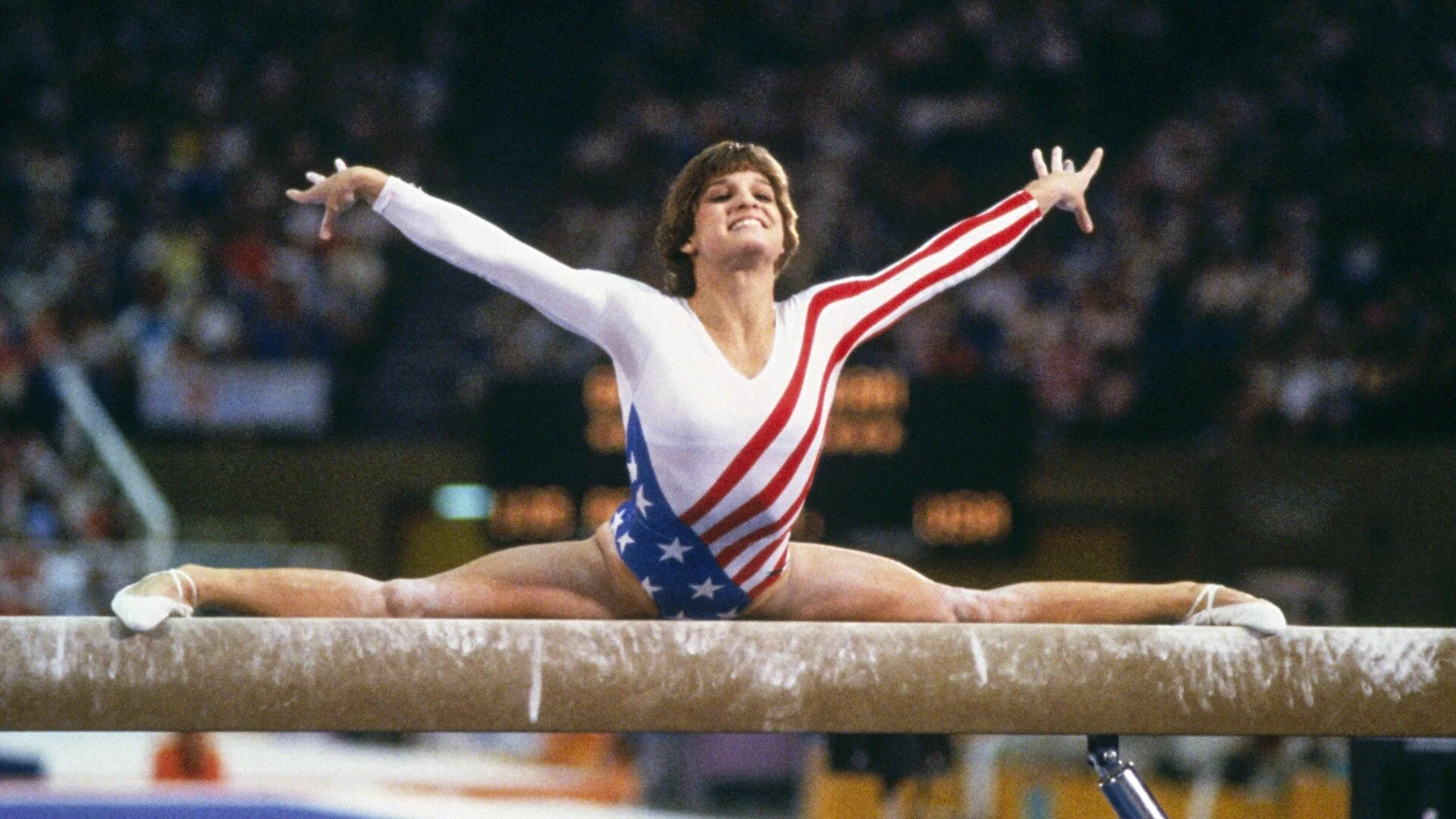
The 1984 Olympic gymnasts defined an era of athletic excellence characterized by the pursuit of the "Perfect 10" and the intense geopolitical climate of the Cold War. Led by icons like Mary Lou Retton, Li Ning, and Ecaterina Szabo, these athletes transformed gymnastics into a premier global spectator sport through record-breaking performances in Los Angeles.
Historical Context: The 1984 Los Angeles Games and the Soviet Boycott
To understand the achievements of the 1984 Olympic gymnasts, one must first recognize the unique competitive landscape of the XXIII Olympiad. Held in Los Angeles, these Games were significantly impacted by a Soviet-led boycott involving 14 Eastern Bloc countries. This withdrawal was a retaliatory move following the U.S.-led boycott of the 1980 Moscow Olympics.
For gymnastics, a sport historically dominated by the Soviet Union and East Germany, the absence of these powerhouse teams fundamentally altered the medal trajectory. However, the competition remained fierce. Romania, the only Warsaw Pact nation to defy the boycott, sent a full squad, ensuring that the level of play remained elite. The 1984 Games became a stage where emerging nations, particularly the United States and China, asserted their dominance, filling the vacuum left by the Soviets and creating a new set of legendary figures.
The Rise of Mary Lou Retton and the American Women's Team
The most enduring image of the 1984 Olympic gymnasts is undoubtedly Mary Lou Retton celebrating her perfect 10.0 on the vault. At just 16 years old, Retton became the first female gymnast from outside Eastern Europe to win the Olympic individual all-around gold medal. Her victory was secured by a mere 0.050 points, a margin that underscored the razor-thin difference between gold and silver in the "Perfect 10" era.
Retton’s performance was characterized by power and athleticism, a departure from the more traditional, balletic style favored by previous champions like Nadia Comăneci. Her success catalyzed a "gymnastics boom" in the United States, leading to increased funding, participation, and media coverage that would eventually lead to the U.S. becoming a perennial powerhouse in the sport.
The U.S. women's team, coached by Bela and Martha Karolyi, also secured a silver medal in the team competition. Key members included:
- Julianne McNamara: A specialist on the uneven bars who shared the gold medal in that event with Ma Yanhong of China.
- Kathy Johnson: A veteran leader who provided stability to the young squad and earned an individual bronze on the balance beam.
- Tracee Talavera: A pioneer for Hispanic-American athletes in gymnastics, contributing significantly to the team's overall score.
Ecaterina Szabo: Romania’s Dominance Amidst Absence
While Retton captured the American imagination, Ecaterina Szabo of Romania was arguably the most successful gymnast of the 1984 Games. Szabo won four gold medals (Team, Vault, Floor Exercise, and a shared gold on the Uneven Bars) and one silver (Individual All-Around). Her rivalry with Retton remains one of the most storied matchups in Olympic history.
The Romanian team’s presence was vital for the technical legitimacy of the 1984 Games. By winning the team gold medal, the Romanian women proved that their training systems—often characterized by extreme discipline and precision—were capable of producing world-leading results even without the Soviet presence. Szabo’s floor routine, set to classic Romanian themes, demonstrated a blend of high-difficulty tumbling and artistic expression that set the standard for the next decade of competition.
The Golden Era of U.S. Men's Gymnastics
The 1984 Olympic gymnasts on the men's side achieved a feat that has not been repeated by an American team since: winning the Olympic Team Gold. Competing at Pauley Pavilion, the U.S. men’s team utilized the "home-field advantage" to overcome a formidable Chinese squad.
The team was led by a group of gymnasts who became household names:
- Peter Vidmar: Known for his elegance and technical perfection, Vidmar won the gold medal on the pommel horse and a silver in the individual all-around.
- Bart Conner: After recovering from a significant bicep injury, Conner scored a perfect 10.0 on the parallel bars to win individual gold. His story of resilience remains a foundational narrative in American sports history.
- Mitch Gaylord: The first American gymnast to score a perfect 10.0 in Olympic competition, Gaylord was known for his high-flying style and the "Gaylord Flip" on the high bar.
- Tim Daggett: His crucial 10.0 on the high bar during the team finals secured the gold for the United States, cementing the team's legacy.
Li Ning: The "Prince of Gymnasts"
Representing the People's Republic of China, Li Ning emerged from the 1984 Games as the most decorated male athlete across all sports. He won six medals in total: three gold (Floor Exercise, Pommel Horse, Rings), two silver (Team, Vault), and one bronze (Individual All-Around).
Li Ning's performance was a masterclass in versatility. His strength on the rings and agility on the floor showcased a level of preparation that signaled China's arrival as a global gymnastics superpower. Following his competitive career, Li Ning transitioned into business, founding one of the world's largest athletic apparel companies, further extending his influence on the global sporting landscape well into 2026.
Technical Standards: The "Perfect 10" System in 1984
The 1984 Olympic gymnasts competed under the traditional Code of Points, where a 10.0 was the maximum possible score. This system, while iconic, was often criticized for its "ceiling effect," where judges had no room to reward difficulty beyond a certain point.
In 1984, the 10.0 was achieved with surprising frequency compared to previous Games. This was due to several factors:
- Increased Difficulty: Athletes were performing skills previously thought impossible, such as double-back somersaults with full twists.
- Subjective Judging: In the absence of the Soviets, some analysts argued that judging became more favorable toward the host nation and the Romanians.
- Technological Advances: Improvements in landing mats and spring floors allowed gymnasts to take greater risks with less fear of injury.
The era of the "Perfect 10" eventually came to an end in 2006, when the International Gymnastics Federation (FIG) moved to an open-ended scoring system to better differentiate between high-level difficulty and execution.
Comparative Medal Table: 1984 Gymnastics Leaders
The following table highlights the top individual performers from the 1984 Los Angeles Olympics, illustrating the diversity of talent across different nations.
| Athlete | Country | Total Medals | Gold Medals | Primary Event |
|---|---|---|---|---|
| Ecaterina Szabo | Romania | 5 | 4 | Vault, Floor, Team |
| Li Ning | China | 6 | 3 | Floor, Pommel Horse, Rings |
| Mary Lou Retton | USA | 5 | 1 | Individual All-Around |
| Bart Conner | USA | 2 | 2 | Parallel Bars, Team |
| Peter Vidmar | USA | 3 | 2 | Pommel Horse, Team |
| Simona Păucă | Romania | 3 | 2 | Balance Beam, Team |
| Koji Gushiken | Japan | 5 | 2 | Individual All-Around, Rings |
| Julianne McNamara | USA | 3 | 1 | Uneven Bars |
Long-term Impact on the Sport and the "1984 Effect"
The 1984 Olympic gymnasts did more than just win medals; they fundamentally changed the business and culture of the sport. Before 1984, gymnastics was largely seen as a niche amateur pursuit. Following the success of the U.S. and Chinese teams, the sport saw a massive influx of commercial interest.
The Professionalization of Gymnastics
Post-1984, many gymnasts leveraged their fame into professional careers. Mary Lou Retton became the first female athlete to appear on a Wheaties box, setting a precedent for sports marketing. This shift allowed gymnasts to extend their careers through tours, endorsements, and coaching, rather than retiring immediately after the Olympics.
The Globalization of Training
The success of the U.S. team under the Karolyis—who had defected from Romania—led to a globalization of training methods. The "centralized" training camp model became the standard for many national teams, emphasizing peak physical conditioning and rigorous repetition.
Where Are They Now? (Status in 2026)
As of 2026, the 1984 Olympic gymnasts continue to influence the sport as elder statesmen and stateswomen.
- Mary Lou Retton remains a motivational speaker and advocate for youth fitness, though she has faced personal health challenges in recent years that mobilized the gymnastics community in support.
- Li Ning continues to lead his multi-billion dollar empire, Li-Ning Company Limited, which remains a major sponsor of Olympic athletes globally.
- Bart Conner and Nadia Comăneci (who, though not a 1984 competitor, is intrinsically linked to the era) operate a premier gymnastics academy in Oklahoma, training future Olympians.
- Peter Vidmar has served in various administrative roles, including Chairman of the Board of USA Gymnastics, working to reform the organization and ensure athlete safety.
Frequently Asked Questions
Did the Soviet boycott diminish the value of the 1984 medals?
While the absence of the Soviet and East German teams removed some of the top-ranked competitors, the 1984 medals are still highly regarded. The athletes who competed, particularly the Romanians and Chinese, were of world-class caliber. The technical skills demonstrated in Los Angeles pushed the sport forward, regardless of the political situation.
Who won the most medals in gymnastics at the 1984 Olympics?
Li Ning of China won the most medals, with six in total (3 gold, 2 silver, 1 bronze). Ecaterina Szabo of Romania followed with five medals, four of which were gold, making her the most successful athlete in terms of gold medal count in gymnastics that year.
What was the significance of the "Perfect 10" in 1984?
The 1984 Games saw a high frequency of perfect 10s, which signaled both the peak of the current scoring system and the need for a more complex way to differentiate athletes. It created a "perfection culture" in the sport that made it highly marketable but eventually led to the 2006 scoring overhaul.
How did the 1984 Olympics change gymnastics for the USA?
The 1984 Games were the catalyst for the "American Century" in gymnastics. The team gold for the men and the individual all-around gold for Mary Lou Retton proved that the U.S. could compete with the best in the world, leading to massive growth in gymnastics clubs across the country.
Are any 1984 Olympic gymnasts still active in the sport?
Most of the 1984 gymnasts are now in their late 50s or 60s. While they are no longer competing, many remain active as coaches, judges, commentators, and officials within the International Gymnastics Federation (FIG) and USA Gymnastics.
Practical Recommendation for Fans and Researchers
For those looking to study the 1984 Olympic gymnasts further, the best resource is the Olympic Channel's historical archive. High-quality footage of the individual and team finals is available, allowing for a technical comparison of how skills have evolved between 1984 and 2026. Additionally, visiting the International Gymnastics Hall of Fame in Oklahoma City provides a deep dive into the specific biographies and equipment used by these legendary athletes.