Acquiring a property or a major asset without an upfront capital injection is possible through specific government-backed programs, specialized credit union products, and private financing structures. However, "no money down" rarely translates to "zero cost," as borrowers typically encounter higher interest rates, mandatory mortgage insurance, or rolled-in closing costs that increase the total loan balance.
The dream of homeownership or business expansion often hits a wall when confronted with the traditional 20% down payment requirement. In the financial landscape of 2026, the "no money down" approach has evolved. While the barrier to entry is lower, the structural mechanics of these loans require a deep understanding of long-term debt obligations. To navigate this, we must examine the 13 primary pathways to 100% financing and the economic trade-offs they necessitate.
Defining the Zero Down Payment Concept
A "no money down" loan, technically known as a 100% loan-to-value (LTV) mortgage, allows a borrower to finance the entire purchase price of an asset. In 2026, these are primarily utilized in the residential real estate market, though they exist in specialized vehicle and equipment leasing sectors.
The "reality" of these loans is that the "down payment" is the only thing being waived. Borrowers are still responsible for closing costs—which include appraisal fees, title insurance, origination fees, and government taxes—unless these are negotiated away or covered by a secondary grant. Furthermore, lenders offset the risk of a 100% LTV loan by charging higher monthly premiums or requiring specific eligibility criteria, such as military service or location-based residency.
13 Pathways to 100% Financing
1. VA Loans for Veterans and Service Members
The Department of Veterans Affairs (VA) continues to offer the most robust no-money-down program. Available to active-duty service members, veterans, and eligible surviving spouses, the VA loan does not require private mortgage insurance (PMI). Instead, it utilizes a "funding fee," which can be rolled into the loan amount. In 2026, the VA loan remains the gold standard for zero-down financing due to its competitive interest rates that often undercut conventional loans.
2. USDA Rural Development Loans
For those looking outside major metropolitan hubs, the United States Department of Agriculture (USDA) provides the Section 502 Guaranteed Rural Housing Loan Program. This is designed for low-to-moderate-income borrowers. The "reality" check here is the geographic restriction; the property must be located in an eligible rural area as defined by the USDA. Additionally, there are strict household income limits that vary by county.
3. FHA Loans Combined with Down Payment Assistance (DPA)
While the Federal Housing Administration (FHA) normally requires 3.5% down, it becomes a "no money down" solution when paired with state or local Down Payment Assistance (DPA) programs. Many state housing finance agencies in 2026 offer silent second mortgages or forgivable grants that cover the 3.5% requirement. The complexity lies in qualifying for both the federal loan and the local grant simultaneously.
4. Navy Federal Credit Union specialized products
Navy Federal offers a "HomeBuyers Choice" program that allows for 100% financing for qualified members. Unlike the VA loan, this is a proprietary product. It often carries a slightly higher interest rate than a standard 80% LTV loan to compensate for the lack of a down payment, but it eliminates the need for monthly PMI, which can save borrowers hundreds of dollars per month.
5. Physician and Professional Loans
Many national banks offer 100% financing specifically to "high-earning, low-asset" professionals such as doctors, dentists, and occasionally attorneys or CPAs. Lenders view these individuals as low-risk due to their high career earnings potential. These loans often waive PMI and allow for high debt-to-income ratios, acknowledging the significant student loan debt many medical professionals carry in 2026.
6. State Housing Finance Agency (HFA) 100% Loans
Several states have developed their own 100% LTV programs to combat housing affordability issues. These are often funded through tax-exempt mortgage revenue bonds. The catch is usually a "recapture tax" if the home is sold within a certain period (typically nine years) and the owner’s income has increased significantly, or a requirement to remain in the home as a primary residence for a set duration.
7. Seller Financing
In a "subject-to" or "land contract" scenario, the seller acts as the bank. A buyer might negotiate a 0% down deal if the seller is motivated to move the property quickly or if the buyer agrees to a higher purchase price or interest rate. While this bypasses traditional bank red tape, it requires rigorous legal oversight to ensure the title is clear and the contract is enforceable.
8. Lease with Option to Purchase (Rent-to-Own)
This is a hybrid strategy. While not a loan in the traditional sense, it allows a buyer to move in with zero down payment toward the equity, with a portion of the monthly rent credited toward a future down payment. The reality is that if the buyer fails to exercise the option or cannot qualify for a mortgage at the end of the term, they typically lose all the "extra" rent paid during the lease period.
9. 80/20 Piggyback Loans
Though less common than in the early 2000s, some lenders in 2026 have brought back the "piggyback" structure. This involves taking a first mortgage for 80% of the home's value and a simultaneous second mortgage for the remaining 20%. This eliminates PMI, but the second mortgage usually carries a variable interest rate that is significantly higher than the first.
10. Credit Union Community Partners Programs
Smaller, community-based credit unions often have "first-time homebuyer" initiatives that offer 100% financing to encourage local investment. These programs are often limited to specific zip codes or employees of partnered local businesses. They offer the benefit of localized servicing and manual underwriting, which can be more flexible than big-bank algorithms.
11. Employer-Assisted Housing (EAH)
Some large corporations and university systems provide down payment loans or grants to employees who purchase homes near their workplace. When combined with a low-down-payment mortgage, this can effectively result in a zero-cash-at-closing scenario. The "catch" is that these loans are often forgivable over five or ten years, meaning if you quit or are fired, the balance becomes due immediately.
12. Micro-Lending and Crowdfunded "Down Payment Equity"
A newer development in 2026 involves fintech platforms that allow investors to "buy" a portion of your home’s future appreciation in exchange for providing the down payment today. You get a $0 down loan, but you give up 20% to 50% of the profit when you eventually sell the home. This is "no money down," but it is arguably the most expensive form of financing in terms of lost equity.
13. Hard Money with a Gap Partner
For real estate investors, hard money lenders typically require 10% to 20% down. However, an investor can achieve 0% down by bringing in a "gap funder"—a private partner who provides the down payment in exchange for a slice of the flip's profit. This is high-risk and high-cost, but it allows for "infinite returns" since the investor has none of their own capital at stake.
The Financial Mechanics of Zero Cost Loans
To understand the "reality" of these 13 options, one must look at the hidden math. Lenders do not provide 100% financing out of charity; they price the risk into the loan's structure.
| Feature | Standard 20% Down Loan | 100% LTV (Zero Down) Loan |
|---|---|---|
| Interest Rate | Market Base Rate | Base Rate + 0.25% to 0.75% |
| Mortgage Insurance | None Required | Mandatory (PMI or MIP) |
| Upfront Fees | Standard Closing Costs | Potential "Funding Fees" or "Origination Premiums" |
| Monthly Payment | Lower (due to lower principal) | Higher (due to higher principal + insurance) |
| Equity Position | 20% Initial Equity | 0% Initial Equity (At risk of "being underwater") |
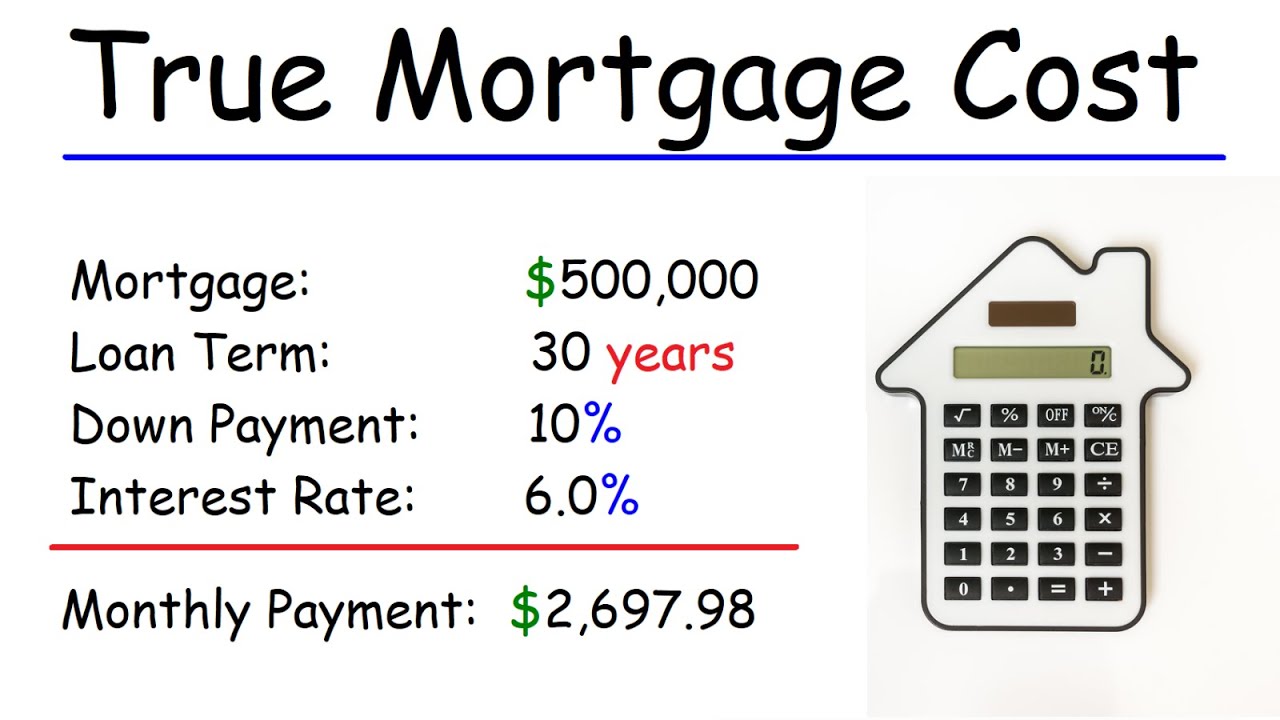
When a borrower opts for a 0% down payment, they are borrowing a larger sum of money. On a $400,000 home, a 20% down payment means a loan of $320,000. A zero-down loan means a loan of $400,000. Not only is the principal higher, but the interest is calculated on that larger amount every month. Over a 30-year term, a zero-down borrower could easily pay $50,000 to $100,000 more in total interest than someone who put 20% down.
The Hurdle of Closing Costs
A common misconception in 2026 is that "no money down" means "no money needed at the closing table." This is false. Closing costs typically range from 2% to 5% of the purchase price. On a $300,000 home, that is $6,000 to $15,000.
There are only three ways to truly achieve a "zero cost" entry:
- Seller Concessions: The seller agrees to pay the buyer's closing costs. Most loan programs limit this to 3% or 6% of the purchase price.
- Lender Credits: The lender pays the closing costs in exchange for giving the borrower a higher interest rate (e.g., taking a 7.5% rate instead of 7.0%).
- Rolling Costs into the Loan: Only certain programs, like the VA or USDA, allow specific fees to be added to the loan balance. Most conventional "no down" programs do not allow you to finance the closing costs.
Risks of Zero Down Payment Financing
The primary risk of 100% financing is negative equity. If the housing market dips even 2% or 3%, a homeowner who put 0% down owes the bank more than the house is worth. This makes it impossible to sell the home without bringing cash to the table or undergoing a short sale, which ruins credit scores.
Furthermore, the "Reality of Zero Cost" includes the opportunity cost of the monthly payment. Because the monthly mortgage is significantly higher, the borrower has less disposable income for home maintenance, emergency savings, or retirement contributions. In 2026's economic environment, where inflation remains a persistent concern, this reduced monthly cash flow can be a significant burden.
Verifying Program Legitimacy
Before pursuing any of these 13 methods, verification is essential. Borrowers should:
- Check the NMLS: Ensure any mortgage loan originator is licensed through the Nationwide Multistate Licensing System.
- Review HUD Guidelines: For FHA and DPA programs, the U.S. Department of Housing and Urban Development provides the official requirements for assistance.
- Consult a Tax Professional: "No money down" strategies often have tax implications, particularly regarding the deductibility of higher interest payments or the treatment of forgiven DPA grants.
Frequently Asked Questions
Does a zero down payment loan affect my credit score differently?
The loan itself does not affect your score differently than a standard mortgage, but the qualification requirements are usually stricter. Lenders often require a credit score of 640 to 680 for government-backed 100% loans, and 720+ for private 100% professional or credit union loans. The higher debt-to-income (DTI) ratio resulting from a larger loan might also impact your ability to get other credit, like an auto loan, in the future.
Can I get a no-money-down loan for an investment property?
It is extremely difficult. Most 0% down programs (VA, USDA, FHA/DPA) require the property to be your primary residence for at least one year. For investment properties, the closest "no money down" strategy is using a "hard money/gap partner" structure or a "subject-to" deal where you take over the seller's existing mortgage.
Is PMI permanent on these loans?
On a conventional zero-down loan, PMI can usually be removed once you reach 20% equity through market appreciation or paying down the principal. However, on FHA loans with a low down payment, the Mortgage Insurance Premium (MIP) is often required for the life of the loan. VA loans never have monthly mortgage insurance, which is one of their greatest advantages.
What are "Seller Concessions" and how do they help?
Seller concessions are an agreement where the seller uses part of their profit from the sale to pay for the buyer's closing costs. In 2026, in a "buyer's market," this is common. In a "seller's market," you may have to offer a higher purchase price to convince a seller to agree to this, effectively financing your closing costs into the house price.
Final Recommendation
If you are considering a "no money down" loan in 2026, start by checking your eligibility for a VA or USDA loan, as these offer the lowest long-term costs. If you do not qualify for those, look toward State Housing Finance Agency grants that can bridge the gap for an FHA loan. Always calculate the "total cost of borrowing" over five and ten years, not just the monthly payment, to ensure the reality of the loan fits your long-term financial health.