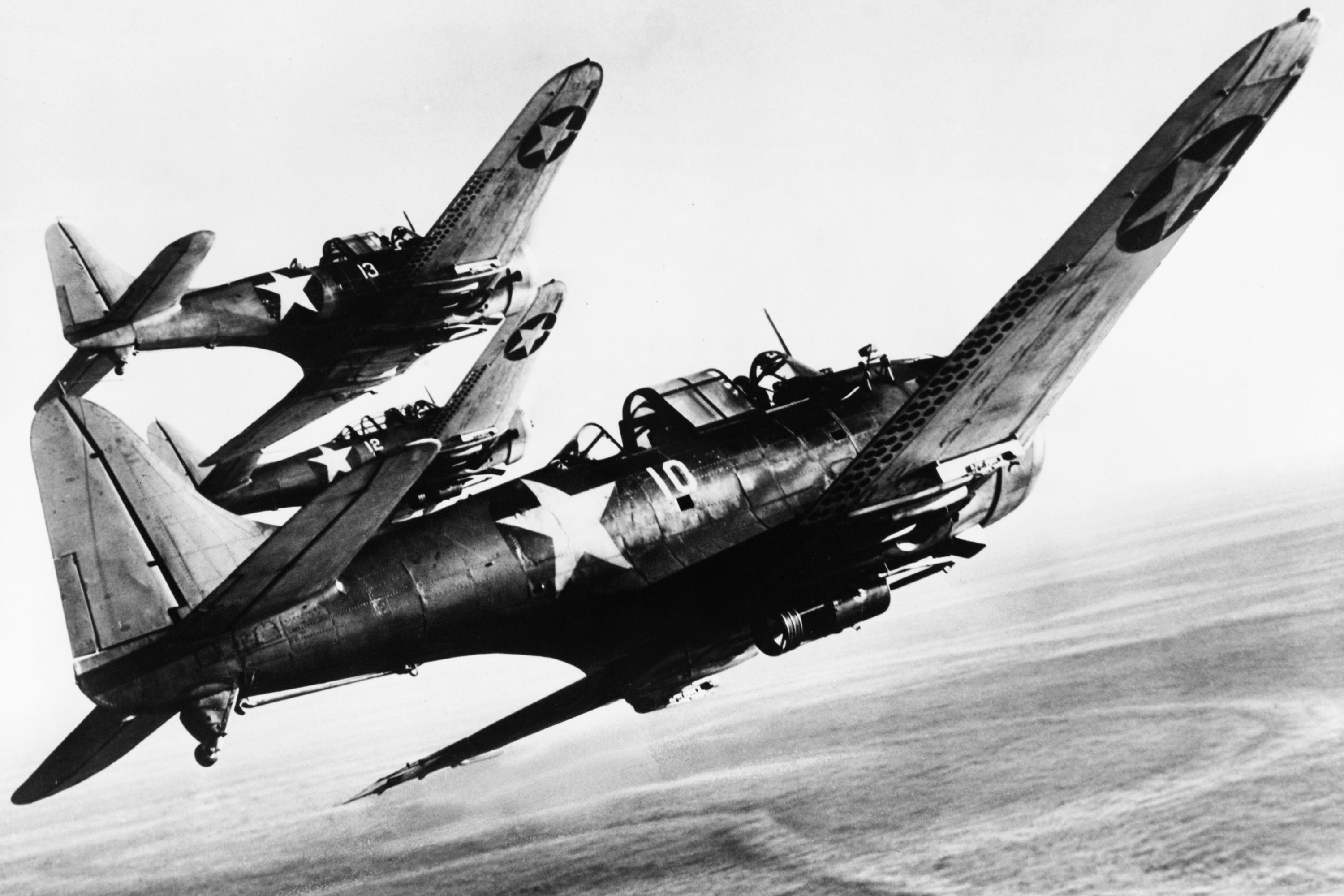
World War II was the first conflict in human history where air superiority dictated the outcome of nearly every major campaign. From the dogfights over London to the vast carrier battles of the Pacific, these 12 key planes represent the pinnacle of 1940s engineering and the strategic shifts that defined modern aerial warfare.
The Evolution of Aerial Combat (1939–1945)
At the onset of World War II in 1939, many air forces still utilized biplanes and fabric-covered structures. However, the rapid acceleration of military technology quickly pushed aviation into the era of all-metal monoplanes, high-performance piston engines, and eventually, the dawn of the jet age. The aircraft selected for this list were not merely fast or heavily armed; they were "key" because they altered the course of the war through their versatility, production numbers, or specialized roles.
In 2026, as we look back on these machines, they remain more than museum pieces. They are case studies in how industrial capacity and engineering breakthroughs—such as the perfection of the Rolls-Royce Merlin engine or the development of long-range drop tanks—can shift the geopolitical landscape.
1. Supermarine Spitfire (United Kingdom)
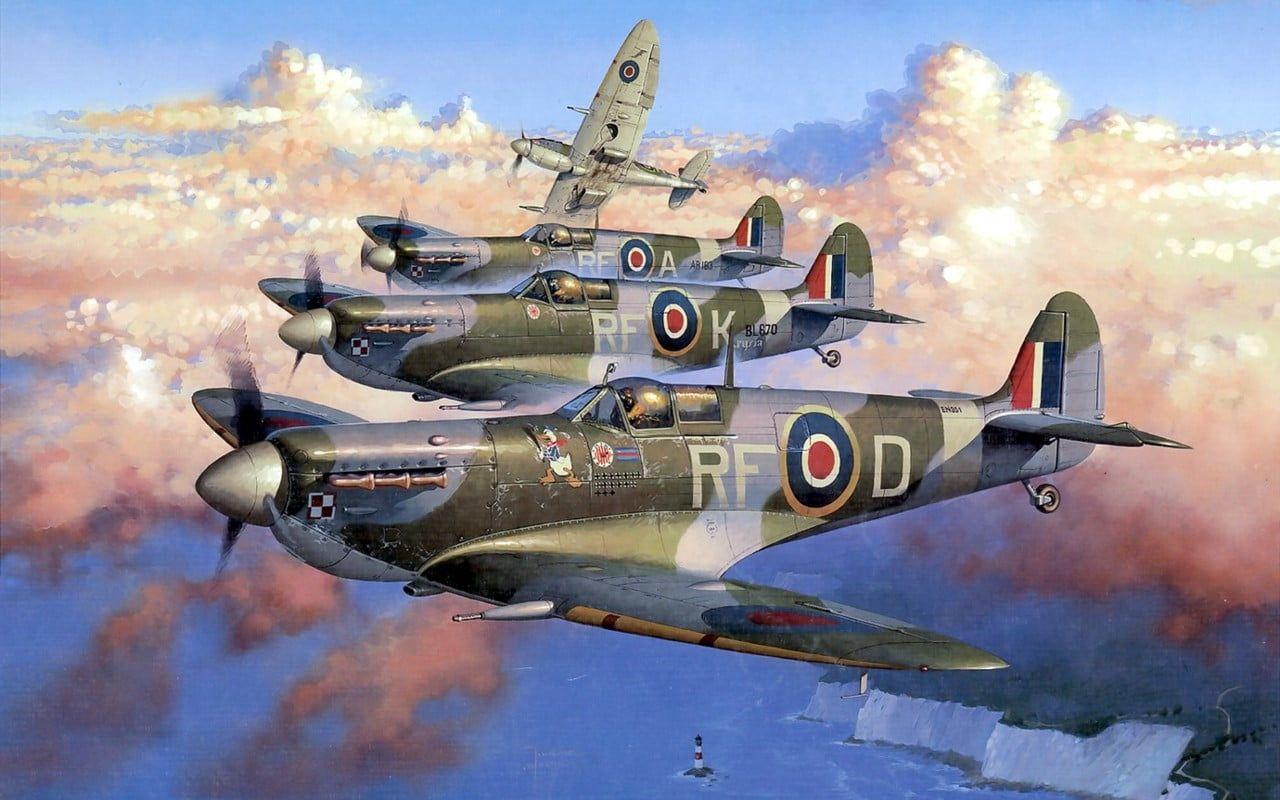
The Supermarine Spitfire is perhaps the most iconic British aircraft of the war. Designed by Reginald Mitchell, its most distinctive feature was the elliptical wing, which provided a thin cross-section that allowed for higher top speeds than most contemporary fighters while maintaining exceptional maneuverability.
Strategic Impact
The Spitfire's finest hour came during the Battle of Britain in 1940. While the Hawker Hurricane actually accounted for more kills during the battle, the Spitfire was the high-performance interceptor capable of engaging the German Messerschmitt Bf 109 on equal terms. This prevented the Luftwaffe from gaining the air superiority necessary for a sea-borne invasion of the British Isles.
Technical Evolution
The Spitfire was one of the few aircraft to remain in continuous production and development throughout the entire war. Early Marks utilized the Merlin engine, while later versions (like the Mk XIV) featured the much more powerful Griffon engine, allowing it to intercept V-1 flying bombs. Its adaptability saw it used as a photo-reconnaissance plane, a fighter-bomber, and even a carrier-based variant known as the Seafire.
2. Messerschmitt Bf 109 (Germany)
The Messerschmitt Bf 109 was the backbone of the German Luftwaffe's fighter force. It was a revolutionary design when it first appeared in the mid-1930s, featuring an all-metal monocoque construction, a closed canopy, and retractable landing gear.
Engineering Edge and Limitations
One of the Bf 109’s greatest technical advantages was its fuel-injected engine. Unlike the early Spitfires, which used carburetors that would cut out during negative-G maneuvers (causing the engine to sputter when diving), the Bf 109 could dive away from an opponent instantly. However, it suffered from a narrow landing gear track, which led to many accidents during takeoff and landing on rough frontline airfields.
Operational Longevity
The Bf 109 was produced in greater numbers than any other fighter in history, with over 34,000 units built. It was the mount of the highest-scoring aces in history, such as Erich Hartmann. As the war progressed, the airframe was pushed to its absolute limits to carry heavier cannons and more powerful engines to combat the swarms of Allied heavy bombers.
3. North American P-51 Mustang (USA)
The P-51 Mustang is often cited as the plane that "won" the air war over Europe. Originally designed to a British specification, the aircraft was merely mediocre until engineers made the decision to marry the American airframe with the British Rolls-Royce Merlin engine.
The Long-Range Escort
Before the Mustang, Allied bombers like the B-17 suffered devastating losses because no fighter had the range to escort them all the way to Berlin and back. The P-51, equipped with external drop tanks, changed everything. It possessed the range to protect the bombers and the performance to outclass German interceptors upon arrival.
Legacy in 2026
Even in 2026, the P-51 Mustang remains the "gold standard" for warbird restoration. Its laminar flow wing, which reduced drag at high speeds, was a precursor to modern aerodynamic designs. It proved that a single aircraft could be a long-range escort, a high-altitude interceptor, and a potent ground-attack platform.
4. Mitsubishi A6M Zero (Japan)
At the start of the Pacific War, the Mitsubishi A6M "Zero" was the most capable carrier-based fighter in the world. It was famous for its incredible range and almost supernatural maneuverability, which allowed Japanese pilots to dominate early engagements over Pearl Harbor and the Philippines.
The Cost of Performance
To achieve its legendary range and agility, the Zero was designed to be incredibly light. It lacked self-sealing fuel tanks and pilot armor. While this made it a formidable opponent in a dogfight, it also meant the plane was highly flammable. Once the Allies developed "Boom and Zoom" tactics—diving on the Zero and extending away rather than trying to out-turn it—the Zero’s lack of durability became a fatal flaw.
Psychological Impact
The Zero created a myth of Japanese aerial invincibility that lasted until 1943. It forced the United States to rapidly innovate, leading to the development of the F6F Hellcat and F4U Corsair, which were specifically designed to counter the Zero's strengths.
5. Boeing B-17 Flying Fortress (USA)
The B-17 Flying Fortress became the symbol of American industrial might and strategic resolve. Operating primarily with the 8th Air Force in England, the B-17 was designed to fly in tight "combat boxes" to provide overlapping fields of fire from its numerous .50 caliber machine guns.
Precision Day Bombing
Unlike the British, who preferred night-time area bombing, the Americans utilized the B-17 for daylight precision bombing. The goal was to destroy Germany's industrial heart—ball-bearing factories, oil refineries, and rail yards. The B-17's ability to absorb massive amounts of battle damage and still return home earned it a legendary reputation among its crews.
Technical Prowess
The B-17 was equipped with the Norden bombsight, a highly sophisticated (and top-secret at the time) analog computer that allowed for greater accuracy from high altitudes. Although later superseded by the larger B-29, the B-17 remains the definitive heavy bomber of the European theater.
6. Ilyushin Il-2 Sturmovik (USSR)
To the Soviet Union, the Ilyushin Il-2 was as essential as bread. Joseph Stalin famously stated that the Red Army needed the Il-2 "like air." With over 36,000 units produced, it is the most-produced military aircraft design in history.
The "Flying Tank"
The Il-2 was a ground-attack aircraft designed to destroy German panzers (tanks) and infantry. Its most unique feature was an armored bathtub that protected the pilot and the engine. This heavy plating, ranging from 4mm to 12mm thick, made the Sturmovik incredibly difficult to shoot down from the ground.
Role on the Eastern Front
The Sturmovik was the key instrument of the Soviet "deep battle" doctrine. It provided close air support that disrupted German logistics and broke the back of the Wehrmacht's armored divisions during the Battle of Kursk. It wasn't a pretty or sophisticated plane, but it was rugged, effective, and perfectly suited for the brutal conditions of the Eastern Front.
7. Avro Lancaster (United Kingdom)
If the B-17 was the scalpel of the Allied bombing campaign, the Avro Lancaster was the sledgehammer. It was the premier heavy bomber of the Royal Air Force (RAF) Bomber Command and was responsible for the majority of the night-time raids on German cities.
Payload Superiority
The Lancaster’s greatest asset was its massive, unobstructed bomb bay. While other bombers were limited by internal structures, the Lancaster could carry the "Tallboy" and "Grand Slam" bombs—monsters weighing up to 22,000 pounds. These were used to destroy hardened targets like U-boat pens and the Tirpitz battleship.
The Dambusters
The Lancaster gained eternal fame during Operation Chastise, the "Dambusters" raid. Specially modified Lancasters carried "bouncing bombs" to destroy the dams of the Ruhr Valley, demonstrating the aircraft’s versatility and the bravery of the crews who flew it at extremely low altitudes at night.
8. Focke-Wulf Fw 190 (Germany)
When the Fw 190 "Würger" (Butcher Bird) first appeared over France in 1941, it sent shockwaves through the RAF. It was faster and more agile than the Spitfire Mk V, and it featured a powerful radial engine at a time when most high-performance fighters used liquid-cooled engines.
Design Innovation
The Fw 190 was designed by Kurt Tank to be a "cavalry horse," not a "racehorse." It was rugged, had wide-set landing gear (solving the Bf 109's stability issues), and featured an advanced power management system called the Kommandogerät. This allowed the pilot to control throttle, pitch, and fuel mixture with a single lever, reducing pilot workload during combat.
Multi-role Dominance
The Fw 190 was exceptionally versatile. It served as a day fighter, a dedicated bomber interceptor (heavily armored and armed with 30mm cannons), and a formidable ground-attack aircraft. It remained a lethal threat to Allied pilots until the very end of the war.
9. Vought F4U Corsair (USA)
The F4U Corsair is instantly recognizable by its inverted gull-wing design. This unique shape was a solution to a technical problem: the plane needed a massive propeller to harness its 2,000-horsepower Pratt & Whitney Double Wasp engine, but it also needed short landing gear for carrier operations. The "bent" wing allowed the propeller to clear the ground while keeping the gear legs short and strong.
The "Whistling Death"
In the Pacific theater, the Corsair became the primary fighter for the U.S. Marine Corps. Japanese pilots nicknamed it "Whistling Death" due to the sound made by its wing-root oil coolers. It was significantly faster than the Zero and eventually became the premier carrier-based fighter of the late-war period once its initial landing visibility issues were solved.
Long Service Life
The Corsair’s design was so effective that it continued to serve long after WWII, seeing extensive action in the Korean War. Its combination of speed, ruggedness, and heavy armament (six .50 caliber machine guns or four 20mm cannons) made it one of the best piston-engine fighters ever built.
10. de Havilland Mosquito (United Kingdom)
The de Havilland Mosquito was known as the "Wooden Wonder." At a time when strategic metals were in short supply, it was constructed almost entirely of spruce, birch, and balsa wood. This unconventional choice made it one of the fastest aircraft in the world upon its debut.
Speed as Defense
The Mosquito was so fast that it was originally designed to carry no defensive armament. The philosophy was simple: if the enemy can't catch you, you don't need guns to defend yourself. This allowed the Mosquito to operate as a high-speed bomber, a reconnaissance platform, and a lethal night fighter.
Tactical Versatility
The "Mossie" performed some of the most daring raids of the war, including the attack on the Amiens Prison and low-level strikes on Gestapo headquarters. Its ability to carry a 4,000-lb "Cookie" bomb to Berlin and return before German night fighters could intercept it made it a thorn in the side of the Luftwaffe.
11. Lockheed P-38 Lightning (USA)
The P-38 Lightning was a radical departure from conventional fighter design. Featuring a twin-engine, twin-boom layout with the pilot and armament in a central nacelle, it was the only American fighter to remain in large-scale production throughout the entire U.S. involvement in the war.
Pacific Dominance
While it served in Europe, the P-38 truly excelled in the Pacific. Its twin engines provided a safety margin over vast stretches of ocean, and its concentrated firepower (all guns located in the nose rather than the wings) allowed for lethal accuracy at long ranges. It was in a P-38 that America's "Ace of Aces," Richard Bong, achieved his 40 victories.
High-Altitude Performance
The P-38 was equipped with turbo-superchargers, allowing it to maintain high performance at extreme altitudes. This made it an excellent escort and reconnaissance aircraft. German pilots referred to it as the "Fork-Tailed Devil," a testament to its fearsome presence in the sky.
12. Grumman F6F Hellcat (USA)
If the Corsair was the high-performance thoroughbred, the Grumman Hellcat was the workhorse of the U.S. Navy. Designed specifically to counter the Mitsubishi Zero, the Hellcat prioritized pilot protection, firepower, and ease of manufacture.
The Zero Killer
The Hellcat is credited with destroying 5,223 enemy aircraft—more than any other Allied naval aircraft. It boasted a staggering 19:1 kill ratio. Its success was due to its massive 2,000 hp engine, heavy armor, and self-sealing fuel tanks, which allowed it to survive hits that would have destroyed a Zero.
Carrier Integration
Unlike the Corsair, which struggled with carrier landings early on, the Hellcat was "pilot-friendly." It had excellent low-speed handling and a wide landing gear track, making it the ideal platform for the "island hopping" campaigns across the Pacific. It was the primary tool used by the Navy to achieve total air supremacy over the Japanese home islands.
Comparison of Key WWII Aircraft
The following table compares the primary specifications and roles of these 12 legendary planes to highlight their technical diversity.
| Aircraft Model | Country | Primary Role | Max Speed (Approx) | Key Feature |
|---|---|---|---|---|
| Supermarine Spitfire | UK | Interceptor | 370 mph | Elliptical wing design |
| Messerschmitt Bf 109 | Germany | Fighter | 380 mph | Fuel-injected engine |
| P-51 Mustang | USA | Escort Fighter | 437 mph | Laminar flow wing / Range |
| Mitsubishi A6M Zero | Japan | Carrier Fighter | 330 mph | Extreme maneuverability |
| B-17 Flying Fortress | USA | Heavy Bomber | 287 mph | Robust defensive armament |
| Ilyushin Il-2 | USSR | Ground Attack | 250 mph | Armored "bathtub" cockpit |
| Avro Lancaster | UK | Heavy Bomber | 280 mph | Massive internal bomb bay |
| Focke-Wulf Fw 190 | Germany | Multi-role Fighter | 408 mph | Radial engine performance |
| Vought F4U Corsair | USA | Fighter-Bomber | 446 mph | Inverted gull-wing |
| de Havilland Mosquito | UK | Multi-role / Bomber | 415 mph | Wooden construction |
| Lockheed P-38 | USA | Heavy Fighter | 414 mph | Twin-engine / Twin-boom |
| Grumman F6F Hellcat | USA | Carrier Fighter | 380 mph | 19:1 kill ratio |
Frequently Asked Questions
Which WWII plane was the most produced?
The Ilyushin Il-2 Sturmovik holds the record for the most-produced military aircraft in history, with over 36,000 units built by the Soviet Union. If you count all variants across history, only the civilian Cessna 172 has higher numbers. The Messerschmitt Bf 109 follows closely as the most-produced fighter, with over 34,000 units.
What was the fastest plane of World War II?
While piston-engine planes like the P-51H and the Ta 152 pushed near 470 mph, the fastest aircraft actually used in combat were the early jets. The German Messerschmitt Me 262 could reach speeds of roughly 540 mph, which made it nearly impossible for Allied piston-engine fighters to intercept using traditional dogfighting methods.
Why was the P-51 Mustang considered the best fighter?
The P-51 Mustang is often called the "best" not because it was the fastest or most maneuverable in every category, but because it solved a specific, war-winning problem: range. By combining an aerodynamically advanced airframe with the reliable Merlin engine and massive fuel capacity, it allowed the Allies to achieve air supremacy over Germany, effectively ending the Luftwaffe's ability to defend the Reich.
Did any of these planes use jet engines?
None of the 12 listed above were jet-powered. These planes represent the absolute peak of piston-engine technology. While the Me 262 and the Gloster Meteor appeared late in the war, the 12 planes highlighted here were the ones that performed the bulk of the combat operations and had the greatest overall impact on the war's outcome.
Are any of these planes still flying today?
Yes, in 2026, many of these aircraft are still maintained in flightworthy condition by organizations like the Commemorative Air Force and the Battle of Britain Memorial Flight. The P-51 Mustang and Spitfire are the most common "warbirds" at airshows, while rarer planes like the Lancaster and Mosquito are much fewer in number but still occasionally take to the skies for commemorative events.
Practical Next Actions for History Enthusiasts
If you are interested in seeing these legendary machines in person, several world-class museums offer the best collections:
- The Smithsonian National Air and Space Museum (USA): Features an original Enola Gay (B-29) and a pristine P-51.
- The Imperial War Museum Duxford (UK): The premier location for seeing Spitfires and Lancasters, often in flight.
- The Royal Air Force Museum Hendon (UK): Home to a rare Fw 190 and the only complete Vickers Wellington.
For those interested in technical specifications, the Jane’s Fighting Aircraft of World War II remains the definitive reference guide for performance data and structural analysis.