Book 12 of Homer’s The Odyssey serves as the dramatic climax of Odysseus's "Great Wanderings." Known as the "Sea Perils," this section concludes the hero’s long-form flashback to the Phaeacians, detailing the final series of disasters that strip him of his remaining ships and his entire crew. By examining the 12 key episodes within this book, readers can better understand the transition of Odysseus from a war leader to a solitary survivor.
The 12 key episodes in Book 12 of The Odyssey include the burial of Elpenor, Circe’s prophetic warnings, the encounter with the Sirens, the navigation between Scylla and Charybdis, the arrival at Thrinacia, the slaughter of Helios's cattle, and the final shipwreck that leaves Odysseus alone. These events represent the ultimate test of leadership and divine justice.
1. The Return to Aeaea and Elpenor’s Burial
Following his harrowing journey to the Underworld (the nekyia), Odysseus returns his ship to the island of Aeaea. The first critical episode is the fulfillment of a promise made to the ghost of Elpenor, the youngest crew member who died from a drunken fall in Book 10.
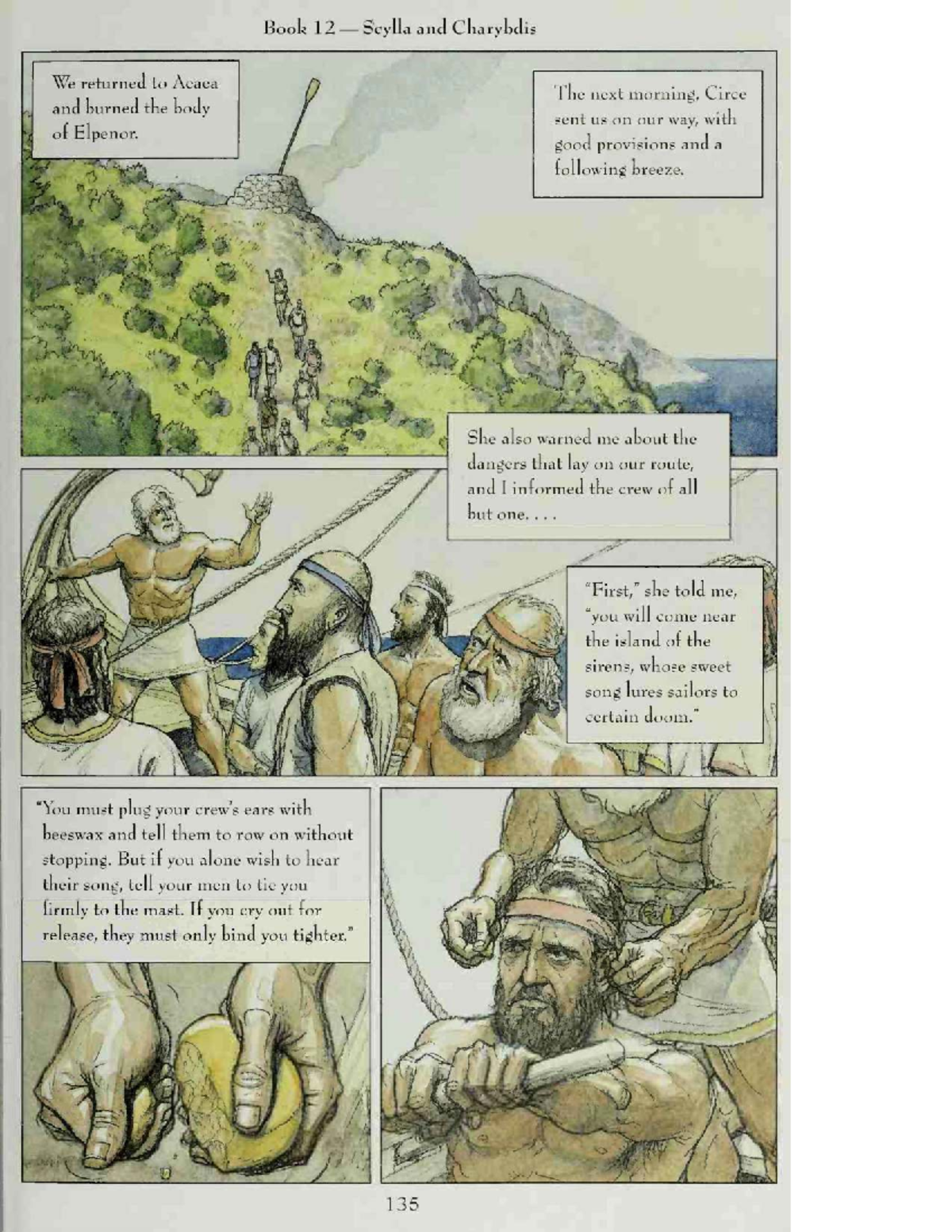
Odysseus and his men recover Elpenor’s body and perform a full funeral rite, including the burning of his armor and the planting of his oar atop his burial mound. This episode is significant because it reinforces the Greek value of tīmē (honor) and the absolute necessity of proper burial rites to ensure the soul's peace. It also marks a transition point; before moving toward home, Odysseus must clear his debts with the dead.
2. Circe’s Final Instructions and Warnings
After the funeral, Circe provides Odysseus with a detailed roadmap of the dangers ahead. This episode acts as a prophetic blueprint for the remainder of the book. Circe describes the Sirens, the Wandering Rocks (Planctae), and the choice between the multi-headed Scylla and the whirlpool Charybdis.
Critically, Circe warns Odysseus about the Cattle of the Sun on the island of Thrinacia. She emphasizes that if the men harm the cattle, their "ship and company will be destroyed." This guidance establishes the central tension of the narrative: Odysseus now possesses the knowledge to save his men, but his ability to control their impulses remains the primary obstacle.
3. The Departure from Aeaea
As the sun rises, Odysseus and his crew prepare the ship. Circe provides a "favoring wind," a common motif in epic poetry signifying divine or supernatural assistance. This episode highlights the bittersweet nature of Odysseus's stay on Aeaea. While he has been Circe's lover and guest, the urgency of his nostos (homecoming) finally outweighs the comfort of the island. The crew’s readiness to leave also demonstrates their initial discipline and trust in their captain, which will soon be tested to the breaking point.
4. The Encounter with the Sirens
As the ship approaches the island of the Sirens, Odysseus implements Circe’s tactical advice. He seals his men’s ears with softened beeswax so they cannot hear the Sirens’ seductive song. However, driven by an intellectual curiosity and a touch of hubris, Odysseus chooses to hear the song himself, commanding his men to bind him tightly to the mast.
The Sirens’ song is not merely about physical lust; they promise "knowledge of all things," specifically the events of the Trojan War. This episode illustrates the danger of forbidden knowledge and the psychological toll of temptation. Odysseus’s struggle to break free of his bonds shows that even the most "resourceful" man is vulnerable to the allure of the ego and the past.
5. Approaching the "Smoke and Heavy Surf"
Once clear of the Sirens, the crew encounters the terrifying sound of crashing waves and rising smoke, signaling the proximity of the Wandering Rocks or the straits. The men are so paralyzed by fear that they drop their oars.
Odysseus undergoes a major leadership moment here. He walks through the ship, heartening his men with a speech, reminding them of their victory over the Cyclops. This episode highlights the rhetorical skill of Odysseus; he knows he must manage his crew’s morale even as he privately prepares for the inevitable casualties he knows are coming.
6. The Choice Between Scylla and Charybdis
Odysseus faces a classic "no-win" scenario. He can sail near Charybdis, a whirlpool that would certainly swallow the entire ship, or near Scylla, a six-headed monster that will surely eat six men. Based on Circe’s advice, Odysseus chooses Scylla.
Significantly, Odysseus chooses not to tell his men about Scylla. He reasons that if they knew, they would hide in the hold and stop rowing, leading everyone to Charybdis. This episode is a cornerstone of ethical debate in the Odyssey: does a leader have the right to sacrifice the few to save the many, and is it more merciful or more deceptive to withhold the truth of impending death?
7. The Attack of Scylla
As the crew gazes in terror at the whirlpool of Charybdis on one side, Scylla strikes from the cliffs on the other. She snatches six of the strongest men from the deck. Odysseus describes this moment as the "most piteous thing" he ever saw in all his wanderings.
The horror is magnified by the men calling out Odysseus’s name one last time as they are hoisted away. Despite his armor and spears—which he donned against Circe’s advice that "strength is useless" against Scylla—Odysseus is powerless to stop the monster. This episode humbles the hero, proving that martial prowess is irrelevant against the raw forces of nature and the divine.
8. Arrival at Thrinacia (The Island of the Sun)
The battered ship reaches the island where Helios, the Sun God, keeps his sacred cattle and sheep. Remembering the warnings of both Tiresias and Circe, Odysseus commands the men to bypass the island entirely.
However, Eurylochus, Odysseus’s second-in-command, leads a verbal rebellion. He argues that the men are exhausted, "bone-weary," and need rest and a hot meal on solid ground. Odysseus, sensing the collective will of the crew is against him, relents but makes them swear a "binding oath" not to touch the cattle. This marks the beginning of the final collapse of Odysseus’s authority.
9. The Trap of the South Wind
The Greeks’ stay on Thrinacia was intended to be a single night. However, a "tempestuous wind" from the South blows for an entire month, making it impossible for the ship to sail. As their provisions run out, the men are forced to hunt and fish, but they remain perpetually hungry.
This episode emphasizes the role of moira (fate) and divine intervention. The gods effectively trap the men in a situation where their survival depends on resisting their most basic instinct: hunger. Odysseus retreats to the center of the island to pray to the gods for a way out, but they cast him into a deep sleep, leaving the crew unsupervised.
10. The Slaughter of the Cattle of Helios
While Odysseus sleeps, Eurylochus delivers a persuasive, albeit impious, speech. He argues that "famine is the most pitiful way to die" and suggests that they kill the best of the cattle, sacrifice the thigh bones to the gods, and vow to build a magnificent temple to Helios upon their return to Ithaca.
The men slaughter the cattle, and the scene turns surreal and horrific. The meat begins to "low" (moo) on the spits, and the hides crawl along the ground—omens of the divine wrath to come. This episode is the ultimate act of hubris and atē (moral blindness), ensuring the crew's destruction.
11. Zeus’s Vengeance and the Shipwreck
When the winds finally die down, the ship sets sail. As soon as they lose sight of land, Zeus conjures a massive storm at the request of Helios, who threatened to "go down to Hades and shine among the dead" if the Greeks were not punished.
A thunderbolt strikes the ship, splitting the hull. The crew is tossed into the sea and drowned "like sea-gulls." Only Odysseus, who did not eat the cattle, survives. He manages to lash the mast and the keel together with a piece of rawhide to create a makeshift raft. This episode fulfills the prophecy and reduces the "king of Ithaca" to a man with nothing but his own will to live.
12. The Second Passing of Charybdis and Arrival at Ogygia
The currents drift Odysseus’s raft back toward the straits of Scylla and Charybdis. Just as Charybdis swallows his raft, Odysseus leaps and grabs onto a wild fig tree hanging over the abyss. He hangs there "like a bat" for hours, waiting for the whirlpool to vomit his timbers back up.
Once the raft reappears, he drops onto it and paddles away with his hands. After nine days of drifting, he reaches Ogygia, the island of the nymph Calypso. This final episode of Book 12 marks the end of his "Great Wanderings" and transitions the narrative back to the present day, where he concludes his story to King Alcinous.
Comparative Analysis of Major Threats in Book 12
| Threat | Nature of Danger | Odysseus's Strategy | Outcome |
|---|---|---|---|
| The Sirens | Psychological/Seductive Song | Wax in crew's ears; bound to mast | Survival; Odysseus gains knowledge |
| Scylla | Physical Predation (6 heads) | Avoidance of Charybdis; speed | Loss of 6 crew members |
| Charybdis | Environmental (Whirlpool) | Staying close to the cliffs | Ship spared (initially) |
| Cattle of Helios | Moral/Divine Sacrilege | Prohibitive Oaths | Total loss of crew and ship |
Frequently Asked Questions
Why did Odysseus not tell his men about Scylla?
Odysseus withheld information about Scylla because he knew that if the men realized six of them were guaranteed to be eaten, they would panic and stop rowing. According to Homeric scholarship, this is often interpreted as a "calculated necessity" in leadership. Had the crew retreated to the hold in fear, the ship would have drifted into Charybdis, resulting in the death of everyone on board.
What was the significance of the "mooing" meat?
The "lowing" of the meat on the spits and the "crawling" hides are supernatural omens (tera) sent by the gods to show that the natural order had been violated. In the ancient Greek worldview, eating the sacred property of a god was a transgression that could not be undone. The omens served as a visceral warning that the crew’s fate was sealed before they even left the island.
Was Odysseus responsible for his crew's death?
This is one of the most debated questions in the Odyssey. While Odysseus is the leader, the text explicitly states in the Proem (Book 1) that the men died through "their own recklessness" (atasthaliai). Book 12 reinforces this by showing that Odysseus gave clear warnings and made them swear oaths. However, his decision to fall asleep (even if divine) and his choice to stop at Thrinacia at all are often cited as his failures in command.
How does Book 12 relate to the rest of the epic?
Book 12 is the final part of the "Apologoi" (the tales told to the Phaeacians). It explains why Odysseus arrives at Calypso’s island alone and without his ship. It also serves as a moral justification for the rest of the poem; because the crew proved themselves fundamentally undisciplined and impious by eating the cattle, Odysseus is the only one "worthy" of returning home to Ithaca.
Recommendations for Further Study
For those looking to deepen their understanding of Book 12 in 2026, it is highly recommended to consult the Perseus Digital Library at Tufts University for a side-by-side Greek-English translation. Additionally, exploring the British Museum's collection of Attic red-figure vases can provide visual context for how the Sirens and Scylla were depicted in antiquity. Analyzing the specific vocabulary used for "hunger" versus "greed" in the Greek text provides significant insight into the moral distinctions Homer makes regarding the crew's final sin.