A 10-year term life insurance policy provides pure death benefit protection for a fixed decade, locking in level premiums and a guaranteed payout amount for individuals seeking affordable, short-term financial security to cover specific near-term obligations.
When evaluating life insurance products, policyholders often encounter choices that span 10, 20, or 30 years, as well as permanent options like whole or universal life. A 10-year term life insurance AMA—referring generally to an "Ask Me Anything" or an intensive advisory evaluation focusing on this specific duration—serves as a targeted tool for consumers trying to understand whether a short-term policy fits their financial roadmap. Because life insurance directly affects the financial security of dependents, understanding the structural mechanics, cost determinants, and long-term implications of a 10-year commitment is essential before signing a contract.
What is 10-Year Term Life Insurance and How Does It Work?
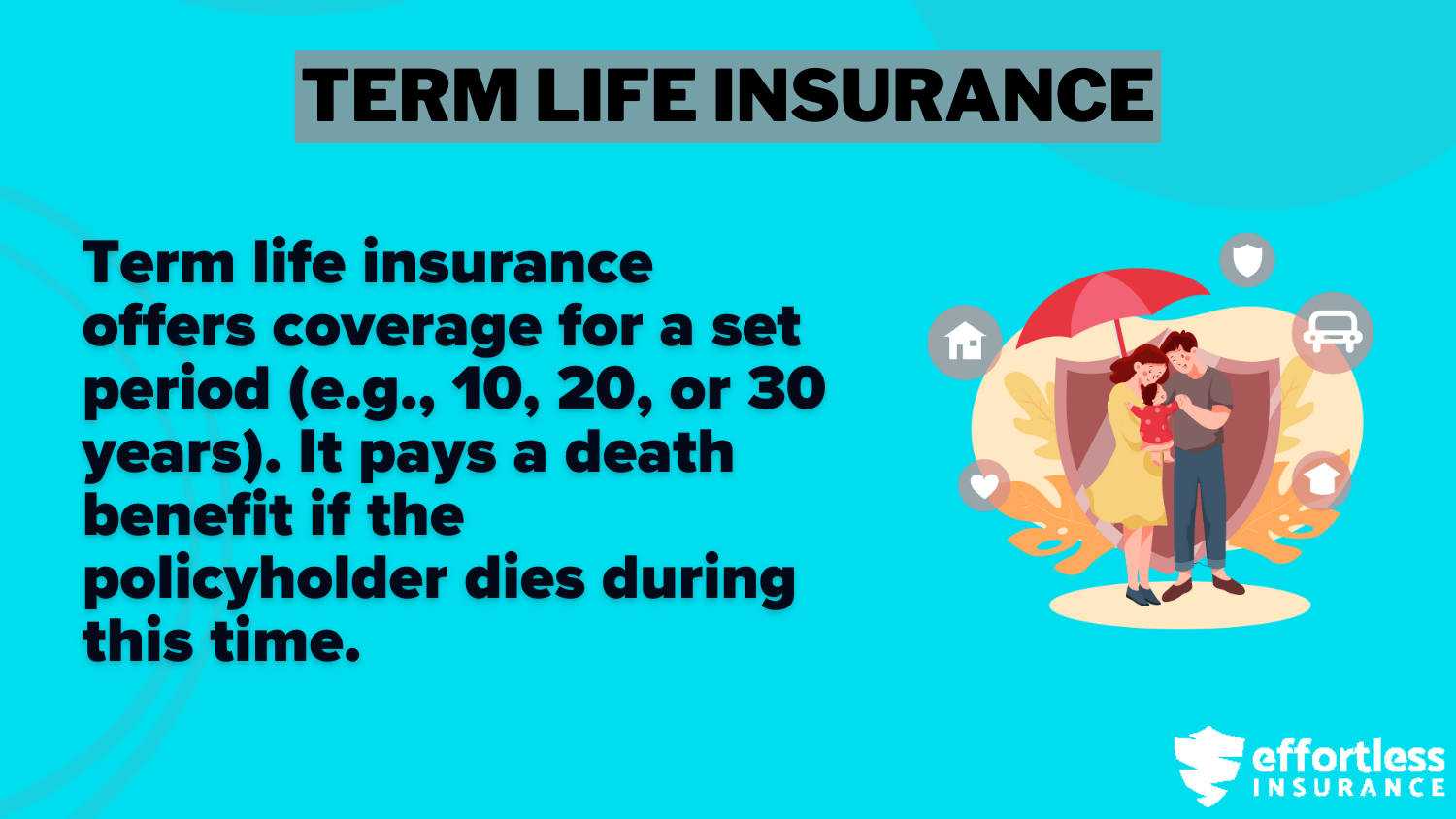
Term life insurance is the simplest form of life insurance. It purchases a specific amount of financial protection for a predetermined period—in this case, 10 years. If the insured individual passes away during the 10-year term, the insurance company pays the designated death benefit income-tax-free to the named beneficiaries. If the insured survives past the 10-year mark, the coverage expires, and no payout is made unless the policy contains specific, pre-funded return-of-premium riders or is converted.
The defining characteristic of a 10-year term policy is its predictability. For the entire duration of the contract, the premium payments remain level, and the face value of the death benefit stays constant. This contrasts sharply with annual renewable term policies, where premiums increase every single year as the insured ages.
The mechanism relies on actuarial tables. Insurance companies calculate the statistical probability of mortality for a given age, gender, and health classification over a 10-year window. Because the window is relatively short, the initial cost is typically lower than a 20-year or 30-year term policy for the exact same coverage amount. However, once the 10 years elapse, maintaining coverage requires either qualifying for a new policy at an older age—which will be significantly more expensive—or letting the coverage lapse.
Primary Use Cases: Who Needs a 10-Year Term Policy?
Not every financial obligation requires a multi-decade commitment. A 10-year term policy is intentionally designed for specific, time-sensitive financial risks where exposure decreases substantially over a decade.
Short-Term Income Replacement for Young Families
Parents with young children often require massive coverage to replace lost income if a primary earner passes away. While a 20- or 30-year term is typically recommended for newborn children to cover them through college graduation, a 10-year term can bridge a gap, supplement an existing policy, or serve budget-conscious parents who need immediate, high-value coverage while planning to upgrade later.
Covering Short-Term Debt Obligations
Significant debts with fixed termination dates—such as a business loan, a short-term commercial mortgage, or personal high-value loans—represent classic targets for a 10-year term policy. If the debt will be fully amortized or paid off within a decade, insuring that specific liability ensures surviving family members or business partners are not saddled with the remaining balance.
Supplementing Employer-Provided Group Life Insurance
Many professionals rely heavily on group life insurance policies provided by their employers, which typically offer coverage equal to one or two times their annual salary. However, these policies are rarely portable if the employee leaves the company, and they often terminate upon retirement or job loss. A private 10-year term policy provides an independent safety net that guarantees personal control over coverage, unaffected by employment status.
Financial Dynamics: Premiums, Costs, and Underwriting
The cost of a 10-year term life insurance policy is determined during the underwriting process, where insurance carriers evaluate individual risk factors to assign a rate class. Understanding how underwriters view applicants helps demystify pricing variations.
Core Underwriting Variables
- Age: The younger the applicant at the time of purchase, the lower the base mortality risk and the cheaper the annual premium.
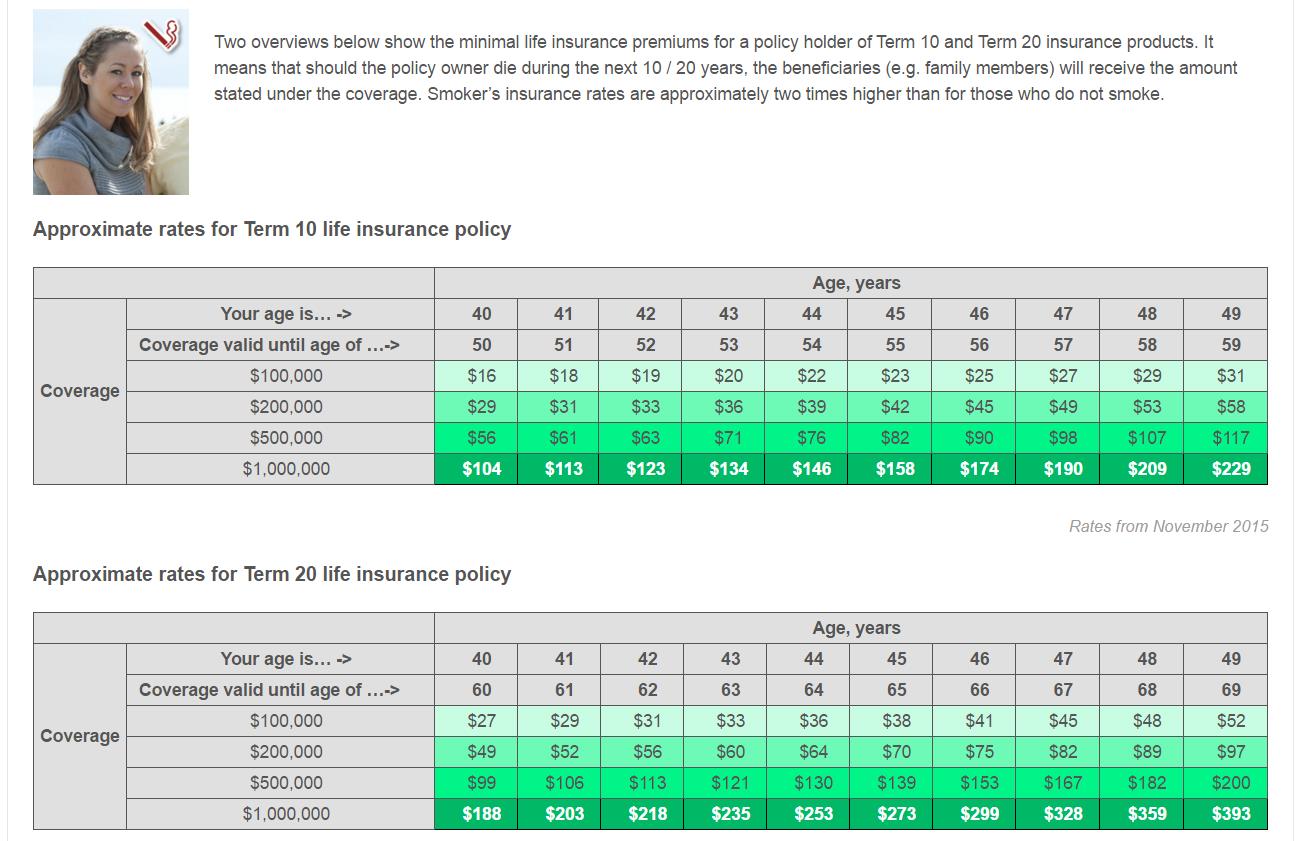
- Health and Medical History: Carriers review medical records, prescription histories, blood pressure, cholesterol levels, and family medical history. Tobacco usage is a primary cost driver, with smokers often paying three to four times more than non-smokers.
- Lifestyle and Occupation: High-risk hobbies (such as skydiving, private aviation, or rock climbing) and hazardous occupations can increase premiums or lead to policy exclusions.
- Coverage Amount and Term Length: Naturally, a $1,000,000 death benefit costs more than a $250,000 benefit, though a 10-year term remains the most economical duration offered by standard carriers.
Comparative Cost Structure
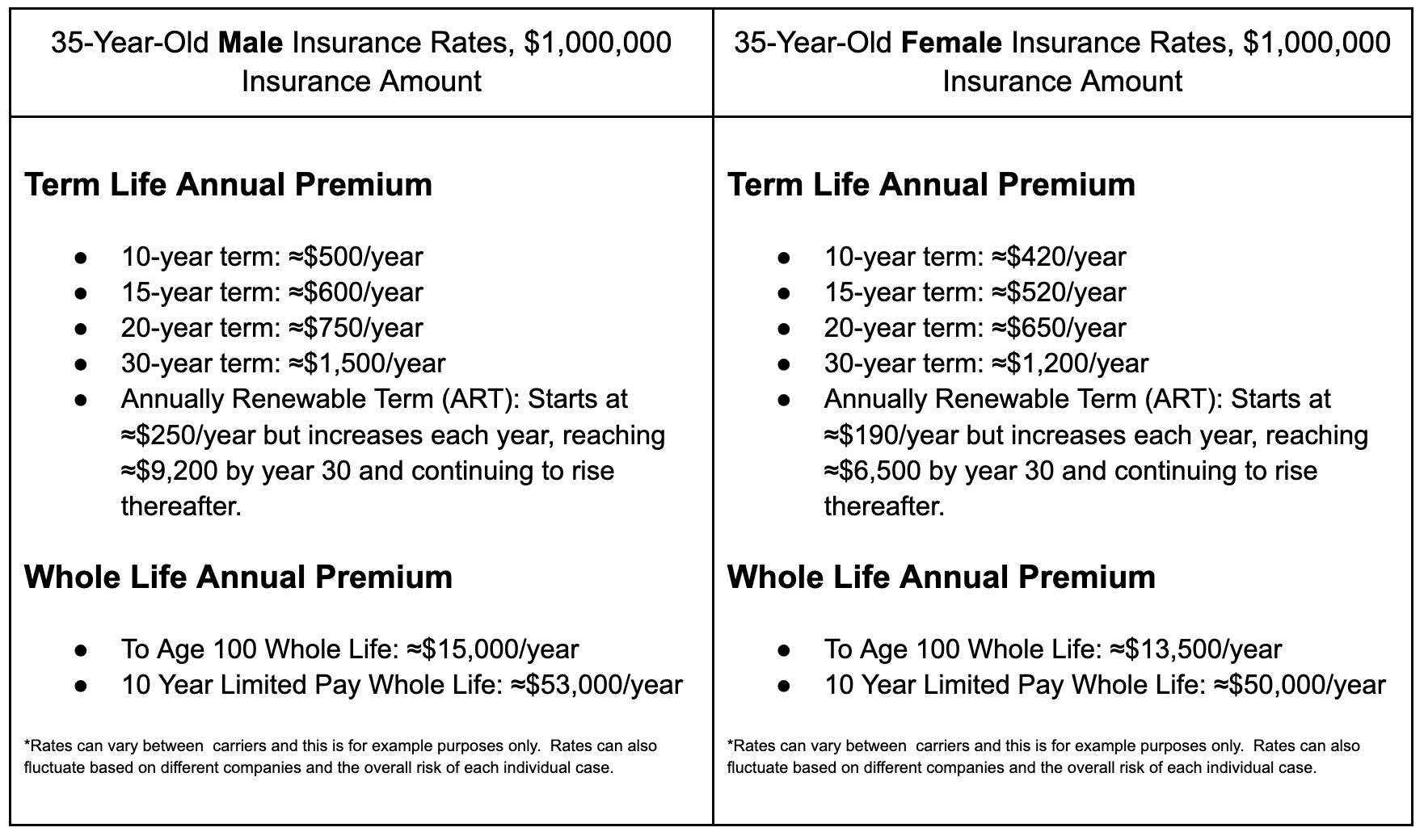
To illustrate how a 10-year term stacks up against longer durations, consider standard industry pricing models for healthy non-smoking applicants:
| Term Length | Premium Stability | Initial Cost | Suitability | Renewal Risk |
|---|---|---|---|---|
| 10-Year Term | Level for 10 years | Lowest among term options | Short-term debts, gap coverage | High (rates skyrocket at renewal) |
| 20-Year Term | Level for 20 years | Moderate | Raising children, standard mortgages | Moderate |
| 30-Year Term | Level for 30 years | Highest among term options | Long-term family protection, young buyers | Low |
| Whole Life | Permanent (lifetime) | Extremely high | Estate planning, final expenses | None (permanent coverage) |
Key Features and Policy Riders to Consider
When evaluating a 10-year term life insurance contract, standard death benefit protection can be enhanced through optional policy riders. These endorsements customize the contract to better suit individual risk management strategies.
Conversion Privilege Rider
One of the most valuable clauses in a term insurance contract is the conversion option. This rider permits the policyholder to convert their 10-year term policy into a permanent life insurance policy (such as whole life or universal life) without undergoing a new medical exam or proving insurability. This is vital for individuals who develop health conditions during the 10-year period and realize they need lifelong protection rather than letting their coverage expire.
Accelerated Death Benefit Rider
Included standard with many modern policies, this rider allows the insured to access a portion of the death benefit early if they are diagnosed with a terminal illness with a life expectancy typically limited to 12 or 24 months. These funds can be used to cover medical bills, hospice care, or final expenses while the insured is still living.
Waiver of Premium Rider
If the insured becomes totally disabled due to an accident or illness and cannot work, this rider waives the premium payments after a designated waiting period (usually 3 to 6 months) while keeping the full death benefit active.
Limitations and Risks of 10-Year Term Insurance
While 10-year term policies offer affordable entry points, they carry structural limitations that consumers must weigh carefully.
- The Renewal Shock: At the conclusion of the 10-year term, policies typically enter an annual renewable phase. Because premiums reset based on the insured's attained age at that moment—which is now 10 years older—the cost often spikes exponentially, sometimes multiplying by five or ten times the original annual rate.
- No Cash Value Accumulation: Unlike permanent life insurance, term insurance has no savings or investment component. If the policyholder outlives the 10-year term and lets the policy lapse, all premiums paid are retained by the insurance company as the cost of insurance protection.
- Insurability Risk at Expiration: If a policyholder reaches age 55 or 60 and realizes they still need coverage after their 10-year term expires, applying for a brand-new policy will require passing a new medical exam. If health has deteriorated, the new policy may be prohibitively expensive or entirely unavailable.
Steps to Choosing and Applying for a 10-Year Term Policy
Securing a policy involves a methodical approach to ensure adequate coverage without overpaying.
- Calculate Financial Needs: Assess total outstanding debts, income replacement requirements over the next decade, and immediate final expense obligations.
- Shop Multiple Carriers: Insurance companies utilize different underwriting guidelines. A condition that triggers a higher rate with one carrier might be viewed more favorably by another. Utilizing an independent insurance broker provides access to multiple quotes.
- Complete the Application and Medical Exam: Provide accurate medical history. Most term policies require a paramedical exam, where a nurse visits the home or office to check height, weight, blood pressure, and collect blood and urine samples.
- Review and Sign the Contract: Evaluate the final offer, verify the rating class, and ensure riders such as conversion privileges are explicitly outlined in the policy documents.
Frequently Asked Questions
Can I convert a 10-year term policy into permanent coverage?
Yes, provided the policy includes a conversion rider and you initiate the conversion within the window specified by the contract—typically the first 5 to 7 years of the policy. This allows you to secure permanent life insurance without taking a new medical exam, regardless of changes in your health status.
What happens immediately after the 10-year term ends?
Once the 10-year period concludes, the policy either expires or automatically converts to an annual renewable term structure with significantly higher premium rates. Most policyholders either let the policy lapse because their financial obligations have ended, or they convert or replace the policy beforehand.
Is a medical exam always required for 10-year term life insurance?
Not necessarily. While traditional fully underwritten policies require a physical exam and lab work, many carriers now offer accelerated underwriting programs. Eligible applicants who meet specific age and health criteria can secure a 10-year term policy entirely based on electronic medical databases, prescription histories, and motor vehicle reports without a physical exam.
Is 10-year term insurance cheaper than a 20-year term?
Yes. Because the insurance company is only assuming mortality risk for 10 years instead of 20, the statistical probability of a claim occurring during that window is lower. Consequently, the insurance carrier prices the 10-year term policy lower than a comparable 20-year or 30-year option.
Can I cancel my 10-year term policy at any time?
Yes, term life insurance contracts do not lock you into keeping the policy. You can cancel coverage at any time simply by stopping premium payments or formally notifying the insurance carrier in writing. There are no cash surrender values to retrieve on a standard term policy, so cancellation stops future payments without generating a payout.
Next Actions for Prospective Buyers
To move forward effectively, review your exact financial timeline over the next decade. If your liabilities—such as a mortgage balance, business notes, or dependent childcare years—will clearly diminish or disappear within ten years, request quotes for a 10-year term policy from at least three independent insurance providers. Compare their conversion options, financial strength ratings via agencies like AM Best, and underwriting criteria to lock in the most secure, cost-effective protection for your household.