1-pentanol is a straightforward straight-chain primary alcohol with the molecular formula $\text{C}5\text{H}{12}\text{O}$ and a structural formula of $\text{CH}_3\text{CH}_2\text{CH}_2\text{CH}_2\text{CH}_2\text{OH}$. Also known as amyl alcohol, this clear, colorless liquid features a characteristic pungent, fusel-like odor and serves as a fundamental building block in organic synthesis, fragrance formulation, and chemical extraction processes.
Introduction to 1-Pentanol and Amyl Alcohol Isomers
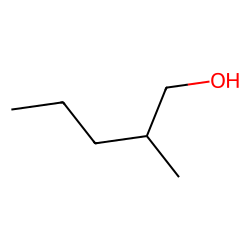
Understanding 1-pentanol requires distinguishing it from other structural isomers within the five-carbon alcohol family. The term "amyl alcohol" historically refers to a mixture of eight structural isomers with the empirical formula $\text{C}5\text{H}{12}\text{O}$. Among these, 1-pentanol is the primary straight-chain isomer where the hydroxyl group ($\text{-OH}$) is attached to the terminal carbon atom.
In industrial chemistry and laboratory settings, 1-pentanol is valued for its intermediate polarity, boiling point characteristics, and solvent capabilities. While lower molecular weight alcohols like ethanol and methanol are completely miscible in water, 1-pentanol exhibits limited aqueous solubility due to the hydrophobic nature of its five-carbon aliphatic chain. This unique balance between hydrophilic hydroxyl functionality and a hydrophobic hydrocarbon backbone dictates its chemical identity, physical behavior, and practical utility across diverse industrial sectors.
Molecular Formula and Chemical Structure
The chemical identity of 1-pentanol is defined by its precise atomic composition and bonding arrangement. With a molecular formula of $\text{C}5\text{H}{12}\text{O}$, the molecule comprises five carbon atoms, twelve hydrogen atoms, and one oxygen atom.
Structurally, the carbon atoms form an unbranched, continuous chain. The oxygen atom is covalently bonded to a single hydrogen atom (forming the hydroxyl group) and to the terminal carbon atom of the pentane backbone. The IUPAC systematic name for this compound is pentan-1-ol, reflecting both the five-carbon length of the principal chain and the position of the primary alcohol functional group.
From a bonding perspective, the carbon-oxygen single bond and the oxygen-hydrogen bond exhibit significant polarity due to the high electronegativity of oxygen relative to carbon and hydrogen. This structural feature allows 1-pentanol to participate in intermolecular hydrogen bonding, which heavily influences its physical properties, such as boiling point and viscosity, compared to non-polar hydrocarbons of similar molecular weight.
Key Physical and Chemical Properties
The physical and chemical characteristics of 1-pentanol govern how the substance is handled, stored, and utilized in chemical processes. Below is a detailed breakdown of its primary empirical and thermodynamic properties.
Summary of Physical Characteristics
| Property | Value / Description |
|---|---|
| Molecular Formula | $\text{C}5\text{H}{12}\text{O}$ |
| Molar Mass | 88.15 g/mol |
| Physical State | Clear, colorless liquid |
| Odor | Mild, pungent, fusel-like |
| Melting Point | $-79\text{ }^\circ\text{C}$ to $-78\text{ }^\circ\text{C}$ |
| Boiling Point | $137\text{ }^\circ\text{C}$ to $138\text{ }^\circ\text{C}$ at 1 atm |
| Density | $0.811\text{ g/cm}^3$ at $20\text{ }^\circ\text{C}$ |
| Solubility in Water | Slightly soluble ($\approx 22\text{ g/L}$ at $20\text{ }^\circ\text{C}$) |
| Flash Point | $33\text{ }^\circ\text{C}$ (Closed cup) |
Volatility and Thermal Behavior
With a boiling point of approximately $138\text{ }^\circ\text{C}$, 1-pentanol is significantly less volatile than lower alcohols like ethanol or propanol. This elevated boiling point is a direct consequence of stronger intermolecular hydrogen bonding networks present in the liquid phase, requiring more thermal energy to vaporize the molecules. Its melting point of around $-79\text{ }^\circ\text{C}$ ensures that it remains liquid across standard operating and storage temperatures.
Solubility and Miscibility Dynamics
The five-carbon aliphatic chain creates a steric and hydrophobic barrier that restricts complete miscibility in water. While it dissolves partially (roughly 22 grams per liter at room temperature), 1-pentanol is completely miscible with most common organic solvents, including ethanol, diethyl ether, and benzene. This behavior makes it an effective solvent for organic extraction procedures where separation from an aqueous phase is desired.
Synthesis and Industrial Production Methods
1-Pentanol is produced commercially through several established chemical pathways, primarily utilizing petroleum-derived feedstocks.
Hydroformylation of Butenes
One of the primary industrial routes involves the hydroformylation (often called the Oxo process) of mixed butenes. In this catalytic reaction, butenes react with carbon monoxide and hydrogen gas in the presence of a transition-metal catalyst (such as rhodium or cobalt) to yield pentanal (valeraldehyde). Subsequent catalytic hydrogenation of pentanal reduces the aldehyde functional group to form 1-pentanol.
Hydration of Pentenes
Alternatively, 1-pentanol can be derived via the hydration of specific pentene fractions obtained from cracked petroleum distillates. However, direct hydration often yields a mixture of positional isomers, requiring careful fractional distillation to isolate the pure straight-chain 1-pentanol product.
Biochemical and Fermentation Routes
Historically and through ongoing sustainable chemistry initiatives, amyl alcohols are also obtained as byproducts of alcoholic fermentation. During the fermentation of grains, potatoes, and molasses by yeasts, amino acids undergo Ehrlich degradation, producing higher alcohols collectively known as fusel oils. Fractional distillation of these fusel oils yields various pentanol isomers, providing a bio-based alternative to petrochemical synthesis.
Primary Applications and Utility
Due to its balanced chemical reactivity and solvent properties, 1-pentanol finds application across multiple industrial domains.
Chemical Synthesis and Esterification
The most prominent use of 1-pentanol is as a chemical intermediate in the production of esters. By reacting 1-pentanol with various carboxylic acids in the presence of an acid catalyst (such as sulfuric acid), manufacturers produce amyl acetates and related esters. These compounds exhibit strong, pleasant, fruit-like aromas and are widely utilized as flavoring agents in the food industry, as well as solvent carriers in lacquers and paints.
Solvent and Extraction Medium
In laboratory and industrial separation processes, 1-pentanol serves as an extraction solvent. Its limited water solubility and ability to dissolve various organic compounds make it useful in liquid-liquid extraction protocols, purification procedures, and polymerization reactions.
Flotation Agents and Fuel Additives
1-Pentanol is occasionally utilized as a frothing agent in mineral processing and ore flotation. Additionally, research into higher alcohols as alternative fuel extenders or gasoline additives sometimes incorporates pentanol isomers due to their energy density and combustion characteristics, although lower alcohols remain more prevalent.
Safety, Toxicity, and Handling Guidelines
As with many organic solvents, proper safety protocols must be observed when handling 1-pentanol to minimize occupational exposure and environmental risks.
Health Hazards and Exposure Limits
1-Pentanol vapor can cause irritation to the eyes, nose, and respiratory tract. Direct contact with the liquid can defat the skin, leading to dermatitis or irritation. Ingestion or significant inhalation of high concentrations may cause central nervous system depression, resulting in headaches, dizziness, nausea, and lack of coordination. It is classified as a hazardous substance under standard global harmonized systems (GHS), requiring the use of appropriate personal protective equipment (PPE), including chemical-resistant gloves, safety goggles, and adequate local exhaust ventilation or respiratory protection.
Flammability and Storage
With a closed-cup flash point of approximately $33\text{ }^\circ\text{C}$, 1-pentanol is classified as a flammable liquid. It must be stored in cool, well-ventilated areas away from ignition sources, open flames, and strong oxidizing agents such as concentrated nitric acid or permanganates. Storage containers should be tightly sealed and grounded to prevent electrostatic discharge during transfer.
Environmental Impact
1-Pentanol exhibits moderate acute toxicity to aquatic life. Because it is slowly biodegradable, accidental industrial releases into waterways must be prevented. Spills should be contained using inert absorbent materials (such as sand or vermiculite) and disposed of in accordance with local environmental regulations.
Frequently Asked Questions
What is the chemical formula for 1-pentanol?
The chemical formula for 1-pentanol is $\text{C}5\text{H}{12}\text{O}$, with a structural formula of $\text{CH}_3\text{CH}_2\text{CH}_2\text{CH}_2\text{CH}_2\text{OH}$. This structure represents a straight-chain pentane molecule with a terminal hydroxyl group.
How does 1-pentanol differ from other amyl alcohols?
1-Pentanol is specifically the straight-chain primary isomer of amyl alcohol. Other amyl alcohols include structural isomers such as 2-pentanol, 3-pentanol, and 2-methyl-1-butanol, which feature branched carbon skeletons or different positions for the hydroxyl group, resulting in distinct physical properties and boiling points.
Is 1-pentanol soluble in water?
1-Pentanol has limited solubility in water, dissolving at a rate of approximately 22 grams per liter at room temperature. This limited solubility stems from the dominating hydrophobic influence of the five-carbon alkyl chain relative to the single hydrophilic hydroxyl group.
What are the primary industrial uses of 1-pentanol?
The primary industrial use of 1-pentanol is as an intermediate in esterification reactions to produce amyl esters, which are used as artificial flavorings and fragrance components. It also functions as a specialized solvent, extraction medium, and frothing agent in mineral processing.
What safety precautions are necessary when handling 1-pentanol?
Personnel handling 1-pentanol must wear chemical-resistant gloves, safety goggles, and work in a well-ventilated fume hood or with approved respiratory protection to avoid vapor inhalation. Because it is a flammable liquid, it must be kept away from heat, sparks, and open flames.
Conclusion and Recommendations
1-Pentanol ($\text{C}5\text{H}{12}\text{O}$) is a versatile primary alcohol whose chemical identity bridges the gap between simple polar alcohols and heavier non-polar hydrocarbons. Its unique combination of a stable five-carbon backbone and a reactive hydroxyl group makes it indispensable in organic synthesis, particularly for manufacturing commercially valuable esters. When working with 1-pentanol in laboratory or industrial environments, personnel should prioritize strict adherence to safety data sheet (SDS) guidelines, ensuring proper ventilation, flame suppression measures, and personal protective equipment to mitigate health and flammability risks.