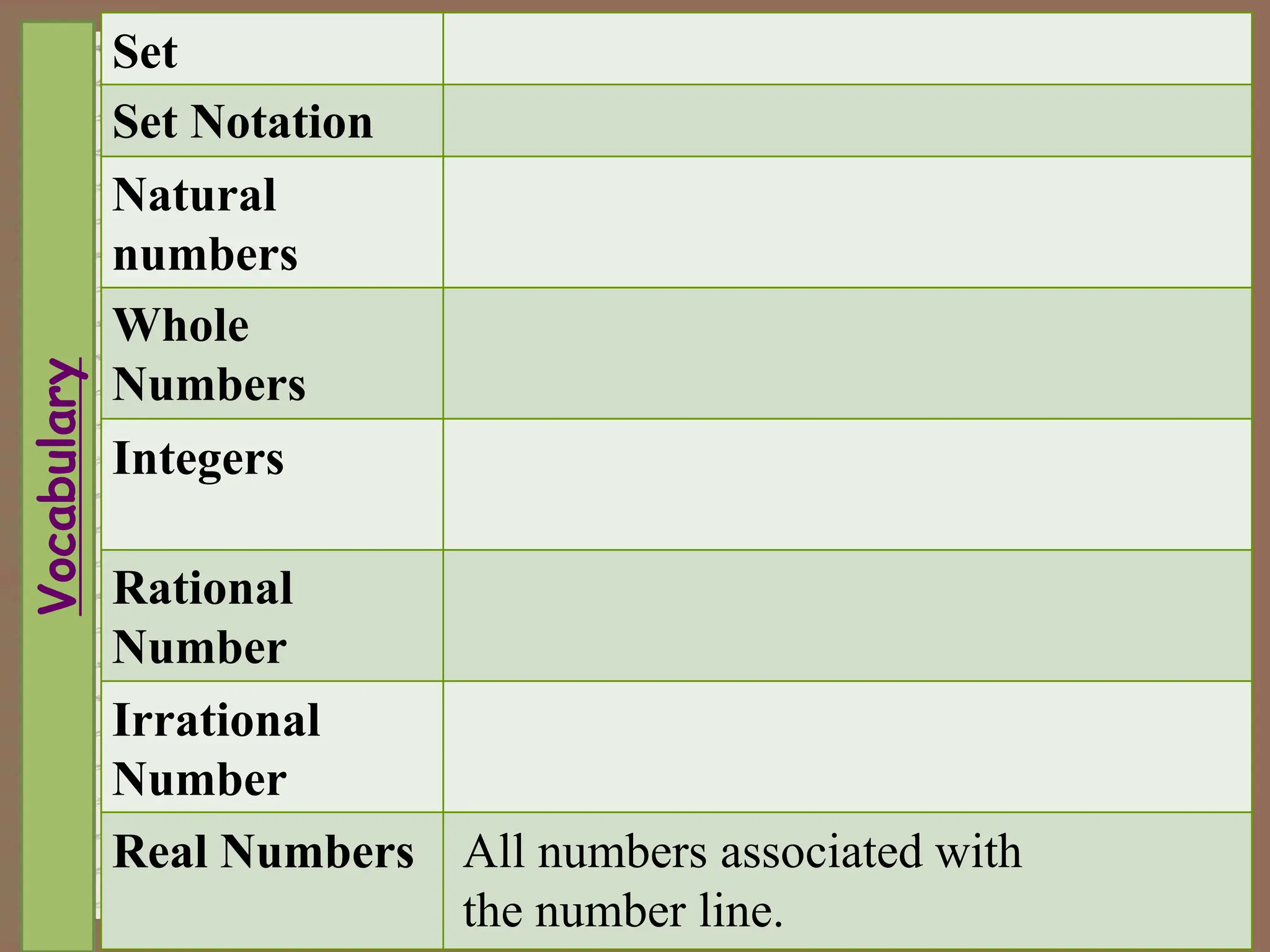
In modern mathematics as of 2026, the set of natural numbers ($\mathbb{N}$) includes all non-negative integers starting from 0 or 1, depending on the specific mathematical context. While 1 is the fundamental building block for counting and the multiplicative identity, 0 serves as the additive identity and the cardinal foundation for set theory and computer science.
Understanding the Foundation: What Are Natural Numbers?
Natural numbers are the most primitive and essential tools in mathematics, used for both counting (cardinality) and ordering (ordinality). Historically, these were the "counting numbers" used to tally physical objects. However, as mathematical logic evolved, the definition of what constitutes a "natural" number became a point of rigorous debate and eventually, formal standardization.
The symbols 0 and 1 are not merely digits; they represent the two most critical identities in arithmetic. One (1) represents unity and the beginning of the counting sequence, while zero (0) represents the absence of quantity. Together, they form the basis of the binary system, the Peano axioms, and the structural foundations of number theory. In 2026, the global standard for mathematical notation—specifically ISO 80000-2—recommends including 0 in the set of natural numbers, though educational curricula in some regions still introduce 1 as the first natural number.
The Historical Evolution of 0 and 1
The inclusion of 1 as a number was rarely questioned, but its status was not always what it is today. In ancient Greek mathematics, 1 was often viewed as the "monad," the source of all numbers rather than a number itself. It was the "unit" from which all other quantities were composed.
The history of 0 is far more complex. Early civilizations, such as the Babylonians and Mayans, used symbols to represent an empty place in their positional numbering systems. However, these were placeholders, not numbers with their own arithmetic value. The concept of 0 as a numerical entity—a value that can be added, subtracted, and multiplied—emerged primarily in India. The mathematician Brahmagupta, in the 7th century, provided some of the first formal rules for using zero in his work Brahmasphutasiddhanta.
By the time mathematics reached the Renaissance, the utility of 0 was undeniable, yet it remained "unnatural" to many because you cannot "count" zero physical objects in a traditional sense. It wasn't until the 19th-century formalization of set theory and logic that 0 earned its place at the head of the natural number sequence.
The Mathematical Debate: Does $\mathbb{N}$ Start at 0 or 1?
The question of whether 0 is a natural number is not a matter of "right or wrong," but rather a matter of convention suited to specific branches of mathematics.
The Number Theory Perspective (Starting at 1)
In classical number theory and many primary education systems, the set of natural numbers is defined as $\mathbb{N} = {1, 2, 3, \dots}$. This is often referred to as the set of positive integers. This convention is useful when the focus is on divisibility, prime numbers, and sequences where the "first" element must be a tangible unit. In this context, 0 is excluded because it is not a divisor and lacks the properties of the "counting" numbers used in basic pedagogy.
The Set Theory and Computer Science Perspective (Starting at 0)
In set theory, logic, and computer science, the set of natural numbers is defined as $\mathbb{N} = {0, 1, 2, 3, \dots}$. This is often denoted as $\mathbb{N}_0$ to avoid ambiguity. Including 0 is essential for several reasons:
- Cardinality: The number of elements in an empty set is 0. If $\mathbb{N}$ is to represent all possible sizes of finite sets, it must include 0.
- Index-based logic: In computer science, arrays and sequences are almost universally "zero-indexed."
- Algebraic Structure: For the natural numbers to form a monoid under addition, an identity element (0) must be present.
Constructing Numbers: The Peano Axioms
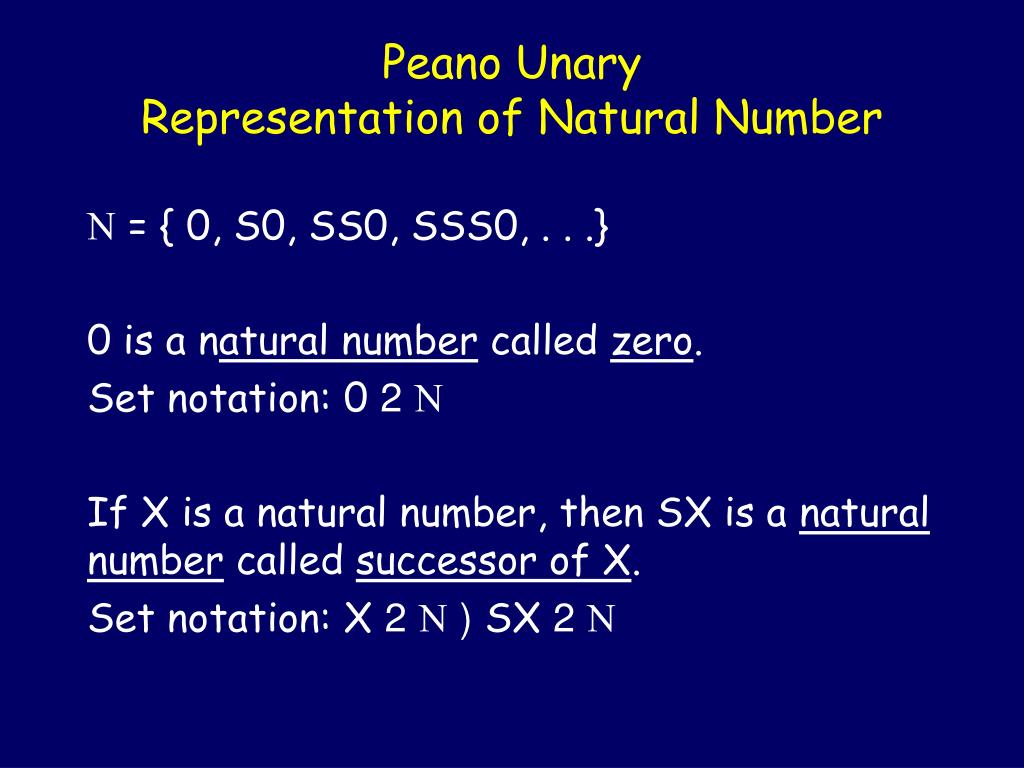
To settle the foundations of arithmetic, Italian mathematician Giuseppe Peano formulated the Peano Axioms in the late 19th century. These axioms define the natural numbers using a starting point and a "successor function."
- The Starting Point: There exists a natural number (Peano originally used 1, but modern logic uses 0).
- The Successor Function: For every natural number $n$, there is a successor $S(n)$ that is also a natural number.
- Uniqueness of the Start: 0 is not the successor of any natural number.
- Injective Property: If $S(n) = S(m)$, then $n = m$.
- Induction: If a property holds for 0 and, whenever it holds for $n$, it also holds for $S(n)$, then it holds for all natural numbers.
Under this framework, 1 is formally defined as the successor of 0, denoted as $S(0)$. This logical construction allows us to build the entire infinite set of numbers from a single starting entity and a single operation. Without 0 as the "base case," the definition of the empty set and the foundations of induction become significantly more cumbersome.
The Role of 1: The Multiplicative Identity and Unit
If 0 is the foundation, 1 is the builder. In mathematics, 1 is the multiplicative identity. This means that for any number $x$, $x \times 1 = x$. This property is fundamental to the definition of fields, rings, and groups.
Beyond its role as an identity, 1 is the "unit" of the natural numbers. Every natural number $n$ can be expressed as the sum of $n$ ones ($1 + 1 + \dots + 1$). In the context of number theory, 1 is unique because it is neither prime nor composite. It is the only natural number with exactly one divisor (itself). In the study of divisibility, 1 is the "universal divisor," as it divides every integer without remainder.
The Role of 0: The Additive Identity and Placeholder
Zero’s role is equally pivotal as the additive identity. For any number $x$, $x + 0 = x$. This makes 0 the "neutral" element of addition. In the 2026 landscape of digital computation, 0's role as a placeholder is perhaps its most visible contribution. Our base-10 (decimal) system relies on 0 to indicate powers of ten. Without 0, distinguishing between 1, 10, and 100 would require a radically different (and likely less efficient) symbolic system.
In higher mathematics, 0 serves as the bridge to the concept of limits and calculus. While division by zero remains undefined in standard arithmetic (as it leads to logical contradictions), the behavior of functions as they approach zero is the cornerstone of the derivative and integral.
Comparing the Roles of 0 and 1
The following table summarizes the distinct and overlapping roles of 0 and 1 within the mathematical ecosystem.
| Feature | The Number 0 | The Number 1 |
|---|---|---|
| Identity Property | Additive Identity ($x + 0 = x$) | Multiplicative Identity ($x \times 1 = x$) |
| Set Theory Role | Cardinality of the empty set ($\emptyset$) | Cardinality of a singleton set (${x}$) |
| Peano Axiom Role | The "Base Case" or first element | The first successor ($S(0)$) |
| Divisibility | Cannot be a divisor; divided by any non-zero $n$ results in 0 | Divides every integer; only divisible by itself |
| Binary Logic | Represents "False" or "Off" | Represents "True" or "On" |
| Algebraic Role | Necessary for an additive monoid | Necessary for a multiplicative monoid |
0 and 1 in Set Theory (von Neumann Construction)
To understand why 0 and 1 are so deeply linked, we can look at the von Neumann construction of natural numbers, which defines numbers purely in terms of sets. This is the standard method used in axiomatic set theory (Zermelo-Fraenkel set theory).
- 0 is defined as the empty set: $0 = \emptyset$.
- 1 is defined as the set containing the empty set: $1 = {0} = {\emptyset}$.
- 2 is defined as the set containing all previous numbers: $2 = {0, 1} = {\emptyset, {\emptyset}}$.
In this model, 0 is literally "nothing," and 1 is the "set containing nothing." This elegant construction shows that all natural numbers can be derived from the concept of an empty set. It highlights why 0 is the most "natural" starting point for the set $\mathbb{N}$ in modern logic—it represents the absolute beginning of structure.
Common Misconceptions Regarding 0 and 1
Even in advanced educational settings, several misconceptions persist regarding these two numbers.
Is 0 a "Natural" Number?
As discussed, the answer depends on the definition. However, many students are taught that "Natural numbers are for counting," and since you don't count starting with zero (you don't say "zero, one, two" when counting apples), zero isn't natural. In 2026, we distinguish this by using terms like Positive Integers ($\mathbb{Z}^+$) for the set starting at 1, and Non-negative Integers for the set starting at 0.
The Complexity of 1 as a Prime
A common mistake is classifying 1 as a prime number. By definition, a prime number must have exactly two distinct divisors: 1 and itself. Since 1 only has one divisor, it is excluded. This is essential for the Fundamental Theorem of Arithmetic, which states that every integer greater than 1 has a unique prime factorization. If 1 were prime, factorizations would not be unique (e.g., $6 = 2 \times 3 = 1 \times 2 \times 3 = 1^2 \times 2 \times 3$).
Division by Zero
Many assume that $n / 0$ should be 0 or infinity. However, in the realm of natural numbers and real numbers, it is undefined. Multiplication and division are inverse operations. If $6 / 2 = 3$, then $3 \times 2 = 6$. If $n / 0 = x$, then $x \times 0$ must equal $n$. Since any number multiplied by 0 is 0, this can only be true if $n$ is also 0. Even then, $0 / 0$ could be any number, leading to an algebraic breakdown.
Practical Applications in 2026
The roles of 0 and 1 extend far beyond the chalkboard. In the current era of advanced AI and quantum computing:
- Binary Systems: All digital logic is built on the "0 or 1" state. This bit-level foundation is the basis for all software, including the Large Language Models and neural networks used in 2026.
- Cryptography: Number theory involving 0 and 1 (and the properties of primes following them) secures global financial transactions.
- Quantum Computing: While classical bits are 0 or 1, qubits exist in a superposition of both. However, the measurement of a qubit always collapses back into the classical natural numbers 0 or 1.
Frequently Asked Questions
Why do some textbooks start natural numbers at 1?
Textbooks, especially those for primary and secondary education, often start at 1 because it aligns with the intuitive process of counting physical objects. Historically, mathematics education has been slow to adopt the set-theoretic inclusion of 0, which is more abstract. However, most university-level discrete mathematics and logic texts now begin $\mathbb{N}$ at 0.
What is the difference between $\mathbb{N}$ and $\mathbb{N}_0$?
$\mathbb{N}$ is the general symbol for natural numbers, but because of the 0 vs. 1 ambiguity, mathematicians use subscripts for clarity. $\mathbb{N}_0$ (or sometimes $\mathbb{W}$ for "Whole Numbers") explicitly includes zero: ${0, 1, 2, \dots}$. $\mathbb{N}^+$, $\mathbb{N}^*$, or $\mathbb{N}_1$ explicitly excludes zero: ${1, 2, 3, \dots}$.
Can 0 be considered a positive number?
No. In the standard real number system, 0 is neither positive nor negative. It is the neutral origin point on the number line. Numbers greater than 0 are positive, and numbers less than 0 are negative. This is why the set ${0, 1, 2, \dots}$ is correctly called the "non-negative integers" rather than the "positive integers."
Is 1 the smallest natural number?
If your definition of natural numbers starts at 1, then yes. If it starts at 0, then 0 is the smallest. In the context of the Peano axioms and set theory (the most rigorous foundations), 0 is the smallest natural number.
How does the inclusion of 0 affect mathematical induction?
The principle of mathematical induction requires a "base case." If 0 is included in $\mathbb{N}$, the base case is usually $P(0)$. If the set starts at 1, the base case is $P(1)$. The logic remains identical, but starting at 0 is often more powerful for proving statements about sets (including the empty set) or computer algorithms that use 0-based indexing.
Next Steps for Learners
To deepen your understanding of these concepts, explore the following areas:
- Discrete Mathematics: Study how 0 and 1 function in propositional logic and combinatorics.
- Abstract Algebra: Investigate the definition of "Identities" in groups and rings to see how the properties of 0 and 1 are generalized.
- Set Theory: Look into the Zermelo-Fraenkel axioms to see how the "Axiom of Infinity" uses 0 to build the set of all natural numbers.