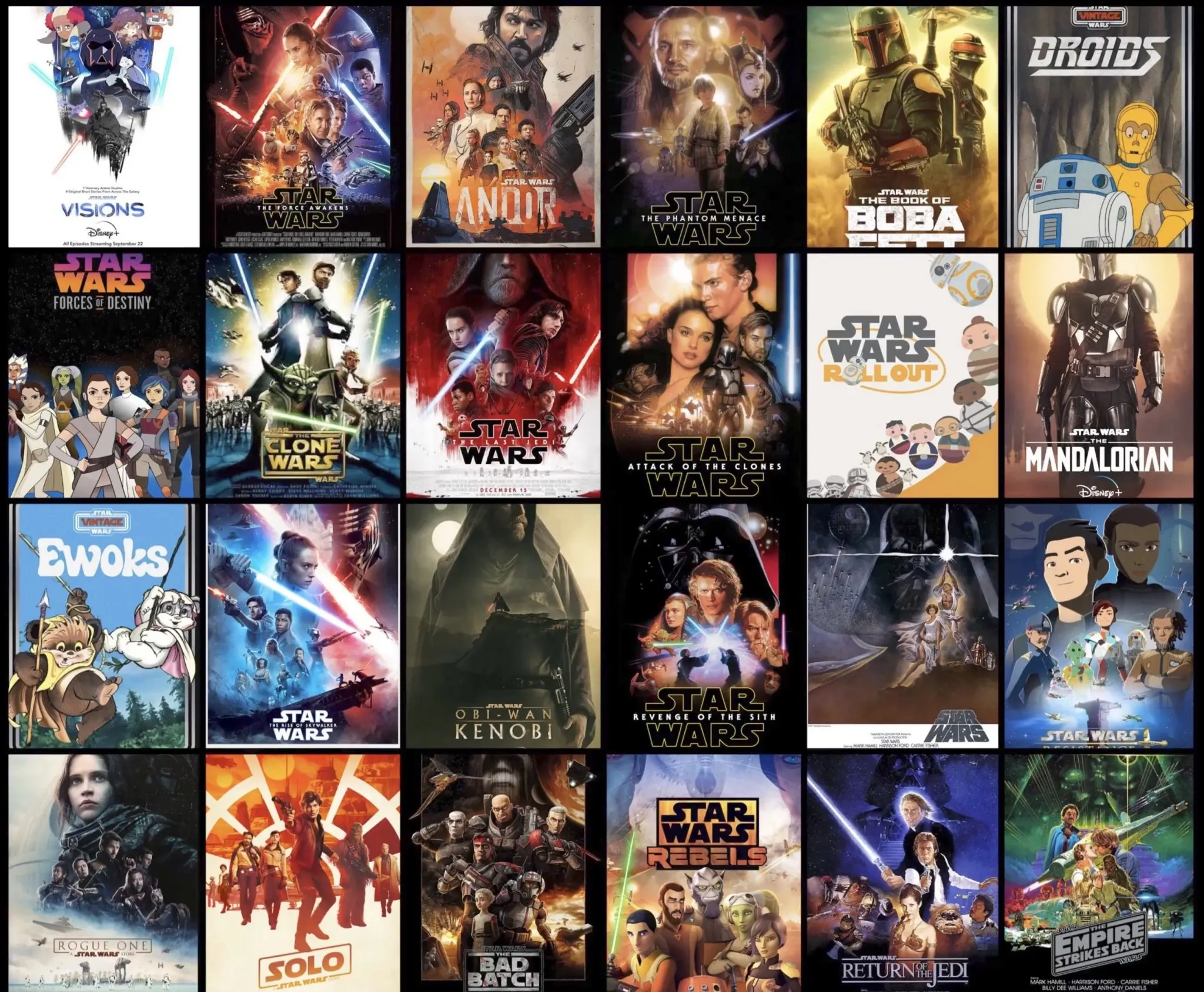
Finding the best way to watch Star Wars movies and shows involves navigating a massive library of feature films, live-action series, and animated projects that span multiple eras of an expanding fictional universe. The optimal viewing experience depends on whether you prefer the classic dramatic reveals of the release order, the chronological historical flow of the galaxy, or curated custom viewing paths.
Understanding the Core Viewing Orders
When approaching the Star Wars franchise, viewers typically choose between two primary viewing orders: release order and chronological order. Each method offers a fundamentally different narrative experience, shifting how twists, character developments, and technological evolution are perceived.
The Release Order: Preserving Surprises and Technological Evolution
The release order follows the exact sequence in which the films and television shows premiered in theaters or on television. This begins with the original theatrical trilogy released between 1977 and 1983 (Star Wars, The Empire Strikes Back, and Return of the Jedi), followed by the prequel trilogy (1999–2005), the sequel trilogy (2015–2019), and modern streaming series.
- Pros: This method preserves major cinematic plot twists—most notably the famous familial revelation in The Empire Strikes Back. It also allows viewers to experience the natural evolution of practical and digital special effects across decades of filmmaking history.
- Cons: Jumping backward in time from the original trilogy to the prequels can feel jarring regarding visual style, pacing, and acting conventions.
The Chronological Order: Experiencing Historical Flow
The chronological order arranges every movie and television show according to the internal timeline of the Star Wars universe, measured by the Battle of Yavin (BBY) depicted in the original 1977 film. This path starts with the prequel era and Republic-focused projects, moves through the Imperial era, and finishes with the sequel trilogy and post-sequel landscape.
- Pros: Viewers see the political decline of the Galactic Republic, the rise of the Galactic Empire, and the subsequent rebellion unfold in a seamless historical sequence.
- Cons: Watching the franchise this way completely spoils the monumental twists of the original trilogy, as prequel projects and spin-off shows explicitly reference events that the original films kept hidden.
Star Wars Chronological Timeline Comparison
| Era / Timeline Segment | Representative Titles | Best For | Primary Narrative Focus |
|---|---|---|---|
| The Fall of the Jedi | The Acolyte, The Phantom Menace, Attack of the Clones, The Clone Wars | Historical completionists | The height and decline of the Jedi Order and the origins of the Clone Wars. |
| The Reign of the Empire | Revenge of the Sith, The Bad Batch, Solo, Obi-Wan Kenobi, Andor, Rebels | Deep lore enthusiasts | The immediate aftermath of Order 66, grassroots rebellion, and early Imperial rule. |
| The New Republic | Rogue One, A New Hope, The Empire Strikes Back, Return of the Jedi | Classic cinema fans | The core Galactic Civil War, the redemption of Anakin Skywalker, and the collapse of the Empire. |
| The Rise of the First Order | The Mandalorian, The Book of Boba Fett, Ahsoka, Resistance, Sequel Trilogy | Modern streaming audiences | The transition from the Empire's remnants to the First Order and final systemic conflicts. |
Essential Viewing Paths for Different Audiences
Because the franchise encompasses more than a dozen feature films and numerous television series, specific customized paths help tailor the journey to individual viewer preferences and time commitments.
The Cinematic Core: Feature Films Only
For viewers who want the foundational story without committing to hundreds of episodes of television, watching the nine episodic saga films (Episodes I through IX) alongside standalone theatrical entries like Rogue One: A Star Wars Story and Solo: A Star Wars Story provides the core narrative arc.
- Theatrical Core Sequence:
- Star Wars: Episode IV - A New Hope (1977)
- Star Wars: Episode V - The Empire Strikes Back (1980)
- Star Wars: Episode VI - Return of the Jedi (1983)
- Star Wars: Episode I - The Phantom Menace (1999)
- Star Wars: Episode II - Attack of the Clones (2002)
- Star Wars: Episode III - Revenge of the Sith (2005)
- Star Wars: Episode VII - The Force Awakens (2015)
- Star Wars: Episode VIII - The Last Jedi (2017)
- Star Wars: Episode IX - The Rise of Skywalker (2019)
The Expanded Universe Integration: Incorporating Canon Television
Integrating television series such as Star Wars: The Clone Wars, Star Wars Rebels, and live-action shows like Andor and The Mandalorian adds substantial emotional weight and character depth. However, doing so requires navigating shifts in animation styles and longer time commitments.
- The Clone Wars Integration: Watching the animated Clone Wars film and series between Attack of the Clones and Revenge of the Sith transforms Anakin Skywalker’s fall to the dark side from a rushed cinematic plot point into a tragic, fully realized descent.
- Rebels and Live-Action Synergy: Series like Ahsoka and The Mandalorian heavily leverage characters and plot threads introduced in animated formats. Consequently, watching Rebels before viewing modern live-action post-Imperial series prevents narrative confusion.
Technical Requirements and Access Considerations
Streaming availability and physical media formats dictate how fans access the complete Star Wars library.
- Streaming Platforms: In major regions, the vast majority of Star Wars feature films and television series stream exclusively on Disney+. Ensuring a stable broadband internet connection capable of 4K ultra-high-definition streaming enhances the viewing experience, particularly for visually dense modern productions.
- Physical Media: Collectors and cinephiles often turn to 4K Ultra HD Blu-ray discs and standard Blu-ray releases. Physical media offers uncompressed audio tracks and higher bitrates than standard streaming feeds, avoiding potential compression artifacts during dark space battle sequences.
Common Mistakes to Avoid
Choosing a viewing method without understanding its structural consequences often leads to frustration or spoiled plot points.
- Starting with Prequels First on a First-Time Watch: While veteran fans enjoy chronological rewatches starting with the prequels, introducing a first-time viewer to The Phantom Menace ruins the narrative tension of the original trilogy's most famous reveals.
- Skipping Animated Series Entirely: Dismissing animation as children's media causes viewers to miss out on vital lore, character introductions, and overarching narrative context that directly connects to contemporary live-action releases.
- Overcomplicating Fan Edits: Complex fan-made viewing orders—such as specific cuts that interweave scenes or omit entire films—often create more logistical hurdles than they solve, making it difficult to follow standard canon discussions.
Frequently Asked Questions
Should I watch Star Wars in release order or chronological order?
For first-time viewers, release order is generally recommended because it preserves the intended narrative surprises, especially the iconic plot twists in the original trilogy. Chronological order is best reserved for subsequent rewatches once the major plot beats are already known.
Do I need to watch the animated shows to understand the live-action series?
While many live-action series like The Mandalorian can be enjoyed standalone, shows like Ahsoka and The Book of Boba Fett rely heavily on character arcs established in Star Wars: The Clone Wars and Star Wars Rebels. Watching the animated shows greatly enriches the viewing experience.
Where can I stream all Star Wars movies and television shows?
Almost the entire official canon library of Star Wars feature films and television series is available to stream on Disney+. Availability of specific titles may occasionally vary by geographic region and local licensing agreements.
Are Rogue One and Solo required viewing?
Neither film is strictly required to understand the core nine-episode Skywalker saga, but both provide vital historical context. Rogue One directly sets up the opening moments of A New Hope, while Solo explores the criminal underworld of the galactic empire era.
Final Recommendations for Your Star Wars Marathon
To start your journey, select the viewing order that matches your goals: choose the release order for maximum dramatic surprise, or the chronological order for a continuous historical exploration of the galaxy. Ensure your streaming setup is optimized for high-definition playback, keep a timeline handy if you are tracking complex eras, and enjoy exploring one of the most influential franchises in cinematic history.