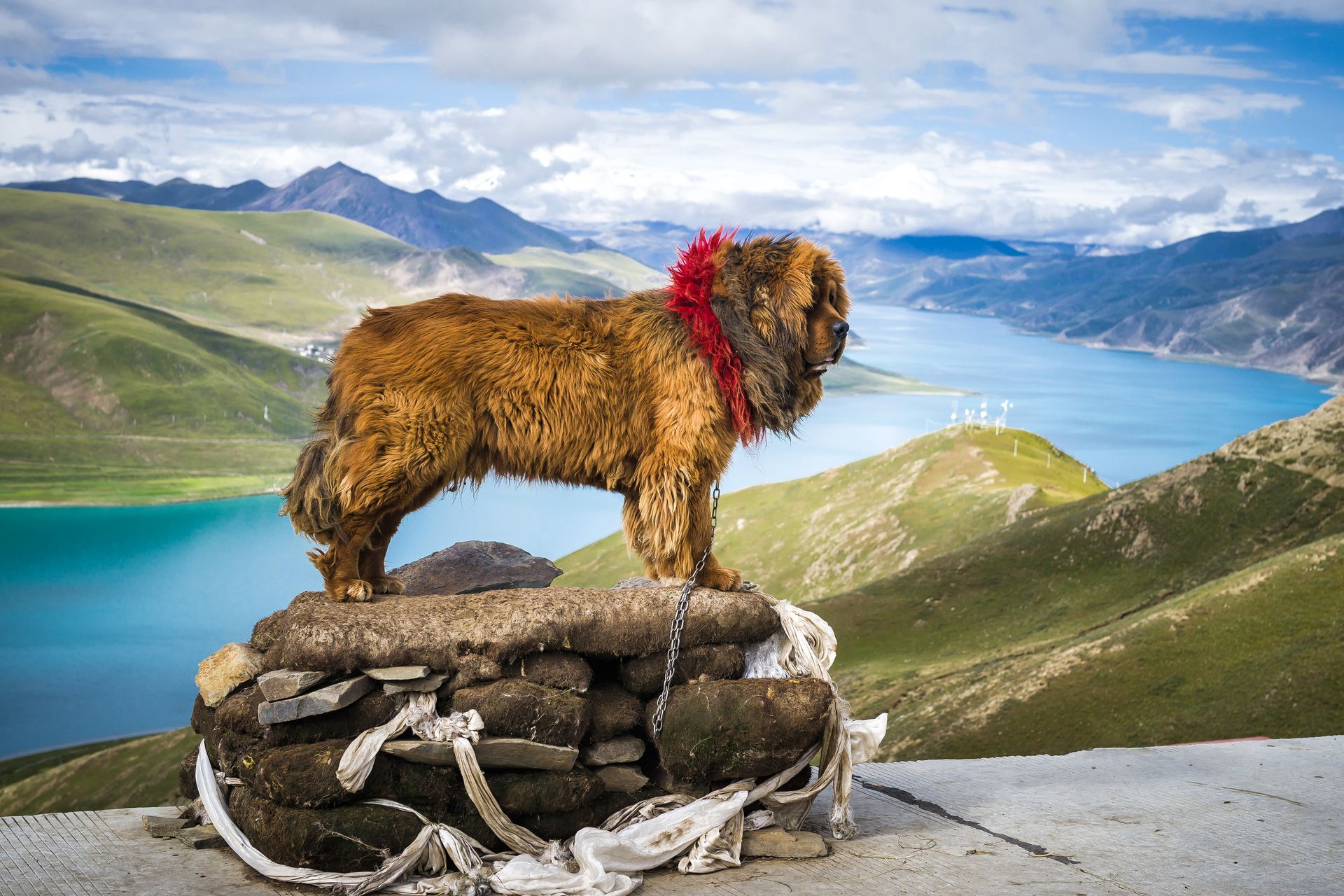
The physical and behavioral reality of a confrontation between a Tibetan Mastiff and a wolf is often obscured by folklore and marketing. While a Tibetan Mastiff can effectively deter a wolf through size and intimidation, it is biologically and tactically disadvantaged in a fight to the death. A wild wolf possesses superior bite mechanics, predatory instincts, and cardiovascular endurance that a domestic guardian dog cannot match.
For centuries, the Tibetan Mastiff has been celebrated as the ultimate protector of the Himalayas. Stories of these massive, lion-maned dogs dispatching leopards and wolves have fueled a global fascination, leading to a massive commercial bubble in the early 21st century. However, as we evaluate these animals in 2026 through the lens of modern ethology and veterinary physiology, the distinction between "guardian deterrence" and "predatory lethality" becomes clear. To understand why a Tibetan Mastiff cannot reliably kill a wolf, one must look past the mane and into the cold mechanics of wild survival.
The Origins of the Wolf-Killer Myth
The idea that a single Tibetan Mastiff is a "wolf killer" is a relatively modern construct, largely driven by the Chinese pet market's hyper-commercialization during the 2010s. During this period, breeders sought to justify astronomical price tags—sometimes reaching millions of dollars—by attributing supernatural combat abilities to the breed. They framed the Tibetan Mastiff not as a livestock guardian, but as a mythical beast capable of defeating any apex predator.
Historically, the Tibetan people (the nomads or Drokpa) never expected a single dog to kill a wolf. The dog’s role was to act as a "Bhotia" or "Do-Khyi" (tied dog), serving as a biological alarm system. Their deep, echoing barks and massive physical presence were designed to alert the camp and intimidate predators into seeking easier prey. In the harsh environment of the Tibetan Plateau, an injured dog is a liability. Nomads valued dogs that could drive wolves away without sustaining life-threatening injuries. The "wolf-killing" narrative is essentially a marketing byproduct that ignores the practical realities of nomadic pastoralism.
Comparative Anatomy and Physiology
To determine the outcome of a hypothetical conflict, we must examine the physical tools each animal brings to the encounter. While the Tibetan Mastiff is significantly heavier than most wolves, weight is not the sole determinant of lethality in the canine world.
The Mastiff’s Bulk vs. The Wolf’s Agility
A male Tibetan Mastiff typically weighs between 100 and 160 pounds (45 to 73 kg). In contrast, a Himalayan wolf (Canis lupus chanco) or a standard Grey wolf usually weighs between 70 and 120 pounds. While the Mastiff has a 40-60 pound weight advantage, this mass is largely composed of bone and muscle designed for short bursts of power, not sustained combat.
The wolf is a masterpiece of evolution designed for the "long kill." Its physiology is optimized for maximum oxygen intake and heat dissipation. In 2026, veterinary studies continue to highlight that domestic dogs, including large molosser breeds like the Tibetan Mastiff, have significantly smaller heart and lung capacities relative to their body mass compared to wild wolves. In a fight that lasts more than a few minutes, a Tibetan Mastiff will likely suffer from muscular fatigue and overheating, while the wolf remains physiologically "fresh."
Jaw Mechanics and Bite Pressure
There is a common misconception regarding bite force. While the Tibetan Mastiff has a powerful bite (estimated between 500 and 550 PSI), its jaw structure is domestic. Domestic dogs tend to "bite and hold" or "shake."
The wolf, however, possesses a specialized skull structure with a higher sagittal crest, allowing for massive muscle attachments. A wolf’s bite force can exceed 1,200 PSI when protecting itself or bringing down large prey. More importantly, the wolf employs a "slash and snap" technique. They do not hold on; they target vital areas—the throat, the femoral artery, or the soft tissue of the belly—with rapid, shearing bites that cause catastrophic hemorrhaging. A Tibetan Mastiff’s thick coat provides some protection against this, but it cannot compensate for the sheer structural difference in cranial strength.
| Feature | Tibetan Mastiff (Domestic) | Grey/Himalayan Wolf (Wild) |
|---|---|---|
| Average Weight | 100–160 lbs | 70–120 lbs |
| Bite Force | ~500–550 PSI | 400–1,200+ PSI |
| Endurance | Low to Moderate (Anaerobic) | High (Aerobic/High Stamina) |
| Instinct | Defensive / Territorial | Predatory / Survivalist |
| Combat Style | Intimidation and Wrestling | Precision Killing and Slashing |
| Skin/Hide | Thick skin, heavy fur | Loose, leathery hide, dense fur |
Domestic Guardian Instinct vs. Wild Predatory Drive
The most significant factor in why a Tibetan Mastiff struggles to kill a wolf is psychological. Domestic dogs have undergone thousands of years of "paedomorphosis"—the retention of juvenile traits into adulthood. Even the most aggressive Mastiff is essentially a permanent adolescent compared to a wild wolf.
The Predatory Sequence
In animal behavior, the predatory sequence consists of:
- Search
- Stalk
- Chase
- Grab
- Kill
- Consume
Domestic dogs, especially Livestock Guardian Dogs (LGDs), have had this sequence intentionally broken by human breeding. LGDs are bred to "Grab" or "Chase" but lack the "Kill" and "Consume" drive. If a Tibetan Mastiff catches a wolf, its instinct is often to pin the intruder or drive it off.
A wolf operates on a "survival of the fittest" mandate. It does not play, and it does not posturing unless necessary. If a wolf is cornered and forced to fight, it fights with a lethal efficiency that the domestic dog cannot comprehend. The wolf’s goal is to end the threat as quickly as possible using the least amount of energy, whereas the Mastiff’s goal is simply to protect its territory.
The Reality of Livestock Protection
If a Tibetan Mastiff cannot kill a wolf, why are they considered such successful guardians? The answer lies in the economics of nature.
The Strategy of Deterrence
Predators are risk-averse. A wolf that sustains a broken leg or a deep muscle tear from a dog bite will likely starve to death. Therefore, a wolf does not need to be "killed" to be defeated; it only needs to be convinced that the "cost" of the meal (the sheep) is higher than the "benefit."
The Tibetan Mastiff is a master of cost-inflation. When a wolf approaches a flock, it is met with:
- Auditory Warning: The Mastiff's bark is low-frequency and carries for miles, signaling the predator that it has been spotted.
- Visual Intimidation: The dog’s mane makes it appear even larger than it is, triggering a fear response in the wolf.
- Physical Intervention: The dog places itself between the predator and the prey.
In 99% of encounters, the wolf will retreat. This is a victory for the Mastiff. However, "driving away" a wolf is not the same as "killing" a wolf. In recorded instances where wolves have been killed by dogs, it is almost always a result of a pack of dogs (often 3 to 5) cornering a single, perhaps elderly or injured, wolf. In a one-on-one encounter, the wolf’s superior weapons and survival-driven ferocity give it the edge.
Environmental Factors and the Himalayan Context
The environment of the Tibetan Plateau plays a role in how these encounters are perceived. At high altitudes (over 14,000 feet), oxygen is scarce. The Himalayan wolf is genetically adapted to these altitudes in ways domestic dogs are not.
Genetic research (updated as recently as 2024 and 2025) confirms that the Himalayan wolf possesses unique hemoglobin adaptations for high-altitude survival. While the Tibetan Mastiff also has some of these adaptations due to ancient interbreeding with wolves, the wild wolf remains the more efficient athlete in the thin air. In a prolonged struggle at 15,000 feet, a Tibetan Mastiff will experience "gasping" much sooner than a wolf, leading to a loss of motor coordination and an opening for the predator.
Common Misconceptions and Internet Hoaxes
Much of the belief in the Tibetan Mastiff’s invincibility comes from staged videos or misidentified animals.
- Staged Fights: Many viral videos from the early 2000s used "tame" wolves or hybrid dogs that lacked wild instincts, making the Mastiff appear more dominant.
- Confusion with Other Breeds: Often, the "wolf-killing" feats attributed to the Tibetan Mastiff are actually historical accounts of the Kangal or the Caucasian Shepherd, breeds that are more prone to dog-on-dog aggression and are sometimes used in brutal (and often illegal) fighting rings.
- The "Lion" Mane: The fluffiness of the Mastiff is often mistaken for muscle. In reality, that fur is a defensive layer, not an offensive weapon. While it protects the neck from a wolf's initial strike, it also makes the dog prone to overheating.
Summary of Findings
The Tibetan Mastiff is one of the most formidable domestic dogs on the planet. Its role as a guardian is undisputed, and its ability to protect livestock from wolves is biologically proven through centuries of successful use. However, the claim that a Tibetan Mastiff can kill a wolf in a fair, one-on-one fight is a fallacy.
- Weight vs. Weaponry: The Mastiff has the weight; the wolf has the teeth and the technique.
- Endurance: The wolf is a marathon runner; the Mastiff is a defensive lineman.
- Psychology: The dog wants to guard; the wolf needs to survive.
Frequently Asked Questions
Can a Tibetan Mastiff at least protect sheep from a wolf?
Yes, exceptionally well. Protection does not require killing the predator. The Tibetan Mastiff’s primary tool is intimidation. By making the "cost of entry" too high, the Mastiff forces the wolf to find easier, wild prey. Most wolves will not risk a fight with an animal as large as a Mastiff if they can avoid it.
Has a Tibetan Mastiff ever killed a wolf?
While there may be anecdotal accounts of a Mastiff killing a wolf, these are extreme outliers. Usually, such events involve a dog defending its home territory where it has the "home-field advantage," or a situation where multiple dogs attacked a single wolf. There is no documented evidence of a consistent ability for the breed to kill healthy, adult wild wolves in 1v1 combat.
How does the Tibetan Mastiff compare to a Kangal in wolf defense?
The Kangal, a Turkish livestock guardian, is often cited as having the strongest bite force of any dog and a more athletic build than the Tibetan Mastiff. While Kangals are more likely to engage in physical combat with wolves and have been known to kill them, they still face the same cardiovascular and "instinctual" disadvantages as any domestic dog when facing a wild apex predator.
Why do people think Tibetan Mastiffs are so dangerous?
Their appearance—huge size, deep bark, and lion-like mane—creates a powerful psychological impact. Additionally, the "Mastiff Bubble" in the Chinese economy led to exaggerated claims about their ferocity to increase their status as "luxury" protection animals.
Is the Himalayan wolf different from the Grey wolf?
Yes. The Himalayan wolf is a distinct lineage that is specifically adapted to high-altitude, low-oxygen environments. They are generally slightly smaller than some North American Grey wolf subspecies but are incredibly resilient and possess unique genetic traits for survival in the world's harshest terrain.
Practical Recommendation for Owners
If you are considering a Tibetan Mastiff for protection in 2026, it is vital to respect the breed for what it is: a guardian, not a fighter. Do not expect or encourage your dog to engage in lethal combat with wildlife. To maximize the effectiveness of a Tibetan Mastiff in a livestock setting, they should always work in pairs or groups. Three Mastiffs can effectively create a "perimeter of safety" that even a small pack of wolves will not penetrate. Attempting to use a single dog as a "wolf killer" is a misunderstanding of the breed's biology and puts the animal at unnecessary risk.