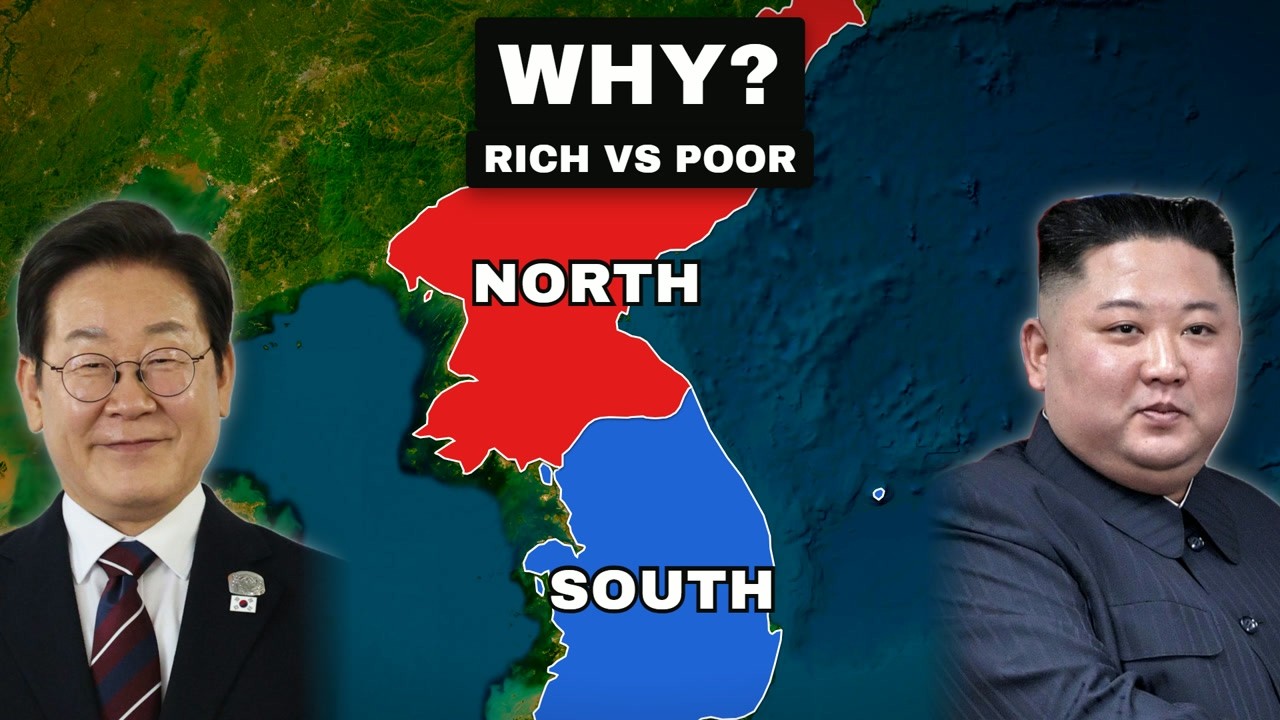
Despite North Korea's official adherence to a strict socialist ideology and state-managed economy, wealth and economic stratification exist within its borders. A distinct class of affluent citizens—known colloquially as the donju (meaning "masters of money")—has emerged alongside high-ranking officials who benefit from privileged access to resources, foreign currency, and private enterprise. While the vast majority of the population endures severe economic hardship, a prosperous urban minority enjoys luxury goods, private dining, modern housing developments, and consumer electronics.
The Ideological Foundation Versus Economic Reality
To understand how wealth exists in North Korea, one must examine the friction between official state ideology and economic reality. The Democratic People's Republic of Korea (DPRK) was founded on Juche (self-reliance) and a centrally planned command economy. In theory, the state provides housing, rations, healthcare, and education, eliminating class distinctions. Private property, capital accumulation, and free-market enterprise were historically outlawed as remnants of capitalist exploitation.
However, the structural collapse of the state public distribution system (known as the Palsang system) during the mid-1990s famine—historically referred to as the "Arduous March"—fundamentally transformed North Korea's economic landscape. When the government could no longer guarantee food rations and employment stipends, citizens were forced to devise informal survival mechanisms. People began trading goods, establishing black markets, and engaging in unauthorized micro-commerce.
Over the subsequent decades, the North Korean government pragmatically tolerated and eventually institutionalized many of these market practices to prevent systemic economic collapse. Today, while state media maintains the rhetoric of egalitarian socialism, the reality on the ground is a dual economy. The state sector continues to operate on paper, but a parallel commercialized market economy drives actual liquidity, consumer spending, and the accumulation of private wealth.
The Rise of the Donju: North Korea’s Capitalist Class
The primary engine of private wealth generation in North Korea is the donju class. Emerging from the ashes of the 1990s economic crisis, the donju are private entrepreneurs, merchants, and financiers who accumulated capital through localized trade, transport, currency exchange, and light manufacturing.
Unlike traditional capitalists in market economies, the donju operate in a grey zone where they must navigate a complex web of state regulations, official bribes, and political protection. They cannot openly display wealth in corporate boardrooms or stock portfolios; instead, they invest their capital in tangible assets, informal banking services, and real estate development.
Key Sectors for Private Wealth Accumulation
Wealthy North Koreans typically build their fortunes by capitalizing on critical supply chain bottlenecks and consumer demands that the state cannot fulfill. The most lucrative sectors include:
- Wholesale and Retail Trade: Importing consumer goods, electronics, clothing, and processed foods from China through border cities like Sinuiju and Hyesan, then distributing them to regional markets (jangmadang).
- Transport and Logistics: Owning and operating fleets of trucks, buses, or taxis. Because state-run public transport is unreliable and fuel is scarce, private transport operators charge high tariffs to move goods and people.
- Informal Financial Services: Functioning as private bankers. The donju provide high-interest loans to aspiring merchants, facilitate cross-border remittances for families receiving money from defectors abroad, and exchange foreign currencies (primarily Chinese Yuan and U.S. Dollars) against North Korean Won.
- Construction and Real Estate Financing: Partnering with state enterprises to finance apartment construction or remodeling. While individuals do not officially own land, wealthy citizens finance the renovation of state-allocated apartments to secure modern, desirable living spaces.
The Elite Bureaucracy and Party Officials
Beyond the entrepreneurial donju, the second major segment of wealthy individuals in North Korea consists of high-ranking officials within the Workers' Party of Korea (WPK), the Korean People's Army (KPA), and security agencies such as the Ministry of State Security.
These officials derive their wealth not from entrepreneurial hustle, but from institutional power and administrative control. They extract rents by demanding bribes for trade licenses, travel permits, and business operations. Furthermore, many state organs and military units operate commercial trading companies that engage in foreign commerce, mining exports, and overseas labor deployment. The profits generated by these state-sanctioned enterprises flow upward, enriching the bureaucratic elite who manage them.
Characteristics of the North Korean Affluent Lifestyle
While Western-style billionaire lifestyles characterized by luxury yachts and offshore bank accounts do not exist in the open, North Korea's wealthy enjoy a remarkably high standard of living relative to the rest of the country. This lifestyle is concentrated primarily in elite districts of Pyongyang, particularly areas like Changjon Street or the Mirae Scientists Street.
Consumer Goods and Technology
Wealthy North Koreans have access to imported consumer goods that bypass state rationing. High-end department stores, such as the Kwangbok Area Department Store, stock luxury cosmetics, imported foods, flat-screen televisions, and home appliances. Smartphones, locally produced under brands like Pyongyang or Jindallae but imported as components from abroad, are common among the urban middle and upper classes, enabling mobile payments and digital communication.
Housing and Interior Comforts
While the exterior appearance of North Korean apartment buildings can look austere or uniform, the interiors of homes belonging to the donju and senior officials are often modern and well-appointed. Wealthy homeowners invest heavily in imported tiles, sophisticated heating systems, private water pumps, and modern kitchen cabinetry. Solar panels (theyangpan) are widely used by the affluent—and increasingly by the general populace—to secure a stable, independent electricity supply against rolling state blackouts.
Leisure, Dining, and Education
Pyongyang's upper class enjoys a burgeoning consumer culture that includes upscale restaurants, coffee shops, fitness centers, and entertainment venues like the Rungna People's Pleasure Ground or the Munsu Water Park. Affluent parents also invest heavily in private tutoring and specialized education for their children, ensuring they gain admission to elite institutions such as Kim Il Sung University or prestigious foreign-language schools.
| Social Stratification | Primary Source of Wealth | Typical Assets | Geographic Concentration |
|---|---|---|---|
| Elite Bureaucracy | State power, Party positions, military trading enterprises | Luxury urban housing, imported vehicles, foreign currency reserves | Pyongyang (Central Districts) |
| Donju (Entrepreneurs) | Private markets, transport networks, informal banking, wholesale trade | Commercial trucks, renovated apartments, retail inventory, cash capital | Border cities (Sinuiju, Hyesan) and Pyongyang |
| General Population | State wages, subsistence farming, small-scale market stalls | Basic bicycles, hand-cart inventory, local ration cards | Provincial towns and rural areas |
Systemic Risks and Legal Precautions
Accumulating wealth in North Korea carries severe risks. The country's legal framework officially prohibits unauthorized private enterprise and capital accumulation. Periodically, the government initiates crackdowns, currency reforms, or anti-corruption campaigns targeting the donju.
To mitigate these risks, wealthy individuals engage in strategic risk management:
- State Sheltering (Sado): Wealthy merchants frequently register their private businesses under the umbrella of a state enterprise or military unit. By paying a regular kickback or percentage of profits to the supervising state organ, the business gains legal camouflage and official protection against sudden expropriation.
- Asset Diversification: Because holding large sums of North Korean Won is risky due to hyperinflation and state currency interventions, the wealthy store their capital in stable foreign currencies—predominantly Chinese Yuan and U.S. Dollars—or convert liquid cash into tangible goods like gold, electronics, and real estate.
- Corruption and Patronage: Maintaining strong personal connections (gwanri) with influential party or security officials is essential. Bribery functions as an informal tax mechanism that purchases security and operational leeway.
Frequently Asked Questions
Can anyone become rich in North Korea?
Upward mobility is severely constrained by North Korea's songbun system, a socio-political classification system that categorizes citizens based on their perceived loyalty to the regime. While the donju class has demonstrated that economic drive can transcend traditional songbun barriers to some extent through bribery and market participation, individuals from politically disfavored backgrounds face systemic obstacles to attaining elite status.
Do wealthy North Koreans pay taxes?
North Korea officially abolished its formal income tax system in 1974, frequently boasting that it is the only tax-free country in the world. In practice, however, wealthy individuals and merchants pay a complex array of informal fees, state enterprise levies, market usage fees, and bribes to operate their businesses and protect their assets.
Where do wealthy North Koreans live?
The vast majority of North Korea's affluent population resides in the capital city of Pyongyang, particularly in newly developed luxury residential zones. Secondary concentrations of wealth are found in major economic hubs and border cities, such as Sinuiju, Pyongsong, and Chongjin, where cross-border trade with China drives commercial activity.
How do rich North Koreans move their money?
Because North Korea lacks a transparent, modern banking system and is largely isolated from international SWIFT banking networks, wealth is primarily stored as physical cash (foreign currency), real estate improvements, or trade inventory. Informal brokers facilitate peer-to-peer transfers and cross-border settlements using cash couriers and trusted networks spanning the China-North Korea border.
Conclusion
The existence of wealthy individuals in North Korea dispels the monolithic perception of the country as an entirely uniform society of impoverished citizens. Driven by the pragmatic necessity of survival following the economic crises of the 1990s, a stratum of enterprising donju and privileged bureaucrats has successfully carved out spaces for commerce, consumerism, and private capital accumulation. While their wealth remains precarious, dependent on political patronage and vulnerable to state crackdowns, these affluent groups form an indispensable engine of modern North Korea’s dual economy.