Multifocal contact lenses are generally considered worth the investment for individuals experiencing presbyopia who seek freedom from reading glasses. While they require a more intensive fitting process and a brief period of neuro-adaptation, they offer a significant upgrade in visual convenience for most users. Success depends heavily on realistic expectations, professional clinical fitting, and the specific optical design of the lens.
Understanding the Role of Multifocal Contact Lenses
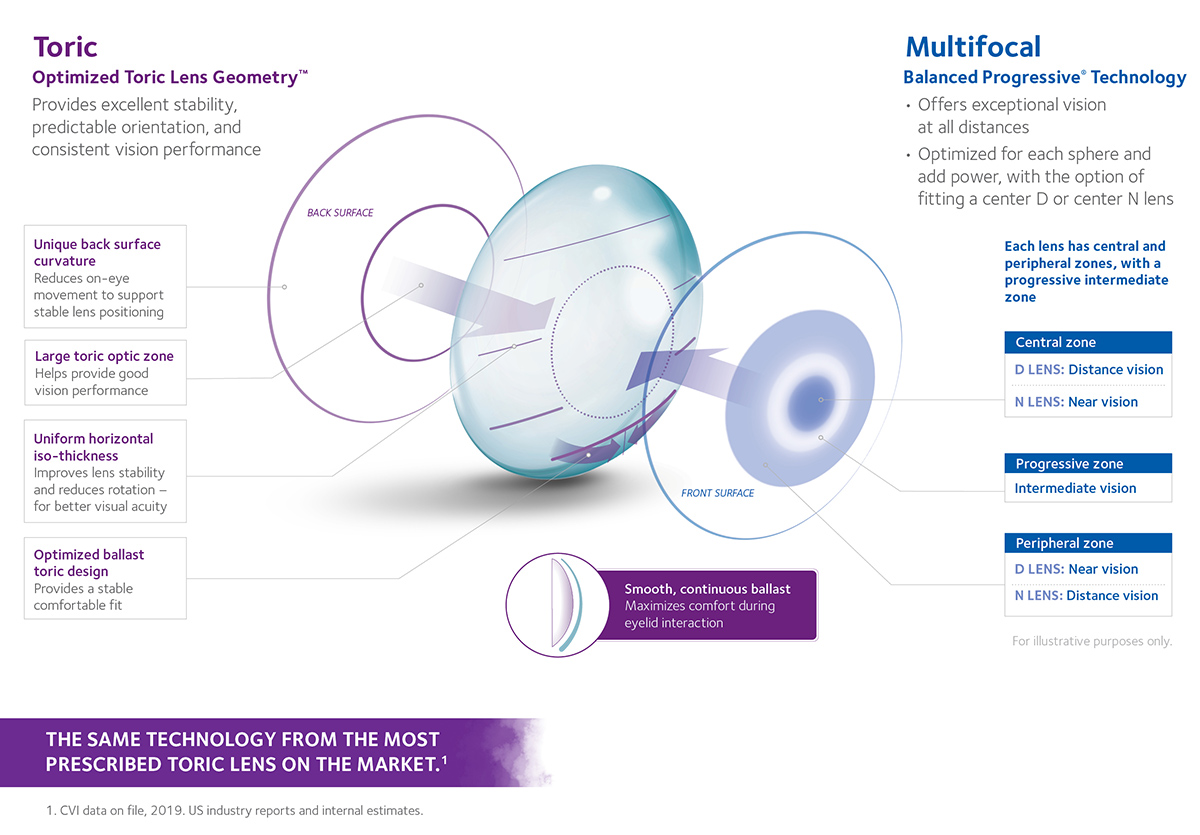
Presbyopia, the age-related loss of near-focusing ability, typically becomes noticeable in the early-to-mid 40s. The crystalline lens inside the eye loses its flexibility, making it difficult to shift focus from distant objects to fine print. Multifocal contact lenses are designed to address this by incorporating multiple zones of power—often including distance, intermediate, and near corrections—within a single lens.
Unlike bifocal glasses, which have a distinct line separating prescriptions, modern multifocal contacts utilize concentric rings or "aspheric" designs. This allows light from various distances to enter the pupil simultaneously. Your brain then learns to prioritize the clear image while suppressing the out-of-focus input. This process is known as "neuro-adaptation," and it is the primary reason why these lenses feel different from standard single-vision lenses.
The Fitting Process: Why Expertise Matters
You cannot simply order multifocal contacts based on your distance glasses prescription. Because the eye's pupil size changes under different lighting conditions and at different focal lengths, the positioning of these optical zones must be precisely centered.
During your examination in 2026, an optometrist will typically perform a "trial fit." This involves:
- Refraction: Determining your base distance prescription.
- Dominance Testing: Identifying which eye is your "dominant" eye, as most fitting systems prioritize distance vision in the dominant eye and near vision in the non-dominant eye.
- Zone Mapping: Selecting a lens design (center-near vs. center-distance) based on your specific visual lifestyle.
- Real-World Testing: You will likely wear a trial pair for at least 15–30 minutes in the office to assess comfort and vision clarity before finalizing the order.
Evaluating the Benefits
The "worth" of these lenses is best measured by the quality of life improvements they provide.
- Visual Continuity: You can transition from driving a car to reading a dashboard, or from using a computer to looking at a colleague across a desk, without switching between glasses.
- Aesthetic Preference: Many patients prefer the look of their natural eyes over wearing frames.
- Activity Compatibility: For sports, hiking, or social settings, the convenience of not carrying a separate pair of reading glasses or "cheaters" is a primary benefit for active adults.
Addressing the Trade-offs and Limitations
It is important to approach multifocal contacts with managed expectations. No contact lens perfectly replicates the youthful flexibility of the natural crystalline lens.
- Low-Light Sensitivity: Because multifocal lenses divide light into different focal zones, there is inherently less light reaching the retina compared to single-vision lenses. Some users report slightly reduced contrast in dim environments.
- Visual Artifacts: A small percentage of users may notice halos around point sources of light, such as headlights while driving at night. While most brain-based adaptation mitigates this over several weeks, it is a clinical reality for some.
- Adaptation Time: While some patients perceive clear vision immediately, others may require one to two weeks of consistent wear for their brain to effectively filter the multiple images.
Cost-Benefit Analysis
When considering the financial aspect, multifocal contacts represent a higher price point than standard soft contact lenses due to the complexity of their manufacturing and the required clinical expertise.
| Feature | Standard Contact Lenses | Multifocal Contact Lenses |
|---|---|---|
| Primary Use | Distance or Near only | Distance, Intermediate, and Near |
| Fitting Complexity | Standard | High (Requires specialized assessment) |
| Initial Cost | Moderate | Higher (Product + Fitting fees) |
| Lifestyle Impact | Requires reading glasses | Offers glasses-free convenience |
| Adaptation Period | Immediate | 1–2 weeks average |
Note: Prices fluctuate based on insurance coverage and the chosen modality (daily disposables, two-week, or monthly replacement). Always verify your vision plan's specific coverage for "contact lens fitting fees," which are often separate from the materials cost.
Common Challenges and Troubleshooting
If you decide to proceed with multifocal lenses, you may encounter minor hurdles during the initial weeks. Troubleshooting is an expected part of the journey.
1. "My vision feels blurry at night." This is often due to the pupil dilating in low light, which shifts the incoming light away from the intended optical zones. Your doctor may adjust the lens diameter or power profile to accommodate this.
2. "I still need reading glasses for tiny print." Multifocal lenses are designed to reduce dependence on reading glasses, not necessarily eliminate them for prolonged, high-intensity near work (such as reading a book for three hours). Using a mild pair of reading glasses over your contacts for these specific tasks is a common and accepted practice.
3. "They feel less comfortable than my old lenses." Advanced multifocal lenses are available in silicone hydrogel materials, which provide higher oxygen permeability. If you feel discomfort, it may be a result of the fit or the lens material. Never hesitate to return to your eye care provider for a follow-up adjustment.
Eligibility and Prerequisites
Not every patient is a candidate for multifocal contact lenses. Those with high levels of astigmatism, significant dry eye disease, or specific corneal irregularities may struggle to find success with standard multifocal designs.
- Dry Eye Management: If your eyes are consistently dry, the surface irregularities will disrupt the delicate optics of a multifocal lens. You may need to treat the dry eye with artificial tears or prescription medication before successful contact lens wear can be achieved.
- Realistic Vision Goals: If your occupation requires perfect, razor-sharp vision for fine, microscopic detail (such as surgery or precision watchmaking), you may find that contacts cannot provide the same acuity as a dedicated pair of glasses.
- Consistency: Because adaptation is a neurological process, wearing the lenses only once or twice a week will prevent your brain from "learning" how to process the images correctly. Consistent daily wear is the fastest path to success.
Frequently Asked Questions
How long does it take to get used to multifocal contact lenses? Most patients report a successful adaptation period ranging from three days to two weeks. It is essential to wear the lenses consistently during this window to allow your visual cortex to adjust.
Can I wear multifocal contacts if I have astigmatism? Yes. In 2026, many manufacturers produce "multifocal toric" lenses. These are more complex to fit and often require a slightly higher investment, but they effectively address both the need for near vision correction and the correction of astigmatism.
Are daily disposables better than monthly multifocals? Daily disposables are often preferred for eye health and hygiene as they eliminate the need for cleaning solutions and reduce the risk of protein buildup. However, some patients find that monthly lenses offer a broader range of available powers or lens geometries.
Will I still need reading glasses for everything? Usually, no. The purpose of the lens is to handle common daily tasks like checking a smartphone, reading a menu, or using a computer. You may find that you occasionally reach for reading glasses for extremely small print or low-light situations, but the need is significantly reduced.
What happens if I cannot adapt to the lenses? If after multiple follow-up visits and potential power adjustments you still do not feel comfortable, most eye care providers offer a "crossover" policy where you can switch to a different modality, such as monovision or standard contact lenses combined with reading glasses.
Final Recommendation
The decision to use multifocal contact lenses is ultimately about trading a small amount of peripheral sharpness for the convenience of seamless focus. If you lead an active lifestyle or simply find the constant on-and-off of reading glasses frustrating, these lenses are highly "worth it."
To ensure success, commit to the adaptation period, be honest with your optometrist about your specific visual needs, and prioritize a high-quality, professional fitting. If you meet the criteria, you will likely find that the freedom to see at all distances outweighs the minor learning curve required to master these advanced optical devices.