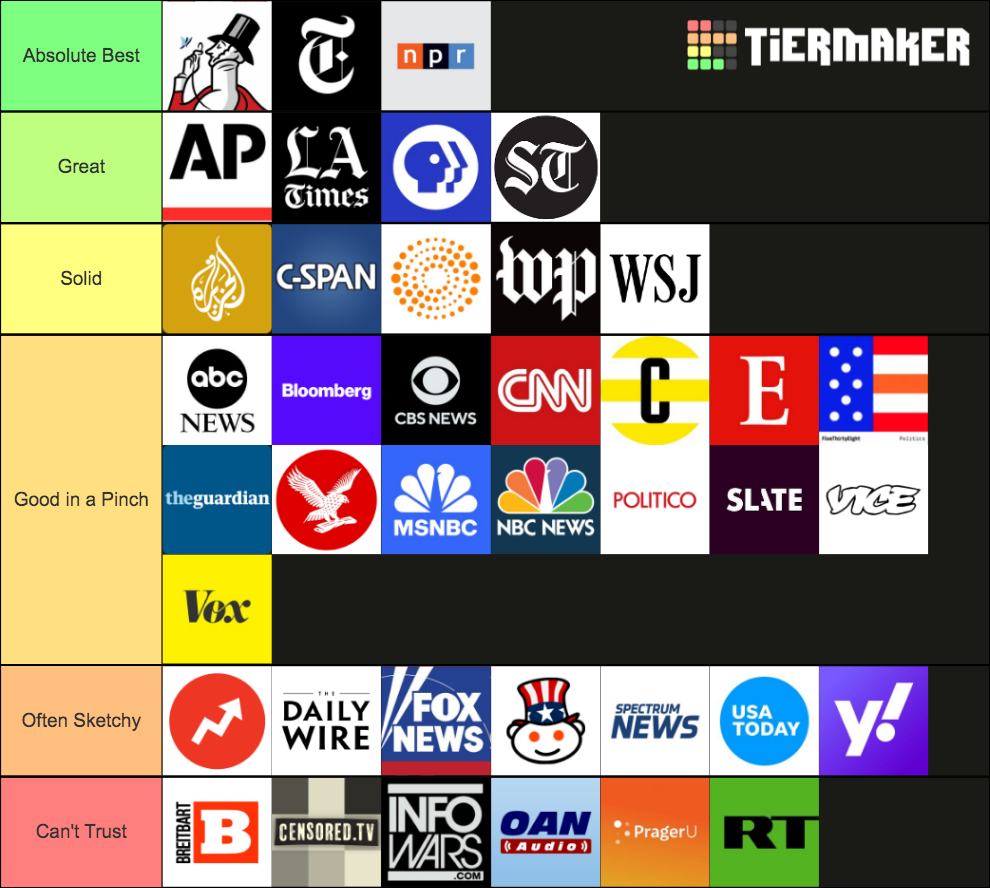
Achieving comprehensive news coverage requires a strategic selection of outlets that balance diverse geographic perspectives, editorial methodologies, and reporting formats. By combining primary wire services, independent investigative journalism, and regional reporting, you can mitigate inherent biases and create a robust framework for understanding global events, political developments, and technical analysis in 2026.
The Foundation of Comprehensive News Consumption
The modern information landscape is fractured. Readers often fall into the trap of echo chambers, where algorithms surface content mirroring their existing beliefs. To break this cycle, you must intentionally curate a list of news sources that prioritize factual reporting, transparent methodology, and wide-reaching geopolitical presence. Comprehensive coverage is not about reading every article published; it is about accessing information from a variety of institutional vantage points.
For effective information gathering, divide your sources into three specific tiers:
- Wire Services: These provide the raw, unadulterated facts that form the baseline of global news.
- National and International Newspapers of Record: These provide the context, long-form analysis, and investigative depth that wire services often lack.
- Specialized and Niche Reporting: These focus on specific sectors—such as technology, energy, or environmental science—where deep domain expertise is required.
Tier 1: The Essential Wire Services
Wire services (or news agencies) are the backbone of global journalism. Most major newspapers and broadcast networks rely on these entities for initial breaking news because they maintain permanent bureaus in conflict zones and remote locations where commercial media outlets cannot afford to keep staff.
- Associated Press (AP): Known for its "neutrality-first" style, the AP is the primary source for US-based domestic news and a dominant force in international reporting. Its style guide is the industry standard for journalistic integrity.
- Reuters: Renowned for financial and economic data, Reuters maintains an aggressive international bureau network. Their reporting is often drier and more focused on the movement of markets and political policy rather than narrative flair.
- Agence France-Presse (AFP): Headquartered in Paris, AFP provides a uniquely strong perspective on European affairs, African conflicts, and global diplomacy, often offering a perspective distinct from Anglo-American outlets.
By subscribing to these wires, you ensure that you receive information before it is filtered through the specific ideological lens of a national newspaper or opinion program.
Tier 2: Newspapers of Record and International Analysis
Once you have the facts, you need the "why." Newspapers of record provide the investigative reporting and editorial rigor necessary to turn raw data into informed understanding.
- The New York Times: While based in the United States, its scale allows for unparalleled investigative resources. It is essential for understanding US policy, culture, and high-level international commentary.
- The Financial Times: For those seeking to understand the intersection of global policy and economic reality, the FT is indispensable. Its coverage of emerging markets and corporate regulation provides a structural view of global power dynamics.
- The Economist: This weekly publication is essential for synthesis. It does not provide breaking news; instead, it provides a curated, high-level analysis of the week’s events, contextualizing them within historical and economic frameworks.
- Al Jazeera English: To avoid a strictly Western-centric worldview, Al Jazeera English offers extensive coverage of the Middle East, Southeast Asia, and the Global South, often covering stories that are sidelined by Western-based corporate media.
Comparative Overview of News Methodologies
Selecting a balanced list involves understanding what each publication aims to achieve. The following table highlights the primary focus of these standard-setting organizations.
| Source | Primary Focus | Editorial Stance | Best Used For |
|---|---|---|---|
| Associated Press | Raw Facts | High Neutrality | Breaking news verification |
| Reuters | Financial/Global Markets | Objective/Technical | Economic and policy impact |
| The New York Times | Investigative/Cultural | Liberal-leaning/Detailed | Deep dives and US policy |
| The Financial Times | Global Business | Pro-Market/Analytical | Institutional/Macro analysis |
| The Economist | Synthesis/Commentary | Moderate/Liberal-Market | Understanding long-term trends |
| Al Jazeera English | Global South/Geopolitics | Diverse/Regional Focus | Underreported global conflicts |
Incorporating Niche and Technical Sources
Generalist news sources often struggle with highly specialized fields. If your information needs involve technical sectors, you must augment your list with industry-specific reporting to ensure accurate context.
Scientific and Technological Reporting
In 2026, scientific breakthroughs often move faster than generalist reporters can interpret. Publications like Nature or Science provide the peer-reviewed rigor that prevents the spread of misinformation regarding clinical trials, climate modeling, or emerging computing standards. If you are tracking technology, pairing these with specific outlets like MIT Technology Review allows you to understand the real-world application of advancements rather than just the marketing claims.
Regional Specialist Outlets
If your comprehensive coverage requirements include a specific region—for example, the Indo-Pacific or the Sahel—you should incorporate local English-language outlets. These often provide nuance that international correspondents miss, such as local regulatory hurdles, specific tribal or ethnic tensions, and nuanced community sentiment. Always verify the ownership structure of these regional outlets to determine their proximity to local political interests.
Practical Steps to Build Your Information Diet
Developing a habit of comprehensive news consumption requires more than just a list of bookmarks; it requires a structural approach to your daily routine.
1. Curate Your Feed
Do not rely on social media feeds for your news. Algorithms are designed for engagement, not information density. Instead, use an RSS reader or a dedicated news aggregator that allows you to hand-pick the sources. By manually curating your sources, you ensure that your "homepage" is a reflection of your desired breadth, not a reflection of your past clicking behavior.
2. Verify Through Cross-Referencing
When a major story breaks, check the event across at least three of your sources: one wire service, one domestic paper of record, and one international outlet. If the core facts (the who, what, when, and where) align, you have a baseline of truth. If the narratives vary significantly, observe the language used. Are they focusing on the intent of the actor or the impact of the event? This observation is where critical thinking occurs.
3. Account for Editorial Cycles
Understand that news is a product. A newspaper’s lead story is chosen based on a mix of public interest, editorial mission, and the need to sell subscriptions. Recognizing that a story is being "pushed" does not make it false, but it should prompt you to search for the counter-view or the subsequent ripple effects that might have been ignored in the primary report.
Avoiding Common Pitfalls
The biggest challenge in maintaining comprehensive coverage is "news fatigue." The sheer volume of information available in 2026 can lead to paralysis or apathy. To avoid this, focus on a limited, high-quality list rather than an expansive, low-quality one.
- Avoid the "Opinion Trap": Many consumers confuse opinion columns and editorial pages with news reporting. While opinions are valuable for understanding the zeitgeist, they are not facts. Ensure your primary information sources are news-heavy, and relegate commentary to a secondary category in your reading list.
- Be Skeptical of "Breaking" Alerts: Push notifications are designed for urgency, not accuracy. The first report on any developing story is almost always incomplete or partially inaccurate. Develop the discipline to wait for the "second wave" of reporting, where editors have had time to verify conflicting information.
- Monitor Funding and Ownership: In 2026, the media landscape remains heavily influenced by who pays the bills. Periodically investigate the ownership structure of the news outlets you rely on. Is it a publicly traded corporation, a non-profit, or state-funded? Knowing the funding model helps you contextualize their reporting priorities.
Frequently Asked Questions
How do I distinguish between a reliable news source and a biased one?
Reliability is measured by a source's history of retractions, transparency in sourcing, and adherence to established style guides. A biased source, by contrast, frequently uses emotionally charged language (loaded adjectives) and emphasizes the "why" at the expense of the "what."
Why are wire services recommended over network television news?
Network television is inherently constrained by time and the need for visual stimulation. Wire services prioritize text-based clarity and broad accessibility, allowing you to consume information at your own pace and without the distraction of sensationalized commentary often found in broadcast programming.
Is it necessary to pay for subscriptions to get comprehensive coverage?
Generally, yes. High-quality investigative journalism is expensive to produce. While free sources exist, they are often ad-supported, which incentivizes "clickbait" titles and superficial reporting. A subscription model aligns the publisher’s incentive with the reader’s desire for depth and accuracy.
What is the best way to track a story as it develops over time?
Create a "monitoring" folder in your news aggregator. When a significant event occurs, add articles from different outlets to this folder over several days. This allows you to track how the story evolves from initial rumor to documented fact, helping you see which outlets were right early on and which were merely speculating.
How do I avoid filter bubbles if I use aggregators?
The best way is to manually add sources that you actively disagree with. If your primary news source is consistently left-leaning, add a high-quality, reputable right-leaning source to your aggregator, and vice versa. The goal is not to force yourself to agree, but to see what facts and stories the other side of the spectrum is highlighting.
Next Actions: Building Your Dashboard
To begin your journey toward comprehensive coverage, your first step is to perform an audit of your current information diet. Identify which sources you consume daily and categorize them based on the tiers mentioned above. If you notice a "gap"—for example, you rely entirely on one nation's media—add two international outlets that provide a different perspective.
Download an RSS reader app, manually input the top five sources from the categories described in this article, and commit to reading these for 15 minutes each morning for two weeks. By moving away from passive algorithmic consumption and toward active, curated discovery, you will find your understanding of the world becoming more layered, nuanced, and structurally sound.