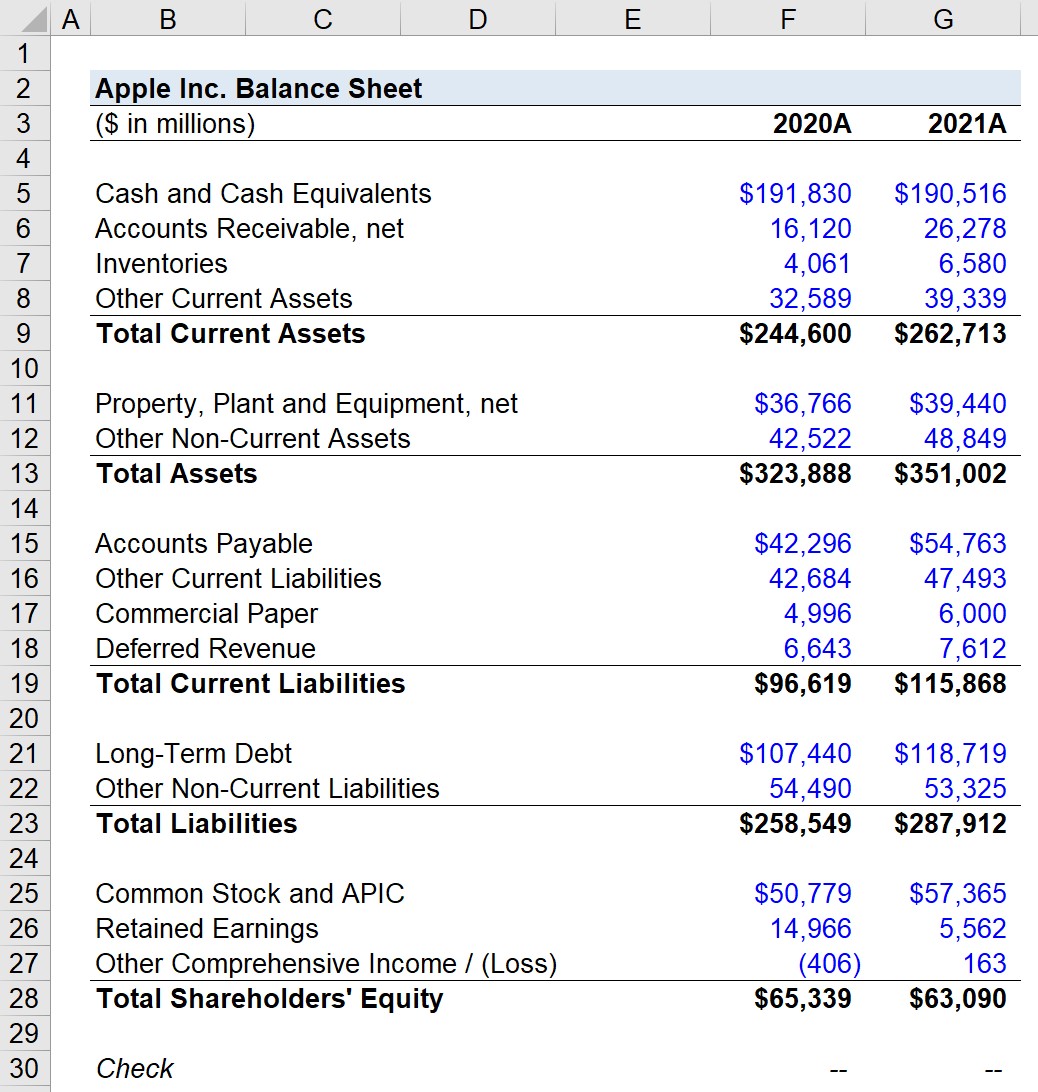
A life insurance company balance sheet is a specialized financial statement that details the firm’s assets, liabilities, and equity at a specific point in time. Unlike standard corporate balance sheets, it prioritizes long-term solvency and policyholder protection, focusing heavily on investment-grade assets and actuarially determined reserves required to fulfill future claim obligations.
Reading the financial health of a life insurance company requires a different lens than evaluating a retail or technology firm. While a typical company focuses on inventory and short-term receivables, an insurer is essentially a massive investment engine fueled by premiums. As of 2026, the landscape of insurance accounting continues to reflect significant shifts in how long-duration contracts are valued, particularly following the widespread adoption of modern accounting standards like IFRS 17 and US GAAP Long-Duration Targeted Improvements (LDTI).
To understand a life insurance balance sheet, one must look past the surface numbers and analyze how the company matches its long-term assets with its even longer-term liabilities. This guide breaks down the core components, regulatory nuances, and key metrics that define the financial stability of life insurers today.
The Foundation of Insurance Accounting: Assets vs. Liabilities
At its simplest, the balance sheet follows the accounting equation: Assets = Liabilities + Equity (or Surplus). However, the nature of these components is unique to the insurance industry.
The Asset Side: The Investment Portfolio
For a life insurance company, assets are primarily comprised of the "General Account." This is where the company invests the premiums it collects to ensure it has enough money to pay future claims.
- Bonds and Fixed Income: This is typically the largest segment of a life insurer's assets. Because insurance liabilities (death benefits) are often decades away, companies prefer high-quality, long-term bonds to match those durations. As of 2026, many portfolios remain heavily weighted toward corporate bonds, government securities, and municipal bonds.
- Mortgages and Real Estate: Life insurers are major players in commercial real estate lending. These are considered attractive because they offer higher yields than government bonds while maintaining a collateralized profile.
- Policy Loans: This is a unique asset class. When a policyholder borrows against the cash value of their permanent life insurance policy, the insurer treats that loan as an asset. It is a "perfect" asset because it is secured by the policy's own death benefit.
- Separate Account Assets: These are funds held for variable life insurance or annuity products. The investment risk for these assets sits with the policyholder, not the insurer, but they must still be reported on the balance sheet.
The Liability Side: Promises to Pay
Liabilities for an insurer are not just "debts" in the traditional sense; they are mostly "reserves."
- Policy Reserves: This is the most critical line item. It represents the present value of the future benefits the company expects to pay out, minus the present value of future premiums it expects to receive. These are calculated using complex actuarial assumptions about mortality, interest rates, and policy lapses.
- Claims Payable: These are obligations for deaths or events that have already occurred but have not yet been fully paid out.
- Unearned Premium Reserves: This represents the portion of premiums received that applies to the remaining period of a policy’s term.
The Concept of Asset-Liability Management (ALM)
A life insurance company’s balance sheet is a study in Asset-Liability Management (ALM). Because a life insurer may collect a premium today for a death benefit it won't pay for 40 years, it faces massive interest rate risk.
If interest rates rise, the value of the bonds the insurer holds (assets) will fall. If interest rates fall, the insurer might not earn enough on its investments to cover the guaranteed interest rates promised in its policies (liabilities).
In 2026, analysts look specifically at "Duration Matching." If the duration of the assets closely matches the duration of the liabilities, the company is insulated from interest rate swings. A significant mismatch on the balance sheet is a red flag for potential insolvency or the need for future capital injections.
Detailed Breakdown of Balance Sheet Components
To provide a clearer picture, the following table summarizes the primary categories found on a standard life insurance balance sheet under modern reporting standards.
| Component | Category | Description | Significance |
|---|---|---|---|
| Invested Assets | Asset | Bonds, stocks, mortgages, and real estate. | Generates the income necessary to fund future claims. |
| Separate Accounts | Asset/Liability | Funds for variable products where the policyholder chooses the investment. | Offset by an equal liability; the insurer carries no investment risk here. |
| Policy Reserves | Liability | Actuarial estimate of future obligations to policyholders. | The largest liability; dictates the long-term solvency of the firm. |
| Deferred Acquisition Costs (DAC) | Asset | Capitalized costs of acquiring new customers (commissions, underwriting). | Amortized over the life of the policy to match revenue with expenses. |
| Policyholders' Surplus | Equity | The "buffer" or capital remaining after all liabilities are subtracted from assets. | Represents the company’s ability to absorb unexpected losses. |
Understanding "Surplus" and Capital Adequacy
In the insurance world, "Equity" is frequently referred to as Policyholders' Surplus. This is the financial cushion that protects policyholders against unforeseen events, such as a pandemic causing higher-than-expected mortality or a sudden market crash devaluing the investment portfolio.
Statutory vs. GAAP Accounting
One of the most confusing aspects of life insurance balance sheets is that most companies maintain two sets of books:
- Statutory Accounting Principles (SAP): This is the version required by state insurance regulators (such as the National Association of Insurance Commissioners - NAIC). It is extremely conservative. Its primary goal is to ensure the company has enough liquid assets to pay claims immediately. It treats many expenses as immediate losses rather than assets.
- Generally Accepted Accounting Principles (GAAP): This is the version used for public financial reporting (SEC filings). It is designed to show the true economic value and "going concern" of the company. It allows for the "smoothing" of certain costs, like Deferred Acquisition Costs (DAC).
In 2026, the gap between these two has narrowed in some jurisdictions due to global convergence efforts, but the distinction remains vital for analysts. If you are looking at a "Life Insurance Company Balance Sheet Explained" for investment purposes, you are likely looking at GAAP. If you are looking for safety and solvency, you look at SAP.
Key Ratios to Analyze the Balance Sheet
Simply looking at total assets is insufficient. To determine if a life insurance company is healthy, several key ratios are derived from the balance sheet:
1. Risk-Based Capital (RBC) Ratio
The RBC ratio is a regulatory tool used to measure the minimum amount of capital appropriate for a reporting entity to support its overall business operations. It considers the riskiness of the assets and the nature of the liabilities. A ratio below 200% usually triggers regulatory intervention.
2. Solvency Ratio
This is calculated as (Total Assets / Total Liabilities). A ratio above 100% is mandatory, but healthy life insurers typically maintain a significant margin to account for market volatility.
3. Investment Yield
By comparing investment income from the income statement to the total invested assets on the balance sheet, analysts determine how efficiently the company is putting its capital to work.
The Role of Separate Accounts
Variable annuities and variable life insurance are common in 2026. On the balance sheet, these appear as Separate Account Assets.
It is important to note that these assets are legally insulated from the insurer's general creditors. If the insurance company goes bankrupt, the money in the separate accounts belongs to the policyholders who invested in those specific funds. For the balance sheet reader, these are often "neutral" entries—an increase in separate account assets is matched exactly by an increase in separate account liabilities.
Impact of Modern Standards: IFRS 17 and LDTI
By 2026, the transition to IFRS 17 and the FASB’s LDTI (Long-Duration Targeted Improvements) has become the standard for large insurers. These standards changed how liabilities are calculated on the balance sheet in two major ways:
- Current Discount Rates: Insurers must now use more current market interest rates to discount their future liabilities, rather than the historical rates used in the past. This makes the balance sheet more "market-consistent" but also more volatile.
- Explicit Risk Adjustments: Companies must now explicitly state the "Risk Adjustment" for non-financial risks, providing more transparency into how much "extra" money they are holding for uncertainty.
Common Red Flags on a Life Insurance Balance Sheet
When reviewing these documents, certain trends can indicate underlying trouble:
- Declining Surplus: If the policyholders' surplus is shrinking year-over-year while liabilities are growing, the company’s safety margin is eroding.
- High Concentrations in "Level 3" Assets: Assets are categorized by how easy they are to value. Level 1 (stocks) is easy; Level 3 (complex derivatives or private equity) is difficult. A balance sheet heavy on Level 3 assets might be overstating its true value.
- Surge in Reinsurance Recoverables: If a company sells off too much of its risk to reinsurers, a large portion of its "assets" becomes "money owed to us by other insurance companies." If those reinsurers fail, the primary insurer is in trouble.
Frequently Asked Questions
What is the most important item on a life insurance balance sheet?
The Policy Reserves (under liabilities) is generally considered the most important item. It represents the core obligation of the company. If the assumptions used to calculate these reserves (like expected interest rates) are too optimistic, the company may not have enough money to pay future claims.
Why do life insurance companies hold so many bonds?
Life insurers hold bonds because they provide predictable, fixed cash flows. Since life insurance payouts (death benefits) are long-term obligations, insurers use bonds to "match" the timing of their income with the timing of their expected payouts. This minimizes the risk that they will have to sell assets at a loss when a claim comes due.
How does inflation affect a life insurance balance sheet?
Inflation can be a double-edged sword. It often leads to higher interest rates, which can improve the "yield" on an insurer's new bond purchases. However, it can also increase the company's operating expenses and may lead to higher lapse rates as policyholders look for better returns elsewhere or need cash for daily living.
What is "Policyholders' Surplus"?
In a life insurance context, the surplus is what is left after all liabilities (including reserves for future claims) are subtracted from the total assets. It acts as the company's "net worth" and provides a safety net for unexpected losses or economic downturns.
What are "Deferred Acquisition Costs" (DAC)?
DAC is an intangible asset on the balance sheet that represents the costs the company paid to get new business (like agent commissions). Instead of taking the full expense the day the policy is sold, the company spreads (amortizes) the cost over the life of the policy to better reflect when the revenue is actually earned.
Summary and Next Steps
Evaluating a life insurance company balance sheet in 2026 requires looking beyond the bottom line to see how well the company manages the relationship between its investments and its promises. A strong balance sheet is characterized by high-quality invested assets, conservative actuarial reserves, and a robust surplus that exceeds regulatory minimums.
For those looking to analyze a specific company, the best next step is to obtain the Annual Statement or Form 10-K. Look specifically at the "Notes to Financial Statements," where the company discloses its "Investment Quality" and "Reserving Assumptions." These details provide the context necessary to determine if the numbers on the balance sheet represent a secure future or a hidden risk.