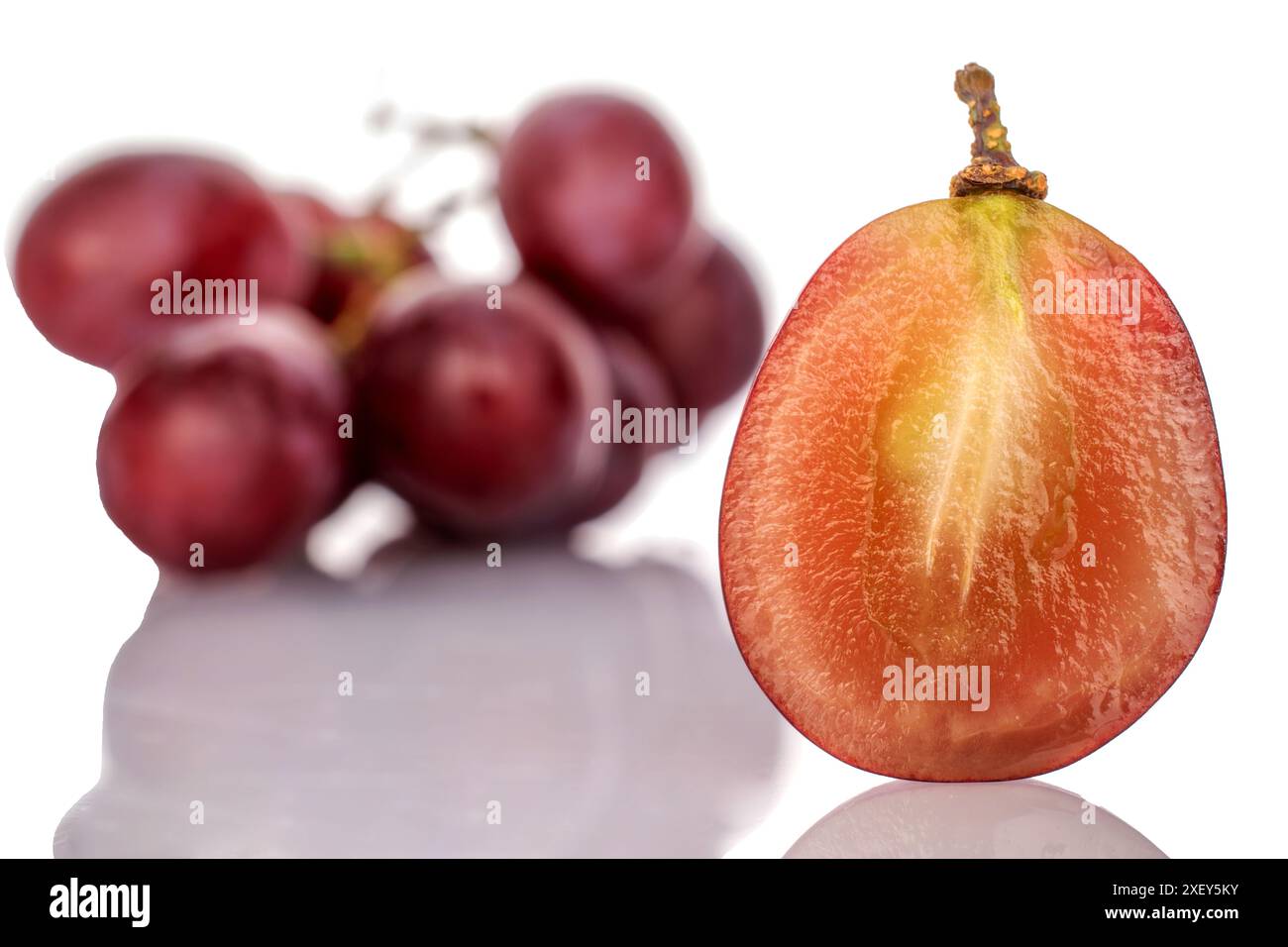
Yes, botanically speaking, grapes are considered true berries. In botanical terms, a berry is a fleshy fruit produced from a single ovary of an individual flower. Grapes meet every scientific requirement for this classification, featuring a thin outer skin (exocarp), a fleshy middle (mesocarp), and an innermost layer (endocarp) that houses the seeds.
While most people associate the term "berry" with small, sweet fruits like strawberries or raspberries, the scientific definition is far more specific and often counterintuitive. In the world of botany, many fruits we call berries do not qualify, while others—like grapes, tomatoes, and even bananas—fit the description perfectly. Understanding why a grape is a berry requires looking past the grocery store aisles and into the reproductive biology of flowering plants.
The Botanical Definition of a Berry
To understand why a grape is a berry, we must first establish what a berry is in the eyes of a botanist. In plant biology, fruits are categorized based on which part of the flower they develop from and the structure of the fruit's wall, known as the pericarp.
The Three Layers of the Pericarp
A true botanical berry is a simple fruit with a succulent pericarp. This pericarp is divided into three distinct layers, all of which are present in a grape:
- Exocarp: This is the outermost layer, commonly referred to as the skin. In grapes, the exocarp is thin and contains various pigments (anthocyanins) that determine the grape's color, ranging from pale green to deep purple.
- Mesocarp: This is the fleshy, juicy middle layer that makes up the bulk of the fruit. In grapes, this area is rich in water, sugars, and organic acids.
- Endocarp: This is the innermost layer that surrounds the seeds. In a true berry, the endocarp is soft and fleshy rather than stony or leathery. If you have ever bitten into a grape, you’ll notice there is no hard "pit" or "core" immediately surrounding the seeds; the seeds are simply embedded within the pulp.
Development from a Single Ovary
Another critical requirement for a fruit to be classified as a berry is that it must develop from a single ovary of a single flower. Many fruits that we colloquially call berries, such as blackberries or raspberries, develop from a single flower that has multiple ovaries. These are classified as aggregate fruits. Grapes, however, develop from one flower with one ovary, cementing their status as true berries.
Why the Confusion Exists: Culinary vs. Botanical Terms
The disconnect between botanical science and common language is a frequent source of confusion. Language evolves based on how we interact with objects, and for most people, "berry" is a culinary term, not a scientific one.
The Culinary Definition
In a kitchen or a grocery store, a "berry" is generally defined as any small, edible fruit that is juicy, round, and usually sweet or tart. This definition is based on size and usage rather than reproductive anatomy. Under this umbrella, we include:
- Strawberries: (Botanically an "accessory fruit" because the fleshy part is actually the receptacle of the flower, not the ovary).
- Raspberries and Blackberries: (Botanically "aggregate fruits" composed of many tiny drupelets).
- Blueberries: (Actually a true botanical berry, aligning with both definitions).
- Grapes: (While small and sweet, they were historically treated differently in culinary contexts, often grouped with "table fruits" or "vine fruits").
The Botanical "Imposters"
It is a striking botanical irony that the fruits with "berry" in their name—strawberries, raspberries, and blackberries—are not berries at all. Meanwhile, the botanical world classifies the following as berries, even though we rarely call them that in daily life:
- Bananas: They develop from a single ovary and have a fleshy pericarp (though the "seeds" in commercial varieties are tiny and sterile).
- Tomatoes: These are the quintessential botanical berries, sharing an almost identical structure to grapes.
- Watermelons and Pumpkins: These are a specialized type of berry called a "pepo," which has a hard, thick rind (exocarp).
- Oranges and Lemons: These are modified berries called "hesperidia," characterized by a leathery rind and juice-filled sections.
The Anatomy of a Grape: A Closer Look
By examining the physical structure of a grape, we can see the "berry" checklist in action. As of 2026, modern imaging and genetic sequencing continue to support these classical morphological classifications.
Skin and Color (Exocarp)
The skin of the grape is more than just a container. It provides protection against pathogens and dehydration. In the wine industry, the exocarp is the primary source of tannins and color. Because grapes are true berries, the skin is fused to the flesh, although in some varieties (like Concord grapes), the skin can be easily slipped off.
The Flesh (Mesocarp and Endocarp)
The interior of the grape is a high-pressure environment filled with vacuoles containing sugary fluid. Because both the mesocarp and endocarp are fleshy, the entire interior is edible. This distinguishes the grape from a "drupe" (like a peach or a cherry), where the endocarp hardens into a woody pit to protect the seed.
Seeds and Reproduction
A standard grape contains one to four seeds. In botanical terms, the presence of seeds inside a fleshy interior derived from a single ovary is the "smoking gun" for berry classification. Even in the case of seedless grapes, the fruit remains a berry.
Seedless Grapes: Are They Still Berries?
A common question is whether seedless grapes still count as berries since they lack the functional seeds usually found within the endocarp. The answer is yes.
Stenospermocarpy
Most seedless grapes available in 2026 are produced through a process called stenospermocarpy. In these varieties, pollination and fertilization still occur, which triggers the fruit to grow. However, the embryos soon abort, leaving behind only tiny, soft traces of seeds that are barely noticeable when eaten. Because the fruit still develops from a single ovary and maintains its fleshy three-layer structure, it remains a botanical berry.
Parthenocarpy
Some other seedless fruits develop through parthenocarpy, where the fruit grows without any fertilization at all. Regardless of the method used to achieve seedlessness, the botanical classification of the plant species remains unchanged. A Vitis vinifera (common grape vine) is a berry-producing plant by its very nature.
Comparing Grapes to Other Common Fruits
To better visualize where grapes sit in the world of fruit classification, the following table compares grapes with other fruits that are frequently misunderstood.
| Fruit | Common Name Category | Botanical Classification | Reason for Classification |
|---|---|---|---|
| Grape | Berry | True Berry | Developed from a single ovary; fleshy throughout. |
| Blueberry | Berry | True Berry | Developed from a single ovary; fleshy throughout. |
| Strawberry | Berry | Accessory Fruit | Fleshy part is the flower's receptacle; "seeds" are the actual fruits (achenes). |
| Raspberry | Berry | Aggregate Fruit | Developed from multiple ovaries in a single flower. |
| Tomato | Vegetable (Culinary) | True Berry | Developed from a single ovary; fleshy throughout. |
| Peach | Stone Fruit | Drupe | Has a hard, woody endocarp (the pit) surrounding the seed. |
| Apple | Pome | Pome | Developed from the fusion of the ovary and the floral tube (hypanthium). |
| Banana | Fruit | True Berry | Developed from a single ovary; has a fleshy pericarp. |
The Taxonomy of Grapes (Vitis)
Grapes belong to the genus Vitis, which consists of about 60 to 80 species of vining plants. The most famous is Vitis vinifera, the European grape used for the vast majority of the world's wine production.
Evolutionary Advantage of the Berry Structure
Why did grapes evolve to be berries? The fleshy, sweet nature of the berry is an evolutionary strategy for seed dispersal. In the wild, birds and mammals are attracted to the colorful exocarp and high-energy mesocarp. They consume the berry whole, and the seeds—protected by their own tough coatings—pass through the animal's digestive tract and are deposited in a new location, often accompanied by a small amount of "fertilizer."
The "true berry" structure is an efficient way to pack seeds into an attractive, nutrient-dense package that ensures the survival of the next generation of vines.
Economic and Culinary Importance in 2026
As of 2026, grapes remain one of the most economically significant fruit crops globally. Their classification as a berry is not just a point of trivia; it affects how they are studied, bred, and processed.
Wine Production
The berry structure of the grape is essential to winemaking. The ratio of skin (exocarp) to juice (mesocarp) determines the concentration of flavor and tannins. Because grapes are berries, winemakers can use the entire fruit, often pressing the berries to extract the juice while leaving the skins for maceration in red wine production.
Table Grapes and Raisins
The succulent nature of the grape berry makes it an ideal fresh snack. When grapes are dried to become raisins, the water in the mesocarp evaporates, concentrating the sugars and nutrients. This transformation is only possible because of the high water content inherent in the berry structure.
Technical Specifications: Is a Grape an "Epigynous" or "Hypogynous" Berry?
For those seeking deeper botanical insight, grapes are generally considered superior berries (developed from a hypogynous flower). This means the ovary is situated above the attachment point of the other floral parts (petals, sepals).
In contrast, "epigynous" berries (like blueberries or cranberries) develop from an inferior ovary, where the floral parts are attached at the top of the fruit. This is why you see the "scar" of the calyx (the little crown) on the bottom of a blueberry, whereas a grape is smooth at the base where it was attached to the stem (pedicel).
Common Mistakes in Classification
When discussing whether grapes are berries, several common misconceptions often arise:
- The Size Fallacy: Many believe berries must be small. However, pumpkins are berries (pepos), proving that size has nothing to do with the botanical definition.
- The Cluster Confusion: Because grapes grow in bunches (clusters), some assume they are "multiple fruits" like pineapples. They are not. Each individual grape in the cluster comes from a separate flower, but each of those flowers has only one ovary, making each individual grape a simple berry.
- The "Nut" Misconception: In some rare contexts, people mistake the seeds of grapes for nuts. Botanically, nuts are dry fruits with a hard shell, whereas grape seeds are just components within the fleshy berry.
Frequently Asked Questions
Are all grapes berries?
Yes, all species and varieties of grapes—including green (white), red, black, seeded, and seedless—are botanically classified as berries. They all share the same basic reproductive structure originating from a single ovary.
If a grape is a berry, is a watermelon a grape?
No. While both are berries, they belong to different families and have different specific classifications. A watermelon is a "pepo," a type of berry with a hard rind belonging to the Cucurbitaceae family. A grape is a simple fleshy berry belonging to the Vitaceae family.
Why don't we call grapes "grapes-berries" like we do with blueberries?
This is a matter of linguistics and history. The word "grape" comes from the Old French "grape," meaning a bunch or cluster of fruit. The term became the standard name for the fruit long before botanical classifications were standardized. Blueberries, being native to North America and used by English speakers, retained the descriptive "berry" suffix.
Does the skin of a grape make it a different kind of fruit?
No. The skin is simply the exocarp layer of the berry. Some berries have tough skins (like grapes), while others have very delicate skins (like tomatoes), but they all fall under the same botanical category as long as they are fleshy and derived from a single ovary.
Can a fruit be a berry but not a grape?
Absolutely. The category of "berry" is broad. It includes tomatoes, bananas, peppers, eggplants, and kiwis. Grapes are just one specific type of fruit within the massive botanical category of berries.
Recommendation for Students and Enthusiasts
If you are studying botany or simply interested in food science, the best way to understand these definitions is to perform a "fruit dissection." Take a grape and a strawberry. Notice how the grape has its seeds inside a uniform fleshy body (a berry), whereas the strawberry has its "seeds" (achenes) on the outside of a fleshy base. This hands-on comparison makes the distinction between botanical facts and culinary labels immediately clear.
For those interested in the most current agricultural data of 2026, refer to the USDA National Agricultural Statistics Service or the International Society for Horticultural Science (ISHS) for detailed reports on grape morphology and global production standards.