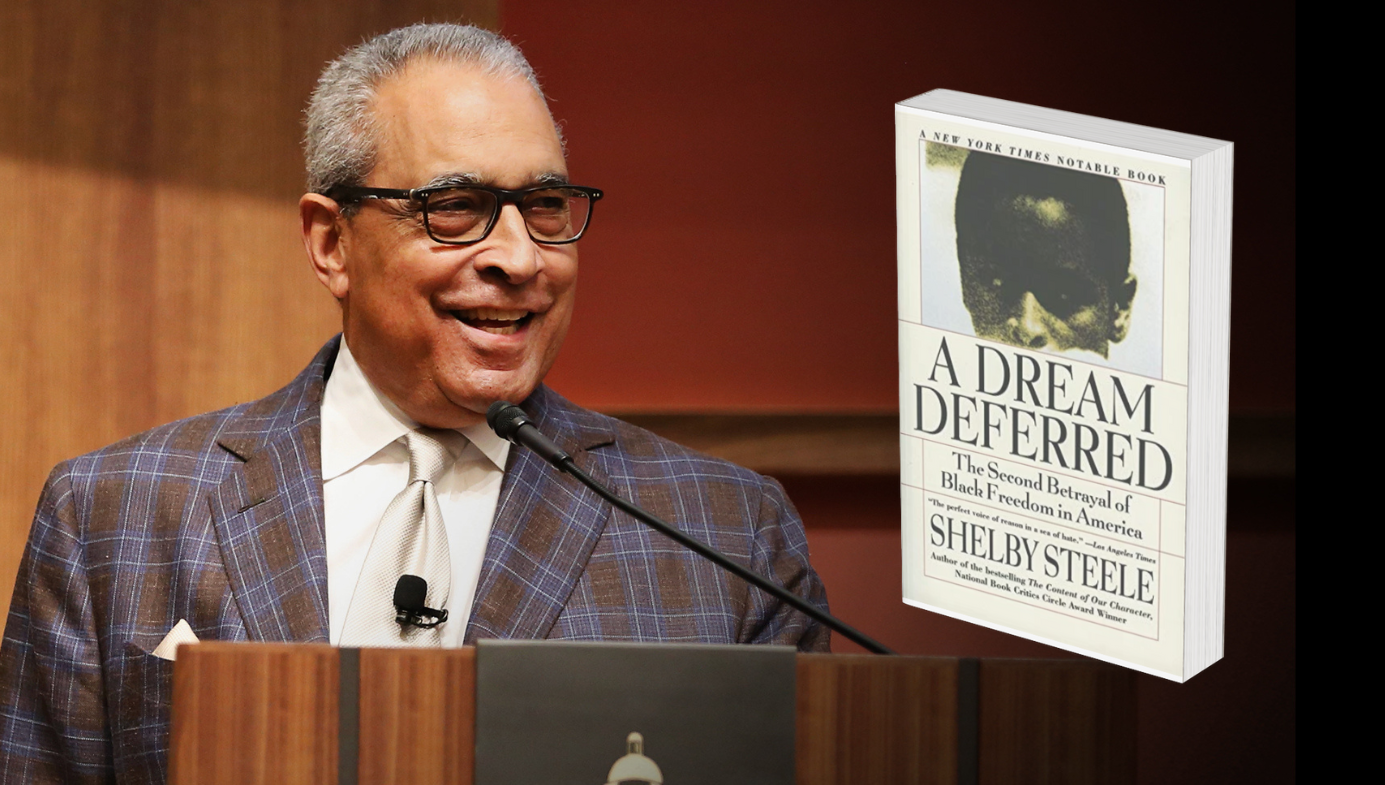
Marshall Frady’s A Dream Deferred: The Second Betrayal of Black Freedom remains the most comprehensive and psychologically penetrating biography of Reverend Jesse Jackson ever published. Originally released in the mid-1990s, the book offers an exhaustive examination of Jackson’s rise from a disenfranchised youth in the Jim Crow South to a global political icon, capturing the complexities of his character and his pivotal role in American civil rights history.
As of 2026, nearly three decades since its initial publication, Frady’s work continues to serve as the essential primary text for scholars, historians, and political enthusiasts seeking to understand the man who twice sought the presidency of the United States and successfully redefined the "Rainbow Coalition" in the American political consciousness. Unlike standard political biographies that focus solely on legislative wins or campaign statistics, A Dream Deferred is a literary exploration of Jackson’s soul, his contradictions, and his unyielding quest for a place in history.
The Significance of Marshall Frady’s Narrative
Marshall Frady was not merely a biographer; he was a veteran journalist of the American South who covered the Civil Rights Movement for The New Yorker and Life magazine. His deep familiarity with the cultural and religious landscape of the South allowed him to approach Jesse Jackson with a level of nuance that few Northern journalists could achieve.
In A Dream Deferred, Frady utilizes a style often associated with New Journalism—rich in descriptive detail, psychological speculation, and a narrative drive that mirrors a novel. This approach is necessary because Jesse Jackson himself is a larger-than-life figure whose life story is intrinsically tied to the grand, often tragic, theater of American race relations. Frady spent years shadowing Jackson, gaining unprecedented access to his inner circle, his family, and the quiet moments between the public spectacles of his various campaigns and negotiations.
The book’s title, borrowed from Langston Hughes’s famous poem "Harlem," suggests that Jackson’s career is both a manifestation of the "dream deferred" and a struggle against the subsequent "betrayals" of the promises made during the 1960s. Frady posits that Jackson’s life is a mirror of the African American experience in the post-King era: a period of significant progress met with equally significant systemic resistance.
Key Themes: Ambition, Identity, and the Shadow of Dr. King
To understand A Dream Deferred, one must understand the three central pillars upon which Frady builds his biography. These themes provide the structure for Jackson’s motivations and the controversies that have occasionally dogged his career.
The Driving Force of Illegitimacy
Frady places significant weight on Jackson’s childhood in Greenville, South Carolina. Born to a teenage mother and a father who lived next door with another family, Jackson grew up with a profound sense of "outsiderness." Frady argues that this early experience of social stigma was the primary engine for Jackson’s relentless ambition. The need to prove his worth—to his father, to his community, and to the nation—became the defining characteristic of his personality.
The Successor Complex
A substantial portion of the biography is dedicated to Jackson’s complex relationship with Dr. Martin Luther King Jr. Frady explores the tension within the Southern Christian Leadership Conference (SCLC), where Jackson was often viewed as a talented but impatient and overly ambitious "young lion." The book provides a detailed, and at times uncomfortable, account of the events following King’s assassination in 1968. Frady analyzes the "bloody shirt" incident—where Jackson appeared on television wearing a turtleneck stained with King’s blood—as a pivotal moment of both genuine grief and a calculated move to position himself as King’s spiritual and political heir.
The Moral vs. The Political
Jackson has always occupied a space between the pulpit and the podium. Frady examines how Jackson used the language of the Black church to mobilize political action, most notably through Operation Breadbasket and later Operation PUSH. The biography details the transition from community organizing to national politics, highlighting how Jackson’s charismatic authority often clashed with the bureaucratic requirements of institutional politics.
Detailed Book Specifications and Historical Context
| Feature | Details of "A Dream Deferred" |
|---|---|
| Full Title | A Dream Deferred: The Second Betrayal of Black Freedom |
| Author | Marshall Frady |
| Original Publication Year | 1996 |
| Page Count | Approximately 512–600 (depending on edition) |
| Subject Matter | Rev. Jesse Jackson's life, political career, and legacy |
| Genre | Biography / Political History / Civil Rights |
| Key Organizations Covered | SCLC, Operation PUSH, Rainbow Coalition |
| Notable Campaigns | 1984 and 1988 U.S. Presidential Runs |
The "Second Betrayal" Explained
The subtitle of the book, The Second Betrayal of Black Freedom, is a critical piece of Frady’s thesis. He suggests that the first betrayal occurred after Reconstruction, when the promises of the 14th and 15th Amendments were systematically dismantled by Jim Crow laws. The "second betrayal" refers to the period following the 1965 Voting Rights Act.
Frady argues that while legal segregation ended, the American political and economic systems failed to provide the structural support necessary for true equity. Jackson is portrayed as the figure who stepped into this vacuum, attempting to force the Democratic Party and the corporate world to honor the "check" Dr. King famously mentioned at the March on Washington. The book chronicles Jackson's efforts to forge a "Rainbow Coalition" of the dispossessed—Black, White, Latino, and rural poor—as a response to this betrayal.
Critical Analysis of the 1984 and 1988 Presidential Campaigns
A biography of Jesse Jackson would be incomplete without a deep dive into his two historic runs for the presidency. Frady provides what many consider the definitive account of these years.
- The 1984 Campaign: Frady describes this as a "missionary journey" rather than a traditional campaign. He details the liberation of Lieutenant Robert Goodman from Syria, a diplomatic coup that vaulted Jackson into the national spotlight, but also covers the devastating "Hymietown" controversy, which Frady treats with journalistic objectivity, showing how it damaged Jackson’s relationship with the Jewish community and exposed the limits of his coalition.
- The 1988 Campaign: Frady illustrates a more disciplined Jackson who won seven primaries and four caucuses. The book captures the excitement of the 1988 Democratic National Convention, where Jackson’s "Keep Hope Alive" speech became a cultural touchstone. Frady’s analysis reveals how Jackson’s success forced the Democratic Party to move toward the center in subsequent years (the "Clintonian" shift), which Frady paradoxically views as another form of the "deferred dream."
Examining the Author’s Perspective
Marshall Frady’s writing style is often described as "Southern Gothic" applied to non-fiction. He uses long, rhythmic sentences and a vocabulary that borders on the baroque. For some readers, this makes the biography a masterpiece of literature; for others, it can feel overly dramatized.
However, Frady’s perspective is crucial because he does not shy away from Jackson’s flaws. He discusses Jackson’s ego, his administrative disorganization, and the "messianic" quality that sometimes led to friction with other civil rights leaders like John Lewis or Andrew Young. Yet, Frady remains deeply sympathetic to the immense burden Jackson carried as the primary symbol of Black political aspiration for over two decades.
How to Utilize this Biography for Research in 2026
In the current landscape of 2026, A Dream Deferred remains a vital resource for several types of research:
- Political Strategy: Jackson’s "Rainbow Coalition" was the precursor to the diverse voting blocs that defined 21st-century elections. Frady’s detailed breakdown of how Jackson organized these disparate groups offers a blueprint (and a cautionary tale) for modern organizers.
- Civil Rights Evolution: The book serves as a bridge between the "Classical" Civil Rights Movement (1954–1968) and the modern era of activism. It helps explain why the issues of the 1980s—economic justice, urban renewal, and voting rights—remain unresolved today.
- Biographical Studies: For those studying the "great man" theory of history versus structuralism, Jackson’s life as presented by Frady is a perfect case study. Did Jackson shape the era, or was he a product of it?
Comparative Works: Jackson in Literature
While A Dream Deferred is the most comprehensive biography, it is often read alongside other works for a balanced perspective:
- "Jesse: The Life and Pilgrimage of Jesse Jackson" by Kenneth O'Reilly: Focuses more on the FBI's surveillance of Jackson and the political mechanics of his career.
- "Straight from the Heart" by Jesse Jackson: Jackson’s own collection of speeches and essays, which provides his voice without the external critique of a biographer.
- "Keep Hope Alive" by Jesse Jackson: A look at the 1988 campaign from the inside.
Compared to these, Frady’s book is the most "human." It looks at the man behind the speeches, the exhaustion behind the energy, and the private vulnerabilities of a public titan.
Frequently Asked Questions
Why is this book called "A Dream Deferred"?
The title is a reference to Langston Hughes’s poem, which asks, "What happens to a dream deferred? Does it dry up like a raisin in the sun... or does it explode?" Frady uses this to frame Jesse Jackson’s career as an attempt to prevent the "explosion" of frustration within the Black community by channeling it into the political process.
Does the book cover Jesse Jackson’s later years?
The original 1996 edition covers Jackson’s life up until the mid-90s. While there have been subsequent printings, the core of the book focuses on his rise through the 1980s. It does not cover his 21st-century activism or his 2021 diagnosis of Parkinson’s disease, though the foundational character traits Frady identifies help explain Jackson's persistence in his later years.
Is the biography authorized by Jesse Jackson?
While not an "authorized" biography in the sense that Jackson had final editorial control, Frady had extensive cooperation from Jackson. This allowed for a level of intimacy and detail that an unauthorized, purely archival biography would lack.
How does Frady handle the controversies surrounding Jackson?
Frady is known for being balanced. He provides the context for controversies—such as Jackson’s relationship with Yasser Arafat or the internal power struggles at the SCLC—allowing the reader to see the motivations behind the actions, even while acknowledging the negative fallout.
Where can I find a copy of "A Dream Deferred" in 2026?
The book remains in print through various publishers and is widely available in university libraries. Digital versions are available on major e-reader platforms. For collectors, the 1996 hardcover edition from HarperCollins is considered the standard for a home library.
Final Recommendation
For anyone seeking to understand the trajectory of American politics and the ongoing struggle for civil rights, Marshall Frady’s A Dream Deferred: The Second Betrayal of Black Freedom is essential reading. It is more than a biography; it is a profound meditation on the American character and the persistent challenge of living up to the nation’s founding ideals. Whether you are a student of history or a political advocate, the insights provided in this volume regarding Reverend Jesse Jackson’s life will offer a deeper understanding of how the past continues to shape our present and future.