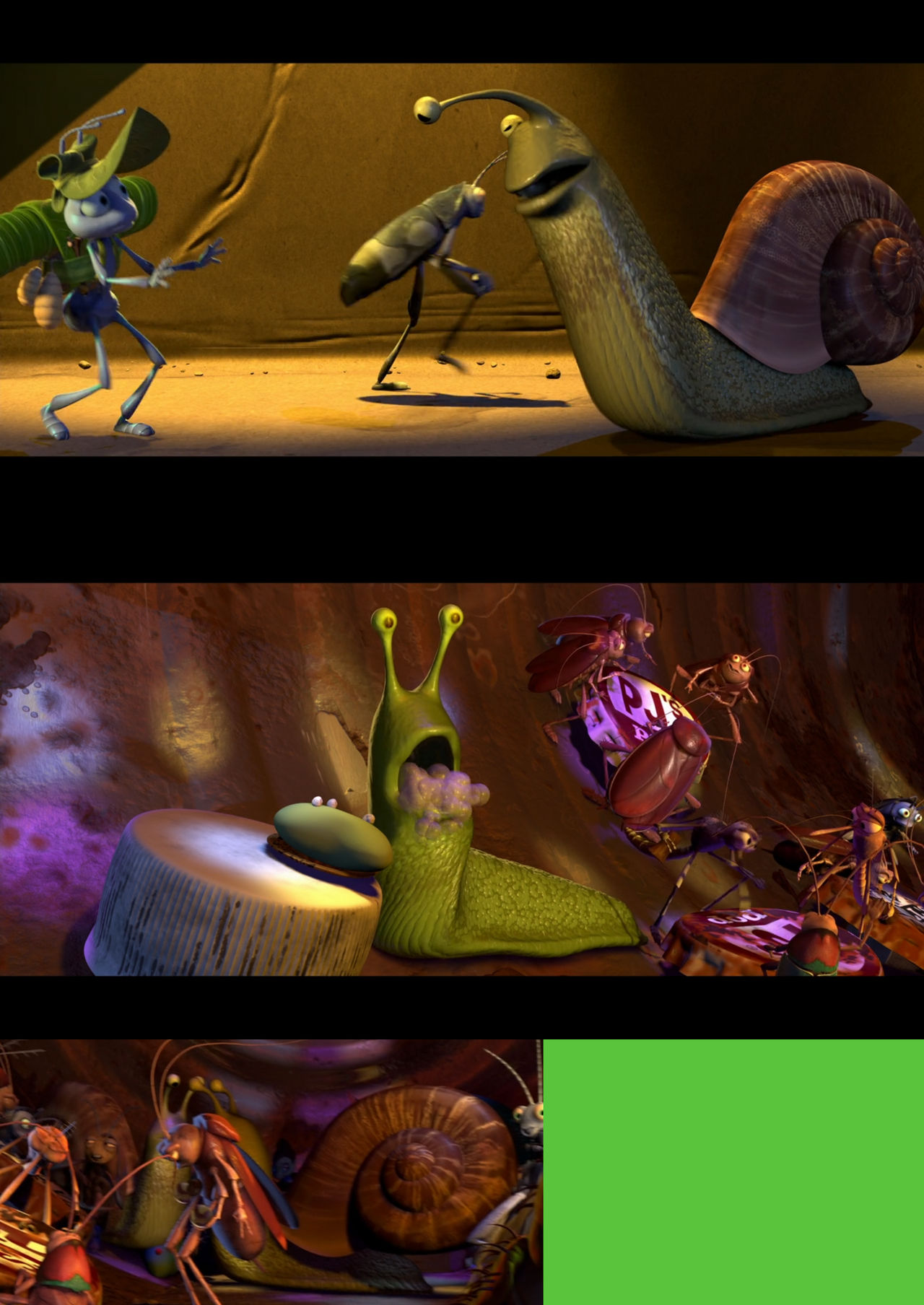
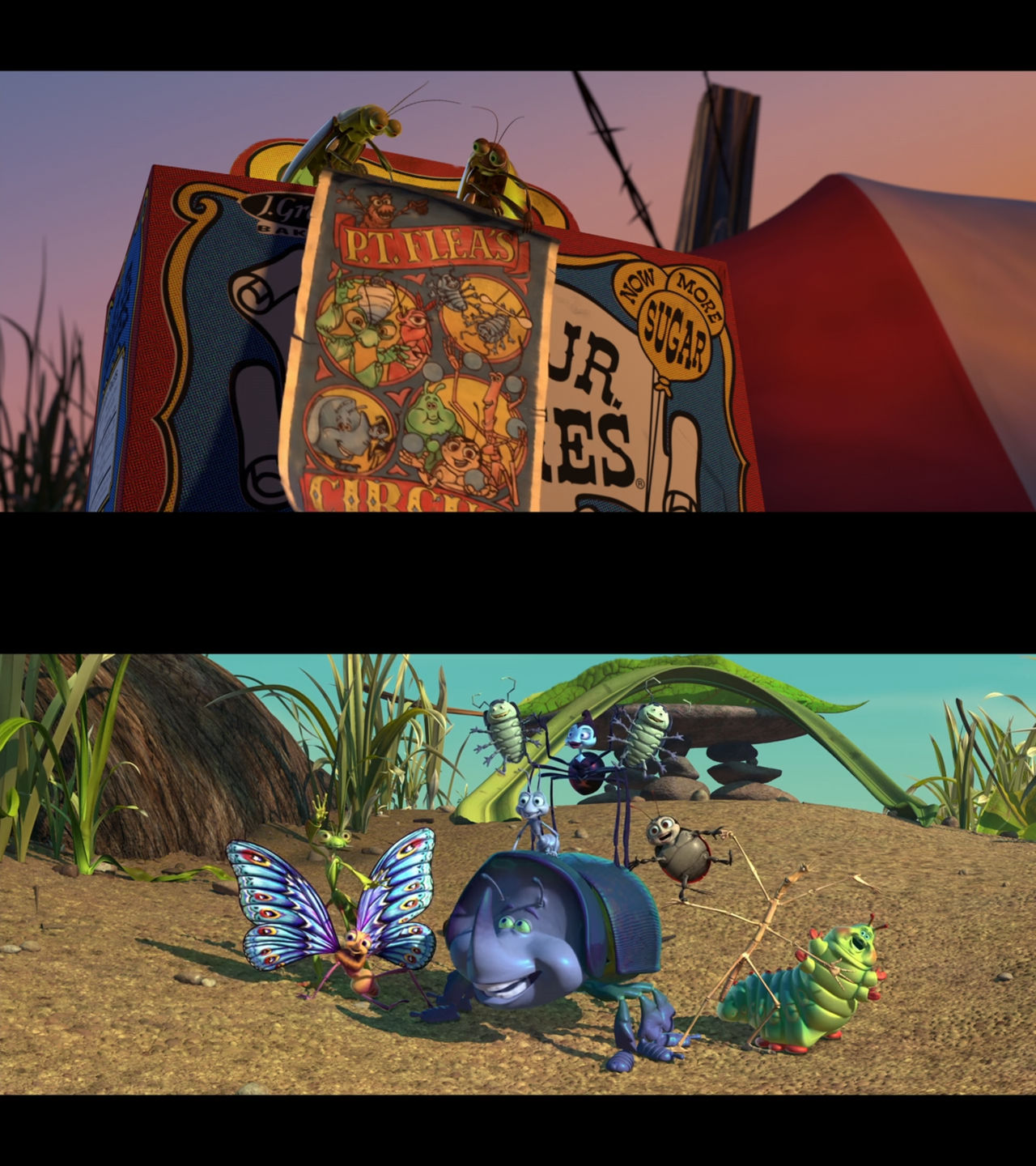
The behind-the-scenes story of Pixar’s A Bug’s Life (1998) reveals a high-stakes era of technical innovation and corporate rivalry. As Pixar’s second feature film, it pioneered organic textures, complex crowd simulations, and the first-ever use of a widescreen aspect ratio in computer animation, solidifying the studio’s dominance in the industry.
Released in the wake of the massive success of Toy Story, Pixar faced what many in Hollywood call the "sophomore slump." The pressure was not merely to create another hit, but to prove that computer-generated imagery (CGI) could handle organic environments—a far cry from the plastic and metallic surfaces of their debut. As we look back from 2026, A Bug's Life remains a masterclass in how a studio leverages technical constraints to fuel creative breakthroughs.
The Technical Leap: Moving Beyond Plastic
When Pixar began production on A Bug's Life, the primary technical hurdle was the move from the "hard" world of toys to the "soft" world of nature. In Toy Story, the limitations of early 3D rendering were masked by the subject matter; toys are naturally shiny and rigid. To tell a story about insects, the team had to invent ways to render translucency, subsurface scattering, and complex organic shapes.
The Innovation of Subsurface Scattering
One of the most significant breakthroughs was the treatment of light. If you hold a leaf up to the sun, you don't just see the surface; you see light passing through it. Pixar’s technical directors worked extensively on what would become known as subsurface scattering. This allowed light to enter an object (like a blade of grass or an ant’s exoskeleton), bounce around, and exit at a different point. This gave the environment a "fleshy" or "organic" feel that was entirely missing from previous CG attempts.
The "Bug's Eye View" Research
To understand the world from a miniature perspective, the production team created a "Bugcam." This was a tiny camera mounted on a LEGO chassis that allowed directors John Lasseter and Andrew Stanton to see what the world looked like from an inch off the ground.
They discovered that at that scale, common objects transform into massive obstacles. A single blade of grass becomes a towering pillar, and a raindrop becomes a lethal projectile. This perspective shift informed every frame of the film, ensuring that the audience felt the scale and danger of the environment.
The Widescreen Revolution in Animation
In 1998, most animated films were produced in the standard 1.85:1 aspect ratio. However, Pixar chose to produce A Bug's Life in 2.35:1 anamorphic widescreen. This was a bold move that had several implications for the production:
- Scope and Scale: The widescreen format allowed for a more "epic" feel, reminiscent of live-action films like The Seven Samurai, which served as a narrative inspiration.
- Crowd Management: It provided the horizontal space necessary to showcase the massive ant colony and the various "circus bugs" simultaneously.
- The Home Video Challenge: Before the era of 16:9 widescreen televisions, films were cropped to 4:3 for VHS and DVD. Rather than simply "letterboxing" the film or using a crude "pan and scan" method, Pixar performed a digital re-composition. They manually moved characters and elements within the frame for the 4:3 version to ensure the storytelling remained intact. This was an unprecedented level of effort for a home video release.
Character Design and the Complexity of Anatomy
Designing the characters for A Bug's Life required a delicate balance between biological accuracy and emotional appeal. Real insects can be visually jarring or even frightening to some audiences. The Pixar team had to "humanize" the bugs while retaining their essential "bug-ness."
Simplification of Form
In reality, ants have six legs. However, the animators found that animating six legs plus two arms made the characters look cluttered and "too busy" on screen. The creative decision was made to give the main characters four limbs (two arms, two legs) to make them more relatable and easier to animate, while some background characters retained more insectoid traits.
Facial Expression and Eyes
Unlike the realistic, compound eyes found in nature, the characters in A Bug's Life were given large, expressive eyes with pupils. This allowed the audience to track where the characters were looking and feel their emotions—a critical component for the "everyman" journey of the protagonist, Flik.
The Famous Rivalry: A Bug's Life vs. Antz
The production of A Bug's Life is inseparable from the public feud between Pixar (under Steve Jobs and John Lasseter) and DreamWorks (under Jeffrey Katzenberg). Katzenberg, a former Disney executive, launched DreamWorks and announced Antz shortly after Pixar’s project was underway.
The result was a "race to the finish." DreamWorks accelerated the production of Antz to beat Pixar to the theaters. While Antz focused on a more mature, cynical tone with woody colors and a Woody Allen-led cast, Pixar leaned into a vibrant, colorful, and family-oriented epic. The competition pushed both studios to their limits, but it also created a legendary rift in Hollywood history. According to Pixar leadership, the similarity in themes was a case of industrial espionage, a claim Katzenberg consistently denied.
Advanced Crowd Simulation and Software
The "Ant Colony" required Pixar to render thousands of individual characters in a single shot. At the time, their proprietary software, RenderMan, was being pushed to its absolute breaking point.
To manage the crowds, technical directors developed simplified versions of the ant model for background use. These "low-res" ants used less memory but could still follow basic behavioral commands. This allowed the studio to create a sense of a living, breathing civilization without the computers crashing from the sheer volume of polygons.
| Feature | Toy Story (1995) | A Bug's Life (1998) | Significance |
|---|---|---|---|
| Primary Surfaces | Plastic, Wood, Metal | Translucent Leaves, Dirt, Organic Skin | Proved CG could handle nature. |
| Aspect Ratio | 1.85:1 | 2.35:1 (Widescreen) | First widescreen CG feature. |
| Crowd Tech | Limited (Soldiers) | Thousands of individual ants | Milestone in crowd simulation. |
| Lighting | Basic Ray Tracing | Global Illumination & Subsurface Scattering | Enhanced realism and depth. |
| Frames Rendered | ~114,000 | ~132,000 | Increased complexity per frame. |
The Voice Cast and Sound Design
The casting of A Bug's Life was pivotal in grounding the film's humor. Dave Foley provided the perfect "earnest dreamer" voice for Flik, while Kevin Spacey brought a genuine sense of menace to the villainous grasshopper, Hopper. The late Joe Ranft, a Pixar legend, voiced Heimlich the caterpillar, providing some of the most enduring comic relief in the studio's history.
The Impact of Randy Newman
Randy Newman returned after Toy Story to compose the score. His work on A Bug's Life moved away from the Americana feel of Woody and Buzz and toward an orchestral, "big adventure" sound. The score earned an Academy Award nomination and helped elevate the film from a simple cartoon to a cinematic event.
The Innovative "Outtakes" (Bloopers)
One of the most memorable aspects of the A Bug's Life behind-the-scenes process was the creation of the animated "outtakes." To humanize the digital characters, Pixar's animators "staged" mistakes, such as characters forgetting their lines, tripping, or the "camera" bumping into equipment.
These were not actual rendering errors but were meticulously animated sequences. They were so popular that Pixar eventually released a second set of outtakes during the film's theatrical run to encourage repeat viewings. This tradition continued in several subsequent Pixar films, helping to establish the studio's unique brand of meta-humor.
Legacy and Influence on the Industry
As of 2026, the influence of A Bug's Life is still felt in the way studios approach environmental rendering. The film was the first to show that CG could be "beautiful" in a traditional, painterly sense, rather than just "impressive" in a technical sense.
It also served as a training ground for the directors and producers who would go on to create Finding Nemo, Wall-E, and Up. The lessons learned in managing the 2.35:1 ratio and complex crowd dynamics paved the way for the massive scale of modern animated blockbusters.
Current Accessibility
For those looking to explore these behind-the-scenes details further, the official Pixar website and Disney+ offer extensive "making-of" documentaries. These resources include original concept art, early test renders of the ants, and interviews with the original creative team.
Frequently Asked Questions
Why did Pixar choose bugs for their second movie?
After Toy Story, Pixar needed a subject that played to the strengths of CG at the time. While they were moving toward organic shapes, insects still have somewhat "shell-like" exteriors that are easier to render than human skin or long fur. Additionally, the world of insects allowed for high-concept storytelling where small everyday objects could become massive plot devices.
Did Pixar really have a rivalry with DreamWorks?
Yes, the rivalry between A Bug's Life and Antz is one of the most famous in animation history. John Lasseter was reportedly devastated when he learned that Jeffrey Katzenberg was producing a similar film, as Lasseter had previously shared his ideas with Katzenberg while both were at Disney.
How did they make the ants look different from one another?
While the base models were similar to save on rendering power, the animators used "variations" in color, size, and clothing (such as hats or tools) to give the illusion of a diverse population. For main characters, the silhouettes were kept distinct so the audience could identify them instantly.
Are the "outtakes" real mistakes?
No, the outtakes seen at the end of the film were completely scripted and animated. They were intended to parody the blooper reels common in live-action films of the 1990s and to show off the "acting" capabilities of the digital characters.
What was the "Bugcam" and did they use it for the whole movie?
The "Bugcam" was a research tool—a tiny camera used to film real-world environments from an insect's height. It was used during pre-production to help the artists understand how light, shadows, and perspective work at that scale. It was not used to film the actual movie, which was entirely digital.
Final Recommendation
For students of animation or fans of the studio, revisiting the behind-the-scenes material for A Bug's Life is essential. It represents the exact moment Pixar transitioned from a "tech company that makes shorts" to a "film studio that defines a medium." If you are watching on a modern 4K display in 2026, pay close attention to the translucency of the leaves and the complexity of the dirt on the ground—these were the frontiers of digital art in the late 90s, and they hold up remarkably well today.