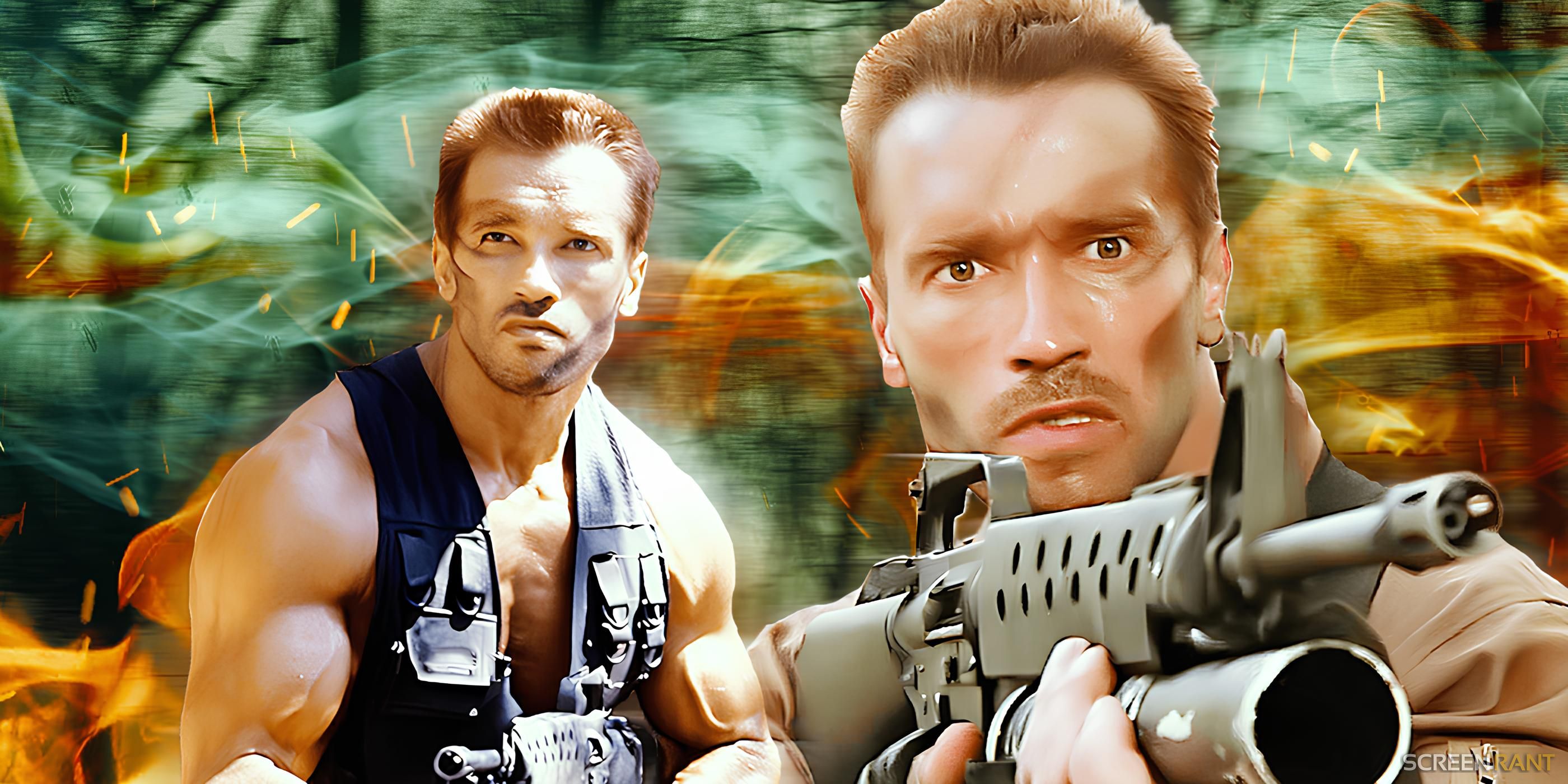
Arnold Schwarzenegger action movies define the modern blockbuster through a combination of peak physical presence, iconic one-liners, and collaborations with visionary directors. From the fantasy roots of Conan to the sci-fi mastery of The Terminator, his filmography represents the evolution of high-stakes heroism and remains a cornerstone of global entertainment history.
The filmography of Arnold Schwarzenegger is more than just a collection of high-octane sequences; it is a blueprint for the evolution of the action genre from the early 1980s through the mid-1990s and into the modern era. As we look back from 2026, his body of work stands as a testament to the transition from the "hard body" era of cinema to the high-concept, tech-driven spectacles that dominate the box office today. To understand these films is to understand the mechanics of Hollywood stardom, the integration of special effects, and the cultural shift toward the invincible yet charismatic protagonist.
The Foundation: Sword, Sorcery, and the Rise of a Star
Before he was an international icon, Schwarzenegger had to bridge the gap between professional bodybuilding and mainstream cinema. His breakthrough in Conan the Barbarian (1982) provided the perfect vehicle. Directed by John Milius, the film leaned into Schwarzenegger’s physical stature while utilizing a script that prioritized stoic action over complex dialogue. This wasn't just a fantasy film; it was an exercise in world-building where the protagonist’s physique served as the primary narrative engine.
Schwarzenegger’s portrayal of Conan established the "Arnold Archetype": a man of immense power, often an outsider, who triumphs through sheer force of will and physical dominance. The sequel, Conan the Destroyer (1984), shifted toward a more family-friendly adventure tone, but the foundation was set. He had proven that he could carry a major production, leading directly to the most pivotal moment in his career: meeting James Cameron.
The Sci-Fi Revolution: The Terminator and Total Recall
While Conan made him a star, The Terminator (1984) made him a legend. James Cameron’s low-budget sci-fi horror film utilized Schwarzenegger’s rigidity and stature to create one of the most terrifying villains in cinema history. The role of the T-800 was a masterclass in economy of movement. By playing an emotionless killing machine, Schwarzenegger turned his perceived weakness—a thick Austrian accent and a massive frame—into his greatest asset.
The success of The Terminator birthed a franchise that would span decades, but it also signaled a shift in Arnold Schwarzenegger action movies toward high-concept science fiction. This trend continued with Paul Verhoeven’s Total Recall (1990). Based on a Philip K. Dick short story, the film challenged the audience's perception of reality. Unlike the straightforward heroics of earlier films, Total Recall placed Schwarzenegger in a psychological labyrinth. The film was also a technical marvel, winning a Special Achievement Academy Award for its groundbreaking visual effects, which blended practical animatronics with early CGI.
In 1991, Terminator 2: Judgment Day (T2) redefined what an action movie could be. With a budget exceeding $100 million—a staggering sum at the time—T2 revolutionized digital effects with the liquid-metal T-1000. Schwarzenegger’s transition from the villain of the first film to the protector in the second mirrored his real-world rise to "America’s Hero," further cementing his dominance at the global box office.
The Peak of the Action-Hero Era: Predator and Commando
If the 1980s were defined by the rivalry between Schwarzenegger and Sylvester Stallone, Commando (1985) was Arnold's definitive entry into the "one-man army" subgenre. The film is characterized by its high body count and the introduction of the "punny" one-liner. These quips—delivered after a kill—became a signature element of Schwarzenegger’s brand, humanizing the hyper-masculine hero with a sense of absurd humor.
However, it was Predator (1987) that showcased the actor’s ability to work within an ensemble. Directed by John McTiernan, Predator began as a traditional military action film but pivoted into a survival horror story. This film is often cited by critics as one of the best-constructed action movies ever made. It deconstructed the invincibility of the 80s action hero by placing Schwarzenegger’s character, Dutch, against an extraterrestrial threat that was physically superior, forcing the hero to rely on ingenuity and primitive tactics rather than just firepower.
High-Budget Spectacle and Satire: True Lies and Last Action Hero
By the early 1990s, Schwarzenegger was the highest-paid actor in the world. He reunited with James Cameron for True Lies (1994), an action-comedy that functioned as a high-stakes James Bond parody. The film balanced massive set pieces—including a famous sequence involving a Harrier Jump Jet—with a domestic comedy plot. True Lies demonstrated Schwarzenegger’s range, proving he could handle romantic chemistry and comedic timing as effectively as a machine gun.
However, not every experiment was a commercial hit. Last Action Hero (1993) was a meta-commentary on the action genre itself. While it initially struggled at the box office due to stiff competition from Jurassic Park, it has since gained a significant cult following. The film explored the tropes of Arnold Schwarzenegger action movies from the inside, featuring a young boy who is transported into a fictional world where heroes are invincible and explosions are constant. From a 2026 perspective, Last Action Hero feels ahead of its time, anticipating the self-referential nature of modern superhero cinema.
Comparative Technical Analysis of Key Films
To understand the scope of his career, it is helpful to look at the directors and production metrics that shaped his most influential work. The following table highlights the diversity of his action filmography.
| Film Title | Release Year | Director | Primary Sub-genre | Significant Achievement |
|---|---|---|---|---|
| Conan the Barbarian | 1982 | John Milius | Fantasy / Adventure | Established the "Bodybuilder as Hero" archetype. |
| The Terminator | 1984 | James Cameron | Sci-Fi / Horror | Defined the "Indestructible Villain" trope. |
| Commando | 1985 | Mark L. Lester | Military Action | Peak of the 80s one-man-army subgenre. |
| Predator | 1987 | John McTiernan | Sci-Fi / Action | Deconstructed the hyper-masculine hero. |
| Total Recall | 1990 | Paul Verhoeven | Sci-Fi / Thriller | Revolutionary practical and digital effects. |
| Terminator 2 | 1991 | James Cameron | Sci-Fi / Action | First major use of realistic CGI for a main character. |
| True Lies | 1994 | James Cameron | Action / Comedy | Successful blend of domestic comedy and high-stakes action. |
| The Last Stand | 2013 | Kim Jee-woon | Western / Action | Marked his return to solo action after politics. |
The Return: Post-Political Action and Legacy
After serving two terms as the Governor of California (2003–2011), Schwarzenegger returned to the screen. His comeback began with cameos in The Expendables series, which united the legends of the 80s action era. This period of his career was marked by a shift toward roles that acknowledged his age while maintaining his formidable presence.
In films like The Last Stand (2013) and Escape Plan (2013), he played older, more weathered characters. The most notable performance of his later career occurred in Maggie (2015), a low-budget zombie drama that focused on his dramatic acting rather than his physical prowess. However, the pull of the action genre remained strong. The Terminator franchise saw his return in Terminator Genisys (2015) and Terminator: Dark Fate (2019), where he played an aging T-800, exploring the concept of a machine that had learned to be human.
By 2026, Schwarzenegger has also transitioned into the world of streaming. His Netflix series FUBAR brought the True Lies dynamic to a serialized format, proving that the appetite for "Arnold-style" action remains high among both older fans and new generations.
Analyzing the "Arnold Action" Style
What separates Arnold Schwarzenegger action movies from those of his contemporaries like Bruce Willis or Mel Gibson? It is the intersection of three specific elements:
- Iconography over Realism: Schwarzenegger movies rarely aim for gritty realism. They are operatic and larger than life. The weapons are bigger, the explosions are brighter, and the stakes are often global or even universal.
- The Linguistic Signature: His accent became a tool for branding. By delivering catchphrases with a specific cadence, he made his characters instantly recognizable. This created a sense of familiarity across different roles, whether he was playing a robot from the future or a Russian police officer in Red Heat.
- Physical Presence as a Visual Effect: Before the advent of ubiquitous CGI, Schwarzenegger’s body was the special effect. His transition from bodybuilding to acting changed the visual standards for male stars in Hollywood, a legacy that persists in the physique-focused requirements of modern superhero roles.
The influence of these films extends beyond the box office. They influenced video games (the Contra and Duke Nukem series are heavily indebted to his films), toy lines, and the very structure of the summer blockbuster.
Frequently Asked Questions
Which Arnold Schwarzenegger action movie had the highest body count?
Statistically, Commando (1985) is often cited as having the highest body count for Schwarzenegger’s character, John Matrix. In the film's climactic final act, Matrix eliminates dozens of enemies single-handedly. However, in terms of scale, Terminator 2: Judgment Day involves far more implied destruction, though his character is programmed not to kill humans in that specific installment.
Did Schwarzenegger do his own stunts in his action films?
While Schwarzenegger performed many of his own physical feats, especially in his earlier roles where his physique was a primary selling point, he worked with seasoned stunt doubles for high-risk maneuvers. In The Terminator and Conan, he did a significant portion of the work, but as he moved into high-budget spectacles like True Lies, professional stunt teams handled the most dangerous vehicle and aerial sequences.
What is the most critically acclaimed Schwarzenegger action movie?
Based on critical consensus and historical impact, The Terminator (1984) and Terminator 2: Judgment Day (1991) are generally considered his best work. Predator (1987) also maintains a near-perfect reputation among genre fans for its pacing and suspense. Total Recall (1990) is frequently praised for its visionary direction and production design.
How did his bodybuilding background affect his action career?
His background gave him a unique "presence" that required directors to frame shots differently. It also helped him land roles that required an "inhuman" or "superhuman" look, such as the T-800 or Conan. His discipline in the gym translated to a high level of professionalism on set, particularly during the grueling shoots for films like Predator, which took place in harsh jungle conditions.
Are there any upcoming Arnold Schwarzenegger action movies in 2026?
As of 2026, Schwarzenegger has largely focused on his television projects and philanthropic efforts, but he continues to be linked to potential sequels and indie action-thrillers. His work on FUBAR has been his primary action output in recent years, though he frequently expresses interest in returning to the screen for legacy projects if the script meets his standards for "the right kind of action."
Recommendation for Viewers
To truly appreciate the evolution of the genre, viewers should watch his filmography in chronological blocks. Start with Conan the Barbarian to see the raw physical power of the early 80s, move to Predator for the peak of ensemble action, and conclude with Terminator 2: Judgment Day to witness the birth of the modern tech-heavy blockbuster. This progression provides a masterclass in how a single individual can shape the aesthetic and commercial trajectory of an entire industry. For those interested in the technical aspects of filmmaking, Box Office Mojo and IMDb provide extensive data on the budgets and reception that defined his career.