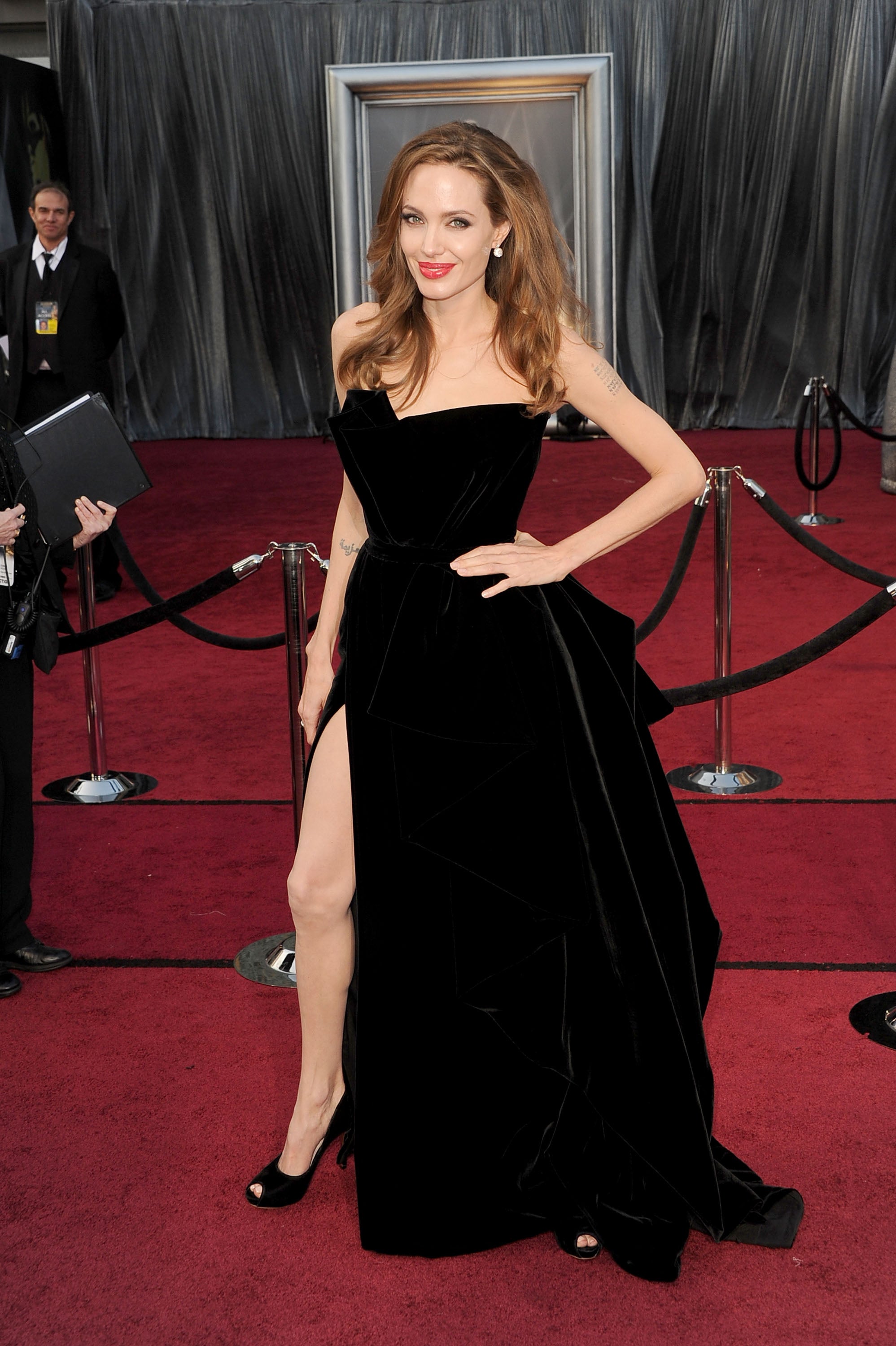
The 84th Academy Awards, held in 2012, cemented a specific fashion moment in pop culture history: Angelina Jolie’s appearance in a black velvet Atelier Versace gown featuring a daring, high-reaching leg slit. This look became a definitive red-carpet benchmark, transforming how evening wear with high slits is perceived, styled, and constructed for maximum visual impact in both luxury and accessible fashion.
The Origin and Anatomy of the Look
The gown that sparked a global conversation was designed by Donatella Versace. It was constructed from black silk velvet, featuring a structured bustier and a dramatic side-swept train. The defining feature was a thigh-high slit that appeared to be integrated into the architectural drape of the skirt.
From a design perspective, the garment’s success relied on the interplay between the heavy, matte texture of the velvet and the fluid, revealing nature of the slit. Unlike a standard evening gown, where a slit might be a subtle utility feature for movement, this design choice served as a primary visual element. The "leg-pose" captured on the red carpet highlighted that the slit was not merely a decorative detail but a dynamic component that demanded a specific interaction between the wearer and the garment.
Engineering the High-Slit Gown
For those looking to recreate or understand the engineering behind a high-slit dress, technical precision is paramount. Achieving the "Jolie effect"—where the dress stays in place while revealing the leg—requires more than just a deep cut in the fabric.
- Weighting and Stabilization: A high-slit gown often requires internal stabilization. If the fabric is too light, the slit will flap uncontrollably; if it is too heavy, like the original velvet, it needs internal support (such as horsehair braid or hidden weights) at the hem to ensure the fabric falls back into its intended silhouette after movement.
- The Pivot Point: The starting point of the slit is structurally critical. In couture tailoring, the seam where the slit begins must be reinforced—often with a small bar tack or a hidden gusset—to prevent the seam from ripping under tension as the wearer walks.
- Internal Underpinnings: When a slit reaches the mid-thigh or higher, traditional undergarments become visible. This necessitates the use of specialized hosiery or seamless, high-cut shapewear that matches the wearer's skin tone to maintain the illusion of an unbroken line.
Styling for Impact and Function
Wearing a dress with an extreme slit involves more than choosing the right footwear. It requires an understanding of balance and proportion.
When the gown features a dramatic slit, the shoes become a central accessory. In the 2012 instance, the choice of a classic, neutral-toned platform pump served to elongate the leg without distracting from the gown’s architectural lines. When selecting footwear for a high-slit dress, consider the following:
- Heel Height: The height of the heel dictates the angle of the leg. Higher heels naturally flex the calf muscle, which enhances the visual drama of the slit.
- Minimalism: Avoid shoes with excessive ankle straps, as they visually "cut" the leg, shortening the silhouette and undermining the purpose of the high slit.
- Balance: If the slit is on one side, ensure the bodice is balanced. A strapless or asymmetrical neckline, as seen on the Versace original, often provides the necessary contrast to the exposed leg.
Comparison of High-Slit Fabrications
Different materials react differently to a high-slit construction. Understanding these properties is essential for selecting or designing a garment that will maintain its shape.
| Material Type | Movement Potential | Structural Support Needed | Best For |
|---|---|---|---|
| Silk Velvet | Moderate | High (Weighted hems) | Winter, Formal Galas |
| Silk Crepe | High | Low (Light interfacing) | Summer, Red Carpet |
| Satin/Charmeuse | Very High | Medium (Invisible stays) | Evening Wear, Flowy looks |
| Jersey/Spandex | Extreme | Minimal | Ease of wear, cocktail |
Pragmatic Considerations for Wearers
Choosing a high-slit gown for a public event carries practical risks, most notably the loss of control over the garment’s positioning. To manage a high-slit dress effectively:
- Practice the "Reveal": The aesthetic impact of the slit is often determined by the wearer's gait. A deliberate, rhythmic pace allows the fabric to open and close, creating the intended visual effect rather than a static, accidental exposure.
- Fabric Friction: If the fabric is prone to clinging, a light application of anti-static spray on the interior lining can prevent the dress from sticking to the leg, ensuring the slit remains "open" when intended.
- Safety Measures: In high-stakes environments, utilize fashion tape to secure the edge of the slit to the lining if you prefer to control exactly how much leg is visible at any given moment.
Common Misconceptions
A common error in fashion criticism is the belief that the "slit dress" is a recent innovation. High slits have been utilized in couture since the early 20th century to allow for movement in otherwise restrictive, full-length skirts. The 2012 moment was not the invention of the slit, but rather the popularization of the "exaggerated pose" as an accessory to the dress. It transformed the slit from a functional feature into a focal point of red-carpet photography.
Furthermore, it is a misconception that these dresses are only for specific body types. The effectiveness of a high-slit dress depends on the placement of the slit relative to the hip and the drape of the fabric rather than the proportions of the wearer. A well-tailored dress with a side slit can be used to create the illusion of a longer, leaner silhouette regardless of height or size, provided the tailor accounts for the wearer's natural stride.
Frequently Asked Questions
How high should a formal slit be? A standard evening slit typically hits just above the knee. A "high" or "dramatic" slit, as characterized by the 2012 look, generally starts mid-thigh. The height is a personal preference, but it should always be placed at the center of the thigh or slightly toward the side to ensure the garment remains functional when sitting or walking.
What undergarments are worn with a high-slit dress? Standard underwear is often visible with deep slits. Professional stylists typically use specialized high-cut, skin-tone shapewear or adhesive lingerie. In some cases, if the dress is constructed with enough structural integrity, the lining is designed to double as an undergarment.
Can a slit be added to any dress? Technically, yes, but not all fabrics are suitable. A slit in a structured or pleated fabric may look asymmetrical or messy. Fabrics that drape, such as silk, velvet, or jersey, respond best to the addition of a slit. Before cutting, a tailor must ensure that the side seam can support the weight of the fabric without tearing.
Why do high-slit dresses often require custom tailoring? The "hang" of a slit is unique to the wearer’s height and stride. Off-the-rack garments often have fixed slit heights that may fall at an awkward point on the leg. Tailoring adjusts the starting point of the slit to ensure it aligns perfectly with the wearer's natural movement.
What is the best way to walk in a high-slit gown? Walk with a natural, slightly slower cadence. If you rush, the fabric may not have the time to settle into the slit, leading to constant leg exposure. A measured pace allows the fabric to fall back into place between steps.
Does a high-slit dress require specific care? Yes, high-slit dresses are prone to "fraying" at the top of the opening where the stress occurs. Periodic inspection of the top of the slit for loose threads or weakening seams is necessary to prevent a wardrobe malfunction.
Moving Forward with Your Selection
When selecting a gown with a dramatic slit, focus on the fabric's ability to hold a line and your comfort level with the garment's mobility. If purchasing for a formal occasion in 2026, prioritize a fitting session that includes your intended footwear. This ensures that the hemline and the slit placement are calibrated to your specific movement, providing both the desired aesthetic impact and the necessary confidence to wear the design effectively. Consult with a skilled tailor to discuss if the existing slit height is appropriate for your silhouette or if minor adjustments are required to achieve the desired drape.