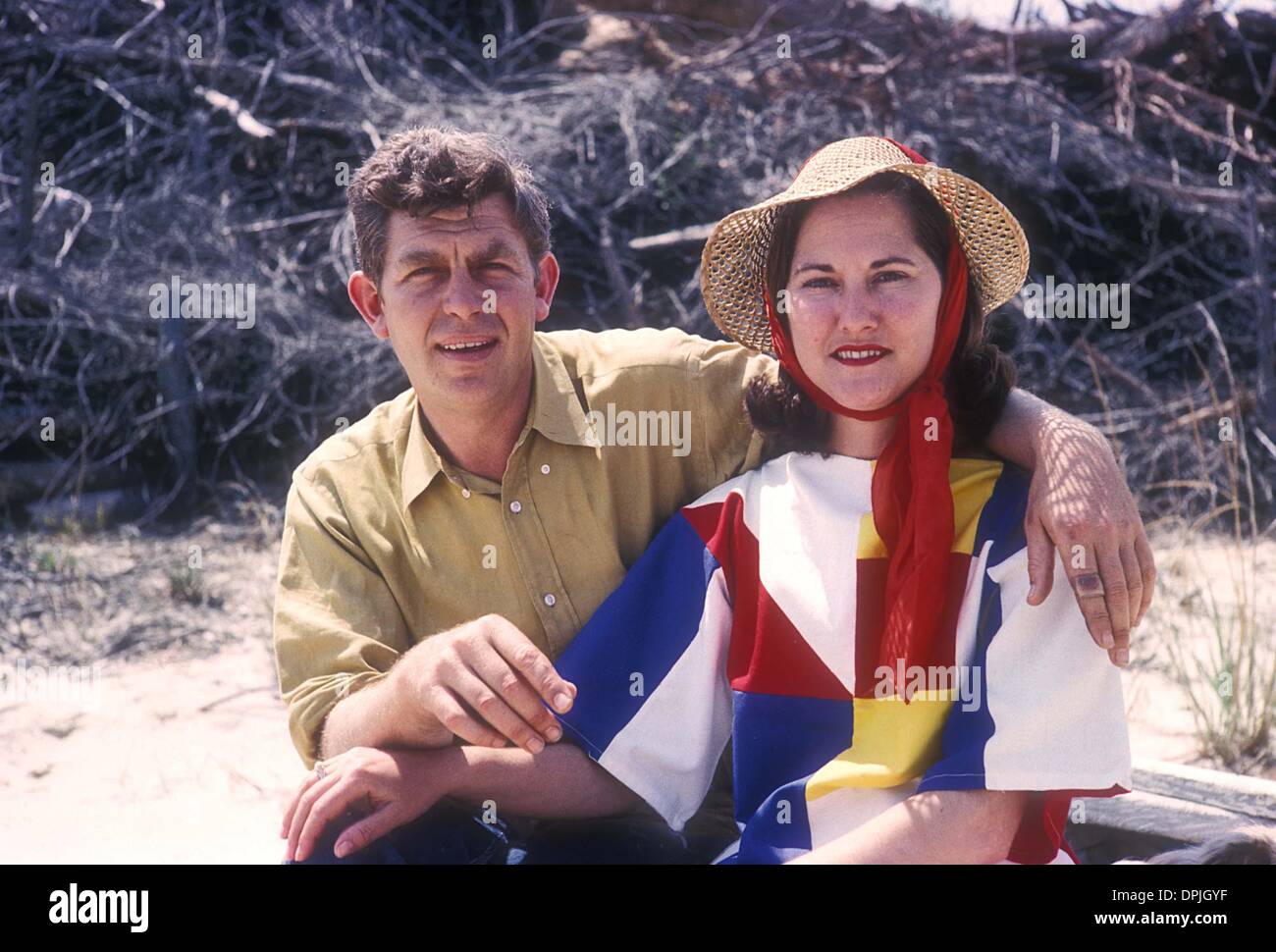
Barbara Edwards, born Barbara Bray Edwards, was the first wife of legendary actor Andy Griffith, married to him from 1949 to 1972. A talented soprano and performer, she was his professional partner during his early career and the mother of his two children, Sam and Dixie-Nan, throughout his rise to superstardom.
The narrative of Andy Griffith is often synonymous with the wholesome, idyllic life of Mayberry, but his real-life story was significantly more complex. At the heart of his early journey from a small-town North Carolina teacher to a national icon was Barbara Edwards. While history often remembers Griffith for his solo success on The Andy Griffith Show and Matlock, Barbara was the foundational partner who shared the stage with him during the lean years and witnessed the transformation of a nervous monologist into a television powerhouse.
The Formative Years at UNC Chapel Hill
The story of Barbara and Andy began at the University of North Carolina at Chapel Hill in the late 1940s. At the time, Griffith was a music major with aspirations of becoming a Moravian preacher, a path he eventually abandoned in favor of the performing arts. Barbara was also a student at the university, a gifted singer with a refined soprano voice that commanded attention in the music department.
Their meeting was a collision of two ambitious artistic spirits. They were both deeply involved in the university’s musical and theatrical productions, most notably the "Carolina Playmakers." It was here that they developed the chemistry that would eventually translate into a professional partnership. Barbara was not merely a supportive girlfriend; she was a contemporary and a peer who shared Griffith's passion for the stage.
The couple married on August 26, 1949, shortly after their time at the university. In the early days of their marriage, they faced the same economic uncertainty that plagues many young artists. Griffith took a job teaching music and drama at Goldsboro High School in North Carolina, but the itch to perform remained. Barbara was instrumental in encouraging him to look beyond the classroom, recognizing that his unique blend of Southern storytelling and musical talent had commercial potential.
The "Andy and Barbara" Professional Duo
Before Andy Griffith became a household name for his comedic monologues, he and Barbara worked as a traveling duo. In the early 1950s, they developed a variety act that they performed for civic clubs, high schools, and small-town community centers across the South. The act typically featured Barbara’s operatic singing juxtaposed with Andy’s rustic humor and folk songs.
This period was grueling but essential for Griffith’s development. Barbara acted as his foil, his vocal coach, and his sounding board. They traveled in a beat-up car, often staying in cheap motels or with friends, slowly building a reputation. It was during these travels that Griffith began perfecting the "What it Was, Was Football" monologue. While Barbara’s role in the act was more traditional—providing the musical "class" to Andy’s "country"—her presence gave the show a professional polish that helped them secure bookings in larger venues.
As Griffith’s monologue began to gain national traction in 1953, the nature of their partnership shifted. The success of the record led to appearances on The Ed Sullivan Show and eventually a starring role in the Broadway production of No Time for Sergeants. As the spotlight focused more intensely on Andy’s specific brand of humor, the "Andy and Barbara" act was gradually phased out, marking the beginning of Barbara’s transition from a professional partner to a more traditional Hollywood spouse.
Life During the Height of Mayberry
By 1960, the Griffiths had moved to Los Angeles for the launch of The Andy Griffith Show. This decade brought immense wealth and fame, but it also fundamentally changed the family dynamic. Barbara, who had once shared the stage with Andy, now found herself on the periphery of his professional life.
During the 1960s, Barbara focused heavily on their home life in Toluca Lake and their summer home in Manteo, North Carolina. The couple adopted two children: a son, Andy Samuel Griffith Jr. (known as Sam), born in 1958, and a daughter, Dixie-Nan, born in 1960. While the public saw Andy Griffith as the ultimate father figure, Sheriff Andy Taylor, the reality of the Griffith household was often shaped by the pressures of maintaining a top-rated television show.
Barbara played a crucial role in maintaining a sense of normalcy for the children while Andy worked long hours on the Desilu lot. Friends and colleagues from that era often described her as a gracious hostess and a devoted mother, though the strain of Andy’s workaholism and his perfectionist nature began to take a toll on the marriage. Griffith was known to be intensely focused on his craft, often bringing the stress of the set home with him.
The Adoption and Upbringing of Sam and Dixie
The decision to adopt was a pivotal moment in Barbara and Andy’s life story. Because they were unable to have biological children, the adoption of Sam and Dixie represented their commitment to building a family legacy. However, the path was not without its challenges.
Sam Griffith’s life, in particular, was marked by difficulty. Growing up in the shadow of a famous father was a heavy burden, and as he reached adulthood, he struggled with substance abuse and legal issues. Barbara remained a steadfast presence in her children's lives, often serving as the mediator between the children and their father, whose temper could be formidable.
Dixie-Nan Griffith has spoken in later years about the complexities of their family life. She described a childhood that was privileged in many ways but also isolated by the fame of her father. Barbara was the primary caregiver and the emotional anchor for the children during the years when Andy was the biggest star on television.
The Dissolution of the Marriage
In 1972, after 23 years of marriage, Andy and Barbara filed for divorce. To the public, who still viewed Griffith through the lens of Mayberry, the news was a shock. However, for those close to the couple, the split had been a long time coming.
The reasons for the divorce were multifaceted:
- Professional Disparity: Barbara had sacrificed her own singing career to support Andy’s, leading to a sense of lost identity.
- Temperament Issues: Griffith’s well-documented "dark side"—his bouts of anger and his intense need for control—clashed with Barbara’s personality.
- The Price of Fame: The transition from a small-town North Carolina couple to Hollywood royalty introduced pressures that neither was fully prepared to navigate for decades on end.
The divorce was finalized in 1972, and it marked a significant turning point in Griffith’s life. He would go on to marry Solica Cassuto in 1973 and later Cindi Knight in 1983. For Barbara, the post-divorce years were a time of seeking a new identity outside of being "Mrs. Andy Griffith."
Key Milestones: Andy and Barbara Griffith
| Year | Event | Significance |
|---|---|---|
| 1947 | Met at UNC Chapel Hill | Started as musical peers and romantic partners. |
| 1949 | Marriage | Began their 23-year union in North Carolina. |
| 1950-1953 | "Andy and Barbara" Duo | Toured the South as a musical and comedy act. |
| 1953 | "What it Was, Was Football" | The breakthrough hit that shifted focus to Andy’s solo career. |
| 1958 | Adoption of Sam | Expanded the family during Andy's rise on Broadway/Film. |
| 1960 | Adoption of Dixie | Completed the family as The Andy Griffith Show premiered. |
| 1972 | Divorce | Ended their marriage; Andy moved toward a new chapter in LA. |
| 1980 | Barbara's Death | Barbara passed away at the age of 53 in North Carolina. |
Barbara’s Life After the Divorce and Her Legacy
Following the divorce, Barbara Edwards moved back to North Carolina, seeking the comfort of her roots and the community she had known before the Hollywood whirlwind. She eventually remarried, becoming Barbara Edwards Casher. Her second husband was Michael Casher, a man far removed from the entertainment industry.
Sadly, Barbara’s life after Andy was relatively short. She passed away in July 1980 at the age of 53. Her death was a significant blow to her children, Sam and Dixie, and it also impacted Andy, who, despite their divorce, recognized the foundational role she had played in his life.
Barbara’s legacy is often overshadowed by Griffith’s later life and his long marriage to his third wife, Cindi Knight, who was with him until his death in 2012. However, biographers and Griffith historians emphasize that Andy Griffith might never have reached the heights he did without Barbara. She was the one who worked the small rooms, she was the one who encouraged the move to New York, and she was the one who managed the household during the most critical decade of his career.
In the 2015 biography Andy and Don: The Making of a Friendship and a Classic American Show by Daniel de Visé, the nuances of Barbara’s influence are explored in detail. The book highlights how her musical training helped Andy find his voice and how her presence provided the stability he needed to overcome his early insecurities as a performer.
Common Misconceptions About Barbara Edwards
Because she was a private person who lived in an era before the 24-hour news cycle, several misconceptions persist about Barbara Edwards:
- "She was just a housewife": This is factually incorrect. Barbara was a trained professional singer and a core part of Andy's professional act for several years.
- "The divorce was scandalous": While any divorce was notable in the 1970s, the split was relatively quiet compared to Hollywood standards. It was a matter of two people growing apart under the weight of immense fame.
- "She was written out of his life": While Griffith didn't speak extensively about her in his later years, she remained the mother of his children, and her influence on his early career is documented in every major retrospective of his work.
FAQs About Barbara Edwards Griffith
Was Barbara Edwards an actress?
While she was primarily a singer, Barbara did perform in theatrical productions during her time at UNC and during the early "Andy and Barbara" touring years. However, she did not pursue a career in film or television like her husband. She chose to focus on music and later on her family.
How did Barbara Edwards die?
Barbara Edwards passed away in 1980 at the age of 53. While specific details of her illness were kept relatively private by the family at the time, her death was attributed to natural causes following a period of declining health. She is buried in North Carolina, the state where her journey with Andy began.
Did Barbara Edwards ever appear on The Andy Griffith Show?
No, Barbara did not have an on-screen role in The Andy Griffith Show. By the time the show premiered in 1960, she had moved away from performing to manage the family's domestic life and support Andy's career from behind the scenes.
What happened to Barbara and Andy’s children?
Their son, Sam Griffith, worked as a real estate developer but struggled with health and personal issues; he passed away in 1996. Their daughter, Dixie-Nan Griffith, has led a more private life, occasionally appearing at events honoring her father’s legacy and providing insights into their family history for biographers.
How did Barbara influence Andy Griffith’s career?
Barbara provided the professional structure Andy lacked in his early 20s. As a soprano, she helped him refine his musical performances, and as his partner in their traveling act, she provided the stability and confidence he needed to transition from a teacher to a full-time entertainer. Many historians believe her belief in his talent was the primary catalyst for their move to New York City in the mid-1950s.
Practical Takeaway: Recognizing the "Partner Behind the Icon"
When examining the life story of Andy Griffith, it is essential to look beyond the character of Andy Taylor and recognize the real-world partnerships that made his career possible. Barbara Edwards was more than a spouse; she was a collaborator during the most transformative years of Griffith's life.
For fans of television history or those studying the dynamics of celebrity marriages, Barbara’s story serves as a reminder of the sacrifices often made by the partners of high-profile entertainers. Her contribution to American comedy and television, though indirect in her later years, was substantial through her early work and her role in raising the next generation of the Griffith family. To understand Andy Griffith’s journey from the Blue Ridge Mountains to the top of the Nielsen ratings, one must understand the woman who stood beside him when he was just a young man with a guitar and a story to tell.