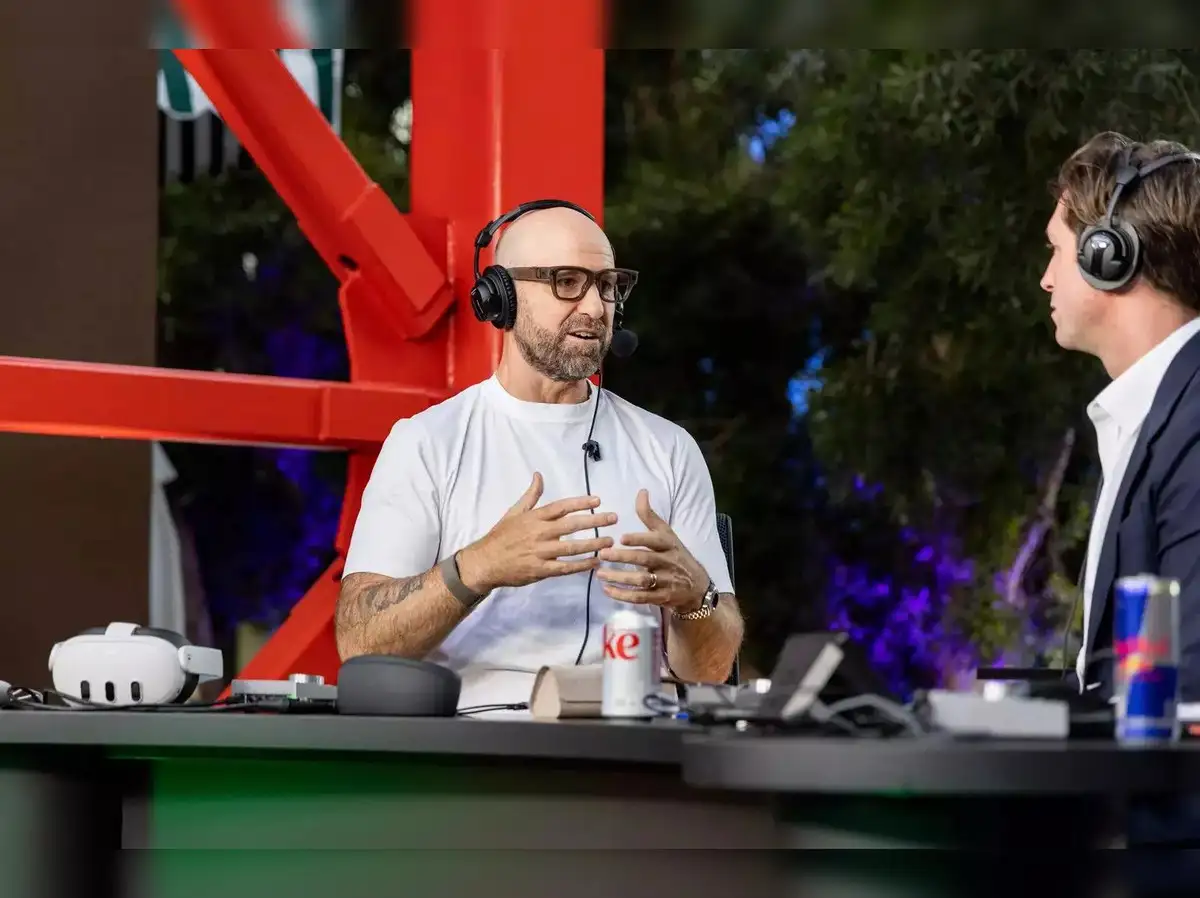
As of 2026, Andrew Bosworth’s net worth is estimated to be between $450 million and $650 million. The majority of his wealth is derived from his long-standing tenure at Meta (formerly Facebook), where he serves as Chief Technology Officer, alongside substantial historical stock grants and executive compensation packages tied to the company's market performance.
Andrew "Boz" Bosworth stands as one of the most influential figures in the history of social media and consumer electronics. As an early employee who joined Facebook in its infancy, his financial trajectory has mirrored the company’s evolution from a Harvard dorm-room project to a trillion-dollar global conglomerate. Understanding Bosworth’s net worth requires a deep dive into the mechanics of executive equity, the history of Meta’s stock performance, and his pivotal role in developing the core products that define the modern internet.
The Foundations of Wealth: Early Tenure at Facebook
Andrew Bosworth joined Facebook in 2006, a time when the company was still a fledgling startup competing with established giants like MySpace. He was among the first group of engineers hired by Mark Zuckerberg, positioning him in a tier of employees who received significant equity long before the company’s 2012 Initial Public Offering (IPO).
In the tech industry, "founding-era" employees often amass wealth that rivals later-stage executives due to the sheer growth in share value. When Bosworth joined, Facebook’s valuation was a fraction of what it would become. His early roles included creating the original News Feed—a product that fundamentally changed how users consumed content and, more importantly, how the company generated advertising revenue. The success of the News Feed was a primary catalyst for Facebook’s valuation surge in the late 2000s.
Because Bosworth was involved in the development of the "social graph" and the communication tools that scaled the platform to its first billion users, his historical stock grants (Restricted Stock Units or RSUs) have undergone multiple cycles of vesting and appreciation. By the time of the IPO in 2012, Bosworth was already a multimillionaire on paper, and the subsequent decade of Meta's growth has only multiplied that figure.
Executive Compensation and Salary Structure
As the Chief Technology Officer of Meta, Bosworth’s compensation is public record, typically disclosed in the company’s annual proxy statements (SEC Form DEF 14A). While his base salary is significant—estimated to be in the range of $1 million to $1.5 million annually—it represents only a small portion of his total yearly earnings.
The bulk of an executive's compensation at Meta's level comes from:
- Restricted Stock Units (RSUs): These are performance-based and time-based grants that vest over several years. As CTO, Bosworth receives annual equity awards designed to align his interests with shareholders. In high-performing years, these grants can exceed $20 million to $30 million.
- Annual Bonuses: Tied to company-wide goals and individual performance, these bonuses can add several hundred thousand dollars to his liquid income.
- All Other Compensation: This category includes perquisites such as security detail and the use of private aircraft for business and personal travel. For high-profile Meta executives, security costs alone can reach several million dollars per year, which is technically counted as part of their total compensation package.
By 2026, the cumulative effect of these annual packages has substantially bolstered his liquid assets and overall net worth, even after accounting for typical sell-offs to cover tax obligations.
The Impact of Meta Stock Performance (2020–2026)
To understand Bosworth’s current financial standing, one must analyze the volatility and recovery of Meta’s stock (META). Between 2022 and 2026, the company underwent a massive transformation. Following a significant dip in 2022 due to concerns over metaverse spending and advertising headwinds, Meta's stock saw a historic recovery driven by "The Year of Efficiency" and the successful integration of Artificial Intelligence (AI) across its apps.
As the leader of Reality Labs and later the entire technology stack, Bosworth was at the center of this recovery. When the share price rebounded, the value of his unvested and vested holdings increased exponentially. For an executive holding hundreds of thousands of shares, a $100 movement in stock price can shift their net worth by $50 million or more.
Furthermore, Meta's introduction of a dividend in 2024 provided a new stream of passive income for long-term shareholders like Bosworth. While the dividend yield may be small relative to the share price, for a holder of a significant block of stock, it represents a substantial annual cash payout.
Reality Labs and the Metaverse Bet
Andrew Bosworth spent years as the Vice President of Reality Labs before ascending to the CTO role. Reality Labs is the division responsible for Meta Quest (VR), Ray-Ban Meta glasses (AR), and the Horizon Worlds platform. This division has been the subject of intense financial scrutiny, with annual losses often exceeding $10 billion.
However, from a net worth perspective, Bosworth’s leadership of this division is a "high-stakes" variable. His compensation is likely tied to the long-term success of these hardware initiatives. In the 2026 landscape, as AR glasses begin to see wider consumer adoption and VR finds its footing in the enterprise sector, Bosworth’s "metaverse" equity grants are likely meeting performance milestones that were set years prior.
His role in shifting Meta’s focus toward "AI-first" hardware—specifically the integration of Llama (Meta's Large Language Model) into wearable devices—has been a major driver of the company’s recent valuation. Investors view the hardware-AI synergy as the next major growth engine, and as the architect of this strategy, Bosworth’s financial incentives are heavily weighted toward its success.
Comparison of Executive Wealth at Meta
To put Andrew Bosworth's net worth into perspective, it is helpful to compare his standing with other key figures within the organization and the broader tech industry.
| Executive | Role | Estimated Net Worth (2026) | Primary Source of Wealth |
|---|---|---|---|
| Mark Zuckerberg | CEO & Founder | $150B - $200B+ | Foundational Founder Equity |
| Andrew Bosworth | CTO | $450M - $650M | Early Employee + C-Suite Equity |
| Chris Cox | Chief Product Officer | $500M - $700M | Early Employee + C-Suite Equity |
| Susan Li | CFO | $50M - $150M | Executive Compensation & Equity |
| Javier Olivan | COO | $150M - $300M | Long-term Executive Equity |
Note: Estimates are based on historical stock holdings, disclosed compensation, and market fluctuations as of 2026.
As seen in the table, Bosworth sits in the "upper tier" of non-founder employees. While his wealth does not reach the multi-billion dollar heights of Mark Zuckerberg (who holds the majority of voting power and founder shares), he remains significantly wealthier than most late-stage C-suite executives due to his 20-year history with the company.
Real Estate and Private Investments
While the majority of Bosworth's wealth is tied to Meta, like most high-net-worth individuals, he has likely diversified his portfolio into real estate and private equity. Public records have previously linked him to high-value properties in the San Francisco Bay Area, particularly in regions like San Mateo and the surrounding Silicon Valley suburbs where luxury estates regularly command prices in the $10 million to $30 million range.
In addition to real estate, Bosworth is known for his intellectual curiosity and involvement in the tech community. It is common for senior Meta executives to act as "angel investors" for early-stage startups. While these private investments are not publicly disclosed, they represent a common "wealth-building" strategy for tech moguls, potentially adding millions to their net worth if one of their portfolio companies reaches an exit (IPO or acquisition).
The Role of Philanthropy and Financial Planning
As net worth grows, so does the complexity of financial management. Bosworth has often used his platform to discuss the culture of Silicon Valley and the responsibilities of those within it. While he has not signed "The Giving Pledge" (a commitment by billionaires to give away the majority of their wealth), he and his family are involved in various charitable endeavors.
Financial planning for an executive at this level often involves the use of 10b5-1 trading plans. These are pre-scheduled stock sales that allow insiders to sell their shares without being accused of insider trading. Bosworth’s net worth is constantly shifting as these plans execute, converting his "paper wealth" (stock) into "liquid wealth" (cash). This liquidity allows for the lifestyle and investment diversification that characterizes his current financial profile.
Potential Risks to Net Worth
Despite the impressive figures, there are inherent risks to the net worth of any executive whose wealth is concentrated in a single company:
- Regulatory Pressures: Ongoing antitrust litigation against Meta could result in forced divestitures or changes to the business model, which might negatively impact the stock price.
- Hardware Adoption: If the market for AR/VR hardware fails to scale as predicted by 2027-2030, the "Reality Labs" portion of Meta's valuation—and by extension Bosworth's performance equity—could suffer.
- Market Volatility: As a high-beta stock, Meta is sensitive to interest rate changes and broader economic shifts.
However, given Bosworth's 20-year track record and the "safety net" of his already-vested assets, his financial position remains remarkably secure regardless of short-term market swings.
FAQ
How much does Andrew Bosworth earn per year?
As of 2026, Andrew Bosworth’s total annual compensation package is estimated to be between $25 million and $40 million. This includes a base salary of approximately $1 million, with the remainder coming from stock awards and performance bonuses.
Was Andrew Bosworth a founder of Facebook?
No, Andrew Bosworth was not a founder. He joined Facebook in 2006 as an engineer. However, he is considered one of the "early architects" of the company, having created fundamental features like the News Feed and original messaging systems.
Does Andrew Bosworth own other companies?
There is no public evidence that Bosworth owns or operates other companies. His professional focus remains entirely on his role as CTO of Meta. He may, however, have minority stakes in various startups through private angel investing.
How does Andrew Bosworth’s wealth compare to Sheryl Sandberg?
Sheryl Sandberg’s net worth is significantly higher, estimated at over $1.5 billion. This is because Sandberg joined Facebook as COO at a time when the company was scaling its revenue model and she received a larger initial equity stake than most engineers, coupled with over a decade of high-level vesting before her departure.
What is Andrew Bosworth’s role in Meta’s current success?
As CTO, Bosworth oversees all technical aspects of the company, including the transition to AI-integrated social apps and the development of AR/VR hardware. His ability to balance the "efficiency" of core apps with the "innovation" of Reality Labs is seen as a key factor in Meta's 2024-2026 valuation growth.
Practical Next Actions for Following Tech Net Worths
For those interested in tracking the financial trajectory of tech executives like Andrew Bosworth, the following steps are recommended:
- Monitor SEC Filings: Check the SEC EDGAR database for Meta Platforms, Inc. Look for Form 4 (Statement of Changes in Beneficial Ownership) to see when Bosworth buys or sells shares.
- Review the Annual Proxy Statement: Every spring, Meta releases a DEF 14A filing which provides the exact compensation figures for its top executives for the previous year.
- Track Meta’s Stock Performance: Since the majority of Bosworth’s wealth is in META shares, using financial platforms like Bloomberg or Yahoo Finance to track the stock’s 52-week highs and lows provides the best "real-time" estimate of his net worth.
- Follow Earnings Calls: Listen to Meta's quarterly earnings reports. The success or failure of the projects Bosworth leads (like Reality Labs) directly influences the performance-based stock grants he receives.