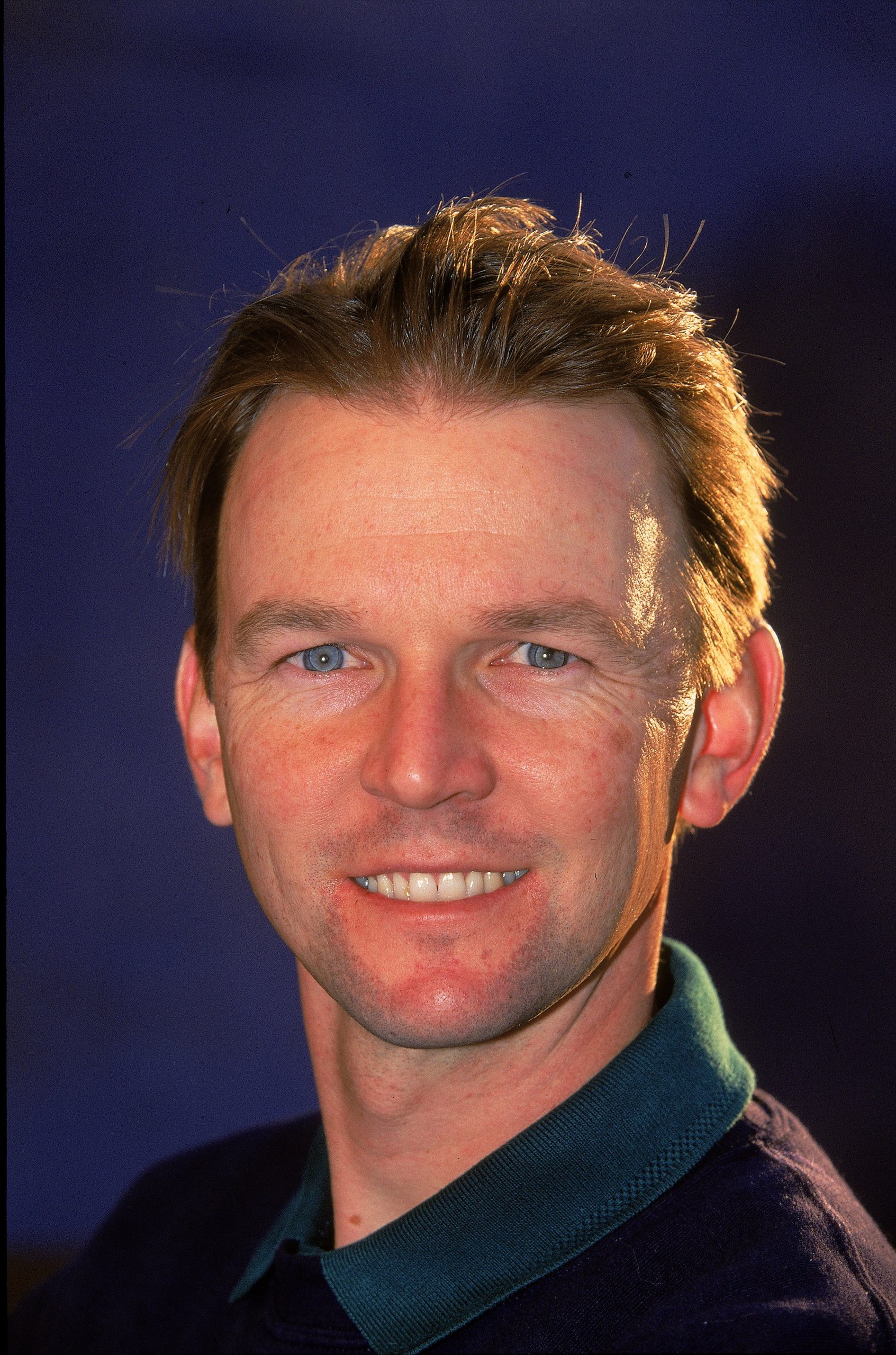
As of 2026, Andrew Beal's net worth is estimated at approximately $15.5 billion, cementing his status as one of the wealthiest individuals in the United States and the world’s richest individual banker. His fortune is primarily derived from his 100% ownership of Beal Bank and Beal Bank USA, alongside strategic investments in distressed debt and real estate.
Andrew Beal is a figure who defies the standard conventions of Wall Street. Unlike many of his peers who rely on complex algorithms or high-frequency trading, Beal built his empire through a combination of extreme patience, mathematical precision, and a willingness to step away from the market when valuations became irrational. Often referred to as a "one-man central bank," he is perhaps best known for his contrarian approach—hoarding cash during economic booms and deploying it aggressively during market crashes.
This comprehensive analysis explores the mechanics of Andrew Beal’s wealth, the unique structure of his banking institutions, and the historical decisions that allowed him to outpace the broader financial sector over several decades.
The Foundation of Wealth: Beal Bank and Beal Bank USA
The cornerstone of Andrew Beal’s net worth is his banking empire. Founded in 1988 in Plano, Texas, Beal Bank began as a small operation with just a few employees. From the outset, Beal’s vision was different from that of traditional retail banks. He did not seek to provide consumer checking accounts, credit cards, or home mortgages to the general public. Instead, he designed a lean, high-capital institution focused on specialized lending and asset acquisition.
A Unique Banking Model
Beal Bank operates with a remarkably low overhead. By avoiding the costs associated with hundreds of retail branches and thousands of tellers, the bank can maintain higher capital ratios than almost any other major financial institution in the country. The bank's primary function is twofold:
- Attracting Capital: The bank offers high-interest Certificates of Deposit (CDs) to consumers across the nation, effectively using these as a source of stable, low-cost capital.
- Strategic Deployment: This capital is then used to purchase bundles of distressed loans, commercial real estate debt, and other undervalued assets from the secondary market.
By the early 2000s, Beal expanded his operations with Beal Bank USA (formerly known as Beal Bank Nevada). This allowed him to diversify his regulatory environment and increase his lending capacity. Because he owns 100% of these entities, the entirety of their profits flows directly into his personal net worth, minus reinvestments and operating costs.
The 2008 Financial Crisis: A Masterclass in Patience
To understand why Andrew Beal’s net worth experienced such exponential growth, one must examine his actions between 2004 and 2009. While most major banks were aggressively pursuing subprime mortgages and collateralized debt obligations (CDOs), Beal grew concerned about what he perceived as a massive credit bubble.
Sitting on the Sidelines
In an unprecedented move for a commercial banker, Beal effectively stopped making new loans in 2004. He argued that the market was "insane" and that the risks were not being properly priced. He spent the next three years shrinking his bank’s assets, letting existing loans pay off and hoarding the cash. His competitors mocked him for missing out on the biggest housing boom in history, but Beal remained steadfast.
The Great Acquisition
When the market finally collapsed in 2008, Beal Bank was one of the only institutions in the world with massive amounts of liquid capital and no exposure to the toxic subprime assets that were sinking his competitors. As the Federal Reserve and the Treasury scrambled to bail out "too big to fail" banks, Beal began buying.
He purchased billions of dollars worth of assets at steep discounts—pennies on the dollar—from failing institutions and the government. These included:
- Commercial Real Estate Loans: Assets that were temporarily depressed but fundamentally sound.
- Structured Finance Products: Debt that had been panic-sold by other hedge funds and banks.
- Corporate Debt: High-yield bonds and loans from companies facing liquidity crunches.
When the economy eventually recovered, the value of these assets skyrocketed, tripling and quadrupling his investment. This period transformed Andrew Beal from a wealthy regional banker into a global billionaire.
Investment Philosophy: The Value of Distressed Debt
Andrew Beal’s investment philosophy is rooted in Value Investing and Game Theory. He does not look for "hot" stocks or speculative tech trends. Instead, he looks for situations where there is a forced seller.
The "Forced Seller" Advantage
Beal understands that in times of crisis, many institutions are forced to sell assets regardless of their intrinsic value because they need immediate liquidity to survive. By acting as the "liquidity provider of last resort," Beal can dictate terms that ensure a massive margin of safety. This approach minimizes his downside risk while providing nearly unlimited upside when market conditions normalize.
Asset Concentration
Unlike many wealth managers who advocate for extreme diversification, Beal is a proponent of concentration. If he identifies a market segment that is undervalued, he is willing to commit a massive portion of his capital to that single sector. This requires an immense amount of research and a high degree of confidence in his mathematical models.
Detailed Breakdown of Andrew Beal’s Financial Portfolio
While the banks are the primary drivers of his wealth, Beal's interests extend into various other sectors. The following table provides a snapshot of the primary components that contribute to his $15.5 billion net worth in 2026.
| Asset Category | Primary Entity/Type | Estimated Value Contribution | Description |
|---|---|---|---|
| Banking Equity | Beal Bank / Beal Bank USA | $12.5 Billion | 100% ownership of two highly capitalized, non-traditional banks. |
| Real Estate | Commercial & Residential | $1.2 Billion | Significant holdings in Texas and Florida, including high-end luxury properties. |
| Distressed Debt | Private Acquisitions | $800 Million | Personal investments in corporate bonds and secondary market paper. |
| Liquid Assets | Cash & Short-term Treasuries | $600 Million | Maintained for immediate tactical deployment in market downturns. |
| Other Investments | Aerospace (Historical) & Poker | $400 Million | Residual value from historical ventures and private equity stakes. |
The Aerospace Venture: A Rare Setback
In the late 1990s, Beal took a significant risk by founding Beal Aerospace. His goal was to revolutionize the space industry by building low-cost, large-scale rockets that could compete with government-funded programs and established giants like Boeing.
Beal invested hundreds of millions of dollars into a facility in Frisco, Texas, and a launch site in the Caribbean. He developed a three-stage rocket engine that was, at the time, the largest of its kind built since the Apollo era. However, the venture was eventually shuttered in 2000.
Beal blamed government subsidies for his competitors, arguing that a private entrepreneur could not compete against the "unlimited" pockets of NASA-backed initiatives. While Beal Aerospace resulted in a financial loss, it demonstrated Beal's willingness to take on massive, complex challenges that require high-level engineering and mathematical oversight.
Andrew Beal and High-Stakes Poker
Beyond the boardroom, Beal is a legendary figure in the world of professional poker. His involvement in the game is not merely a hobby; it is a clinical application of the same mathematical principles he uses in banking.
"The Corporation"
In the early 2000s, Beal challenged the world's best professional players—including Phil Ivey, Doyle Brunson, and Ted Forrest—to a series of heads-up, limit Texas Hold'em games. The stakes were unprecedented, with blinds reaching as high as $100,000/$200,000. The pros were forced to pool their money into a collective known as "The Corporation" just to match Beal’s bankroll.
Beal’s strategy was to "break" the pros by raising the stakes to a level where their psychological stress would outweigh their technical skill. While he eventually lost a significant sum in the final sessions, he had previously won over $11 million from the world's best players in a single day. This episode is chronicled in the book The Professor, the Banker, and the Suicide King, which highlights his ability to utilize capital as a weapon.
Mathematics and the Beal Conjecture
Andrew Beal is a self-taught mathematician with a profound interest in number theory. In 1993, he formulated a mathematical problem known as the Beal Conjecture. This conjecture states that if $A^x + B^y = C^z$, where $A, B, C, x, y, z$ are positive integers and $x, y, z > 2$, then $A, B$, and $C$ must have a common prime factor.
To encourage interest in mathematics, Beal offered a $1 million prize through the American Mathematical Society (AMS) for anyone who can either prove or disprove the conjecture. As of 2026, the prize remains unclaimed, and the conjecture stands as one of the most famous unsolved problems in modern mathematics. This philanthropic endeavor reflects Beal's belief that mathematical literacy is the foundation of economic success.
Why Andrew Beal’s Net Worth is Resilient
As we look at his financial standing in 2026, several factors contribute to the stability and growth of his wealth:
- No Public Shareholders: Because his banks are private, Beal is not pressured by quarterly earnings reports or the need to please short-term investors. He can make decisions that take decades to play out.
- High Capital Buffers: Beal Bank historically maintains capital ratios significantly higher than those required by the FDIC. This ensures that the bank can survive even the most severe economic depressions.
- Low Leverage: Unlike many billionaires who borrow against their stock to fund their lifestyle, Beal’s wealth is largely unleveraged. He owns his assets outright, which protects him from margin calls during market volatility.
Frequently Asked Questions
How did Andrew Beal get started in business?
Andrew Beal began his entrepreneurial journey in his teens by repairing and flipping used televisions. He later moved into real estate, buying distressed properties and apartment buildings in Lansing, Michigan, before moving to Texas to start his banking career. His early success in real estate provided the seed capital for the founding of Beal Bank in 1988.
Is Beal Bank a safe place to keep money?
Yes, Beal Bank and Beal Bank USA are FDIC-insured institutions. This means that deposits are protected up to the legal limit (currently $250,000 per depositor, per ownership category). Historically, Beal Bank has been one of the most well-capitalized banks in the country, often holding far more cash in reserve than required by federal law.
What is Andrew Beal’s connection to the Beal Conjecture?
Andrew Beal is the creator of the conjecture. He developed it while working on Fermat's Last Theorem. He provides the $1 million prize money, which is held in a trust and administered by the American Mathematical Society. His goal is to inspire young people to pursue careers in mathematics and science.
Does Andrew Beal still play high-stakes poker?
While Beal occasionally appears in high-stakes games in Las Vegas, he is no longer as active as he was during the "Corporation" era of the early 2000s. He remains a respected figure in the poker community for his fearless play and his ability to compete with the world's top professionals using a purely mathematical approach.
Why doesn't Andrew Beal invest in the stock market like other billionaires?
Beal generally avoids the public stock market because he believes it is often inefficiently priced and prone to "herd mentality." He prefers to own entire companies or large blocks of debt where he can have more control over the outcome and where the "intrinsic value" is easier to calculate through tangible assets like real estate or equipment.
Practical Recommendation for Investors
For those looking to emulate the success that led to Andrew Beal’s multi-billion dollar net worth, the primary lesson is strategic patience. In a world of 24-hour news cycles and constant trading, the ability to do nothing is a rare and valuable skill.
- Build a Cash Reserve: Having liquidity during a market downturn is the only way to capitalize on distressed opportunities.
- Focus on Intrinsic Value: Don't follow trends. Look for assets that have a clear, underlying value that is being ignored by the broader market.
- Understand the Math: Whether it is banking or poker, success is often a game of probabilities. If the odds are not in your favor, do not play. If they are, play aggressively.
Andrew Beal’s career serves as a reminder that wealth is often built not by following the crowd, but by having the courage and the capital to stand against it.