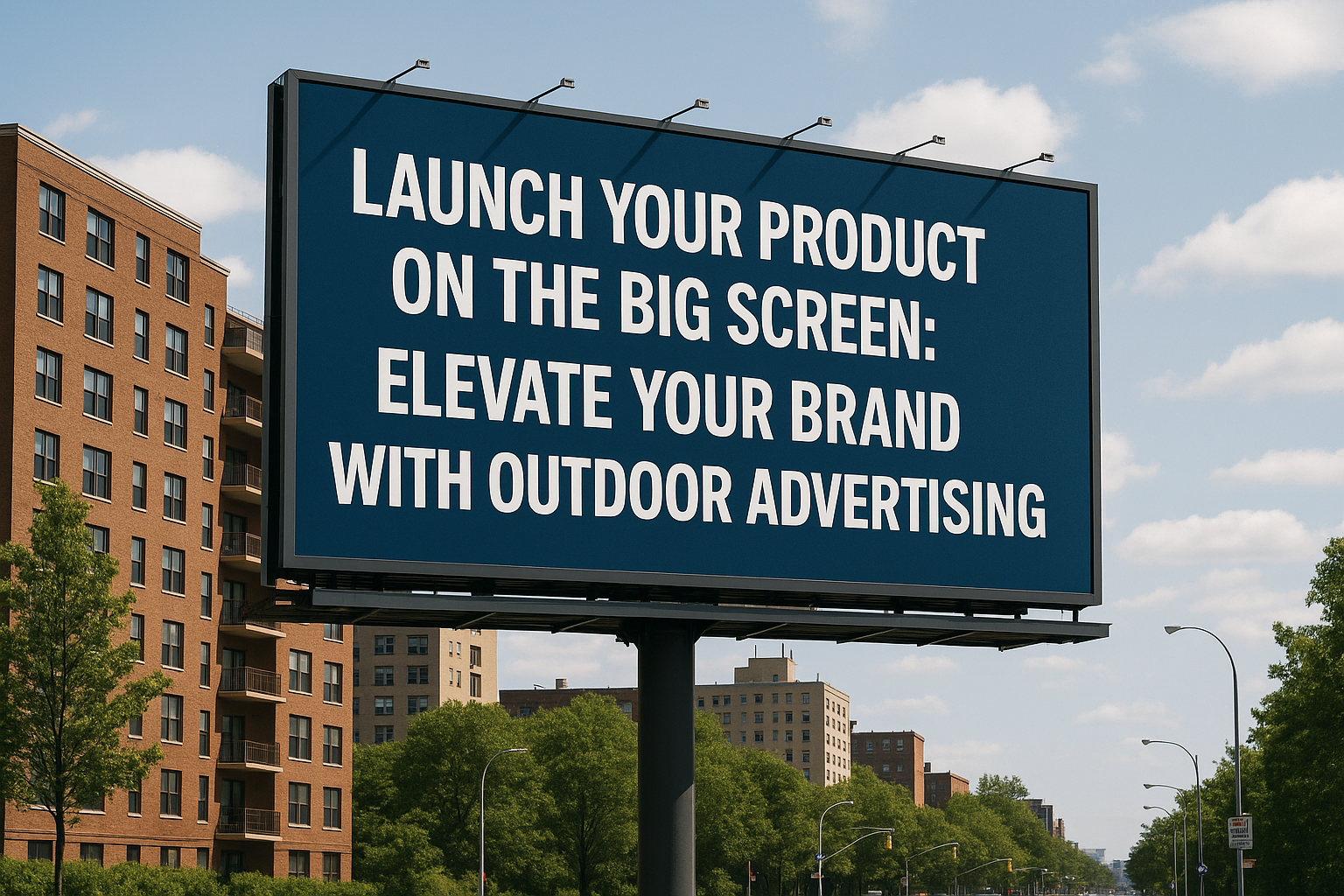
Choosing the right alternative billboard involves identifying non-traditional out-of-home (OOH) formats—such as street furniture, transit wraps, or digital place-based screens—that align with your target audience’s daily movements. By prioritizing dwell time, location context, and programmatic flexibility, brands can achieve higher engagement and better ROI than through traditional highway signage alone.
As we move through 2026, the landscape of out-of-home advertising has shifted fundamentally. While the massive static highway billboard remains a recognizable staple, the "alternative billboard" category has expanded to encompass an ecosystem of high-tech, high-engagement media. These alternatives offer brands the ability to meet consumers in the "white spaces" of their lives—at the grocery store, on the commuter train, or while charging an electric vehicle. Choosing the right medium is no longer just about size; it is about the intersection of data-driven location intelligence and creative relevance.
The Evolution of Alternative Outdoor Media in 2026
The term "alternative billboard" once referred to anything that wasn't a standard 14x48-foot poster. Today, it describes a sophisticated array of Out-of-Home (OOH) and Digital Out-of-Home (DOOH) assets. In 2026, the industry has largely moved away from "buying a sign" toward "buying an audience."
Modern alternative media utilizes anonymous mobile location data to track how many people pass a specific point, their demographic profile, and their subsequent online or in-store behavior. This shift has made non-traditional formats particularly attractive to brands that previously found traditional billboards too broad or expensive. The ability to programmatically bid on a digital screen in a high-end gym or a network of urban kiosks allows for a level of precision that mirrors digital display advertising but with the unskippable physical presence of the real world.
Primary Categories of Alternative Outdoor Media
Understanding the landscape requires categorizing these media types based on their environment and how the audience interacts with them. Each format serves a different psychological state and consumer intent.
Street Furniture and Urban Kiosks
Street furniture includes bus shelters, newsstands, benches, and specialized urban kiosks. These are among the most effective alternative billboards because they exist at eye level. Unlike highway billboards that drivers pass at 65 mph, street furniture is designed for pedestrians and commuters who have high "dwell time."
- Bus Shelters: These provide a captive audience for three to ten minutes. This allows for more detailed copy and complex visuals that a driver would never have time to read.
- Digital Urban Kiosks: In 2026, these often serve as Wi-Fi hubs or interactive city guides. They allow for touch-screen engagement and real-time updates, making them ideal for localized promotions or "wayfinding" brand experiences.
Transit Advertising
Transit media follows the pulse of the city. It includes wraps on buses and trains, interior cards, and station dominance (where a brand "takes over" an entire subway station).
The strength of transit media is its mobility. A wrapped bus acts as a moving alternative billboard that travels through various neighborhoods, providing massive reach across different socio-economic zones. Conversely, interior transit ads benefit from extreme dwell times—often 20 minutes or more—making them perfect for long-form storytelling or QR-code-driven direct response campaigns.
Place-Based Media
Place-based media targets consumers where they spend their leisure or work time. This includes screens in elevators, office lobbies, health clubs, malls, and even cinema advertising. The primary advantage here is context. If you are a protein shake brand, an alternative billboard inside a network of gyms is infinitely more valuable than a highway sign, even if the total "impressions" are lower. The relevance of the environment increases the likelihood of conversion.
Guerrilla and Ambient Media
For brands looking to create social media "buzz," guerrilla tactics remain a potent alternative. This category includes 3D projection mapping on buildings, sidewalk stencils, and "wild posting" (posters applied to construction site hoardings). These formats work best for product launches or cultural events where the goal is to feel integrated into the local street culture rather than being an external corporate intruder.
Strategic Factors for Selecting Your Media Format
Choosing between these options requires a rigorous analysis of your campaign goals. You must move beyond the "cool factor" and look at the technical specifications of how your audience moves.
Analyzing Dwell Time vs. Glance Time
One of the most common mistakes in OOH advertising is using a "glance time" creative on a "dwell time" asset, or vice versa.
- Glance Time: Traditional billboards and vehicle wraps are seen for 2–5 seconds. The creative must be minimalist—one image, seven words or fewer.
- Dwell Time: Bus shelters, train interiors, and mall kiosks have dwell times of several minutes. Here, you can include more information, multiple product benefits, and clear calls to action (CTAs).
Geographic and Demographic Precision
In 2026, brands use "heat maps" provided by OOH specialists like the Outdoor Advertising Association of America (OAAA) to identify where their target segments congregate. If your data shows your target audience is 25-34-year-old tech professionals, your "alternative billboard" should likely be digital screens in "Class A" office buildings or electric vehicle (EV) charging stations in suburban hubs.
The Role of Programmatic DOOH (pDOOH)
The rise of programmatic buying has revolutionized alternative media. Brands can now set triggers for their ads. For example, a coffee brand might only bid on digital bus shelter screens when the temperature drops below 40 degrees Fahrenheit, or a rain-gear brand might activate only when local weather APIs signal a storm. This level of agility ensures that the "alternative" choice is also the most efficient use of the budget.
Comparison of Alternative Outdoor Media Formats
The following table provides a comparison based on typical performance metrics observed in 2026.
| Media Format | Typical Dwell Time | Reach Potential | Targeting Capability | Best Use Case |
|---|---|---|---|---|
| Bus Shelters | 5–10 Minutes | Moderate/Urban | Zip Code / Route | High-detail storytelling, local retail |
| Bus/Train Wraps | 2–5 Seconds | Very High | City-wide | Brand awareness, mass-market launches |
| Gym/Mall Screens | 30–60 Seconds | Niche/Targeted | Lifestyle / Interest | Contextual relevance (Fitness, Fashion) |
| Office Lobbies | 15–30 Seconds | Professional | B2B / High Income | Professional services, SaaS, Luxury |
| Digital Kiosks | 1–3 Minutes | High Pedestrian | Hyper-local | Real-time offers, events, interactive |
| Projection Mapping | Variable | Viral / Social | Event-specific | Experiential marketing, "Buzz" creation |
Measurement and ROI in the Non-Traditional Space
A major hurdle for alternative billboards used to be measurement. In 2026, this has been resolved through multi-touch attribution (MTA). By using "geofencing," advertisers can create a virtual boundary around their outdoor asset.
When a mobile device enters that boundary, the system notes the exposure (anonymously). If that same device later visits the brand's website or physical store, the OOH exposure is credited as a touchpoint in the consumer journey. This data allows brands to calculate a true Cost Per Acquisition (CPA) for their outdoor spend, rather than relying on estimated traffic counts.
Furthermore, visual sensors on digital screens can now provide "attention metrics." These sensors (compliant with 2026 privacy regulations) measure how many people actually looked at the screen and for how long, providing a "verified impression" rather than just a "potential impression."
Creative Best Practices for Alternative Billboards
Because alternative formats are often closer to the consumer, the creative approach must be more "human-centric" than traditional billboards.
- Context is King: If your ad is in a grocery store (on a digital cart or aisle screen), the creative should relate to food, hunger, or household management.
- The "Social" Bridge: Since people are often standing or walking near alternative media, they have their phones in hand. Use this. Incorporate QR codes that are easy to scan at eye level, or encourage "selfie" moments with 3D or anamorphic digital content that looks different from various angles.
- Sustainability Matters: In 2026, brand perception is heavily tied to environmental impact. Choosing solar-powered digital kiosks or using recyclable materials for transit wraps is not just an operational choice; it is a brand statement that should be subtly communicated.
- Aesthetic Integration: Alternative billboards should feel like they belong in their environment. A sleek, minimalist ad looks great in a modern transit hub, while a more vibrant, "street art" style might work better for wild postings in a creative district.
Common Pitfalls to Avoid
Even with the best data, campaigns can fail if basic principles are ignored.
- Overcrowding the Design: Just because a bus shelter allows for more text doesn't mean it requires it. Clarity always wins.
- Ignoring Technical Specs: Every digital screen has different aspect ratios and brightness levels. Using a standard 16:9 video on a vertical 9:16 kiosk without optimization leads to a poor brand image.
- Neglecting the "Last Mile": If your alternative billboard is a mall screen promoting a sale, the store should be within walking distance. Don't use localized media for a broad, non-specific call to action.
- Static Thinking on Digital Assets: Using a digital screen to show a static image is a wasted opportunity. Use the "D" in DOOH to show motion, subtle animation, or live data feeds.
Frequently Asked Questions
What is the average cost of an alternative billboard compared to a traditional one?
Costs vary significantly by city and format. Generally, alternative media like bus shelters or digital kiosks have a lower entry price point (often $500–$2,500 per unit per month) compared to highway bulletins, which can cost $5,000–$50,000 in major metros. However, the CPM (cost per thousand impressions) for alternative media might be higher because the audience is more targeted and "high-value."
Can I buy alternative outdoor media for just a few days?
Yes. With the advent of programmatic DOOH (pDOOH), you can buy impressions on digital screens for a single day, a weekend, or even specific hours of the day (dayparting). Traditional static billboards usually require a minimum four-week commitment (a "lunar period").
How do I know if my target audience is seeing the ads?
Modern OOH agencies provide "post-campaign reports" that use mobile location data and third-party verification services like Geopath. These reports show the estimated reach, frequency, and demographic breakdown of those exposed to the media.
Are QR codes still effective on outdoor ads in 2026?
Yes, but only on "dwell time" assets. They are highly effective on bus shelters, train interiors, and mall kiosks where the consumer is stationary. They are almost never effective on moving vehicles or high-speed roadside signs.
What is "anamorphic" 3D advertising?
Anamorphic ads are digital creative designs that use perspective to create a 3D illusion. These are popular on large-scale "corner" digital screens in high-traffic urban areas like Times Square or Piccadilly Circus. They are excellent for "alternative" brand activations because they are highly shareable on social media.
Selecting Your Path Forward
To choose the right outdoor media for your brand, start by mapping your customer’s "day in the life." If your customer is a busy parent, look at grocery store networks and suburban street furniture. If they are a corporate executive, focus on airport lounges and office lobby screens.
The most successful campaigns in 2026 don't just use one format; they use a "multi-format" approach. For example, use a large-scale transit wrap for broad awareness, supported by a network of hyper-local digital kiosks that offer a scannable discount code.
Your next action should be to consult with an OOH media planner who uses programmatic data. Ask for a "geographic heat map" of your target audience and match those hot spots to the available alternative media assets in your target city. This data-first approach ensures that your brand isn't just shouting into the wind, but is instead having a meaningful conversation with the right people at the right time.