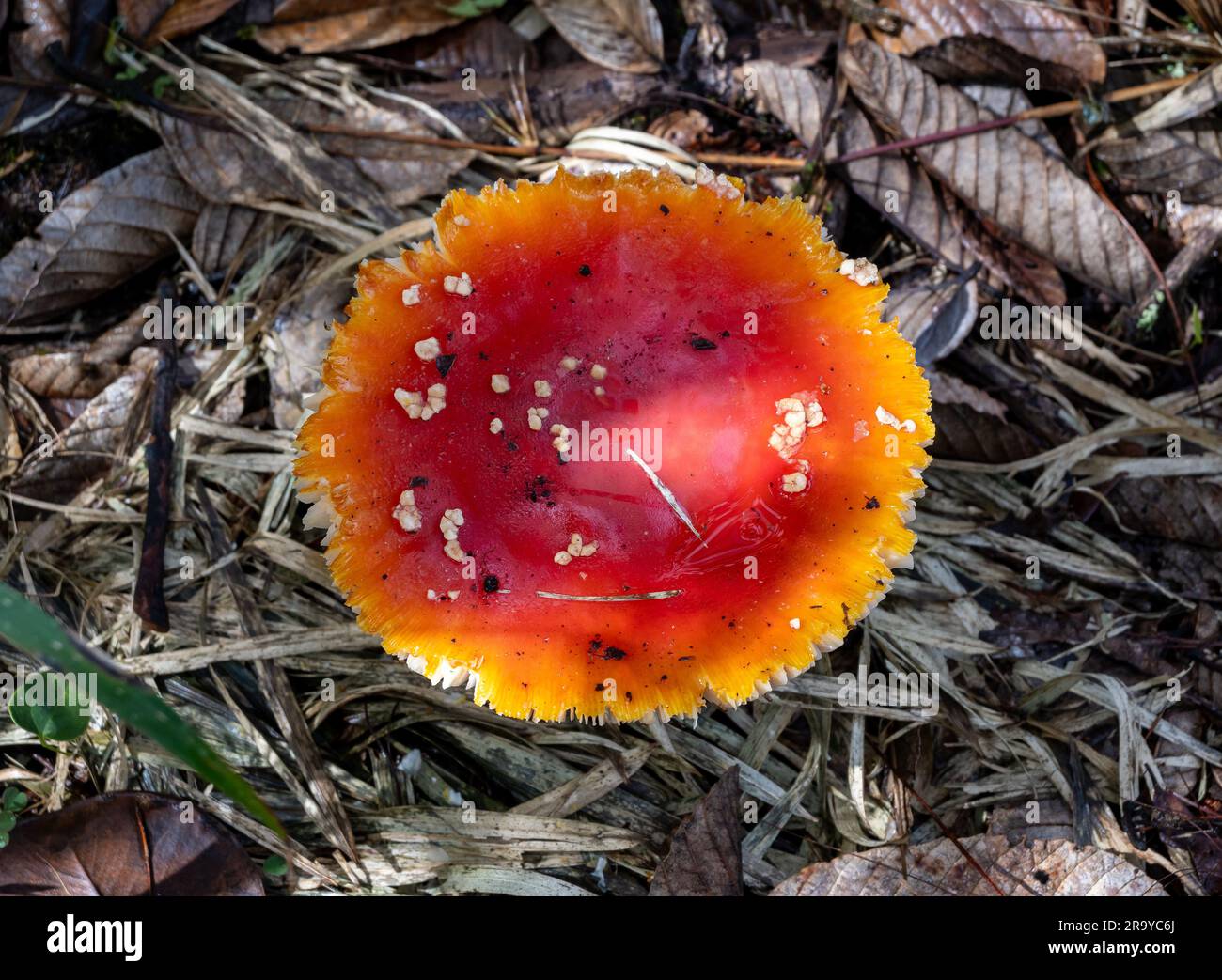
Identifying a red mushroom requires careful observation of the cap, gills, stem, and ecological context, as "all red mushroom" can refer to dozens of species ranging from the iconic, psychoactive Amanita muscaria to the gastronomically dangerous Russula emetica. While some red mushrooms are edible, many contain muscarine or other gastrointestinal irritants, making expert-level identification essential before any form of consumption or handling.
Understanding the Diversity of Red Fungi
In the mycological world, red is a high-visibility signal. For some species, the pigment serves as a warning (aposematism), while for others, it is simply a byproduct of specific chemical compounds like betalains or carotenoids. As of 2026, citizen science and advanced DNA barcoding have expanded our understanding of red fungal biodiversity, yet the fundamental morphological rules for field identification remain the primary tool for enthusiasts and researchers alike.
When encountering a red mushroom, the first step is to determine if the entire specimen is red or if the color is limited to the pileus (cap). Some mushrooms, such as certain Hygrocybe species, are vividly red from the tip of the cap to the base of the stipe. Others, like the classic Fly Agaric, feature a red cap paired with white gills and a white stem. Distinguishing between these variations is the first step in narrowing down the genus.
The Iconic Fly Agaric: Amanita muscaria
Perhaps the most famous "red mushroom" in the world, Amanita muscaria is the archetype for fungal imagery in folklore and popular culture. While it is often depicted as a bright red cap with white spots, its appearance can vary significantly based on age and local environment.
Key Morphological Features
The cap of Amanita muscaria begins as a globe covered in a white universal veil. As the mushroom expands, this veil breaks into the characteristic white warts or scales. The red pigment lies just beneath the skin. Over time, rain can wash away these warts, leaving a smooth, red surface that might lead a novice to misidentify it as a different species.
The gills are free, meaning they do not attach to the stem, and are consistently white. The stem features a distinct ring (annulus) and a bulbous base with concentric rings of veil remnants.
Toxicity and Chemical Profile
In 2026, pharmacological interest in Amanita muscaria remains high due to its primary active compounds: ibotenic acid and muscimol. Unlike the deadly amatoxins found in the Death Cap (Amanita phalloides), the toxins in the Fly Agaric are neurotoxic rather than organ-failing. Ingestion typically leads to confusion, hallucinations, muscle spasms, and deep sleep. While rarely fatal to healthy adults, it causes severe distress and is classified as toxic.
The Brittle Gills: Genus Russula
The genus Russula contains some of the most common red-capped mushrooms found in temperate forests. These are often referred to as "brittle gills" because their flesh contains spherical cells called sphaerocytes, which cause the mushroom to snap cleanly like chalk rather than breaking into fibers.
The Sickener (Russula emetica)
Russula emetica is the primary representative of red mushrooms that cause gastrointestinal distress. It features a bright, "fire-engine" red cap that is often tacky to the touch.
- Cap: 2–10 cm wide, convex to flat, often with a slight depression in the center.
- Gills: White, closely spaced, and brittle.
- Taste: If a tiny piece of the cap is placed on the tongue (and then spat out), it provides a peppery, acrid burn. This "acridity test" is a standard diagnostic for identifying toxic red Russulas, though it should only be performed by those familiar with the genus.
Edible Look-alikes
There are edible red-capped Russulas, such as Russula aurea (though it often has yellowish tones), but the sheer number of red species—many of which are indistinguishable without a microscope—leads most experts to recommend avoiding all red-capped Russulas for culinary purposes.
The Waxy Wonders: Hygrocybe (Waxcaps)
The Hygrocybe genus includes some of the most visually stunning red mushrooms. These are often small, vibrant, and possess a "waxy" or "slimy" texture. They are frequently found in unimproved grasslands, old cemeteries, and mossy woodlands.
Crimson Waxcap (Hygrocybe punicea)
The Crimson Waxcap is one of the larger species in this group. It features a deep blood-red cap and a stem that is often yellow or orange toward the base. Unlike the Russulas, the flesh of a waxcap is somewhat translucent and fibrous.
Scarlet Waxcap (Hygrocybe coccinea)
Smaller than the Crimson Waxcap, the Scarlet Waxcap is "all red," including the cap, gills, and stem. It is a key indicator of ancient, nutrient-poor grasslands. Because these habitats are disappearing, many red waxcaps are now subjects of conservation efforts in various jurisdictions as of 2026.
Red-Capped Boletes and the "Blue Staining" Rule
Not all red mushrooms have gills. The Boletes are a group of fungi that have a sponge-like layer of pores beneath the cap instead of blade-like gills. Several species in this group feature red caps or red pores.
The Devil’s Bolete (Rubroboletus satanas)
This is a large, heavy mushroom with a pale silvery-grey cap and blood-red pores. It is significantly toxic. A key identification feature for many toxic red-pored boletes is that the flesh turns blue almost instantly when bruised or cut. This oxidation reaction is a warning sign; while not all blue-staining boletes are toxic, many of the most dangerous ones feature this combination of red pores and blue bruising.
Unusual Shapes: Scarlet Cups and Stinkhorns
Red mushrooms are not always the traditional "umbrella" shape. Some of the most striking red fungi belong to the Ascomycota or have highly specialized fruiting bodies.
Scarlet Cup (Sarcoscypha coccinea)
Often appearing in late winter or early spring, the Scarlet Cup looks like a small, bright red bowl or cup growing on decaying sticks buried in the leaf litter. The interior of the cup is a vivid scarlet, while the exterior is a paler, slightly fuzzy white or pink. While some sources list them as edible, they have little flavor and a rubbery texture, making them more valuable as a visual marvel than a food source.
Octopus Stinkhorn (Clathrus archeri)
While technically a fungus rather than a "mushroom" in the colloquial sense, Clathrus archeri is a startlingly red organism. It emerges from a gelatinous "egg" to form 4–7 red tentacles that resemble an octopus or a starfish. It emits a foul odor of rotting meat to attract flies, which then disperse its spores.
Comparison of Common Red Mushrooms
The following table summarizes the key characteristics of the most frequently encountered red mushrooms to assist in preliminary field sorting.
| Species Name | Common Name | Primary Features | Spore Print | Edibility |
|---|---|---|---|---|
| Amanita muscaria | Fly Agaric | Red cap, white warts, white gills, ring on stem. | White | Toxic |
| Russula emetica | The Sickener | Bright red cap, brittle white gills, acrid taste. | White | Toxic |
| Hygrocybe coccinea | Scarlet Waxcap | Small, waxy, red cap/gills/stem, no ring. | White | Edible (but small) |
| Rubroboletus satanas | Devil's Bolete | Pale cap, red pores, bruises blue, bulbous stem. | Olive-Brown | Toxic |
| Sarcoscypha coccinea | Scarlet Cup | Cup-shaped, grows on wood in winter. | White | Edible (insipid) |
| Clathrus archeri | Octopus Stinkhorn | Red tentacles, foul smell, emerges from "egg." | Olive-Green | Non-toxic/Inedible |
How to Identify a Red Mushroom: A Systematic Approach
When attempting to identify a red mushroom, follow these steps to ensure you capture the necessary data for a correct determination.
- Examine the Underside: Does the mushroom have gills, pores, or teeth? If it has white gills that don't touch the stem, it may be an Amanita. If it has red pores that turn blue, it is likely a member of the Boletaceae family.
- Test the Texture: Gently break a piece of the cap. Does it snap like a radish (Russula) or is it fibrous and bendy?
- Check the Habitat: Is it growing on wood (Sarcoscypha), in the grass (Hygrocybe), or near specific trees like birch or pine (Amanita)? Many mushrooms are mycorrhizal, meaning they form a symbiotic relationship with specific tree species.
- Take a Spore Print: Place the cap gills-down on a piece of paper (half white, half black) and cover it with a bowl for several hours. The color of the resulting powder (spores) is a critical taxonomic marker.
- Look for Veil Remnants: Check the stem for a ring and the base for a cup-like structure (volva). The presence of a volva is a major warning sign for potentially deadly Amanita species.
Safety and Toxicity Warnings
The phrase "all red mushrooms are poisonous" is a myth, but it is a "safe" myth for beginners. While species like the Scarlet Cup are technically edible, the risk of misidentifying a toxic Russula or a young Amanita is high.
Common Symptoms of Poisoning
If a toxic red mushroom is ingested, symptoms usually fall into two categories:
- Gastrointestinal Irritants: Nausea, vomiting, abdominal cramps, and diarrhea. These usually appear within 30 minutes to 3 hours. Russula emetica and Rubroboletus satanas are classic examples.
- Neurotoxic Effects: Dizziness, hallucinations, altered perception, and sweating. These are characteristic of Amanita muscaria and appear within 1–2 hours.
If you suspect mushroom poisoning, do not wait for symptoms to escalate. Contact a local poison control center or seek emergency medical care immediately. If possible, save a sample of the mushroom (including the base of the stem) for identification by a mycologist.
Frequently Asked Questions
Are there any "all red" mushrooms that are safe to eat?
Yes, some species in the Hygrocybe (Waxcap) genus are edible, such as the Scarlet Waxcap (Hygrocybe coccinea). However, they are often very small and have little culinary value. Additionally, the risk of confusing them with toxic species is significant for those without experience. The Scarlet Cup (Sarcoscypha coccinea) is also edible but often described as having a woody or neutral taste.
Why do some red mushrooms turn blue when touched?
The blue staining reaction, common in boletes like the Devil's Bolete, is caused by the oxidation of pulvinic acid derivatives. When the mushroom tissue is exposed to air, enzymes convert these compounds into blue quinone methides. While fascinating, in the context of red-pored boletes, this reaction is often a signal to avoid the specimen as it frequently correlates with toxicity.
Is the red juice from some mushrooms dangerous?
You may be referring to the "Bleeding Tooth Fungus" (Hydnellum peckii). While the cap can appear reddish or pink and it "bleeds" a thick red liquid, it is not a "mushroom" in the traditional sense and is not poisonous to the touch. However, it is extremely bitter and considered inedible. No known mushroom is dangerous to touch; toxicity only occurs upon ingestion.
Can I remove the toxins from a red mushroom by boiling it?
While some toxins (like the ibotenic acid in Amanita muscaria) are water-soluble and can be reduced through specific, rigorous parboiling processes, this is not recommended for the general public. Many other toxins, such as those in Russula or certain boletes, are heat-stable and will not be neutralized by cooking.
What is the most dangerous red mushroom?
In terms of immediate gastrointestinal distress, Rubroboletus satanas (Devil's Bolete) and Russula emetica are among the most common culprits. While Amanita muscaria is more famous, its toxicity is rarely fatal. The greatest danger lies in misidentifying a red mushroom for an edible orange-red species like Amanita caesarea (Caesar's Mushroom), which is highly prized but looks similar to toxic relatives.
Final Recommendations for Identification
When observing a red mushroom in 2026, treat it primarily as a subject for photography and ecological study rather than a potential meal. The complexity of fungal taxonomy means that "all red mushroom" is a category filled with biological exceptions. For those interested in foraging, the best next step is to join a local mycological society where experts can provide hands-on training in identifying the subtle differences between a harmless waxcap and a dangerous "sickener." Always use a regional field guide and never rely on a single photograph for identification.