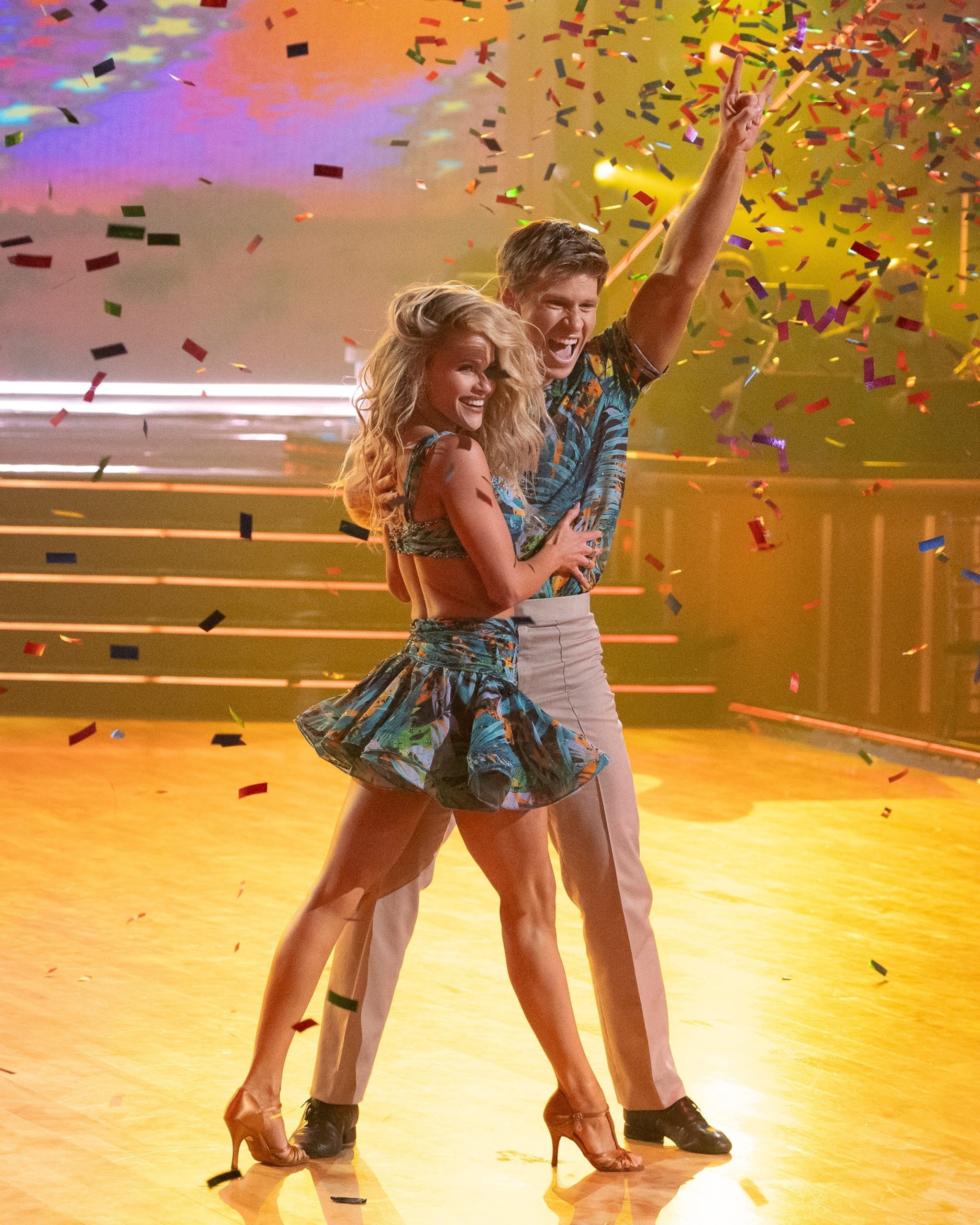
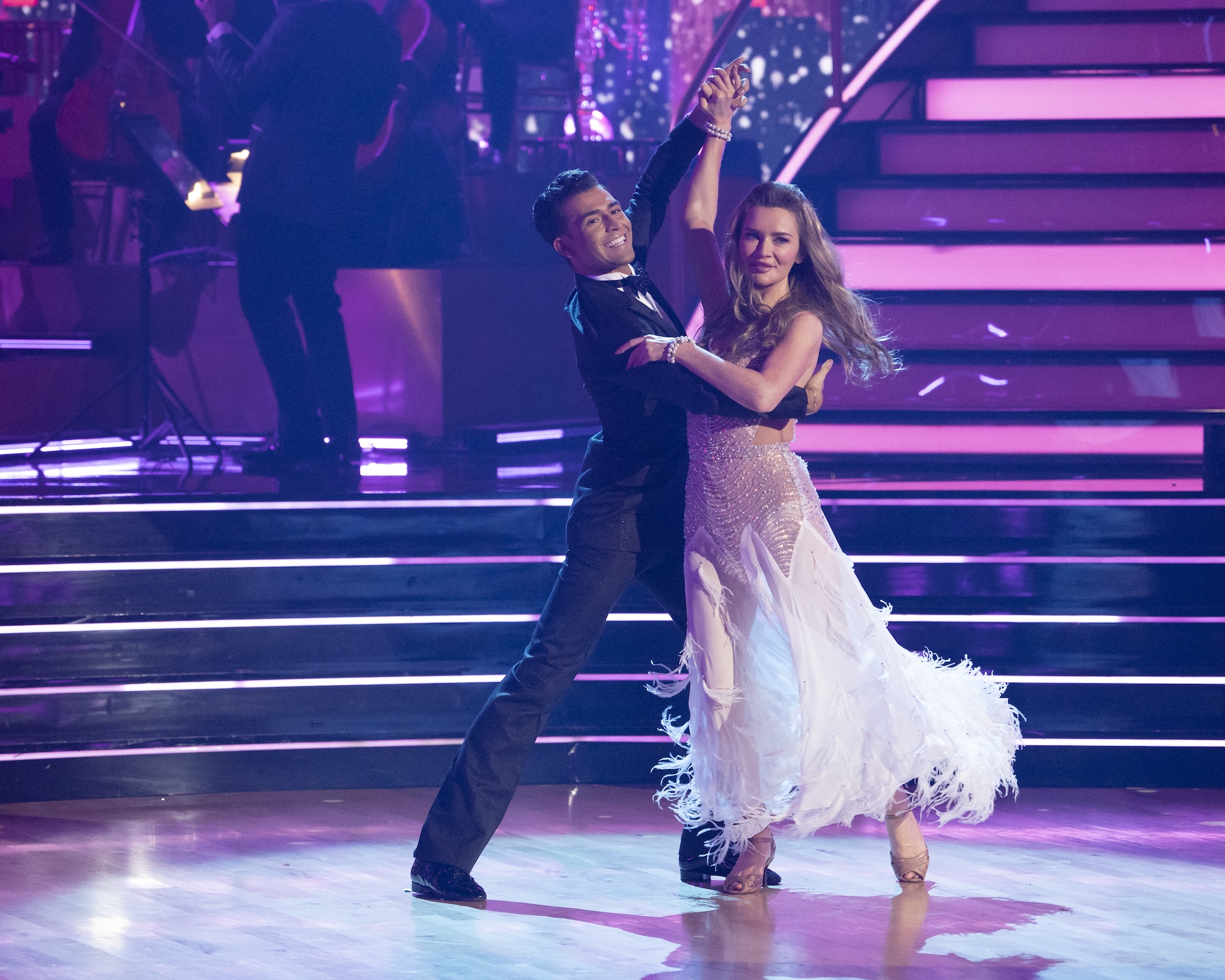
Olympic gold medalist Alexandra "Aly" Raisman delivered one of the most technically precise and artistically transformative runs on Season 16 of Dancing with the Stars in 2013. Partnered with professional dancer Mark Ballas, Raisman finished fourth overall, captivating audiences by bridging the gap between world-class gymnastic athleticism and expressive ballroom dance performance.
Identity Disambiguation: Alexandra "Aly" Raisman on DWTS
When television audiences search for "Alexandra on Dancing with the Stars," they are referring to Alexandra Rose "Aly" Raisman, the three-time Olympic gold medalist and captain of the 2012 U.S. Olympic Women's Gymnastics team ("The Fierce Five"). While universally known in sports media by her nickname "Aly," her full legal given name is Alexandra.
Raisman entered Season 16 of Dancing with the Stars (DWTS) in the spring of 2013, just months after winning individual floor exercise gold and team gold at the London Olympic Games. Her appearance on the hit ABC series marked a major pivot from competitive, highly regimented gymnastics to live theatrical ballroom performance.
Understanding Raisman's trajectory on the show requires looking at both her elite athletic background and the specific mechanical demands of ballroom dance. While gymnasts possess world-class flexibility, strength, and spatial awareness, transitioning to partner dancing introduces completely different demands regarding weight placement, frame mechanics, and romantic or dramatic partner connection.
Season 16 Performance Journey and Routine Progression
Partnered with fan-favorite professional dancer Mark Ballas, Alexandra Raisman constructed a performance narrative defined by relentless work ethic, rapid technical mastery, and an eventual emotional breakthrough. Over ten weeks of live competition, Raisman tackled Latin, Standard/Smooth, and specialized contemporary styles, culminating in two perfect scores.
Season 16 Trajectory: [Week 1-3: Foundational Technique] ➔ [Week 4-7: Emotional Expansion] ➔ [Week 8-10: Artistic Breakthrough & Perfect Scores]
The Early Weeks: Building Footwork and Rhythm (Weeks 1–3)
Raisman and Ballas debuted in Week 1 with a Cha-Cha-Cha set to "Live While We're Young" by One Direction, earning a score of 21 out of 30 from judges Len Goodman, Bruno Tonioli, and Carrie Ann Inaba. The judges praised her physical conditioning and line precision, but noted a slight rigidity in her upper body—a common trait among elite gymnasts trained to maintain locked core control.
In Week 2, the duo tackled the Quickstep to "I Got Rhythm," scoring 24/30. Raisman demonstrated exceptional speed and foot alignment, showing that her floor exercise agility translated directly into fast-paced ballroom movement. By Week 3’s Viennese Waltz to "Give Me Love" (23/30), Ballas began pushing Raisman to relax her shoulders and sink into her partner's frame, initiating her transition from solo athlete to ensemble partner.
The Mid-Season Shift: Fluidity and Characterization (Weeks 4–7)
By Week 4, Raisman’s performance quality underwent a noticeable evolution. Performing a Samba to "Misery" by Maroon 5, she earned 27/30 as judge Bruno Tonioli highlighted her improving Cuban motion and rhythmic isolation. Her Foxtrot in Week 5 ("Isn't She Lovely") matched that score, displaying increased softness in her rise-and-fall mechanics.
Week 7 brought a major milestone: an Argentine Tango to "Should I Stay or Should I Go" by The Clash. Scored at 29/30, the performance showcased sharp staccato leg actions (ganchos and boleos) and an aggressive, intense characterization that surprised both the audience and judges. This routine proved that Raisman could move beyond her wholesome Olympic persona to project dark, dramatic intensity.
The Semifinals and Finals: Peak Artistry and Perfect Scores (Weeks 8–10)
In the semifinals (Week 9), Raisman produced her most iconic performance of the season: a Contemporary routine set to "Titanium" by David Guetta featuring Sia. Ballas choreographed a routine that leaned into Raisman's core gymnastic strengths while demanding deep emotional vulnerability. The routine featured seamless aerial lifts, balance holds, and exquisite line extensions. The judges awarded Raisman her first perfect score of 30/30, with Len Goodman calling it a masterclass in dynamic performance.
Raisman reached the finals in Week 10, alongside fellow finalists Kellie Pickler, Zendaya, and Jacoby Jones. In the finals, Raisman performed a Samba re-vote (28/30) and an acrobatic Afro-pop/Motown-inspired Freestyle routine set to "I Want You Back" by The Jackson 5. The Freestyle earned another perfect 30/30, praised for its high energy, complex lift sequence, and flawless execution. Ultimately, Raisman and Ballas finished in fourth place, a result widely considered one of the most competitive field finishes in Dancing with the Stars history.
Comprehensive Scoring and Routine Breakdown
The table below outlines Alexandra Raisman’s complete performance record during Season 16 of Dancing with the Stars, including music choices, judge scores, and technical highlights.
| Week | Dance Style | Musical Track | Score (out of 30) | Primary Technical Highlight / Judge Focus |
|---|---|---|---|---|
| 1 | Cha-Cha-Cha | "Live While We're Young" | 21 | Excellent extension; judges noted top-line rigidity. |
| 2 | Quickstep | "I Got Rhythm" | 24 | Exceptional speed and foot speed; strong frame hold. |
| 3 | Viennese Waltz | "Give Me Love" | 23 | Fluid sway; worked on softening upper-body tension. |
| 4 | Samba | "Misery" | 27 | Improved hip action (Cuban motion) and bounce timing. |
| 5 | Foxtrot | "Isn't She Lovely" | 27 | Elegant sway and rise-and-fall; strong musicality. |
| 6 | Salsa / Team Samba | "Echa Pa'lla" / "LaserLight" | 27 / 25 | High-energy Latin isolations and synchronized group work. |
| 7 | Argentine Tango | "Should I Stay or Should I Go" | 29 | Sharp leg hooks (ganchos) and intense dramatic expression. |
| 8 | Rumba / Trio Afro-Jazz | "The Way You Look Tonight" / "Azanto" | 27 / 29 | Continuous hip movement in Rumba; high stamina in Trio. |
| 9 | Paso Doble / Contemporary | "50 Ways to Say Goodbye" / "Titanium" | 25 / 30 | Earned first perfect 30/30 for iconic Contemporary dance. |
| 10 | Samba (Instant) / Freestyle | "Superstition" / "I Want You Back" | 28 / 30 | Second perfect 30/30 for Freestyle; finished 4th place. |
Technical Analysis: Gymnastics Mechanics vs. Ballroom Discipline
Analyzing Alexandra Raisman's performance requires examining the physical mechanics involved when an elite Olympic gymnast adapts to ballroom and Latin dance disciplines.
Gymnastics Alignment Ballroom Partnership Mechanics [Rigid Core & Vertical Posture] VS. [Elastic Frame, Sway & Shared Axis] [Toe-First Rebound Landing] [Heel-Lead Drive & Sinking Mechanics] [Solo Precision & Line Holding] [Dynamic Lead-and-Follow Energy]
Direct Physical Advantages
- Core Stability and Spatial Orientation: Gymnasts possess top-tier core strength, enabling them to execute complex lifts, balances, and spins without losing center-of-gravity alignment.
- Line and Extension: Decades of floor exercise training provided Raisman with naturally extended legs, pointed toes, and clean arm placement, giving her routines superior visual polish.
- Pliability and Flexibility: Exercises requiring high splits, back extensions, or dramatic lifts were executed effortlessly, allowing partner Mark Ballas to attempt high-risk choreographic elements.
Key Biomechanical Challenges
- Foot Placement and Heel Leads: Artistic gymnasts are conditioned to stay on the balls of their feet for explosive tumbling launches and landings. In ballroom disciplines like the Foxtrot and Quickstep, movement across the floor requires driving forward through a distinct heel lead. Overcoming the impulse to walk on her toes was one of Raisman's initial mechanical hurdles.
- Posture Flexibility vs. Rigidity: Gymnastics scoring demands a locked, straight spine to withstand impact forces. Conversely, ballroom dancing—particularly European Standard styles—requires an open, curved upper back, relaxed shoulders, and lateral sway.
- Partner Connection and Weight Sharing: In gymnastics, balance is entirely self-contained. In partner dance, balance relies on dynamic resistance, weight-sharing, and non-verbal touch cues. Ballas focused heavily on helping Raisman release control and rely on lead-and-follow mechanics.
The Cultural and Artistic Impact of Alexandra’s DWTS Stint
Alexandra Raisman’s participation on Dancing with the Stars created ripple effects that extended beyond television ratings and weekly scores. Her performance trajectory contributed to several broader cultural shifts:
1. Establishing the Blueprint for Olympic Gymnasts on DWTS
While Shawn Johnson won Season 8 in 2009, Raisman’s Season 16 run solidified the precedent for female gymnasts transitioning into prime-time entertainment formats immediately following their Olympic cycles. Her technical discipline demonstrated how elite athletes could cross over into performance arts, paving the way for future Olympic gymnasts on the show, including:
- Laurie Hernandez (Season 23 Winner, 2016)
- Simone Biles (Season 24 Finalist, 2017)
- Suni Lee (Season 30 Finalist, 2021)
- Jordan Chiles (Season 33 Contestant, 2024)
2. Public Image Transformation and Artistic Autonomy
For elite gymnasts, competitive careers are often characterized by rigid schedules, uniform appearances, and deference to coaching authorities. On DWTS, Raisman showcased her evolving personality, creative input, and emotional range. Viewers saw her transition from a laser-focused, disciplined team captain ("Captain Aly") into a versatile, expressive performer capable of humor, sensuality, and deep emotional storytelling.
3. Laying Groundwork for Advocacy and Personal Empowerment
Raisman’s willingness to embrace vulnerability on national television mirrored her broader personal evolution. In the years following her 2013 DWTS appearance and her subsequent return to the 2016 Rio Olympics (where she won three more medals), Raisman emerged as a prominent advocate for athlete safety, mental health awareness, and body positivity. Her season on DWTS represented an early, visible step in finding her independent voice outside the confines of competitive gymnastics.
Strategic Lessons for Athletes Transitioning to Expressive Performance
Raisman’s journey offers actionable insights for athletes, dancers, and coaches navigating cross-disciplinary training:
- Isolate Mechanical Instincts: Identify foundational movement patterns from your primary sport that conflict with the new discipline (e.g., toe-walking versus heel-leads). Target these differences early through slow-motion drills.
- Prioritize Artistry Alongside Technique: Perfectionism can stifle expression. Dancers transitioning from judged sports must learn to trade absolute precision for emotional connectivity and narrative storytelling.
- Leverage Native Strengths: Rather than ignoring your athletic foundation, integrate signature physical attributes—such as core stability or flexibility—into performance choreography to build confidence early on.
- Embrace Partner Reliance: For solo athletes, dynamic partner work requires shifting from internal focus to external responsiveness. Trusting your partner's frame is essential for fluid movement.
Frequently Asked Questions
Which season of Dancing with the Stars did Alexandra (Aly) Raisman compete in?
Alexandra Raisman competed in Season 16 of Dancing with the Stars, which broadcast on ABC in the spring of 2013.
Who was Alexandra Raisman's professional dance partner?
Raisman was paired with two-time Dancing with the Stars champion Mark Ballas. Known for his inventive choreography and technical precision, Ballas tailored routines specifically to capitalize on Raisman's athletic abilities.
What place did Alexandra Raisman finish on the show?
Raisman and Ballas finished in fourth place overall. They reached the season finals alongside country singer Kellie Pickler (who won), pop star Zendaya (runner-up), and NFL player Jacoby Jones (third place).
Did Alexandra Raisman receive any perfect scores during her season?
Yes. Raisman received two perfect scores of 30/30 during Season 16. Her first perfect score came in Week 9 (Semifinals) for her Contemporary routine to "Titanium," and her second came in Week 10 (Finals) for her high-energy Freestyle routine set to "I Want You Back."
What was Alexandra Raisman's highest-rated routine on DWTS?
Her Contemporary dance to "Titanium" in Week 9 is widely recognized as her highest-rated and most critically acclaimed routine. It earned unanimous praise from the judges for its emotional depth, technical line execution, and seamless blend of gymnastics lifts with fluid dance technique.
Summary and Next Steps
Alexandra "Aly" Raisman’s run on Dancing with the Stars stands as a defining example of cross-disciplinary athletic adaptation. By blending Olympic core strength and spatial discipline with artistic vulnerability and ballroom footwork, she delivered performances that earned perfect scores and left a lasting imprint on the show's history.
For fans, dancers, and athletes looking to analyze or replicate this transition, explore official video archives of Season 16 routines—specifically her Week 7 Argentine Tango and Week 9 Contemporary—to examine how dynamic tension, frame alignment, and performance presence interact in high-level partner dancing.