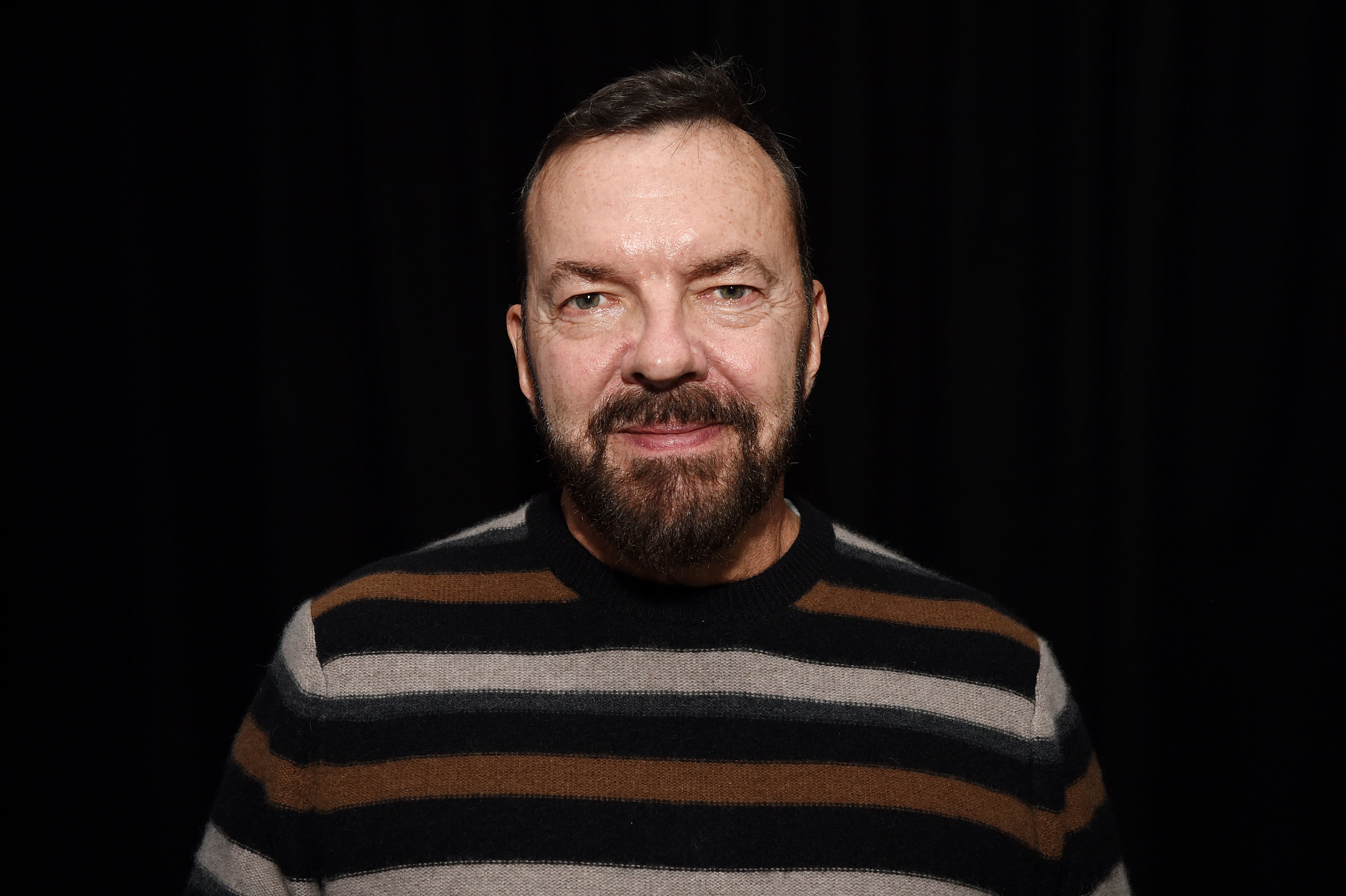
Alan Ball is a critically acclaimed American writer, director, and producer best known for writing the Academy Award-winning film American Beauty and creating the iconic HBO series Six Feet Under and True Blood. His work typically explores themes of death, sexuality, family dysfunction, and the pursuit of authenticity within repressive social structures.
By 2026, Alan Ball’s influence on the "Golden Age of Television" is viewed as foundational. His ability to blend macabre humor with deep emotional resonance reshaped how networks approached character-driven dramas. From his early days in sitcom writing to his reign as an HBO powerhouse, Ball has consistently challenged audiences to look beneath the surface of the "polite society" and confront the messy, beautiful reality of human existence.
The Formative Years: From Theater to Sitcom Turmoil
Alan Ball’s journey to becoming one of Hollywood's most respected voices did not follow a linear path of immediate success. Born in 1957 in Marietta, Georgia, Ball’s early life was marked by a tragic event that would later inform much of his creative output: the death of his sister in a car accident while he was a passenger. This early brush with mortality seeded the obsession with death and grief that would define his most famous works.
Ball studied theater at Florida State University and began his career in the world of Off-Broadway playwriting. His early plays, such as Five Women Wearing the Same Dress, showcased his sharp ear for dialogue and his interest in the internal lives of marginalized or frustrated individuals. However, the financial instability of the theater led him to Hollywood in the 1990s.
His initial foray into television was, by his own admission, a period of creative frustration. He served as a writer and story editor on sitcoms like Grace Under Fire and Cybill. These environments were often described as toxic and creatively stifling. The rigid structure of the 1990s multi-cam sitcom, with its reliance on punchlines and safe resolutions, stood in stark contrast to Ball’s more cynical and surreal sensibilities. Yet, it was this very frustration—a sense of being trapped in a system that demanded superficiality—that fueled the script for his cinematic breakthrough.
American Beauty and the Deconstruction of the Suburban Dream
In 1999, Alan Ball transitioned from a frustrated sitcom writer to an Academy Award winner with the release of American Beauty. Directed by Sam Mendes, the film was a cultural phenomenon that dismantled the facade of the American suburban ideal.
The script follows Lester Burnham, a middle-aged man suffering from a profound sense of numbness, who undergoes a radical (and often problematic) awakening. Ball’s writing used the backdrop of manicured lawns and white picket fences to explore deep-seated themes of repression, beauty, and the search for meaning in a materialistic world.
The film's impact was immediate. It won five Academy Awards, including Best Picture and Best Original Screenplay for Ball. Critics praised the script for its "magical realism"—specifically the famous scene involving a plastic bag blowing in the wind—which argued that there is an overwhelming amount of beauty in the world if one is willing to see it. For Ball, American Beauty was a manifesto against the "living death" of conformity. It established his signature style: a mixture of sharp, biting satire and earnest, almost spiritual, contemplation.
Six Feet Under: Redefining the Television Drama
If American Beauty put Alan Ball on the map, Six Feet Under (2001–2005) cemented his legacy as one of the greatest showrunners in history. Debuting on HBO during a period of intense creative experimentation for the network, the series focused on the Fisher family, who operated a funeral home in Los Angeles.
The genius of Six Feet Under lay in its structure. Each episode began with a death—ranging from the mundane to the absurd—which served as a thematic catalyst for the family's internal struggles. This "death of the week" format allowed Ball to explore every conceivable angle of mortality, grief, and the business of dying.
The show was revolutionary for its time in several ways:
- Representation: It featured one of the most nuanced and complex portrayals of a gay relationship on television through the character of David Fisher (played by Michael C. Hall).
- Surrealism: Ball frequently utilized dream sequences and "conversations" with the dead to externalize the characters' inner monologues.
- The Finale: The series concluded in 2005 with what is widely considered one of the best series finales in television history, a flash-forward montage showing the eventual deaths of every main character, emphasizing the show’s central theme that life is precious because it ends.
Through the Fishers, Ball argued that the proximity to death does not make one an expert on living; if anything, it makes the confusion of life more acute.
True Blood: Genre-Bending and Social Metaphor
Following the somber, existential weight of Six Feet Under, Ball pivoted in a surprisingly campy and visceral direction with True Blood (2008–2014). Based on The Southern Vampire Mysteries by Charlaine Harris, the show was a "Southern Gothic" explosion of sex, violence, and supernatural politics.
While on the surface True Blood was a fun, high-octane genre piece, Ball used the "vampire" as a multifaceted metaphor. The central conceit of "coming out of the coffin" and the struggle for the "Vampire Rights Amendment" served as a clear allegory for the LGBTQ+ rights movement and the broader struggle for civil rights in America.
The show was a massive commercial success for HBO, proving that Ball could handle big-budget, effects-heavy production without losing his focus on character dynamics. Even in a world of shapeshifters and faeries, the core of the story remained the human (and vampire) desire for intimacy and acceptance. Ball served as the showrunner for the first five seasons, maintaining a delicate balance between high-brow social commentary and low-brow "popcorn" entertainment.
Later Projects and Cinematic Returns
After stepping down as the showrunner of True Blood, Ball continued to produce and write, though often moving toward more personal or experimental projects.
In 2013, he executive produced Banshee for Cinemax, a hyper-violent action drama that gained a cult following. In 2018, he returned to HBO with Here and Now, a family drama centered on a multi-racial family in Portland. While the show was short-lived, it continued Ball’s exploration of progressive themes and the existential anxiety of the modern era.
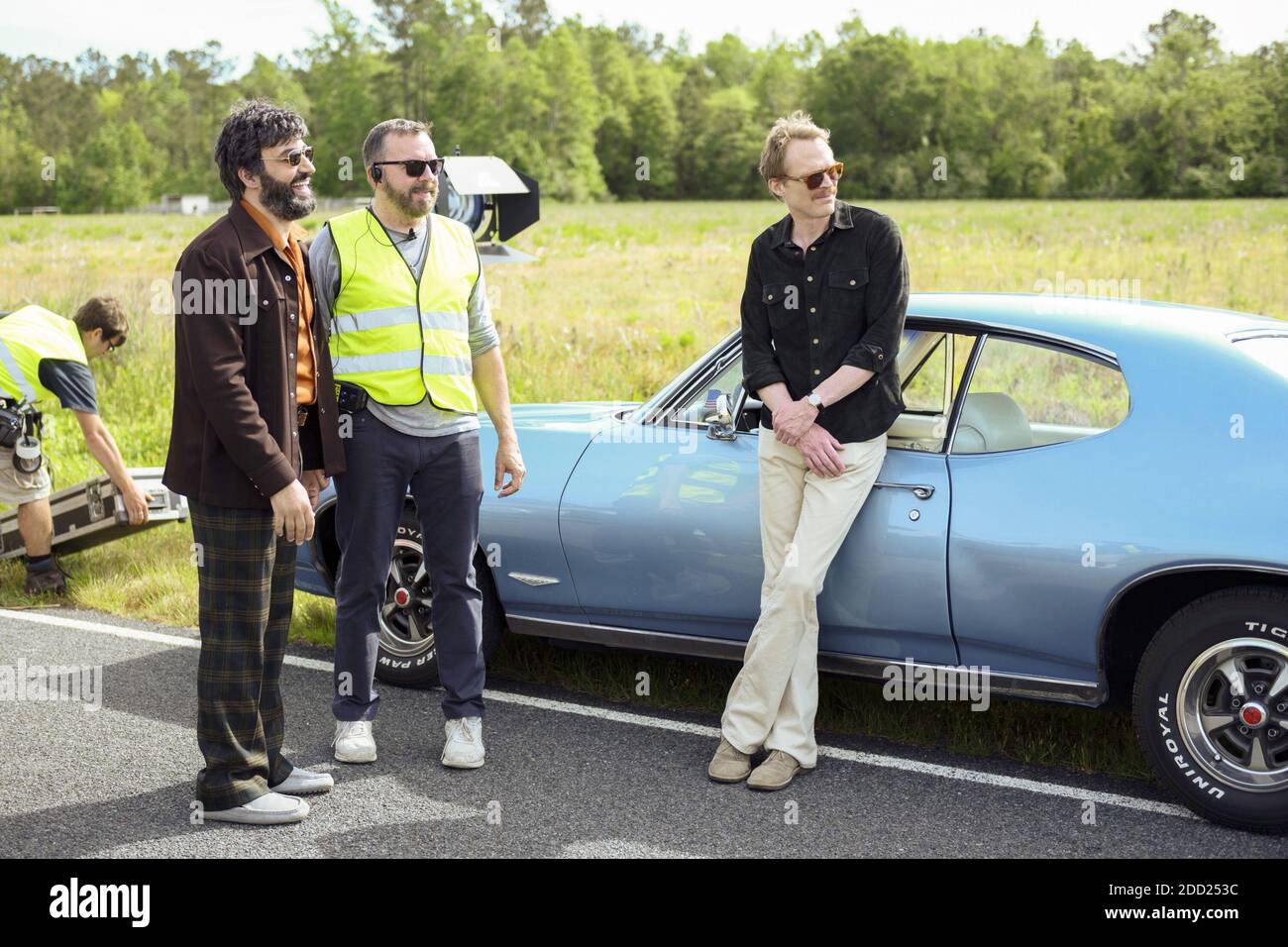
In 2020, Ball wrote and directed the film Uncle Frank, an Amazon Original. Set in the 1970s, the film is a deeply personal story about a gay man returning to his Southern roots for a family funeral. The film was praised for its warmth and its sensitive handling of trauma and reconciliation, echoing the themes of his early work in the theater.
The Alan Ball Aesthetic: Themes and Techniques
To understand Alan Ball as a writer is to understand a specific set of recurring motifs that bridge the gap between his most disparate projects.
1. The Proximity of Death
Ball views death not as an end-point, but as a lens through which life becomes visible. In his scripts, characters are often forced to confront mortality in ways that strip away their social masks. This is most evident in Six Feet Under, but even in American Beauty, the narration begins with the protagonist announcing his own death.
2. The Critique of Suburbia and Modernity
Whether it is the stifling "perfection" of the Burnhams' neighborhood or the religious hypocrisy of the small Southern towns in True Blood and Uncle Frank, Ball consistently critiques the way social institutions repress the individual. He often pits "authenticity" against "conformity," usually siding with the messy, authentic individual.
3. Magical Realism and Surrealism
Ball rarely sticks to strict naturalism. He uses the tools of cinema and television to show the "inner world." This includes:
- Talking to the dead: Often used to represent a character's conscience or unresolved grief.
- Subjective fantasies: Characters frequently have daydreams that interrupt the flow of reality, showing their deepest fears or desires.
- Symbolism: Objects like the plastic bag in American Beauty or the "True Blood" synthetic blood beverage represent larger philosophical or social shifts.
4. Dark Humor
Even in his most tragic moments, Ball finds the absurdity. His writing is characterized by a "gallows humor" that recognizes how ridiculous human behavior can be, even—or especially—during a crisis.
Comparison of Major Works
The following table compares the primary elements of Ball’s three most significant projects:
| Project | Medium | Primary Theme | Tone | Core Conflict |
|---|---|---|---|---|
| American Beauty | Film | The search for beauty | Satirical/Poetic | Repression vs. Awakening |
| Six Feet Under | TV Series | The reality of mortality | Existential/Humanist | Grief vs. The Need to Move On |
| True Blood | TV Series | Identity and prejudice | Campy/Southern Gothic | Integration vs. Tribalism |
| Uncle Frank | Film | Reconciliation with the past | Intimate/Drama | Shame vs. Acceptance |
Awards and Recognition
Alan Ball’s contributions have been recognized by every major awarding body in the entertainment industry. His 1999 Academy Award for Best Original Screenplay is often cited as a turning point for independent-leaning scripts in the mainstream.
Beyond the Oscar, Ball has earned:
- Primetime Emmy Awards: Multiple wins for Six Feet Under, including Outstanding Directing for a Drama Series.
- Golden Globes: Several wins for Best Drama Series (Six Feet Under).
- Writers Guild of America (WGA): Numerous nominations and wins for his television writing and screenwriting.
- Directors Guild of America (DGA): Recognition for his unique visual storytelling style.
Frequently Asked Questions
What was Alan Ball's first major writing job?
Alan Ball's first major writing jobs were for the television sitcoms Grace Under Fire and Cybill in the mid-1990s. While he found the experience creatively stifling, it provided him with the industry experience and financial stability to write the script for American Beauty.
Why is the Six Feet Under finale considered so significant?
The finale is significant because it broke the traditional television "cliffhanger" or "open ending" tropes. By showing the deaths of every character in a definitive montage, Ball provided a level of closure rarely seen in storytelling, while simultaneously reinforcing the show's core message about the transience of life.
Is Alan Ball still active in the industry as of 2026?
Yes, Alan Ball continues to work as a producer and consultant. While he has moved away from the grueling schedule of being a primary showrunner for long-running series, he remains involved in film development and mentor-producer roles for new writers at HBO and various streaming platforms.
Did Alan Ball write all the episodes of True Blood?
No. As is standard for television, Ball served as the showrunner and "creator," meaning he set the creative direction and wrote key episodes (especially premieres and finales). He oversaw a "writers' room" of several other writers who scripted individual episodes under his guidance for the first five seasons.
What is Alan Ball’s connection to the LGBTQ+ community?
Alan Ball is an openly gay man, and his work frequently centers on LGBTQ+ experiences. From the groundbreaking relationship between David and Keith in Six Feet Under to the allegorical struggles in True Blood and the semi-autobiographical elements of Uncle Frank, he is considered a pivotal figure in bringing queer narratives to mainstream audiences.
Recommendation for Aspiring Writers
For writers looking to emulate Ball’s success, the primary takeaway is the importance of thematic consistency. Ball does not just write "stories"; he writes "arguments" about the human condition. Whether you are writing a vampire thriller or a suburban drama, identify the core philosophical question you want to answer. Ball’s career teaches us that the most personal, specific obsessions—in his case, mortality and repression—are often what resonate most universally with an audience.
To study his technique, one should analyze the pilot script of Six Feet Under. It is a masterclass in establishing an ensemble cast, a unique setting, and a tonal balance between comedy and tragedy within the first sixty minutes.